• Skip to primary navigation
  • Skip to main content
  • Skip to primary sidebar
  • Skip to footer

BJU Press Blog

  • Home
  • Shop
    • Shaping Worldview
  • Simplified Homeschool
  • Successful Learning

Jenna

Sixth-Grade Pasta Structure Activity

May 31, 2018 by Jenna

pasta structure
As your kids grow older, they become more and more capable of understanding complicated concepts. During a discussion about earthquakes, they are fully capable of understanding why it’s important for engineers to construct buildings that will withstand an earthquake. Structural engineers are responsible for the lives and safety of the people that use the buildings they create. They exercise dominion when they plan carefully and use the best materials in their buildings. Your children may not be quite ready to dive into structural engineering, but they can apply their knowledge of earthquakes to a small structure with a simple experiment. In this activity they will construct a structure out of pasta noodles and marshmallows. How well will their pasta structure stand up against an earthquake?

Materials for the Pasta Structure Activity

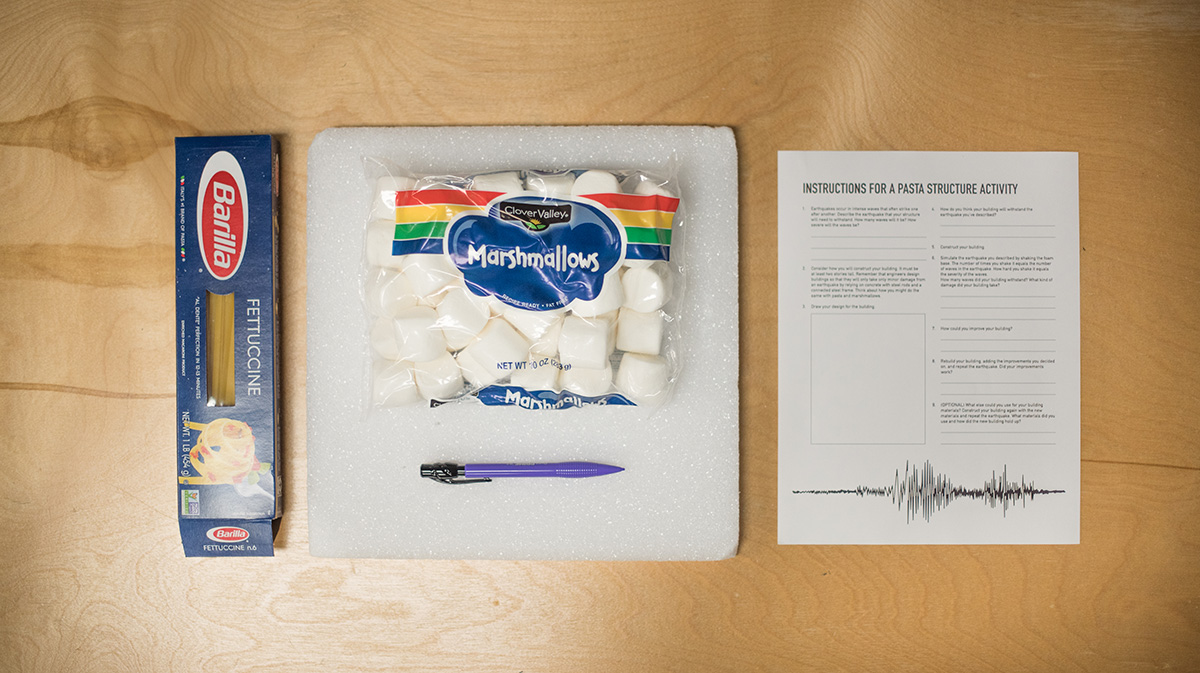
  • 1 bag large marshmallows
  • 1 box fettuccine noodles
  • Foam base, approximately 8 in x 10 in (can be Styrofoam or other stiff foam)
pasta structure materialsDoing the Activity

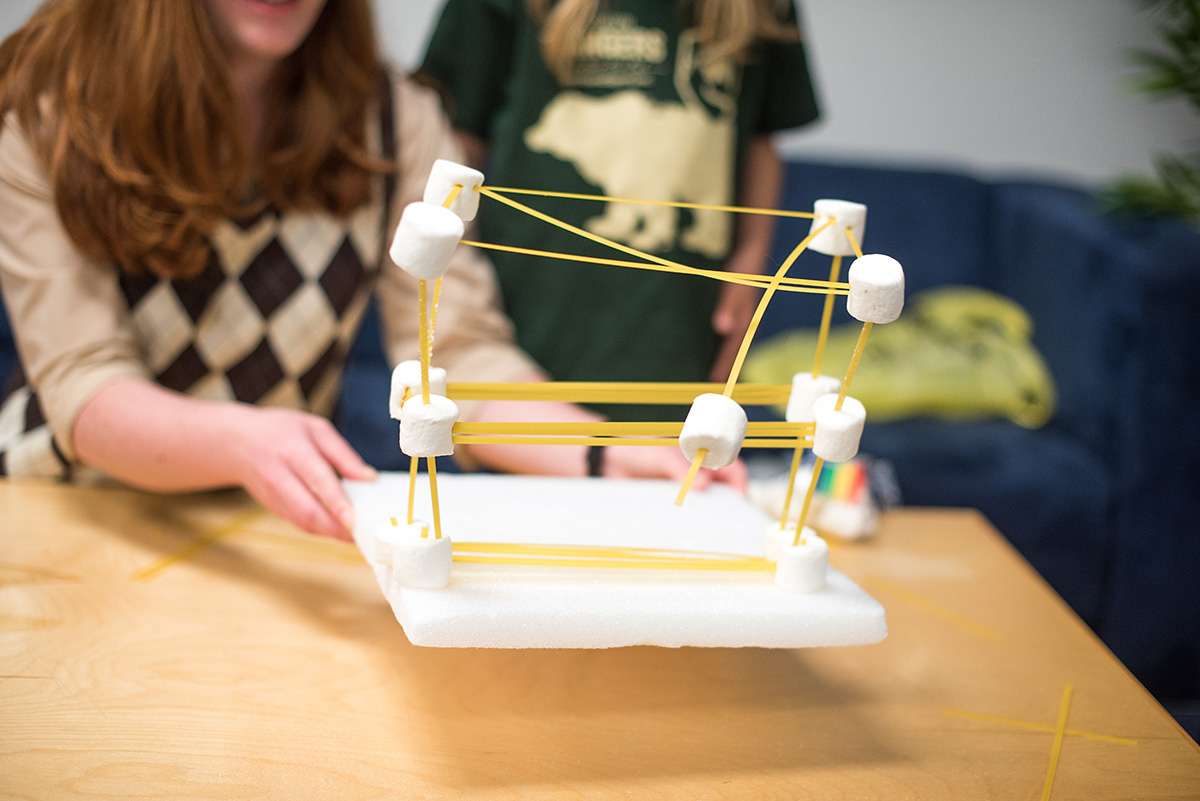
The goal is to design a structure that can withstand the force of an “earthquake.” And we’ll do it with just pasta and marshmallows. Your child will need to determine the number of waves in the earthquake and the severity of the waves her structure must survive. In order to simulate the earthquake, she will need to shake the foam base her building rests on. The number of times she shakes it represents the number of waves in the earthquake. How hard she shakes it represents the severity of the waves.

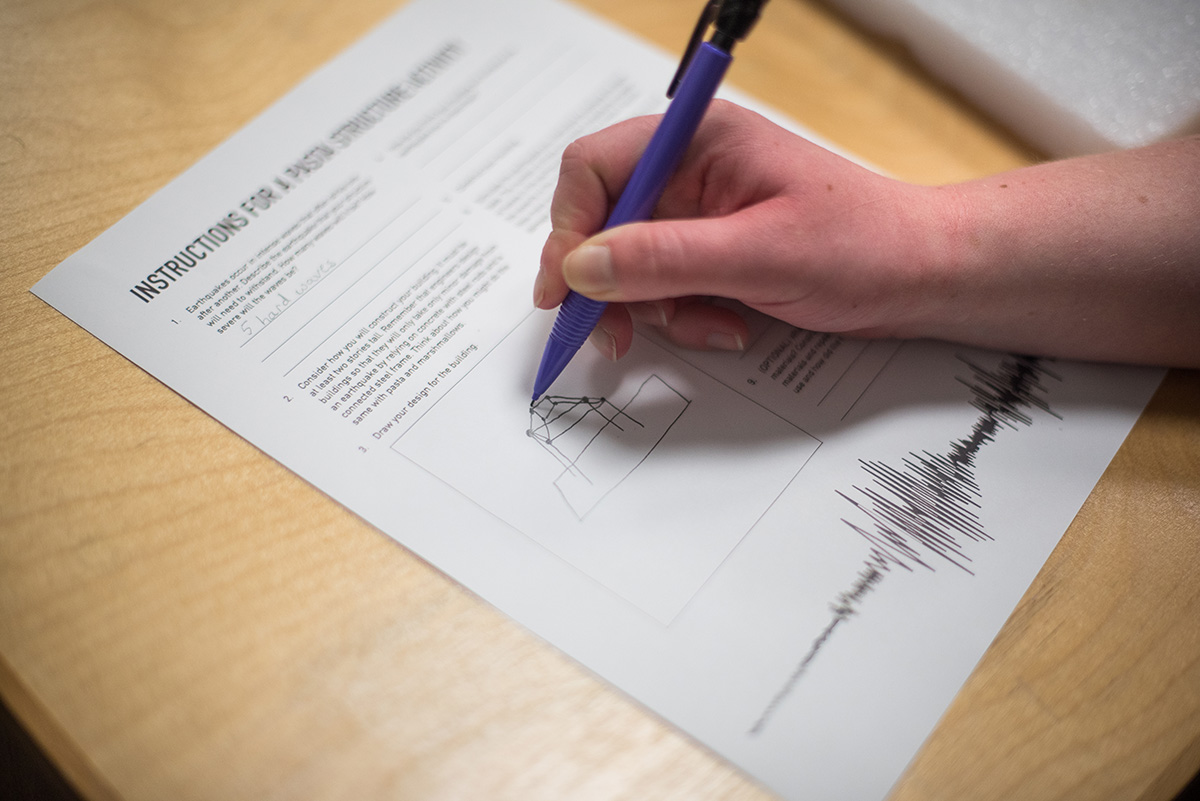
  1. Print out the pasta construction activity handout and have your child describe the earthquake her structure must survive. Have her complete items 1–4 on the handout before starting construction.pasta structure handout
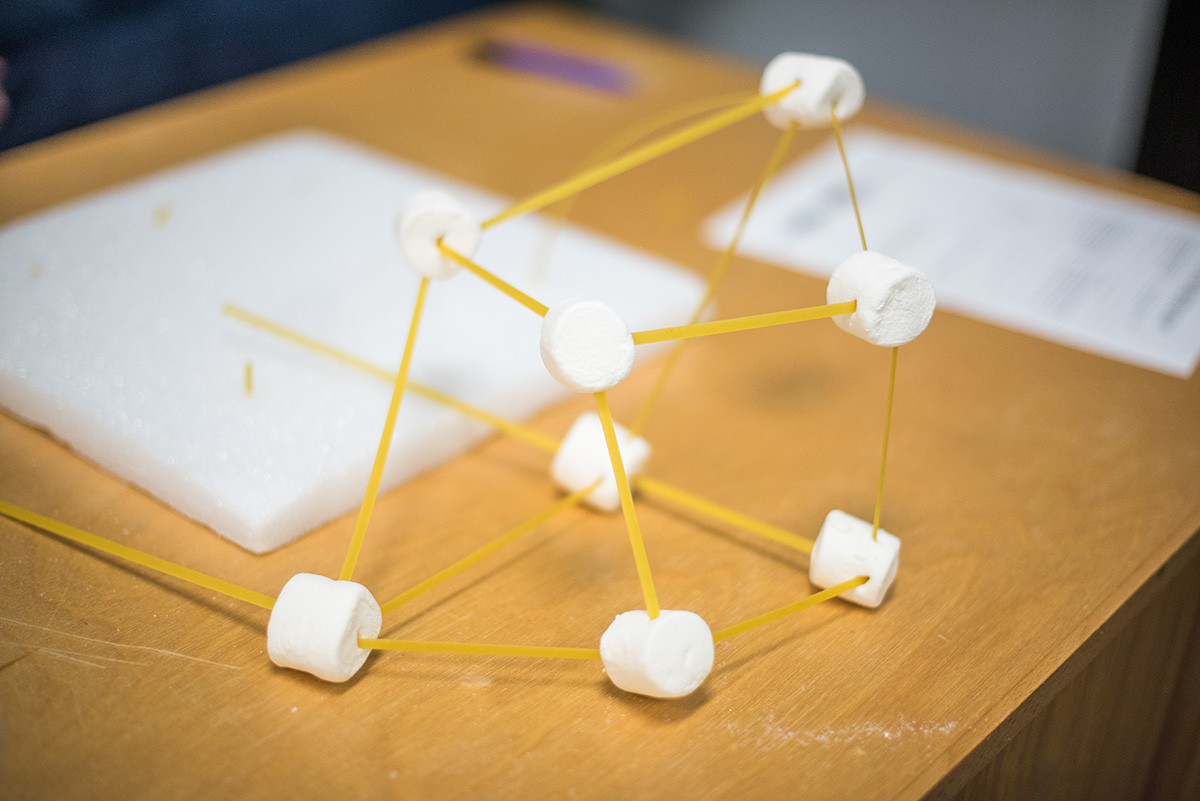
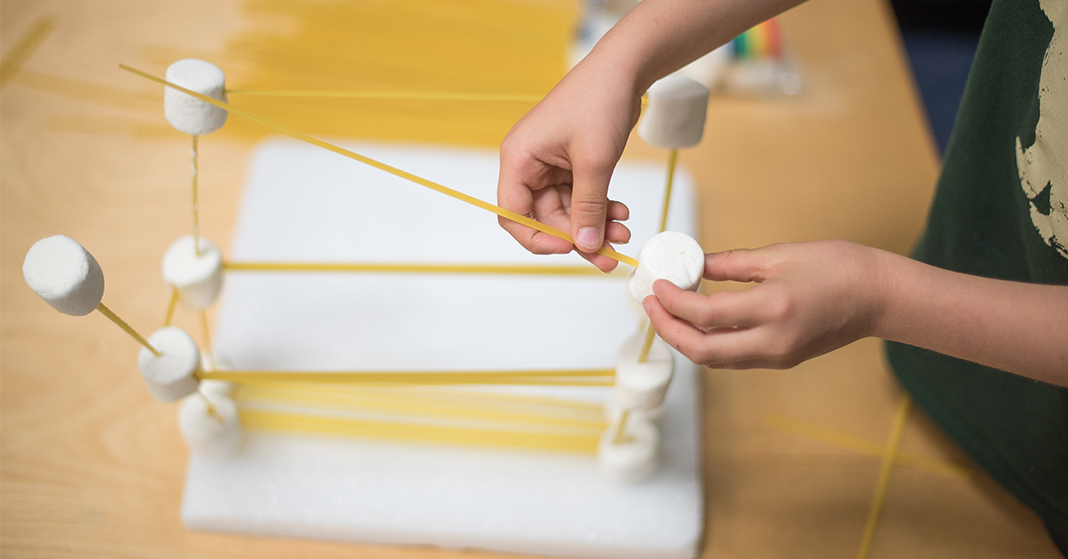
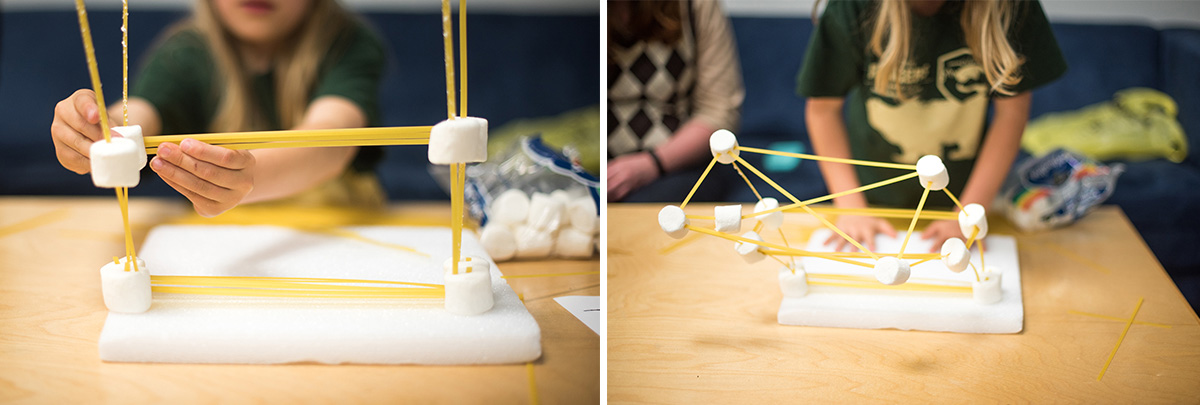
  2. Have her construct a building out of marshmallows and pasta with the foam base as the foundation. Her building should be at least two stories tall. She should consider the materials she’s using, the shape of her building, and how high it will be. All of these factors will affect how well her building will stand.
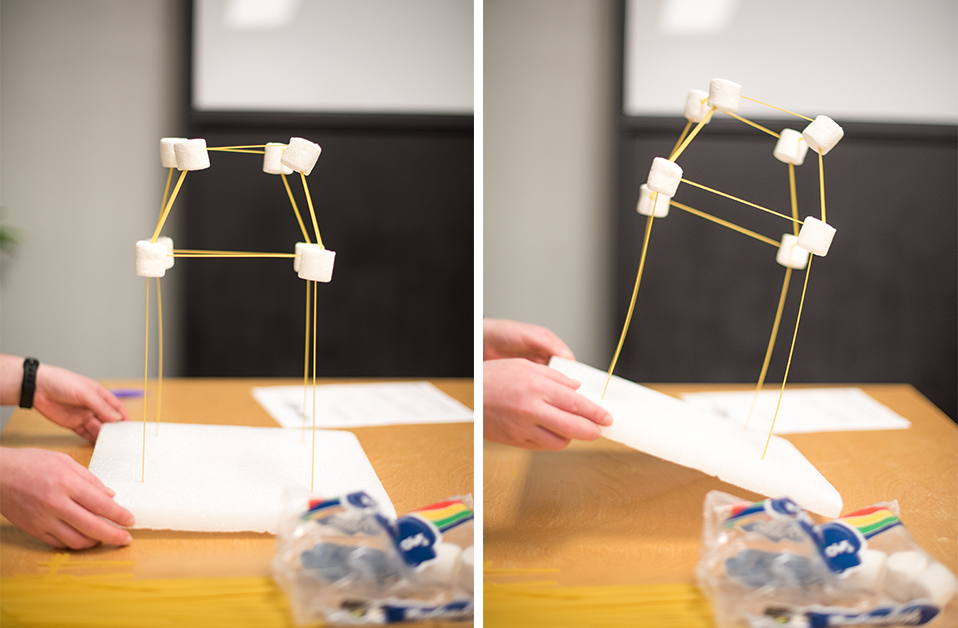
  3. Once she’s finished her pasta construction, she should simulate the earthquake she has described by shaking the foam base.pasta structure earthquake 1pasta structure fallen
  4. Ask, “Did your building stay up? How many shakes was it able to take before it collapsed? What kind of damage did the earthquake do? Can you improve your design so that it will be able to survive the earthquake?” She should record on the handout any ideas she has for improvements to the structure.
  5. Have her repeat the experiment, applying her ideas for improvements. Ask, “Did the improvements make the structure better? Did it last longer during the earthquake?”
second pasta structurepasta structure staying upTaking It a Step Further

  1. Ask, “What other materials could be used for construction?” If you have the materials on hand, have her repeat the experiment and compare the new materials to the old ones.

This would be a great activity for siblings to work together on. Put your sixth grader in charge of construction and have younger and older ones follow her directions. She will need to exercise both listening and communication skills as she shapes her building.

Filed Under: Successful Learning Tagged With: earthquake science, engineering, homeschool science, pasta construction, STEM

Darkness in Dystopian Fiction and the Hope After

May 15, 2018 by Jenna

dystopian fiction today
In the last few years, there has been a trend towards dystopian literature in young adult fiction. Though the trend may eventually die down, the books it has produced are still popular. If your children start asking about reading these books or watching the movie adaptations, what will you say? It’s always better if you read them yourself first. But you may still find yourself uncertain about whether dystopian fiction is appropriate for your children.

Let’s address a few of the basic questions you may have and point out some things to consider when approaching this genre of literature.

What is dystopian fiction?

Dystopian fiction is the opposite of utopian fiction. Instead of living in a perfect world, the characters typically live in a post-apocalyptic world with highly isolated societies. Dominant themes include an overly controlling, and often broken, government and a socialistic structure of society. Series such as The Hunger Games and The Giver are examples of popular dystopian fiction, but the genre is far from new. Though there is some debate, the earliest dystopian novel is either The Time Machine (1895) or When the Sleeper Wakes (1899), both by H. G. Wells. Rebellion against an oppressive government and violence because of that rebellion often characterizes the genre. It also has a tendency to be hopeless and repressively dark.

Why is dystopian fiction popular now?

Of course, a work of literature makes more sense when you understand its author’s background, but it’s also true that what a society chooses to highlight often reveals a great deal about that society. The culture that’s drawn to dystopian literature often identifies with the darkness, fear, death, and hopelessness that dystopian works portray. It’s a society that lacks security and dreads an uncertain future. It sees itself reflected in solitary heroes who try to repair a system that was broken long before they were born. It’s a society that is deeply afraid, with nowhere to turn. Even when their heroes win, it often feels like a broken victory.

The people in this society are your children’s peers and friends.

How can dystopian fiction be valuable?

Just like many other books, dystopian novels offer an opportunity to discuss a biblical worldview of the issues they raise. Naturally, mature children or those whose parents are reading along with them will be better equipped to critique those ideas. The following questions may also help direct your discussion of dystopian fiction: What does the Bible say about obeying the laws of governments? What does it say about obeying laws that are contrary to God’s law? How could the protagonist have handled a bad situation differently? What is a biblical response to a fearful and troubled society?

But perhaps even more importantly, familiarity with these stories opens up pathways of communication for your children with their peers. Yes, we live in a dark and broken world, but its future is by no means uncertain. We have a greater hope in Christ, who has already won a complete victory, and in His hands those who trust in Him are secure for all eternity. Your child might have a wonderful opportunity to share the hope we have in Christ with others who are deeply discouraged.

Filed Under: Shaping Worldview Tagged With: dystopian fiction, homeschool reading, young adult literature

Experimenting with Insulation in Fifth Grade

May 3, 2018 by Jenna

insulation cover
If you’re like a lot of homeschool moms, you probably rely on your morning coffee or tea to get yourself going. Ever noticed that if you don’t finish it within ten minutes or so, it goes cold—unless you use an insulated cup or thermos? Insulation has become a key feature in our modern-day lives. It keeps our houses warm in winter and cool in summer. It keeps our refrigerators cold on the inside and not the outside. It’s also a part of God’s design in warm-blooded creatures that live in cold regions, such as polar bears and whales.

A great way for your fifth grader to understand how insulation works is to test different types of materials to see how well they insulate a warm substance. In this activity from the Science 5 Teacher’s Edition, you and your child will try to keep a cup of hot water warm.

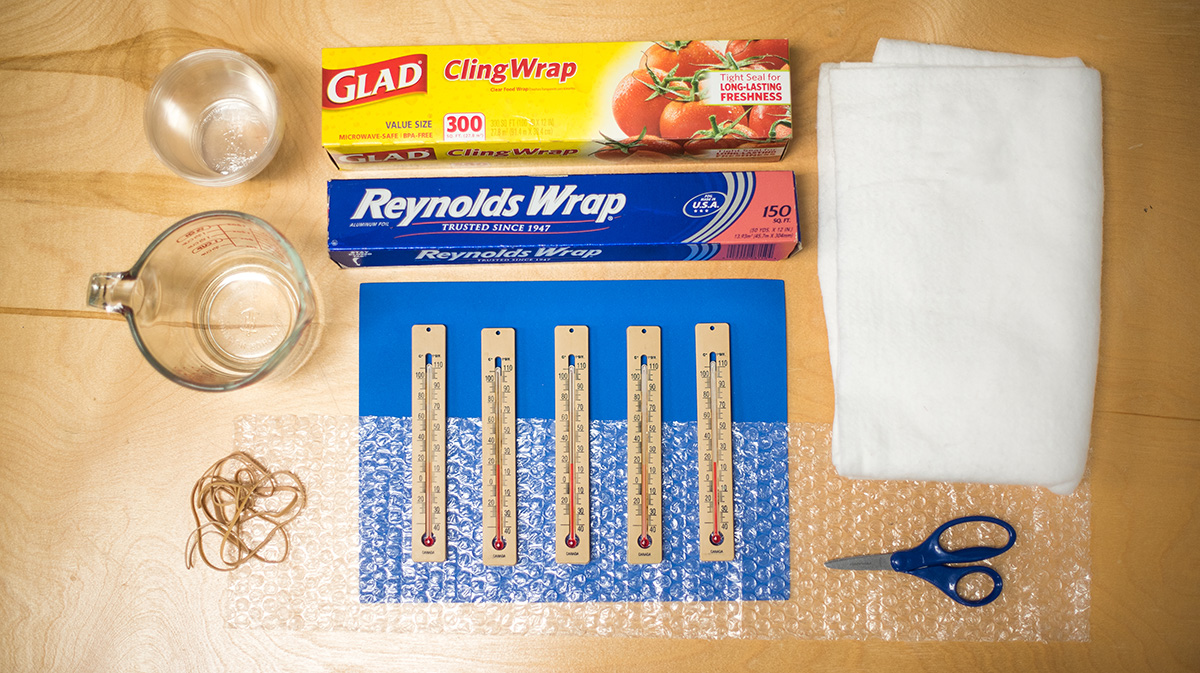
Materials Needed for Insulation Activity

  • 5 plastic cups, 9 oz
  • Cotton batting, 1 square foot
  • Rubber bands, 5 or more
  • Craft foam, 1 sheet
  • Bubble Wrap®, 1 square foot
  • Aluminum foil, 1 square foot
  • Hot water
  • 1 cup measuring cup
  • 5 thermometers
  • Plastic wrap, 1 roll
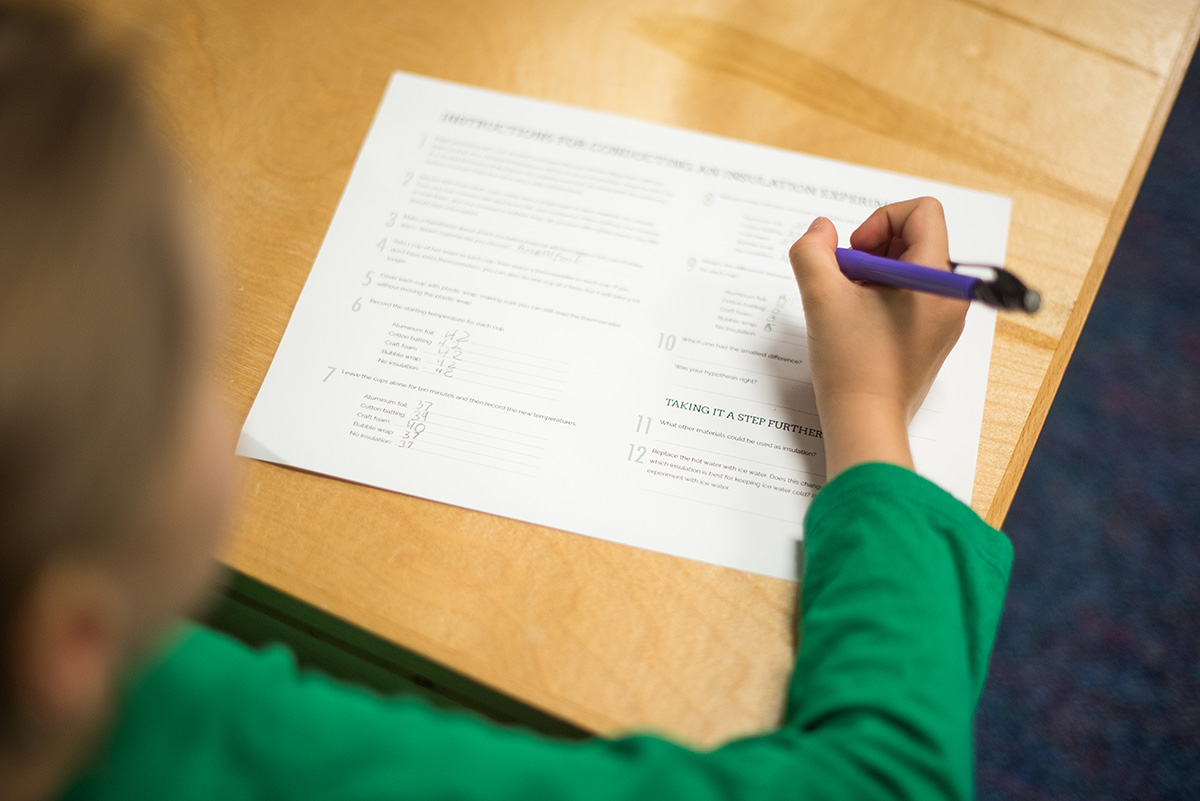
  • Insulation experiment printable
  • Ice water (optional)

insulation experiment materialsConducting the Experiment

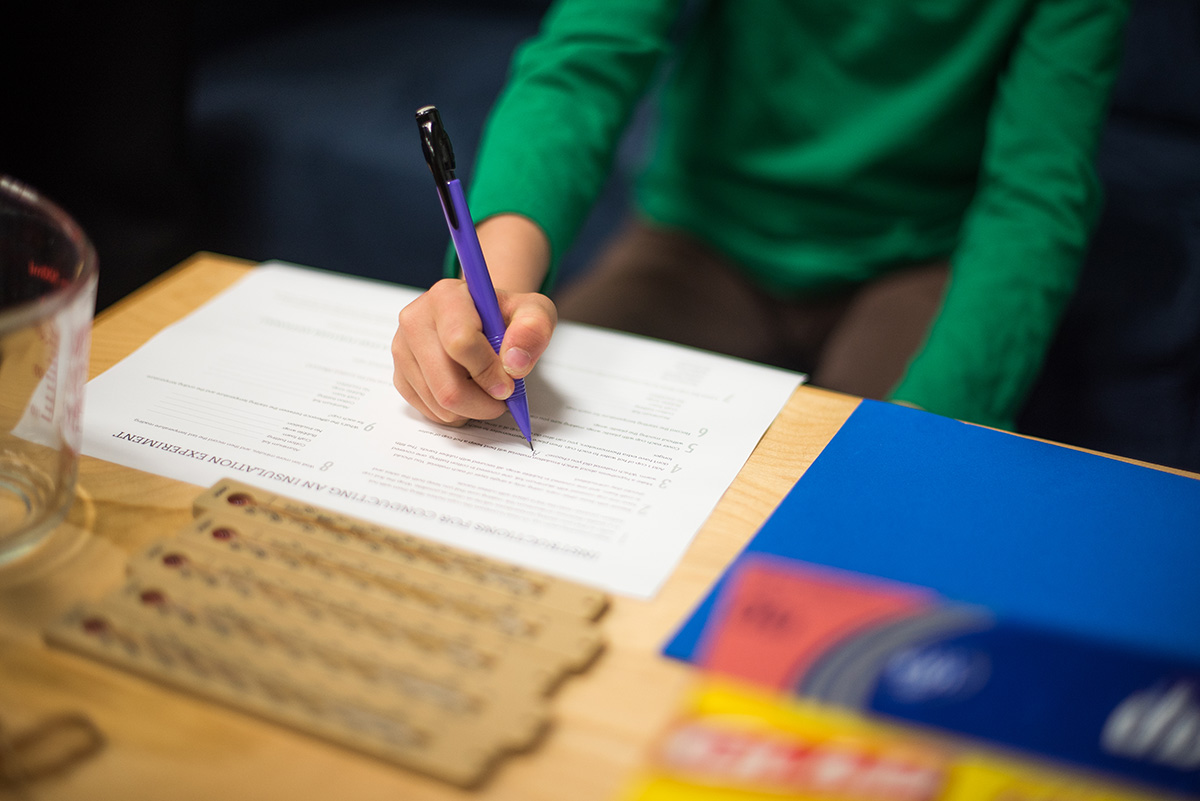
Direct your child to follow the directions on the handout, or give the following instructions orally.

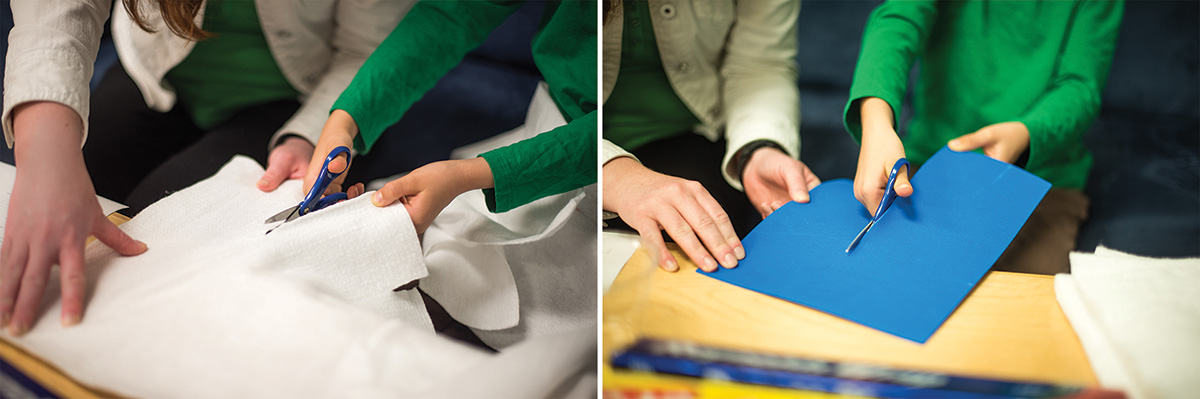
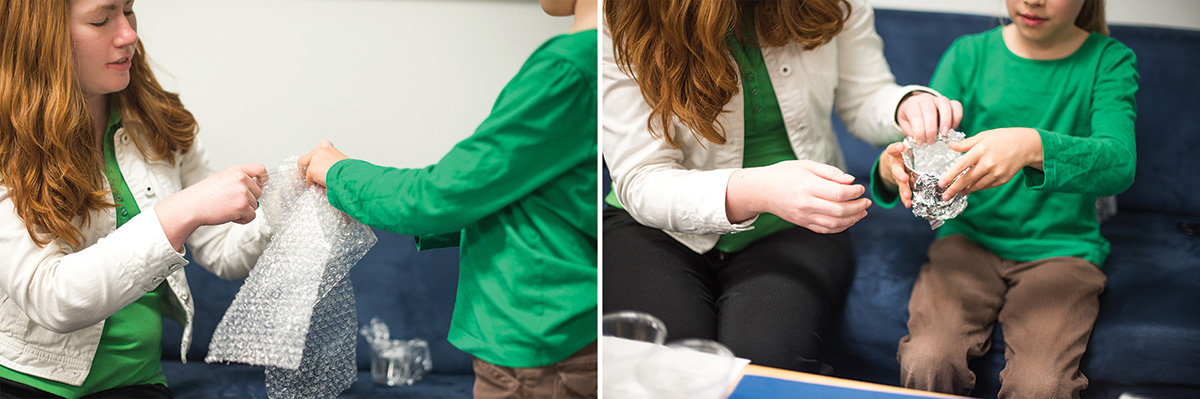
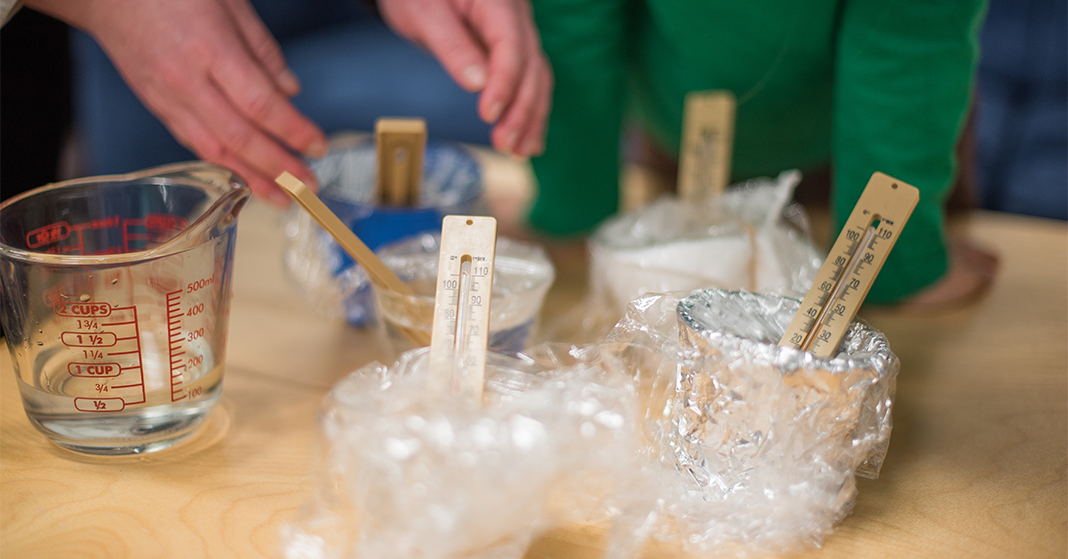
  1. Prepare four cups as follows (the fifth will have no insulation):
    (a) Wrap cotton batting around the first cup, making sure you cover the bottom as well. Use rubber bands to keep the insulating material in place. Position the rubber bands vertically rather than horizontally so they don’t slip off easily.
    (b) Wrap the second cup with craft foam the same way.
    (c) Use bubble wrap to insulate the third cup.
    (d) For the fourth cup, use a double thickness of aluminum foil. (Use two layers because foils is much thinner than the other materials.)
    It’s important to have all five cups ready before filling them with hot water so that the starting temperatures will be practically the same.insulation cutting materialsinsulation covering cups
  2. Now predict which insulation material will best keep water in the cup hot. Write your answer on the handout.
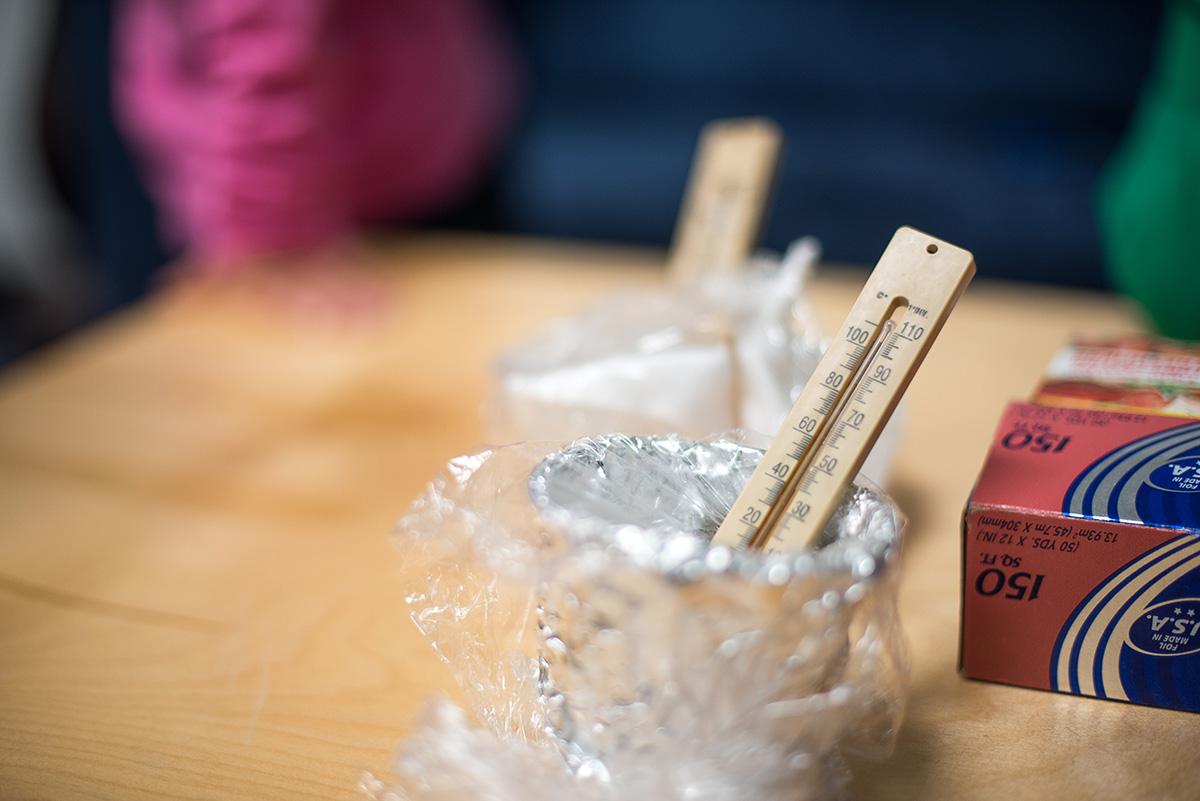
  3.  Carefully pour 1 cup of hot water into each cup, and then put a thermometer in each cup. (If you only have one thermometer, you can do one cup at a time, but it will take a lot longer.)insulation handoutinsulation thermometer
  4. Cover each cup with plastic wrap, making sure you can still read the thermometer without removing the plastic wrap.
  5. Record the starting temperature for each cup.
  6. Leave the cups alone for ten minutes and then record the new temperatures. Wait ten more minutes, and then take one more temperature reading.
  7. Substract to figure out the difference between the starting temperature and the ending temperature for each cup. Record these numbers, and decide which one had the smallest difference. Was your hypothesis right?

insulation finishing handoutTaking It Further (Optional)

  1. List other materials that could be used as insulation. Predict how well each would work.
  2. Repeat the the experiment with ice water. Does this change your hypothesis? If so, which insulation is best for keeping ice water cold?

This experiment is a great way to introduce your child to STEM activities since engineers and designers frequently rely on the principles your child is learning to create better products and materials. If we were going to make a thermos to keep hot chocolate hot—or cold milk cold—what should we make it out of?

Filed Under: Successful Learning Tagged With: homeschool science, insulation, science activity, STEM

A Blackout Poem Writing Activity

April 12, 2018 by Jenna

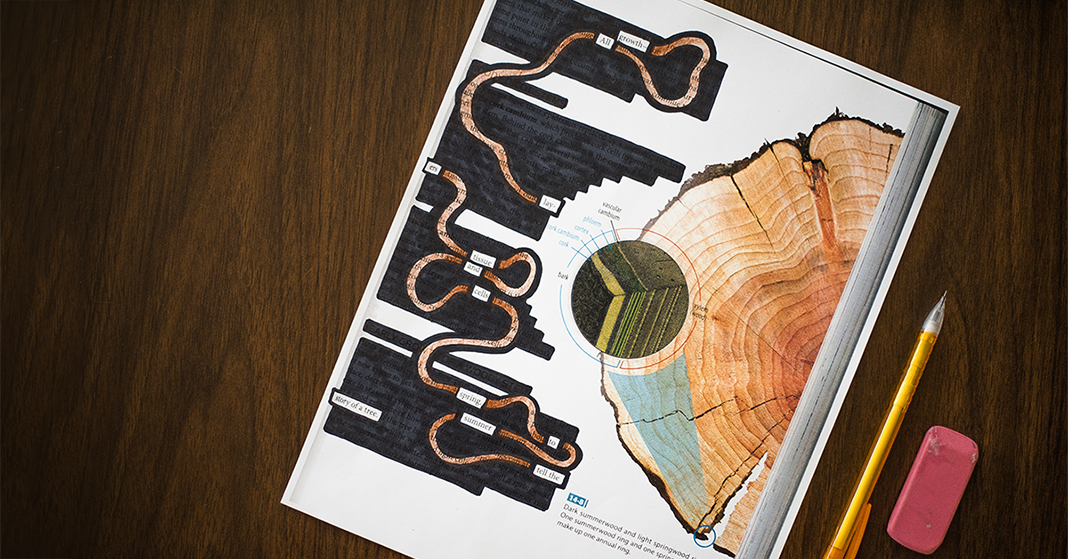
biology blackout poem
Teaching elementary poetry writing can be enjoyable, especially when working with sensory poems or even simple shape poems. And there are hundreds of engaging poems for elementary ages that can help kids get interested in poetry. One of my favorites is “I Wave Good-bye When Butter Flies” by Jack Prelutsky. But what about teaching high school poetry writing? While sensory poems and shape poems are good for any age, many high schoolers are capable of more challenging activities. A blackout poem might be just the kind of poetry exercise your high schooler will find intriguing.

What Is a Blackout Poem?

Blackout poetry is made by highlighting certain words on a published page and then marking out all the rest. You can use cheap thrift-store books you don’t want to keep or photocopied pages of books you already have. You could also use magazine or newspaper pages.

How Do You Make a Blackout Poem?

Pick a book, magazine article, or newspaper story. Any long text will work, but keep in mind that what you choose will affect the words your high schooler will have to work with. Choose material that uses descriptive language and strong verbs. And it helps if it’s about a topic he enjoys.

  1. Show him the example and explain that the goal is to “find” a poem within the text, selecting words from the text that can be connected together to make a poem.
  2. Let your teen pick a page that he thinks will give him enough material to create a poem.
  3. He should read his page several times. He’ll need to be familiar with the content in order to decide what he can do with the words. If he finds that his page won’t work, he should choose a new one.
  4. Using a pencil, he should circle or underline all the words that may be useful in crafting his poem. Knowing where conjunctions and strong verbs are will also help him in shaping the poem.
  5. Once he’s chosen his words, he should black out all remaining words on the page with a marker. Blackout poems are most often read from top to bottom and from left to right. He may need to get creative in order to clearly connect his words.

Why Blackout Poetry?

Since your teen will be creating a poem out of words he already has, this activity should work well with even the most reluctant of poets. He won’t have to come up with the ideas himself, and he can even choose a page from one of his favorite books.

By creating a blackout poem, your high schooler will learn to create a poem using just the words he has available. He may be surprised by the beauty of his final product, even if he’s skeptical at first.

Filed Under: Successful Learning Tagged With: blackout poem, blackout poem on textbooks, blackout poetry, national poetry month

The Macroscopic World: Making a Moon Model

April 5, 2018 by Jenna

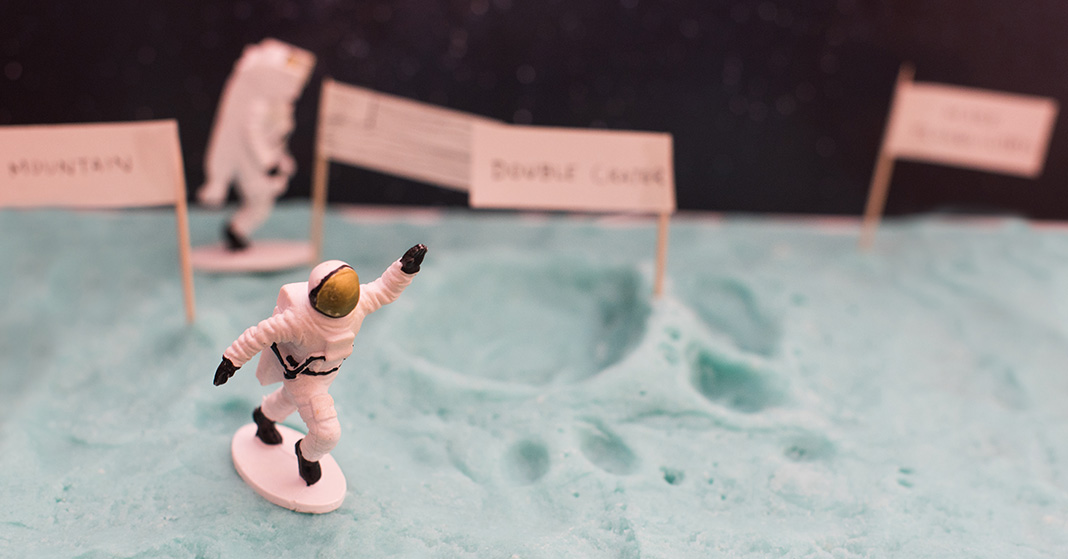
moon model landscape
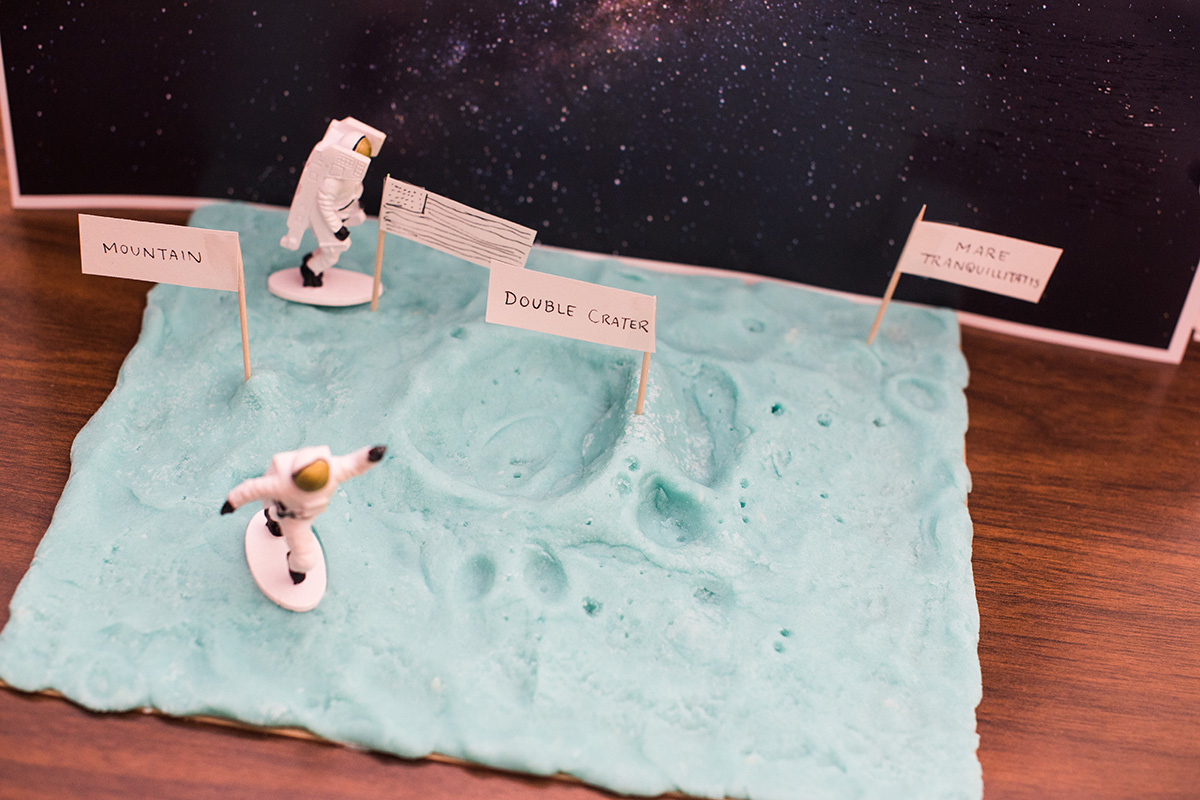
Just as it can be difficult to study the world on a microscopic level, it can also be hard to study things that are too large to make sense of. Models of large objects must be scaled down so that we can better understand them. In this activity from the BJU Press Science 4 Teacher’s Edition, we’ll create a moon model. (The clay we use here may be edible, but we don’t recommend eating it.)

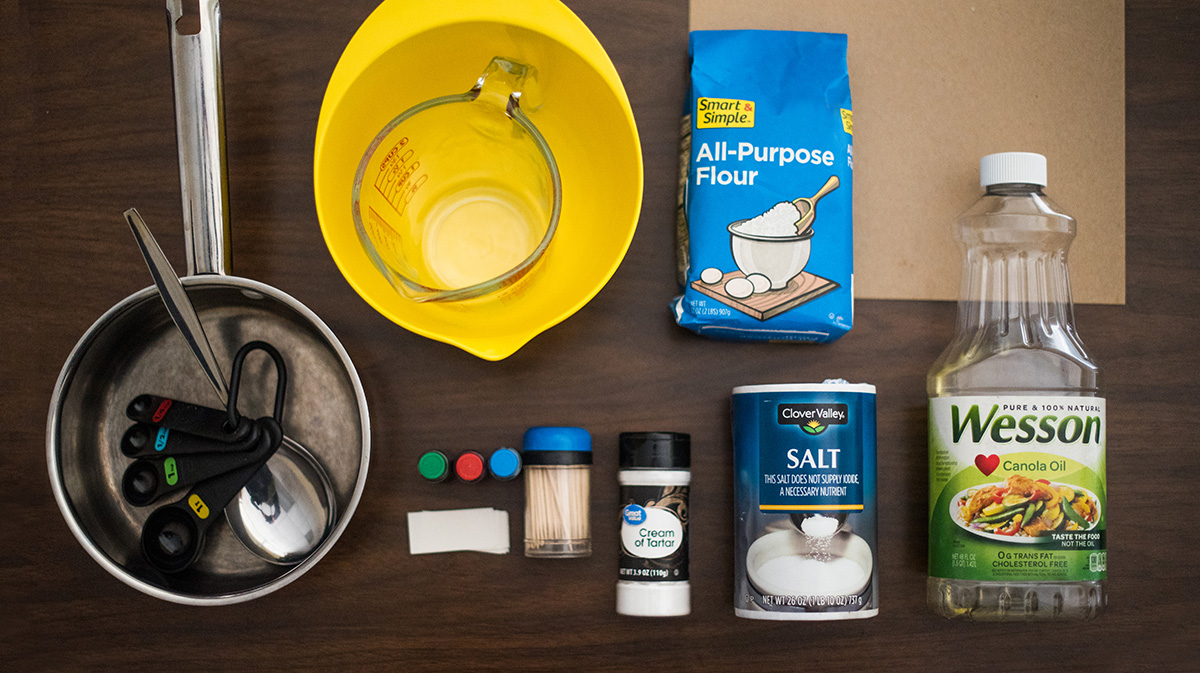
Materials for a Moon Model

  • 1 cup flour
  • ½ cup salt
  • 2 tsp cream of tartar
  • 1 tbsp cooking oil
  • 1 cup water
  • Saucepan
  • Spoon
  • 12″ x 12″ square of cardboard
  • Toothpicks
  • Paper, cut into thin strips
  • Red, green, and blue food coloring (optional)

moon model materialsMaking the Model

  1. Help your child pick an area of the moon to model. The desktop version of Google Earth will let you explore the moon’s surface in some detail. Otherwise, you can explore the moon on Google Moon. You will also find interesting facts about the Apollo space missions. We chose an area visited by Apollo 11 called Double Crater, on the edge of the Mare Tranquillitatis.
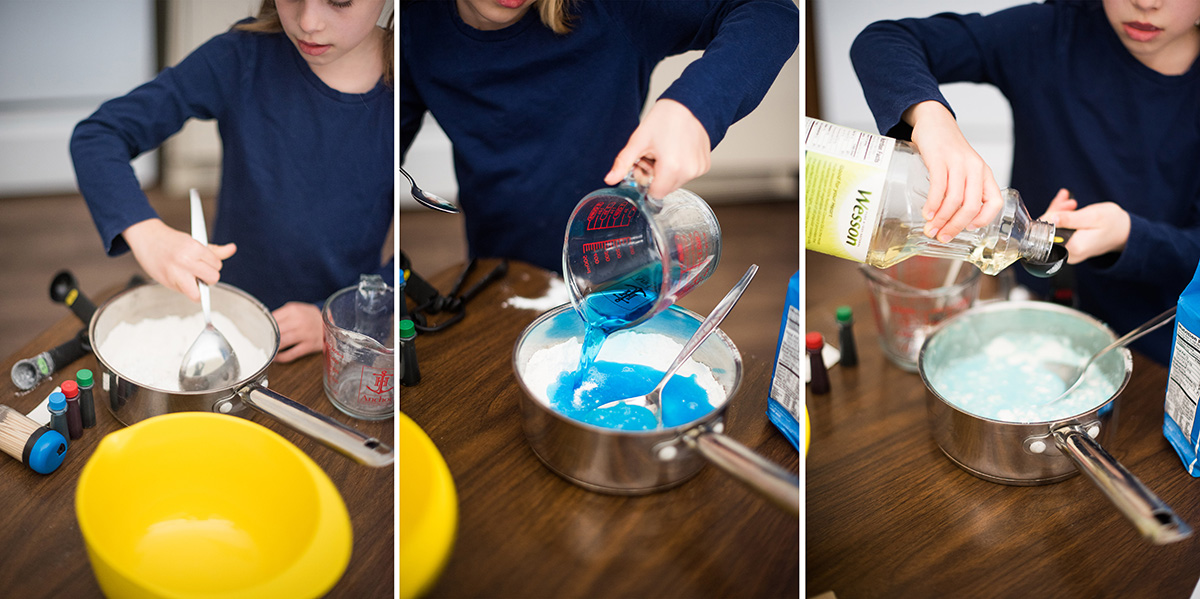
  2. Have your child combine 1 cup flour, ½ cup salt, and 2 teaspoons cream of tartar in a saucepan.
  3. (optional) If your child wants to make a model the same color as the moon, she may add 1 drop each of the red, blue, and green food coloring to the water to turn the clay gray.moon model clay making
  4. Have her add 1 tablespoon cooking oil and 1 cup water to the dry ingredients.
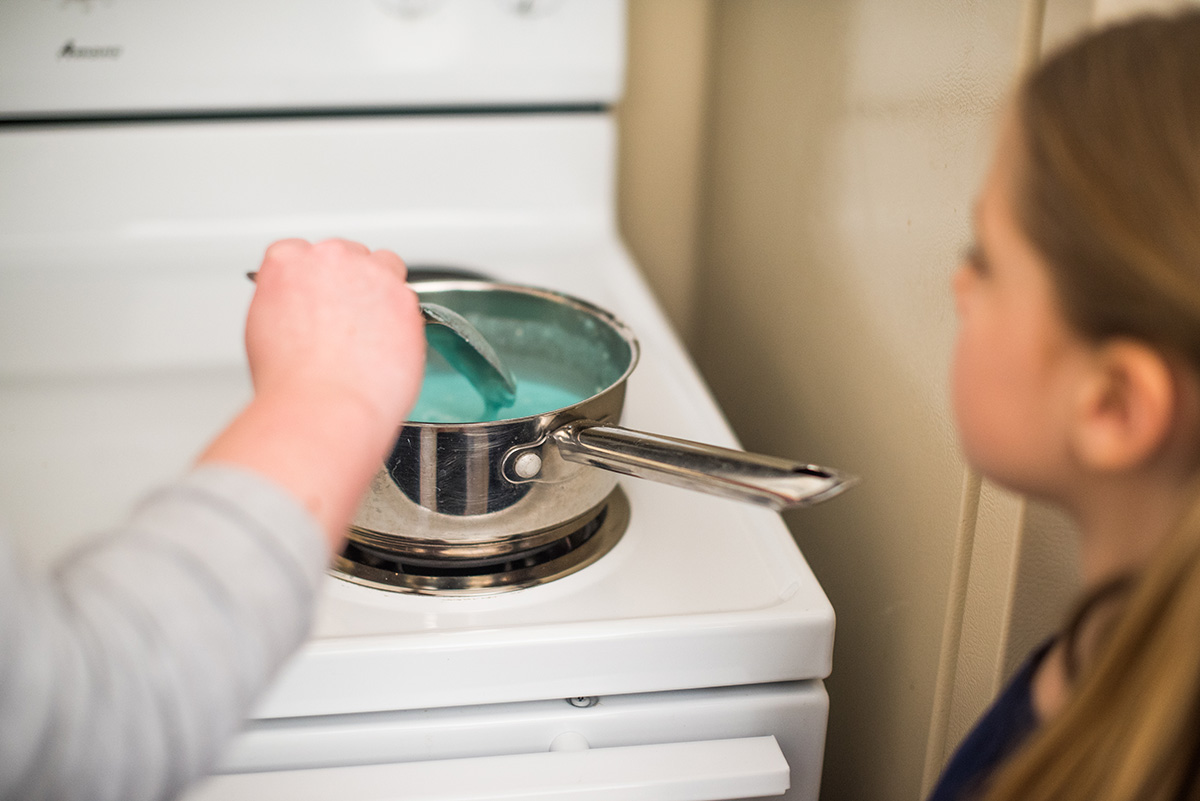
  5. Heat the mixture over medium heat, stirring constantly, until the clay begins pulling away from the pan.moon model cookingmoon model kneading
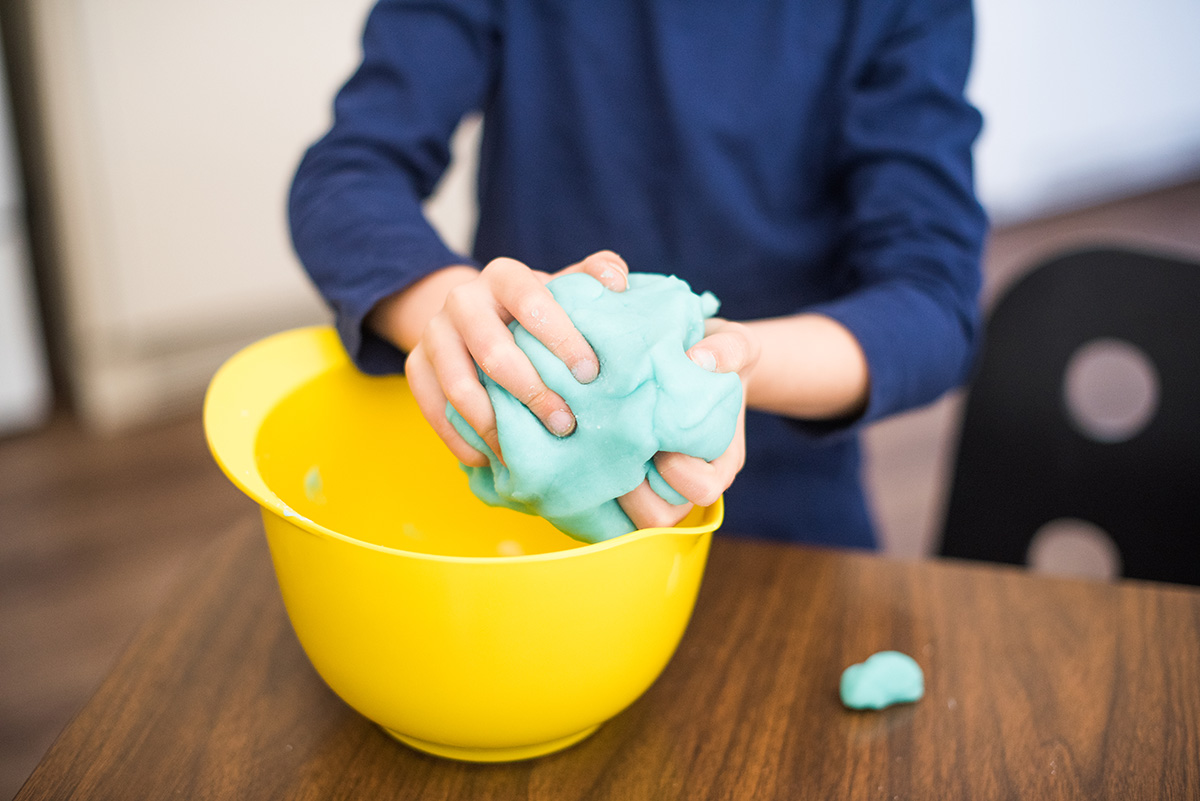
  6. Take the pan off the heat and remove the clay from the pan. Since the clay may be too hot to handle right away, this may be an excellent time to teach the benefits of cleaning as you go. Once the tools she’s used are clean and the clay is safe to touch, she should knead the clay until it’s cool.
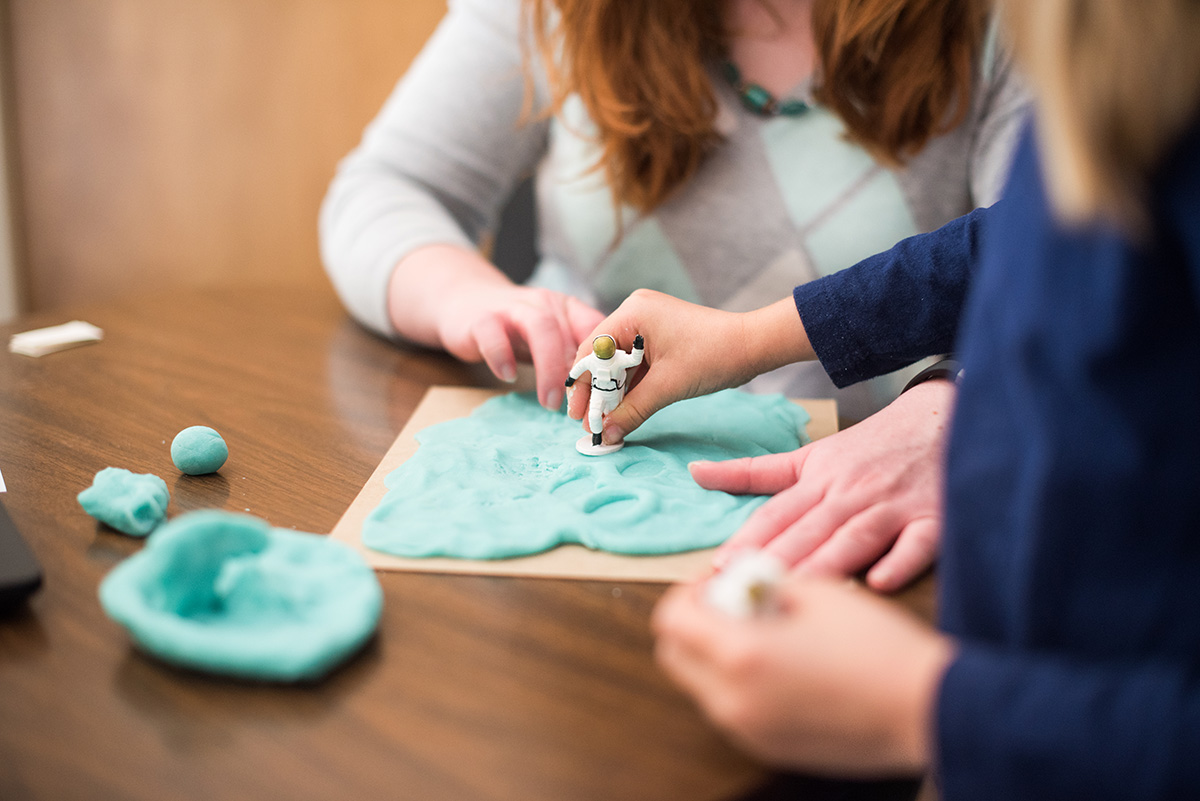
  7. Have your child spread the clay (using the cardboard as a base) and mold it to show the features of the area selected in step 1.
  8. She can use the paper strips and toothpicks to make little flags to mark important features.

Your clay will harden in about a day, leaving you with an excellent tool for activating prior learning in the future. It can become the landscape for Lego astronauts reenacting the Apollo missions, or an adventure straight from your child’s imagination. Your child will be able to add the terms she used in the lesson for the moon’s landscape to her play, solidifying learning even more.

We’d love for you to share your moon models with us! Please feel free to share your photos on Facebook or Instagram and tag us with @bjupresshomeschool.moon model moldingmoon model finished

Filed Under: Successful Learning Tagged With: homeschool science, moon model, teaching science

  • « Go to Previous Page
  • Page 1
  • Interim pages omitted …
  • Page 13
  • Page 14
  • Page 15
  • Page 16
  • Page 17
  • Interim pages omitted …
  • Page 23
  • Go to Next Page »

Primary Sidebar

As parents, teachers, or former homeschool students, we are passionate about homeschooling from a biblical worldview. We hope these teaching tips, fun activities, and inspirational stories support you in teaching your children.

Email Signup

Sign up for our homeschool newsletter and receive select blog posts, discounts, and more right to your inbox!

Connect with Us!

                    Instagram     

Read Posts on Specific Subjects

Early Learning
Foreign Language
History
Language Arts
Math
Science

Footer

Disclaimer

The BJU Press blog publishes content by different writers for the purpose of relating to our varied readers. Views and opinions expressed by these writers do not necessarily state or reflect the views of BJU Press or its affiliates. The fact that a link is listed on this blog does not represent or imply that BJU Press endorses its site or contents from the standpoint of ethics, philosophy, theology, or scientific hypotheses. Links are posted on the basis of the information and/or services that the sites offer. If you have comments, suggestions, questions, or find that one of the links no longer works, please contact us.

Pages

  • About BJU Press
  • Conversation Guidelines
  • Terms of Use & Copyright

Archives

© 2026 · BJU Press Homeschool