• Skip to primary navigation
  • Skip to main content
  • Skip to primary sidebar
  • Skip to footer

BJU Press Blog

  • Home
  • Shop
    • Shaping Worldview
  • Simplified Homeschool
  • Successful Learning

Jenna

Meet Your Online Learning Teachers: Jessica Ingersoll

March 29, 2018 by Jenna

distance learning teacher Jessica Ingersoll
If you went to school as a kid, you may have had the odd experience of running into a teacher at the store. It’s still easy for kids who go to school to forget that teachers are real people who need groceries. But for kids who use only videos, it’s even easier to start thinking of their Online Learning teachers as celebrities. It’s always fun to get to know our celebrities, so I sat down with Miss Ingersoll for an interview. Here are some things I learned about her.

She loves . . .

Food!

One of the reasons she’s excited about the World Studies course is getting to introduce her students to new foods from around the world. She has a wonderful selection of cultural cuisines lined up for her students!

Traveling!

One part of studying history and science that we don’t often consider is that it takes us to new places. Miss Ingersoll loves to travel. She’s even gone hiking in Alaska and Hawaii. In her classes, she gets to create interest in other cultures by bringing in elements of other places and times. In her elementary class, she puts on fun hats, and in world studies, she has filled her classroom with items from all around the world.

Teaching!

One big ways Online Learning differs from a regular classroom is that the teacher doesn’t always get to immediately know the impact of her teaching on her students. Miss Ingersoll wants to inspire her students to love learning. To do that, she uses various tools and techniques to make sure her students stay engaged. She keeps lessons as hands-on as they can be, and she shares interesting facts in each lesson. But she can’t help but wonder how God will use her lessons. She loves hearing from her students!

Teaching WWII!

I never thought of World War II as interesting until Miss Ingersoll started talking about it. Many of the factors in play during that part of history are things we don’t often think about, like how different cultures interacting contributed to the war and how soldiers had to make do with the equipment they had. She tries to start every lesson by being excited about the day’s topic, but I can tell she is most excited about teaching World War II.

Remember, Miss Ingersoll won’t be Miss Ingersoll for much longer. In May, she’ll become Mrs. Bancroft, and we’re all praying for her as she makes preparations!

Stay tuned for more opportunities to get to know your Online Learning teachers on Facebook, Instagram, and right here on the BJU Press Homeschool blog. If you’d like to learn more about Mrs. Walker, check out some of her secrets for unforgettable teaching.

Filed Under: Simplified Homeschool Tagged With: BJU Press Distance Learning, distance learning teachers, homeschool, homeschool teachers

Literary History: The Missing Links of Literature

March 13, 2018 by Jenna

literary history library
Do you ever feel that, even if your child is doing well in literature, he’s not actually benefiting from it? Literature was always my best subject, but there were many aspects of literature that didn’t always connect for me. I always thought the stories were interesting enough in themselves without all the historical detail. Most discussions about literary history seemed to come from the dustiest and most disused corners of the library.

It’s easy to unintentionally let literature become an island subject. Math almost demands a constant connection to reality, and science and history don’t exist without the real world. But for readers and nonreaders alike, literature can seem like a complete subject with just the stories themselves.

But literature means much more when you understand who the author is and where he or she is coming from.

Understanding Literary History Deepens Meaning

For example, take Jack London. Though London is better known for his novels Call of the Wild and White Fang, your child will study his short story “The Law of Life” in American Literature. In “The Law of Life,” the story follows Koskoosh, an old man who accepts that it’s his time to die. He can no longer contribute to his tribe, so he passively waits for the end. His tribe always leaves the elders behind to die.

I’ve never liked London’s writing because everyone always seems to die, even the dogs. But your perspective on London’s writing changes when you approach it knowing some important history.

London worked hard his whole life, whether he was writing or working in a factory. But no matter what he did, he found little success. His best-known works are all from this period of his life. His efforts to raise himself above the station of his birth largely failed for much of his life. He finally began publishing in leading magazines in the early 1900s. London lived during the height of the progressive movement in the United States and when On the Origin of Species was gaining ground in academic communities. As a result, Darwinism and the beginnings of the American socialist movement were big influences on him.

Knowing these facts, the meaning of “The Law of Life” changes subtly. It’s not just a simple story about an old man giving in to death. Instead, it becomes a statement about how a man, as little more than an animal himself, should accept the inevitability of his death. He once was able to live and contribute, but since he is no longer able, he has no purpose. He must die.

Countering Literary Ideologies Sharpens Thinking

Literature is an ideal vehicle for teaching beliefs. In a story, the author gets to tell everything from one side, and it all makes sense. But without an understanding of literary history, a child may not always see the truth about what he’s reading. After all, from a certain point of view, London’s beliefs about life and death make sense. You should replace a tool once it’s broken or too old to work, shouldn’t you? Animals are often put to sleep once they become too old and sick, aren’t they?

Looking at literature from a historical perspective gives you an opportunity to discuss many of the beliefs that authors have poured into their writings. Once your child is able to recognize the false beliefs that contribute to an idea, he should also learn how to counter them from a correct biblical worldview. Our response to Jack London’s beliefs could be to point out that people are neither tools nor animals. God cherishes the souls of His image-bearers, no matter what they’re physically capable of.

If your child learns to make connections between authors and their backgrounds and beliefs and learns how to assess the beliefs he encounters, he’ll be better equipped to face similar issues in other media, such as movies, TV shows, and even music.

Filed Under: Successful Learning Tagged With: homeschool, Literary history, literary ideologies, teaching literature

And Then . . . Story Prompts and How to Use Them

February 27, 2018 by Jenna


Some people are writers; some people aren’t. And some people learn to be writers. If you have a budding writer in your home but aren’t a natural or learned writer yourself, you may find it difficult to help your child cultivate this skill. One tool you might consider using is story prompts.

What Is a Story Prompt?

Story prompts can be short or long, funny or serious, based on fact or on fiction. There are scene prompts, first-line prompts, last-line prompts, character prompts, picture prompts, and—my favorite—dialogue prompts. But most importantly, prompts are always specific and centered on details that can capture the imagination.

A prompt doesn’t lay out the whole story. It just gives a slice of an idea that can become a whole story. For example, here’s one of my favorite dialogue prompts: “Is it a requirement for supervillains to go to lame pun school?” One writer could take this prompt and write a scene with a hero criticizing a villain’s monologue. Another might take it in a completely different direction.

The right story prompt lets ideas bloom like flowers in a garden.

How Do You Use a Story Prompt?

Writers need to be writing all the time. Published authors don’t disagree about that. And for your young writer to grow his skill, he may need more opportunities to write than a regular homeschool day may provide. Orson Scott Card once said, “Everybody walks past a thousand story ideas every day.” But even a writer may not always see them. Keeping a healthy batch of story prompts allows you to give your young writer a place to go to for ideas and a chance to use his imagination outside of regular school assignments.

The story prompts you choose for your child should call for him to write a scene, a short story, or a description of a character or setting. The response should be short but can be longer if your child wants to expand it into a well-developed story.

Possible Creative Writing Story Prompts

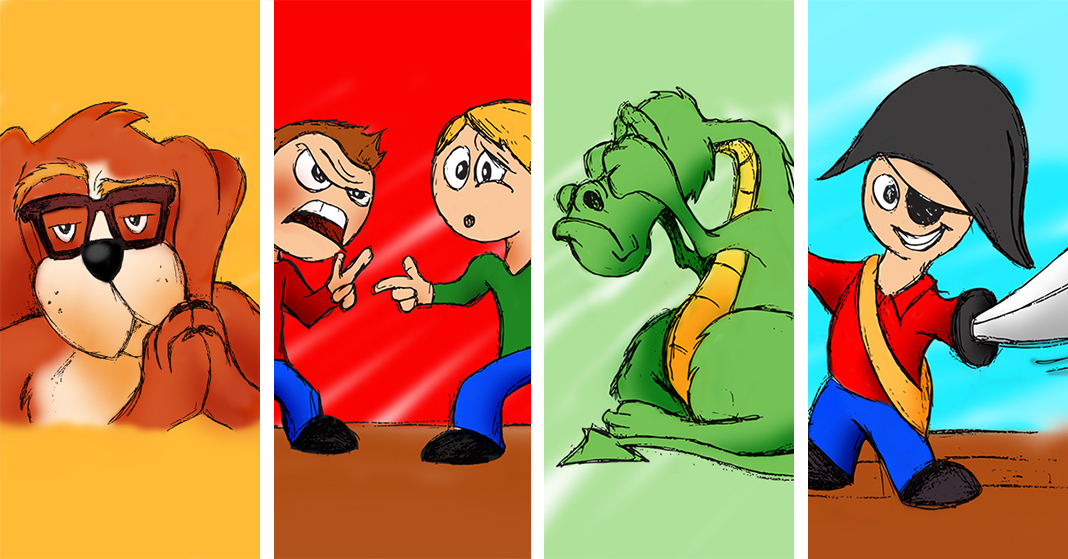
  • Write a short story that ends with “And that’s what happens when you’re raised by pirates.”
  • Start a short story with “This time, it was the princess’s turn to rescue the dragon.”
  • Write a scene in which two characters say this to each other: “So what’s your plan?” “My plan was to follow your plan!”
  • The government has developed an intelligence-boosting drug, and one of the testers’ pets has been eating it. Describe what happens to the pet.
  • Write a short story that starts with the first line of a hymn.

If you would like to print out visuals for these story prompts, download a printable version.

You could put your collection of prompts into a story-prompt jar for your child to pick from once or twice a week. What kind of stories will your young writer create? We’d love to hear about them!


Save

Filed Under: Successful Learning Tagged With: creative writing, story prompts, teaching writing

Loving Your Homeschool Pets

February 20, 2018 by Jenna

love your pet day
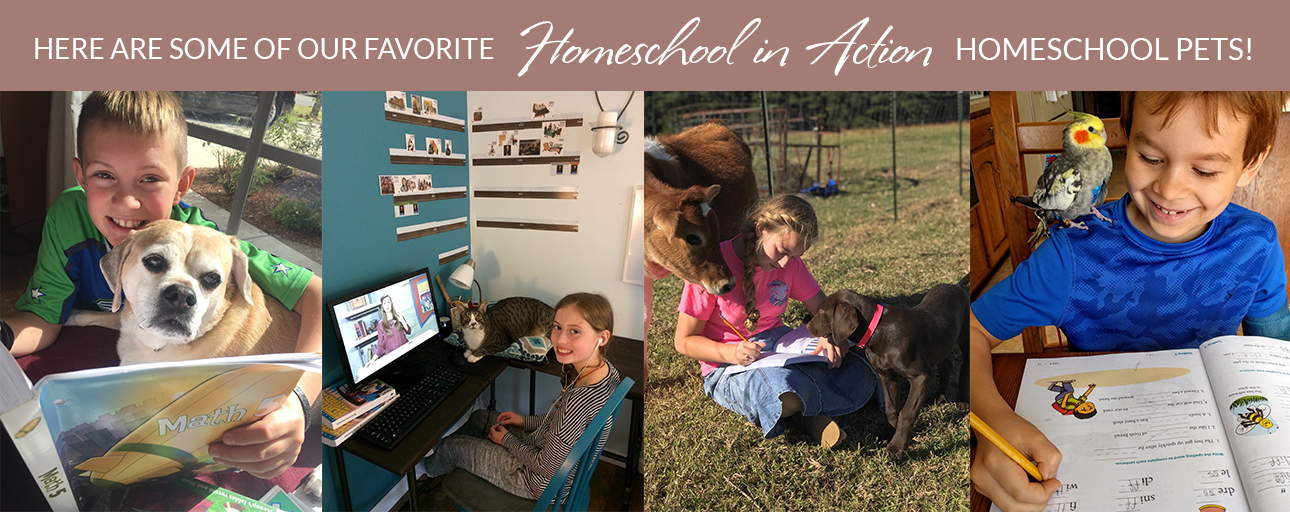
Did you know that today, February 20, is national Love Your Pet Day? It’s also the perfect day to bring your homeschool pets in on the learning.

In October last year, BJU Press invited you to share photos of your homeschool experience with us in the Homeschool in Action Photo Challenge, and one of the categories was “homeschool pet.” Inspired by some of our favorite entries to the homeschool pet category (see below), here are some little-known facts about pets.

Dogs

  • Every dog’s nose print is as unique as a human fingerprint.
  • Dogs aren’t completely colorblind. They have receptors to see blue and yellow.
  • They also have night vision.
  • Australian shepherds aren’t from Australia. They’re an American breed.

Find out more about dogs from the American Kennel Association.

Cats

  • The design of cats’ ears helps them to survive falls from more than thirty stories high.
  • A group of adult cats is called a clowder, and a group of kittens is a kindle.
  • A cat’s tongue feels rough because it’s covered with tiny barbs that direct food to the throat. These barbs also help them drink and groom.
  • When a cat rubs against you with its nose, it’s saying it likes you. Cats use the scent glands on their cheeks to mark their territory.

Get more facts about cats from Purina.

Cows

  • Cows can see in color.
  • You may have heard that cows have four stomachs, but it’s really only one with four compartments. The main one can hold up to fifty gallons of food.
  • A cow typically spends six to eight hours a day eating and just as long chewing its cud.

Learn more about cows from Farms for City Kids.

Cockatiels

  • Australian shepherds may not be from “down under,” but cockatiels certainly are!
  • Cockatiels enter their nests tail-first.
  • A cockatiel can mimic sounds much like a parrot does.

You can find out more about cockatiels from Kids Answers.

Keep an eye out on our Facebook and Instagram pages because we’ll be sharing our own pets with you soon. Want to share your homeschool pets with us? Be sure to use the hashtag #lovemyhomeschoolpet and tag us with @bjupresshomeschool.

homeschool in action love your pet day


Filed Under: Successful Learning Tagged With: birds, cats, cows, dogs, homeschool pets, pet facts

Activity: Changing the States of Matter

February 8, 2018 by Jenna

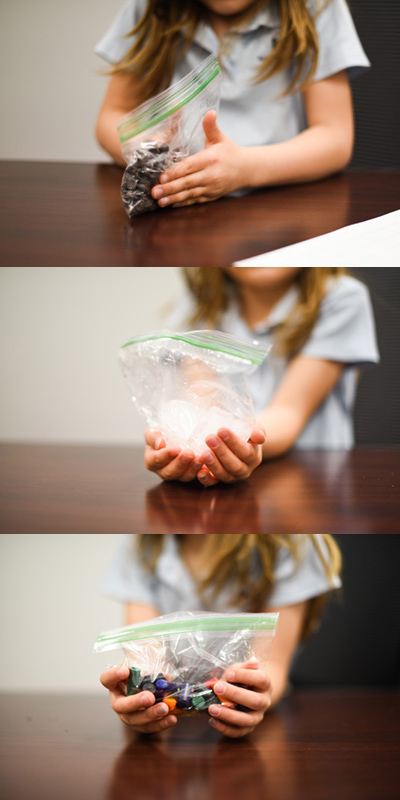
States of matter samples
As adults, we often forget that our experiences have helped us understand how God’s creation works. Your children are still looking for those experiences.

For example, how many of us have heard about a child who has misheard a hymn so that the lyrics don’t make any sense? They only need to understand the meaning once, and then the words will make sense to them. But until that happens, they will often accept the wrong lyrics without question. Similarly, they may accept that everything is matter without understanding how any of it works. Experiencing the changing states of matter helps the knowledge fall into place and become comprehension.

This activity gives your child an opportunity to both see and feel the change. And, if you’re having fun with the activity, you can take it a few steps further.

Materials Needed for States of Matter Activity

  • Measuring spoon (1 Tbsp)
  • Timer
  • Sealable bags (3)
  • Chocolate chips
  • Crayon pieces
  • Ice chunks
  • Parchment paper (optional)
  • Oven or hair dryer (optional)

Instructions

  1. Have your child measure 1 Tbsp of chocolate chips into one of the sealable bags, 1 Tbsp of crayon pieces into the second bag, and 1 Tbsp of ice chunks into the third bag.
  2. Before he starts, ask him which he thinks will melt the fastest and record his prediction on the chart.
  3. After he starts the timer, have him take a bag in his hands and rub his hands together slightly to mix the contents of the bag. Stop the timer once what’s in the bag has noticeably changed. If nothing happens after two minutes, stop the timer and move on. Record how long it took for the contents of the bag to change.
  4. Repeat with the other two bags.
  5. Ask: “Which melted first? Was your prediction right? How did each solid change? If they’re no longer solids, what are they? Describe the liquids. Are they thin? Thick? Sticky?”

Optional: Take It a Step Further

  1. Since crayons weren’t made to melt at skin temperature—otherwise they would be a parent’s worst nightmare—your child probably hasn’t succeeded in melting the crayons with his hands alone. Ask: “Why didn’t the crayons melt? What would make them melt?” Try out your child’s suggestions as appropriate (e.g., put the crayons on several layers of parchment paper on a cookie sheet in the oven or warm them with a hair dryer).
  2. Ask: “How could you turn the liquids back into solids?” Let him experiment with the chocolate chips and ice cubes in their bags and then record his results on the chart.

If you finish this project and find yourself with leftover melted ice, melted chocolate, and melted crayons, there are tons of other activities you could do with them. Maybe your kids would like to water a plant, make some candy, or do a crayon art project? Check out how we used our leftover bits in our blog post “Repurposing Leftover Crayons and Chocolate.”

Save

Save

Save

Save

Save

Save

Save

Save

Save

Filed Under: Successful Learning Tagged With: homeschool science, liquids, science activity, solids, states of matter

  • « Go to Previous Page
  • Page 1
  • Interim pages omitted …
  • Page 14
  • Page 15
  • Page 16
  • Page 17
  • Page 18
  • Interim pages omitted …
  • Page 23
  • Go to Next Page »

Primary Sidebar

As parents, teachers, or former homeschool students, we are passionate about homeschooling from a biblical worldview. We hope these teaching tips, fun activities, and inspirational stories support you in teaching your children.

Email Signup

Sign up for our homeschool newsletter and receive select blog posts, discounts, and more right to your inbox!

Connect with Us!

                    Instagram     

Read Posts on Specific Subjects

Early Learning
Foreign Language
History
Language Arts
Math
Science

Footer

Disclaimer

The BJU Press blog publishes content by different writers for the purpose of relating to our varied readers. Views and opinions expressed by these writers do not necessarily state or reflect the views of BJU Press or its affiliates. The fact that a link is listed on this blog does not represent or imply that BJU Press endorses its site or contents from the standpoint of ethics, philosophy, theology, or scientific hypotheses. Links are posted on the basis of the information and/or services that the sites offer. If you have comments, suggestions, questions, or find that one of the links no longer works, please contact us.

Pages

  • About BJU Press
  • Conversation Guidelines
  • Terms of Use & Copyright

Archives

© 2026 · BJU Press Homeschool