• Skip to primary navigation
  • Skip to main content
  • Skip to primary sidebar
  • Skip to footer

BJU Press Blog

  • Home
  • Shop
    • Shaping Worldview
  • Simplified Homeschool
  • Successful Learning

Jenna

Tips for Your Homeschool Space

July 26, 2018 by Jenna

A clean homeschool space
The summer marches on, and we’re one step closer to starting the school year back up again. Have you begun thinking about your homeschool space setup? Whether you have a dedicated schoolroom, a homeschooling corner, or just freestyle it wherever the books fall, here are some ideas to consider.

Keeping homeschool supplies condensed

Janelle Knutson shares a tour of her homeschool room, where she keeps most of her supplies condensed on three bookshelves. This way, she can have her homeschool space wherever those shelves are. The majority of her materials for four of her children, plus some toddler toys, fit on these three shelves.

Giving the kids their own homeschool space

Erica’s dedicated homeschool room at Confessions of a Homeschooler could be an inspiration to homeschool moms everywhere. Her children have their own desks, and although the furniture is identical, the children’s personalities show up in how they decorate their desks. Even though this setup is intended for a dedicated homeschool room, you could make this work without a room. Those desks really could go anywhere in your home.

Cutting down on distractions

Lara at Everyday Graces found a need for eliminating distractions when one of her boys was diagnosed with ADHD. She even simplified how she decorated her walls! You may love filling your kids’ bedrooms with fun colors and cute decorations, but that may not be the best option for wherever you homeschool, even without ADHD. In the end, Lara wound up with a much calmer, simpler room that made learning easier.

How have you set up your homeschool space? We’d love to see it!
Filed Under: Simplified Homeschool Tagged With: homeschool organization, homeschool space, organization

Creating Sets for Online Learning with Jodi Kappel

July 19, 2018 by Jenna

creating sets with Jodi Kappel
In a previous post we learned how Del Thompson influences BJU Press textbooks through art. But there’s also a lot of art that goes into creating sets for Online Learning. If you take a tour of our studios, you’ll be able to go through the scene shop, and you might even meet the person behind creating sets and props you get to see on-screen!

Jodi Kappel: Online Learning Art Director

Jodi has been the art director for eighteen years. In her position, she faces some challenges that demand creative solutions. How can she construct a unique set piece requested by the teacher? Or how is she able to change out large sets multiple times a day during peak filming season? How does she design pieces that enhance learning experiences rather than detracting from them?

Behind the Scenes of Creating Sets and Props

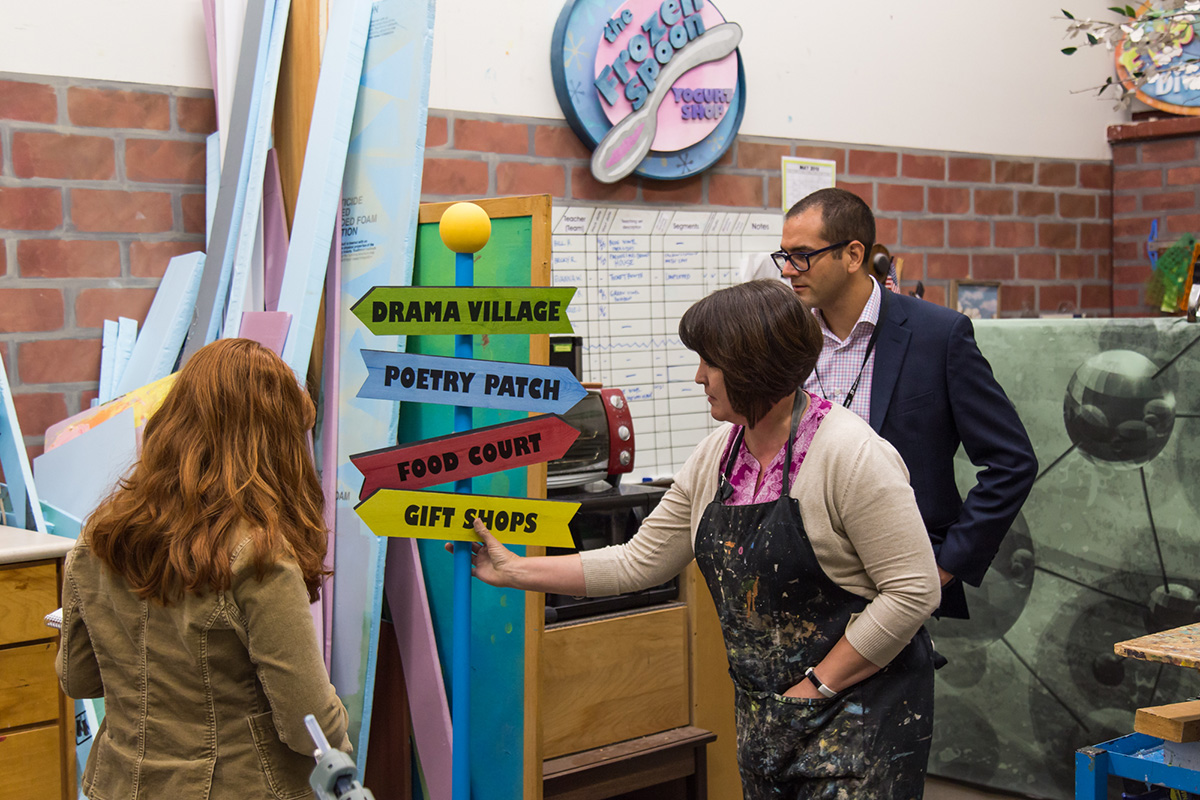
As an innovative artist, Jodi gets to take unconventional materials and turn them into incredibly realistic pieces. One of the pieces we saw when we visited recently was a special request for Mrs. Walker’s Reading 2 class. Mrs. Walker wanted a sign to add depth to her amusement park theme. Making a sign out of wood would have taken too long and would have made set changes too hard. So Jodi was able to put the sign together with an old lamp, tape, stickers, and Styrofoam. In the end, she had a fun sign that looks real, but was lighter and easier to carry.

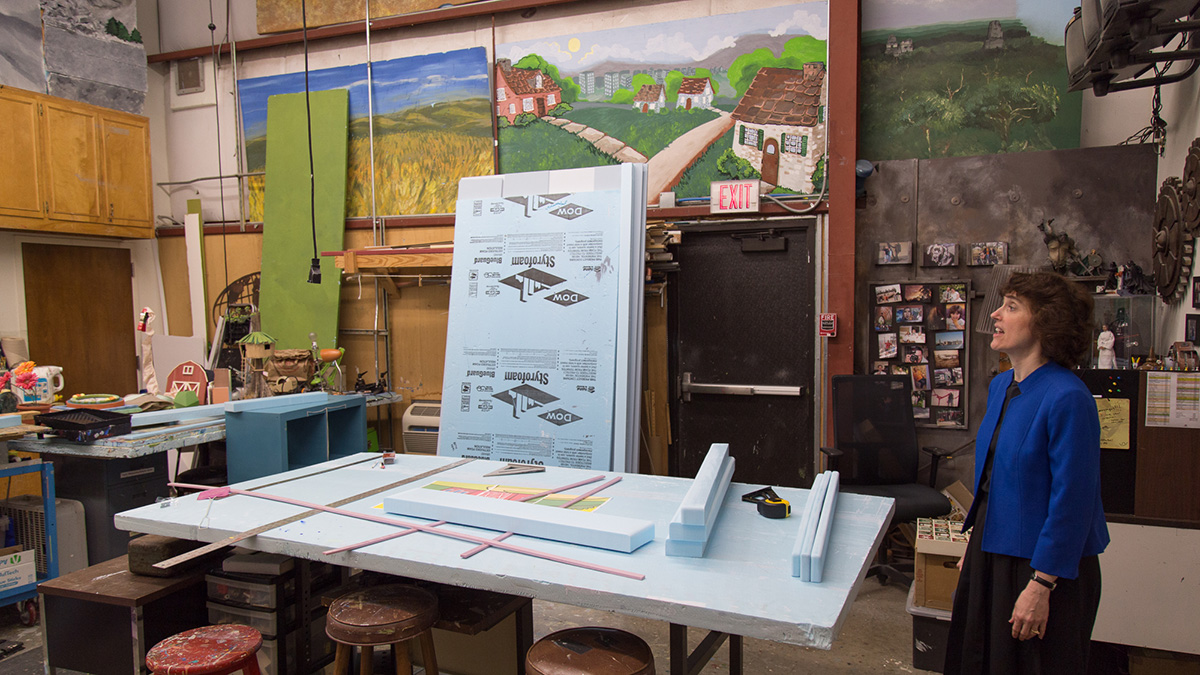
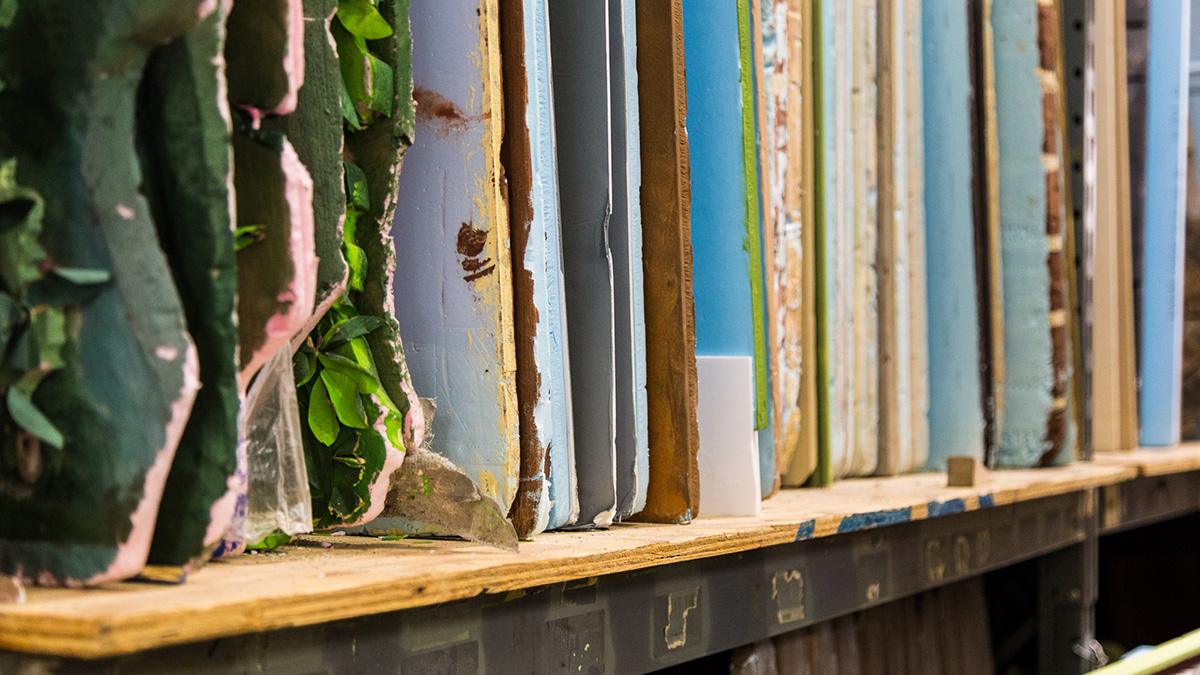
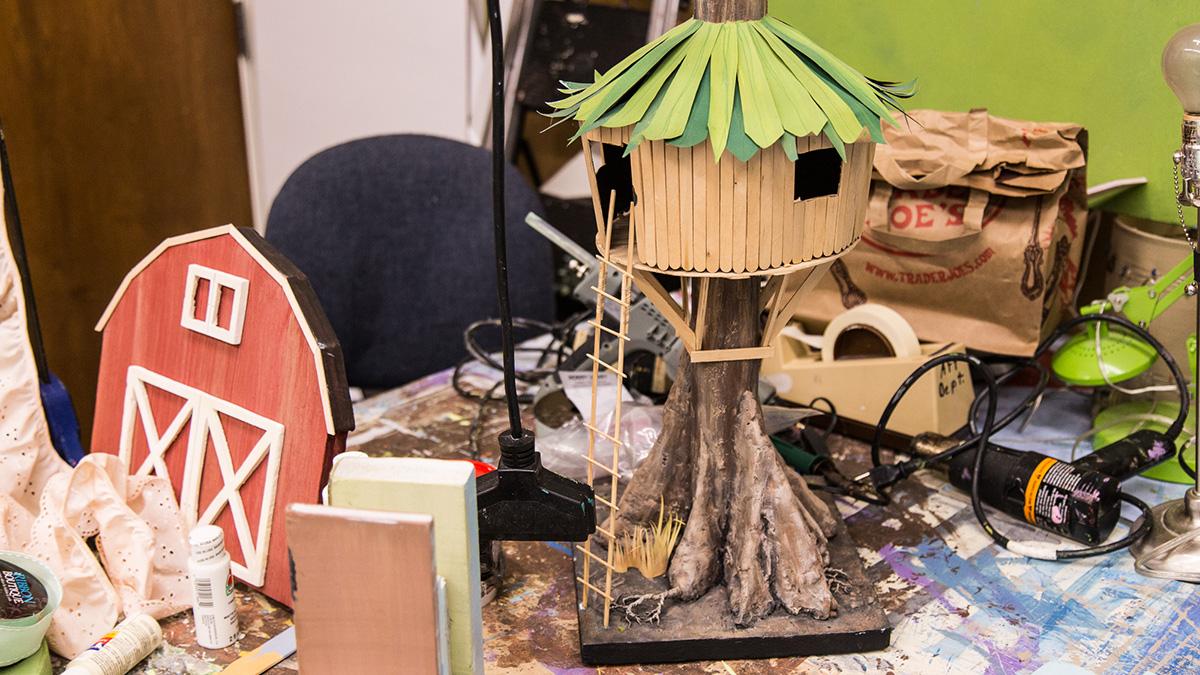
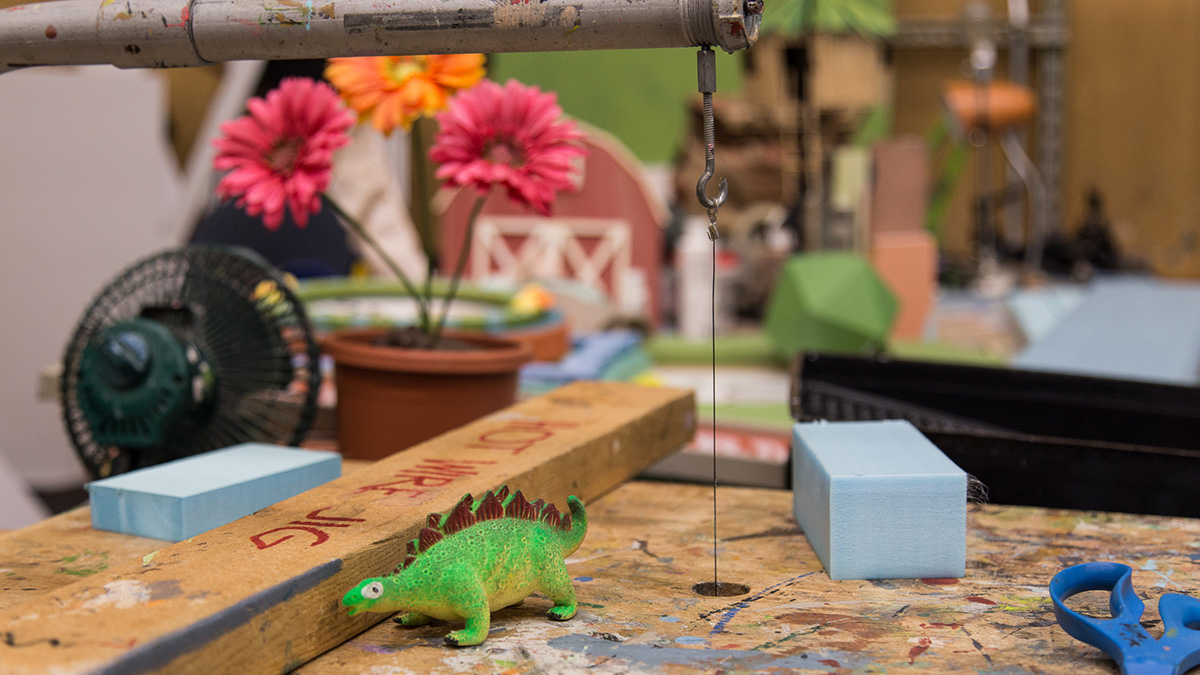
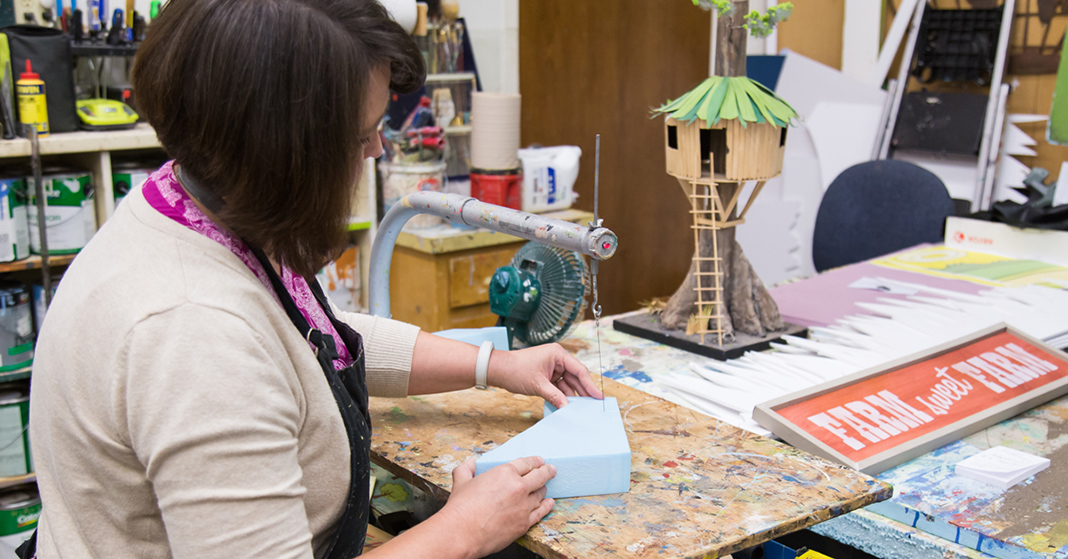
creating set piece signStyrofoam actually makes up most of the props and sets that Jodi uses for Online Learning videos. When we were there, the scene shop was full of pieces for the K5 math course that’s being filmed. She was able to make picture frames, small props, and even a large shelf—all out of Styrofoam! A special tool, a hot wire cutter, allows her to make intricate shapes and designs, and with her artistic skills she can turn Styrofoam into something that looks like real wood!
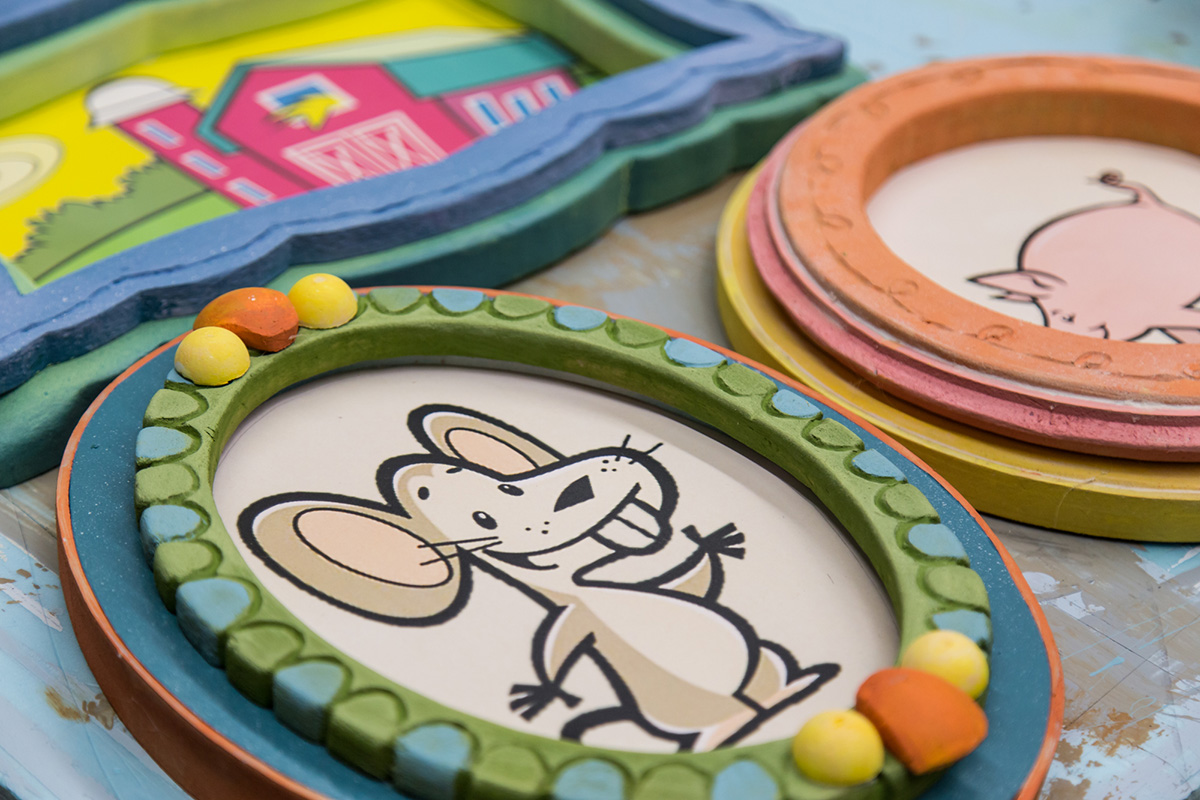
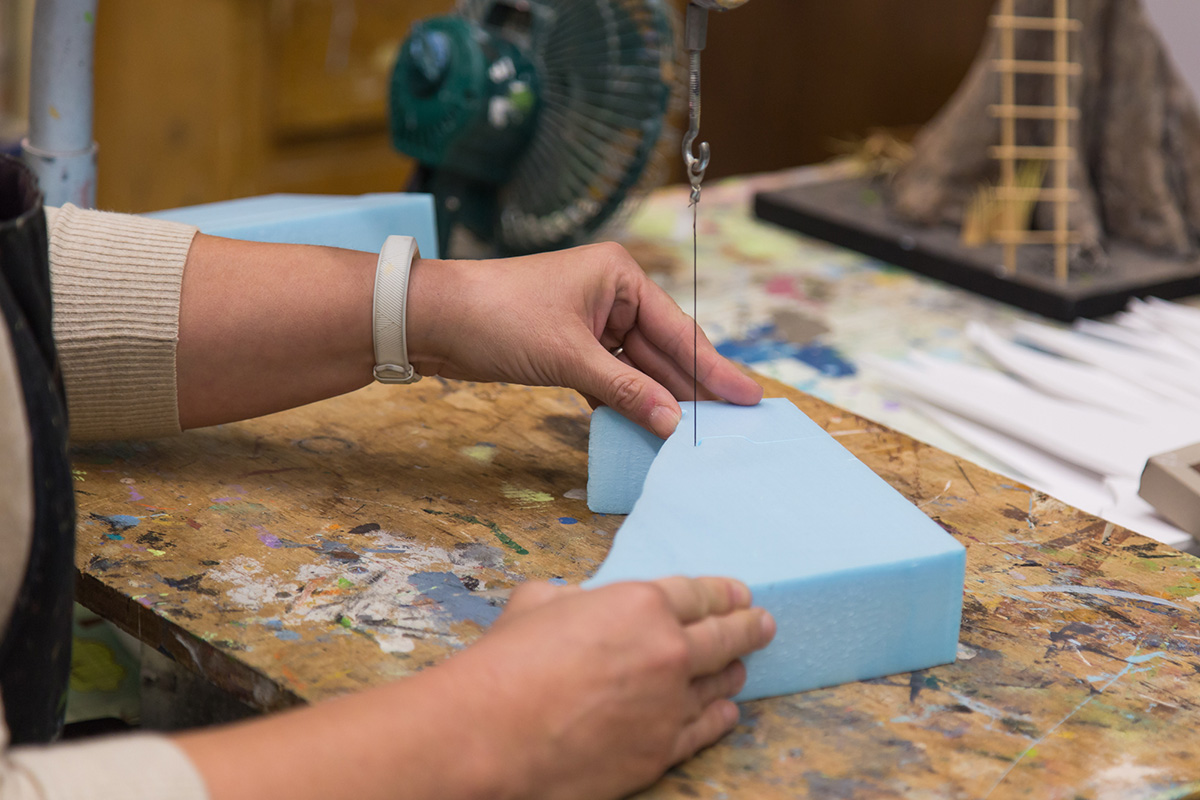
Cheddar in K5 Mathheated cord cutting styrofoamOne of our favorite pieces was a piece of apple pie that she made for Mrs. Walker. She made ice cream out of hair conditioner, water, and corn starch, and she made the pie with bread dough, Styrofoam, and hot glue—and cinnamon to make it look authentic!
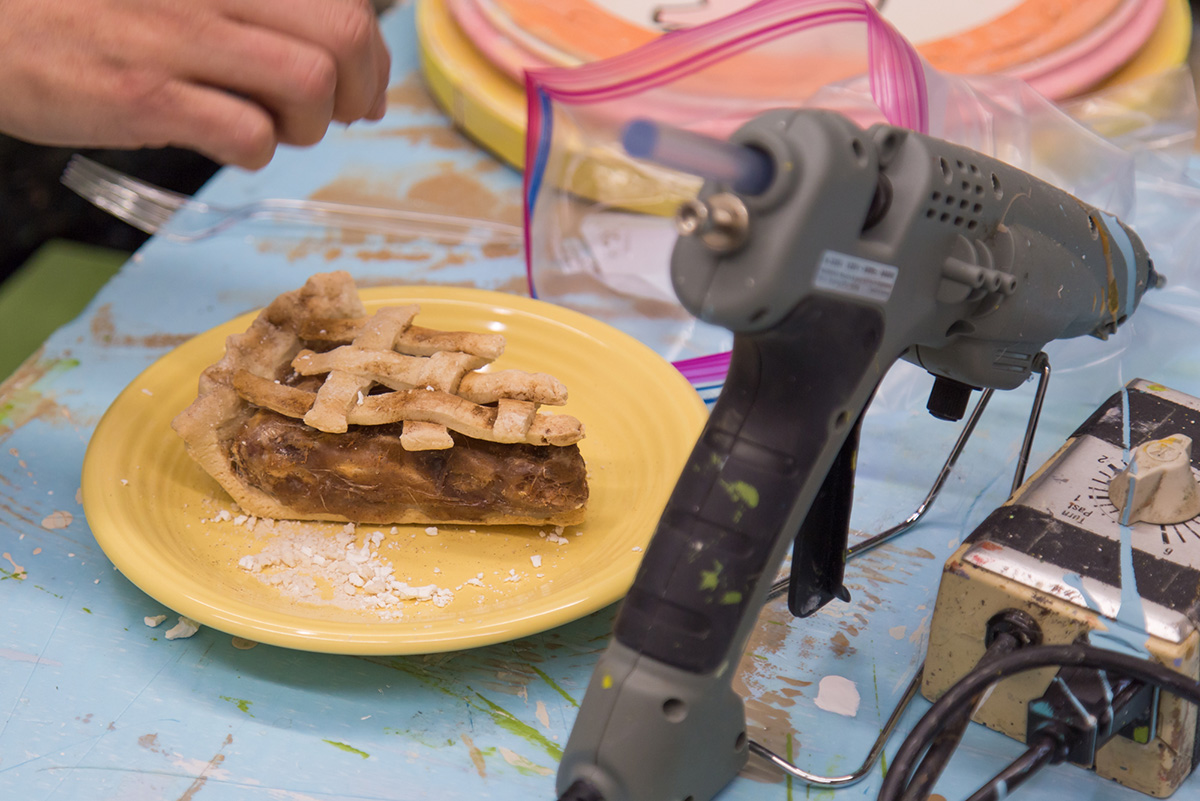
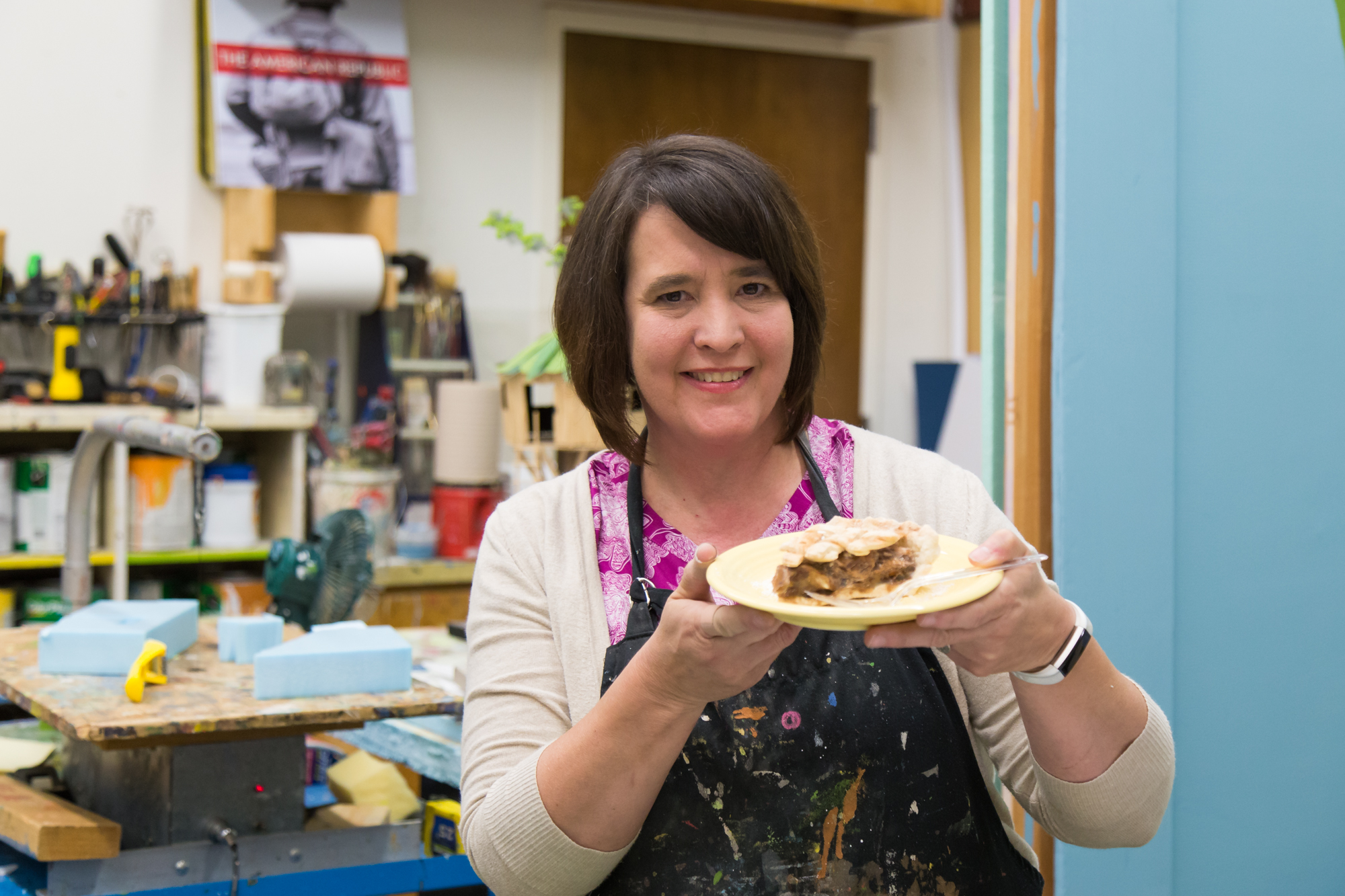
fake apple pieJodi and her realistic apple pie sliceProps and Sets on Screen

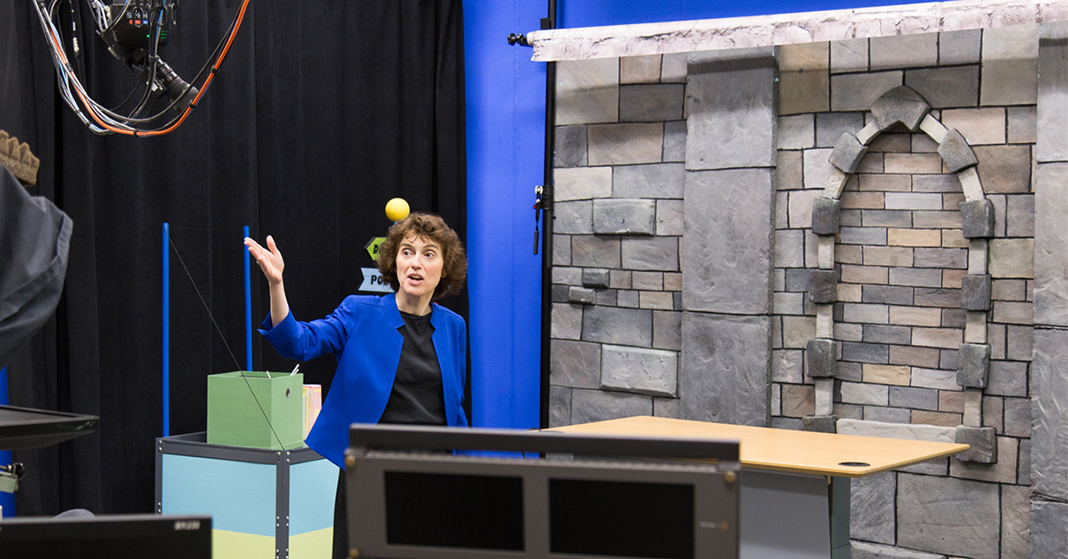
The pieces Jodi creates serve a unique function for the teachers. The props and sets are realistic enough so that they won’t distract from the lesson, yet functional enough that teachers can still use them.

The next time you see a brick wall or wooden cupboard on set, remember that everything may not be as it seems. With a little bit of creativity and innovation, who knows what you can create!

Filed Under: Successful Learning Tagged With: art and education, behind the scenes, BJU Press Distance Learning, teaching through art

Come Tour Press Studio Services

July 5, 2018 by Jenna

Jennifer leading a tour

Did you know that you can take a tour of Press Studio Services and see where your favorite homeschool video teachers get to create lessons? If you come by for a visit, you’ll get a behind-the-scenes look at where all the teaching happens and get to meet some or your favorite teachers too. So, who’s responsible for giving the tours? Recently, Jennifer Matesevac, who has many other responsibilities, has excitedly taken on the opportunity of guiding the tours of Press Studio Services.

With an infectious laugh and an enthusiasm for meeting new people, Mrs. Matesevac takes each tour group through the most interesting parts of the video operation. When we met with her, we were able to see firsthand the places she loves to show to homeschool families.

Featured on Your Tour

Teacher meeting place—She usually begins or ends your tour here with the teachers you requested. The teachers have busy schedules, so if you want to meet your child’s teacher, be sure to schedule your tour early.

Studios—One of the next places you’ll visit is the studios where the teachers record their videos. You might even get to see a teacher recording in progress. What courses will be recording in the studios you get to see?

Scene shop—When you stop by the scene shop, you will meet one of our artists, who designs and creates the sets for the video studios. With a floor like a Jackson Pollock splatter painting, the scene shop is full of current and past projects. You might even get a chance to see an older set from your favorite class. Be sure to ask what the scene shop is working on right now too!

Jennifer touring the scene shop

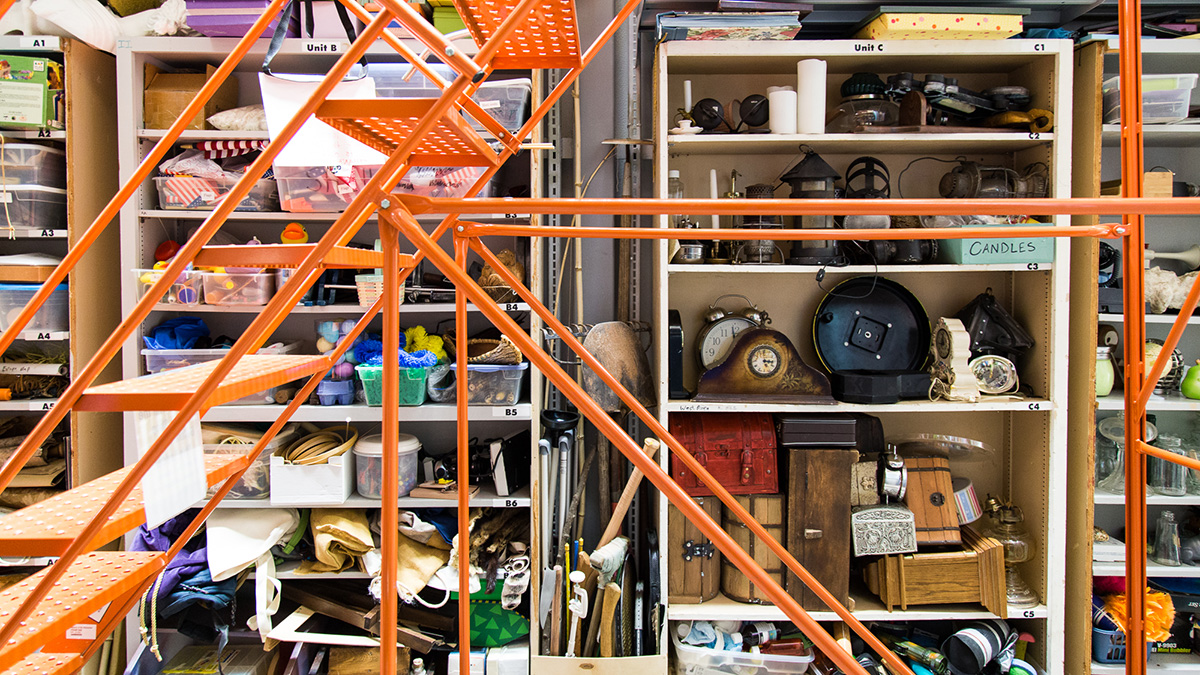
Props and backdrops—Do you know what the sets (and many of the props the teachers use) are made of? In this part of the tour, you’ll get to see many of the sets and props from the classes you’ve taken. You might also see some new items for classes currently being recorded.

old set tour

How to Organize a Tour

  • Choose a date or two when you can come to Greenville, SC, for a visit!
  • Click on this link (https://www.bjupress.com/tours.php) to fill out our BJU Press Tour form.

We hope to see you soon!

old props tour

scene shop tour

reserved props tour

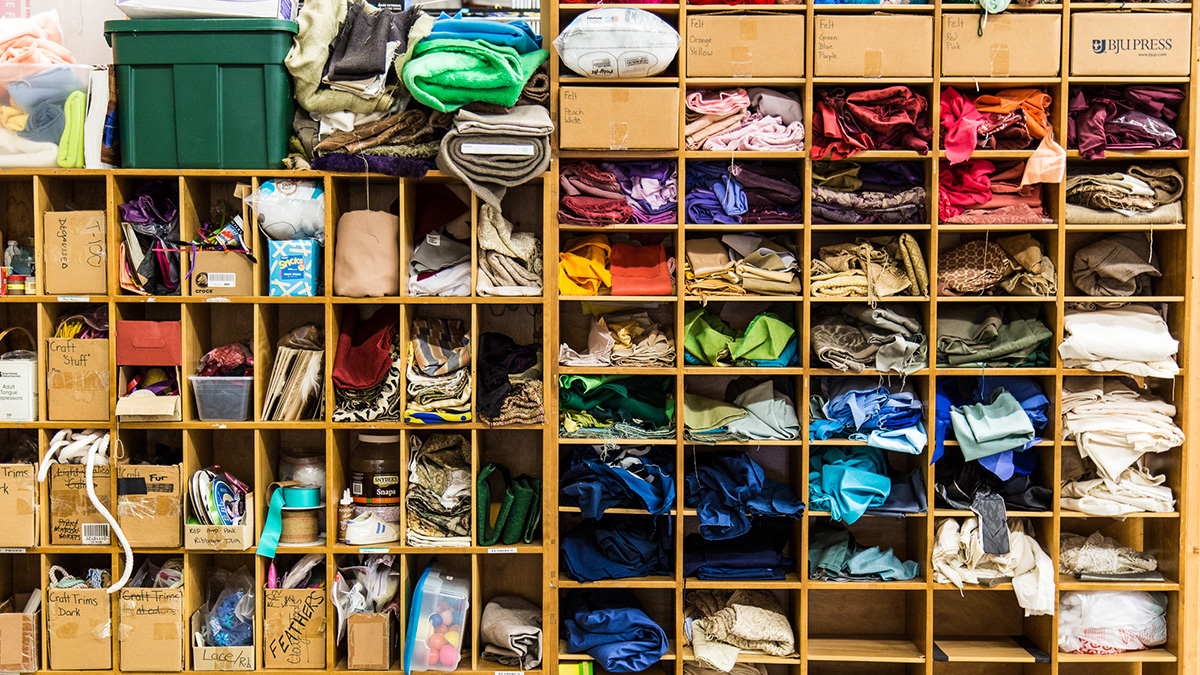
costume fabrics tour

Filed Under: Simplified Homeschool Tagged With: distance learning, studio tour, tour

Celebrating Independence Around the World

July 3, 2018 by Jenna

celebrating independence with fireworks
Are you ready to celebrate the Fourth of July? Most families across the nation share similar traditions for this holiday. Who doesn’t have fond memories of family picnics and then waiting for nightfall to enjoy a spectacular fireworks display? Celebrating independence is a key element of our American culture. But America isn’t the only nation that celebrates its independence. Have you ever wondered how other nations celebrate their independence? Here are some Independence Day traditions from other nations.

Celebrating Independence in Mexico

Mexico’s united cry of Viva Mexico makes the nation stand out. Though many Americans are familiar with the text of our Declaration of Independence, those words never became a part of our traditions. The story of Mexico’s independence shows just how powerful such a declaration can be. In the little town of Dolores on September 16, 1810, a priest named Miguel Hidalgo rang the church bell to summon the town. With a speech, he called the people to war. His speech sparked the war for independence against Spanish rule. The exact words of his speech are lost to time, but it’s now known as El Grito de Dolores—the Cry of Dolores. Today, El Grito officially begins Independence Day celebrations. The Mexican president reenacts El Grito, ringing a bell at the National Palace and reciting a version of Hidalgo’s words. At the end, crowds erupt in unison with ¡Viva México!

Learn more about Mexican Independence Day traditions!

Celebrating Independence in Malaysia

Like many other nations, Malaysia celebrates its independence with parades and fireworks, but it takes a different approach to the themes of its celebrations. As a nation made up of several different people groups, Malaysia can’t depend on similar ideologies to create unity in its people. Instead, it sets a new theme to focus on each year for its Hari Merdeka—Independence Day—on August 31. These themes often focus on Malaysia as a nation or on unifying values. Past themes have been “Because of You, Malaysia” (2000–2006), “Good Values Make a Successful Society” (1997), and “Together Towards Vision” (1993).

Celebrating Independence in Finland

We all know the story of Paul Revere’s ride and the significance of one or two lanterns, but in Finland, two candles in a window mean something entirely different. Before gaining independence, Finland was  part of the Russian Empire. Even though the nation had its own government, it still suffered great oppression under the Russians. Traditionally, the people would place two candles in their windows as a silent protest against the empire.

However, the candles got a new meaning during World War I. Many young Finnish men traveled to Germany to volunteer for the German army. There, they would be trained as elite infantrymen called jägers. Since the journey from Finland to Germany was dangerous under Russian rule, families would offer the soldiers-to-be food and shelter by placing two candles in their windows. Even though the jägers weren’t able to return home until after Finland gained its independence on December 6, 1917, these expert soldiers made great contributions during the Finnish Civil War and later defended their country against the Soviet Union in 1939. Today, many of the Finish people still place candles in their windows in honor of those brave soldiers.

Do you know of any other Independence Day traditions from around the world?

Filed Under: Successful Learning Tagged With: freedom, holiday, Independence Day

An Artist’s Vision for Textbooks

June 7, 2018 by Jenna

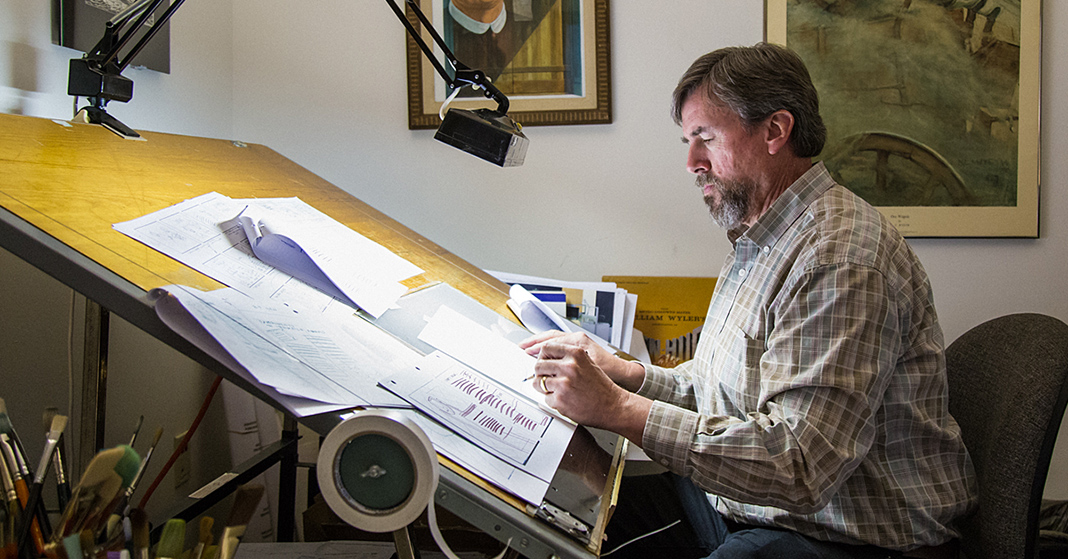
artist's vision for textbooks
What does art have to do with learning? The team that creates your homeschool curriculum is much more than our Distance Learning teachers and writers. We also have experienced designers who carefully consider how the look and layout of a textbook affect a child’s learning. We’d like to introduce you to someone who plays a vital role in shaping our textbooks.

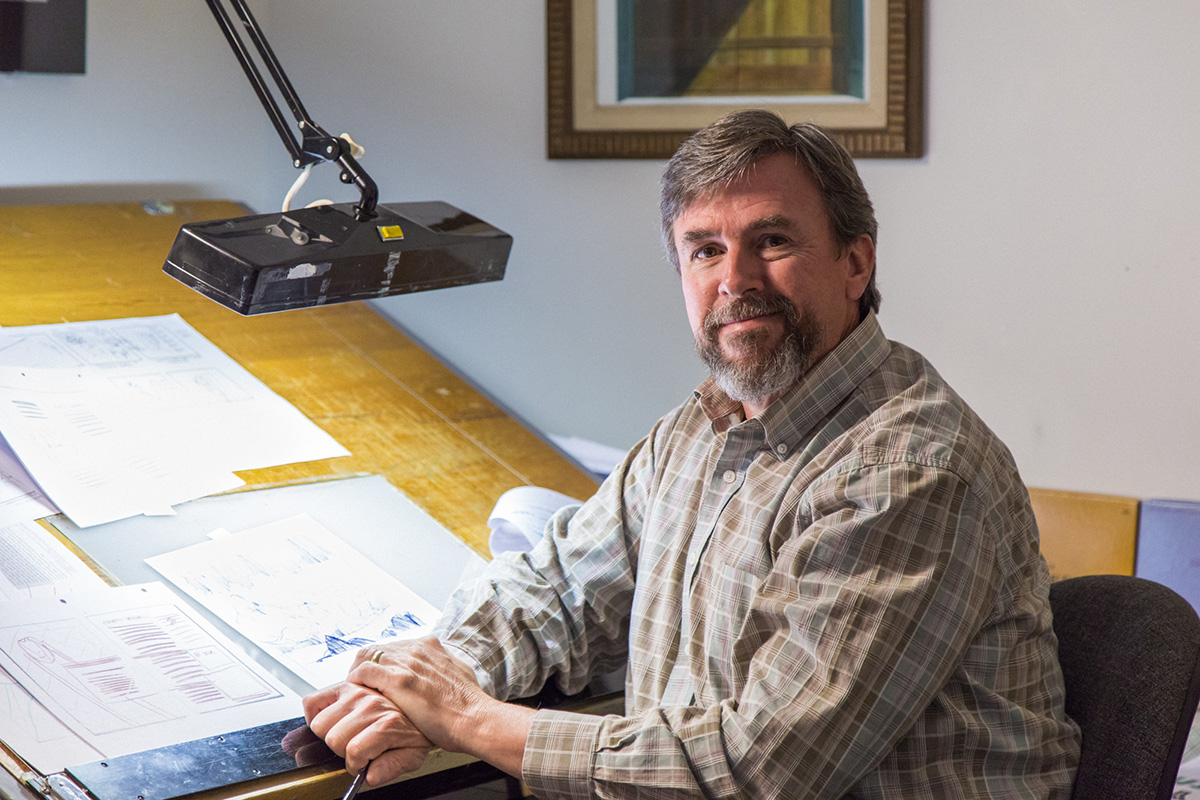
Del Thompson: Lead Artist

Illustrating Learning in Textbooks

Del is a man who tries to approach everything in life with passion and joy. He first started working at BJU Press in 1978 as an art and design student. He took a job in paste-up—putting together textbook pages by gluing clippings of text and images to cardstock—and soon became a regular student worker. In the summer of 1979, he became an illustrator. He found many opportunities to apply what he had learned in class to his work, and that process was vital to his education. One of his favorite recent projects was the K4 Bible cards.

Working on the K4 Bible cards seemed like a dream job to him. As an illustrator, he embraced the opportunity to challenge artistic traditions in Bible story art. For example, Bible scenes often show Jesus and Abraham wearing the same kinds of clothes, but would a man from Ur  around 2000 BC and a Nazarene of the first century have dressed the same way? You might find some of his corrections to typical representations of Bible times in the Bible Truths K4 Teaching Cards.

designing textbooksMaking Art Do More

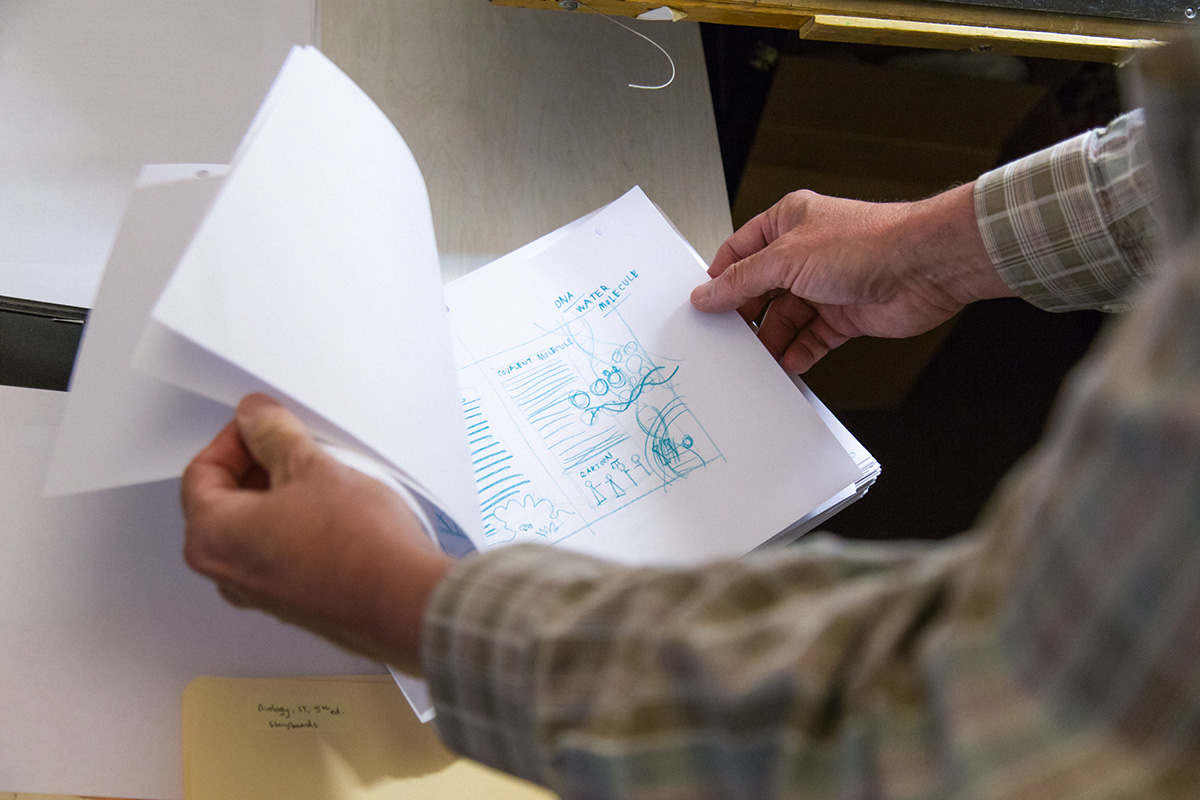
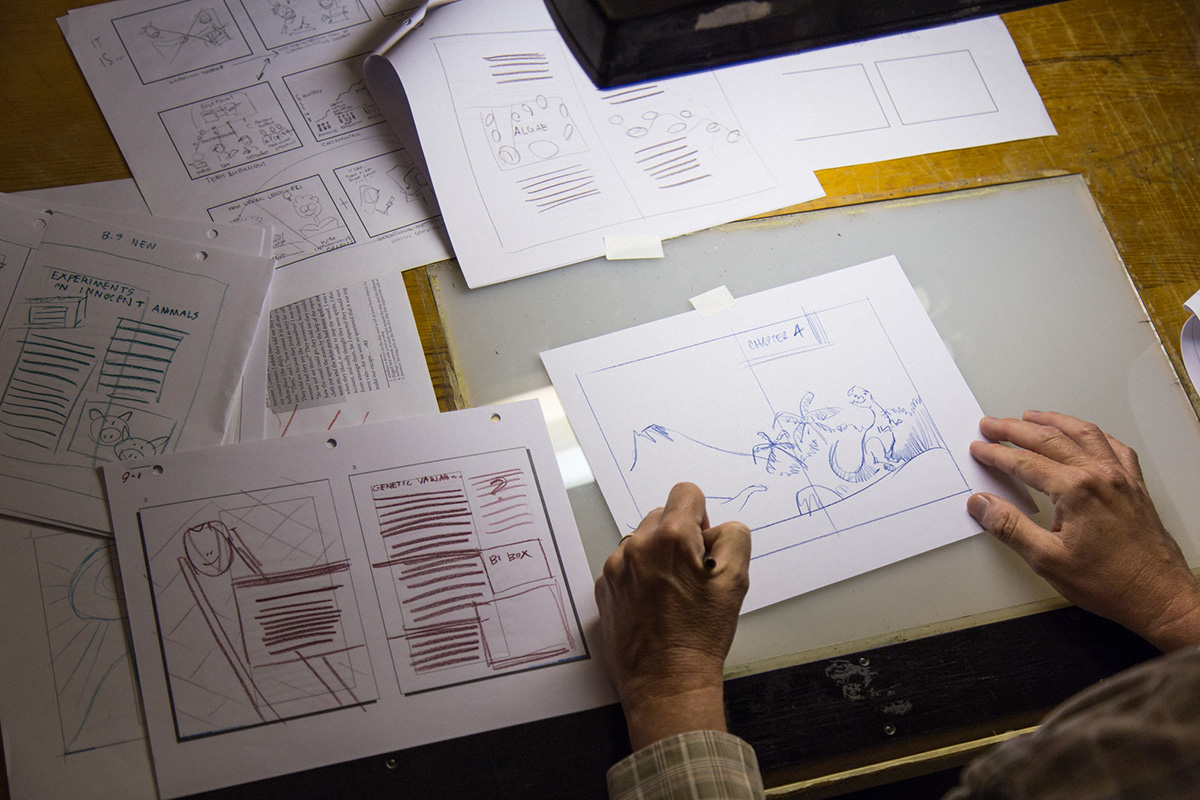
In 2011, Del became the art and design manager over the art department. Since then, he has been unable to do as much illustration work as he would prefer, but he has brought together the textbook development teams in a special way by introducing the concept of storyboarding—and adding more snack times. With storyboarding, the designer lays out a project from start to finish to see how it works as a whole. The film industry and other publishing companies often use storyboarding, but it hasn’t always been applied to textbook creation. Pushing the content development teams toward storyboarding introduced them to opportunities for working together that go beyond the efficient.

Del says, “If you know what you’re doing from beginning to end, you can build toward that ending in a much more intelligent fashion.” Content teams now have the opportunity to work together to lay out the strongest product possible. Additionally, Del was able to help everyone on the art and design team to see imagery not as decoration, but as content. Sarah Lompe, one of his illustrators, was able to work with the writers to transform what would have taken several pages to explain into a beautiful piece of art that fused words and images to convey the concepts. You can see this throughout the Biology (5th edition) student text!

textbooks mockupEmpowering Learning Through Art

Del thinks that art in a textbook should travel “the shortest distance from the writer’s brain to the student’s,” which means he doesn’t want to make the content harder to understand. His efforts have thrown new light on the notion of academic rigor. Academic rigor doesn’t mean making concepts harder to learn. Academic rigor means including difficult content but making it attainable for young minds.

He believes that “if a book is put together with a lot of joy (like when you read a novel, and somebody is having a blast writing it), somehow it bleeds through the type. And if a textbook is put together with the same enthusiasm, it will somehow bleed through that text in a way that it becomes more than the sum of its parts.” And that is what Del and his team strive for in each of the textbooks they work on.

Your children may not always realize that the design of their textbooks is helping them learn. They may appreciate the pictures and be thankful for white spaces, but it’s not always obvious to them that those pictures and white spaces teach just as much as the text itself. The next time you’re noticing the color and beauty of your textbooks, take a moment to consider how that color and beauty helps your children to learn better.

textbook artist

Filed Under: Successful Learning Tagged With: academic rigor, art & design, illustration

  • « Go to Previous Page
  • Page 1
  • Interim pages omitted …
  • Page 12
  • Page 13
  • Page 14
  • Page 15
  • Page 16
  • Interim pages omitted …
  • Page 23
  • Go to Next Page »

Primary Sidebar

As parents, teachers, or former homeschool students, we are passionate about homeschooling from a biblical worldview. We hope these teaching tips, fun activities, and inspirational stories support you in teaching your children.

Email Signup

Sign up for our homeschool newsletter and receive select blog posts, discounts, and more right to your inbox!

Connect with Us!

                    Instagram     

Read Posts on Specific Subjects

Early Learning
Foreign Language
History
Language Arts
Math
Science

Footer

Disclaimer

The BJU Press blog publishes content by different writers for the purpose of relating to our varied readers. Views and opinions expressed by these writers do not necessarily state or reflect the views of BJU Press or its affiliates. The fact that a link is listed on this blog does not represent or imply that BJU Press endorses its site or contents from the standpoint of ethics, philosophy, theology, or scientific hypotheses. Links are posted on the basis of the information and/or services that the sites offer. If you have comments, suggestions, questions, or find that one of the links no longer works, please contact us.

Pages

  • About BJU Press
  • Conversation Guidelines
  • Terms of Use & Copyright

Archives

© 2026 · BJU Press Homeschool