
• Skip to primary navigation
  • Skip to main content
  • Skip to primary sidebar
  • Skip to footer

BJU Press Blog

  • Home
  • Shop
    • Shaping Worldview
  • Simplified Homeschool
  • Successful Learning

Jenna

A Challenge for Your Young Writer: Homeschooling NaNoWriMo

October 2, 2018 by Jenna

typewriter homeschooling NaNoWriMo
Are you training up a young writer? Or do you want to switch up your writing instruction for a while? You might consider homeschooling NaNoWriMo this year. NaNoWriMo is National Novel Writing Month, a special opportunity for writers to join a yearly writing competition in November. Many writers struggle with finishing a story because they get stuck editing and re-editing without moving on. Participants are encouraged to leave editing behind and just write. Participating adults must write 50,000 words from November 1 to November 30 at midnight, but children may enter the Young Writer’s Program and set their own word count goals.

How can NaNoWriMo fit into your homeschool?

The BJU Press Writing & Grammar program is excellent for building writing skills and grammatical accuracy, but there’s a difference between testing that knowledge in a graded assignment and letting it loose in novel form. As your budding writer lets her imagination loose on paper, she becomes closely aware of the joys of writing. She’ll also get a sense of accomplishment from reaching her word count, whether she has a goal of 50,000 or 20,000.

But you don’t have to stress about fitting another lengthy learning activity into your homeschool schedule. Though 50,000 words in 30 days averages out to almost 2,000 words a day, as a fiction writer myself, I can tell you that it’s a lot easier to write 2,000 words in a fictional piece than in a literary essay. And since you homeschool, you can put your normal English coursework on hold for the month. Or you can even count the writing your child does towards her final grade in English!

How does NaNoWriMo work?

If you’d like your child to participate in the competition, she may sign up for an account at NaNoWriMo.org, or you may help her sign up for the Young Writer’s Program. Once you’ve set up a profile, your child can create a novel, and starting November 1, she can log how many words she writes each day on the site. If your child finishes 50,000 words by 11:59 pm on November 30, or meets another word goal, you can paste the full text of her novel on the website for a chance to win.

Or if you don’t want to officially participate in the competition, you can follow the rules without creating an account. Perhaps completing the word goal could mean a special dinner or a night out?

How do you prepare for homeschooling NaNoWriMo?

Some participants like to start on November 1 with a brand new novel concept with no development. But if your child wants to participate in NaNoWriMo, she doesn’t have to start from scratch. Here are a few things you can do to prepare.

  • Review the writing process with her. Since the goal is writing a whole novel in 30 days, she will spend most of her time drafting. She won’t be able to spend much time at all in the revising, proofreading, and publishing steps. You might consider saving her novel to go back over in the future in order to complete these steps.
  • Gather story prompts and share them with her. She can choose a story idea now so that she can start deciding on basic plot details.
  • Get a head start on planning. Since the month of November is dedicated to the drafting portion of the writing process, your child can spend the weeks leading up to it on planning. She can work on an outline or fill in a plot pyramid for the major events of her story.
  • Practice techniques for busting writer’s block with her. What stops her while she’s writing? Find ways to help her move past those blocks so she knows how to handle them in November.

NaNoWriMo may seem like a daunting task, but in the end, your young writer will have something a lot of other aspiring writers don’t—a start. And with writing, any start is a good start. After meeting her word goal, your young writer will have a better idea of her own writing abilities and potential. Will she decide to take the piece she’s written to the next level? Or will she yearn to complete a bigger goal?

Filed Under: Successful Learning Tagged With: homeschool, homeschooling NaNoWriMo, NaNoWriMo, writing

No Ordinary Night, September 12, 2001

September 11, 2018 by Jenna

September 12 New York Skyline
On September 11, 2001, I woke up late on a Tuesday morning to find my mother in the living room, watching the news and crying. When we look back on a life-changing event, we can usually remember exactly where we were or what we were doing when we heard about it, but we don’t always remember much about the days that followed. As a ten-year-old, all I understood that day was that a plane had crashed in New York City. For many of us, fear and war scatter across our memories for the days that followed 9-11, and those memories are difficult to explain.

To help your children understand, share this pantoum by Morgan Reid Persun.

No Ordinary Night, September 12, 2001

No ordinary night, that, not with those fires smoldering;
the whole civilized world held out candles for us to see by.
And dawn’s early light found us standing, flags at half-mast,
the heavy artillery of the American spirit gathering. The silence ominous.

The whole civilized world held out candles for us to see by
as we looked through our ruined towers for a miracle,
the heavy artillery of the American spirit gathering. The silence ominous:
America had not gone down with the towers; she was revealed behind them.

As we looked through our ruined towers for a miracle,
the enemy believed we would crumble more easily within, but
America had not gone down with the towers; she was revealed behind them.
We looked up, one people, we the people, with terrible force.

The enemy believed we would crumble more easily within, but
we, sure that right would right itself, steeled to the cause.
We looked up, one people, we the people, with terrible force,
with liberty and justice for all. With justice for all.

And dawn’s early light found us standing, flags at half-mast,
we, sure that right would right itself, steeled to the cause:
With liberty and justice for all. With justice for all.
No ordinary night, that, not with those fires smoldering.

Filed Under: Successful Learning

Your Commitment to Homeschooling

September 6, 2018 by Jenna

making a commitment to homeschooling
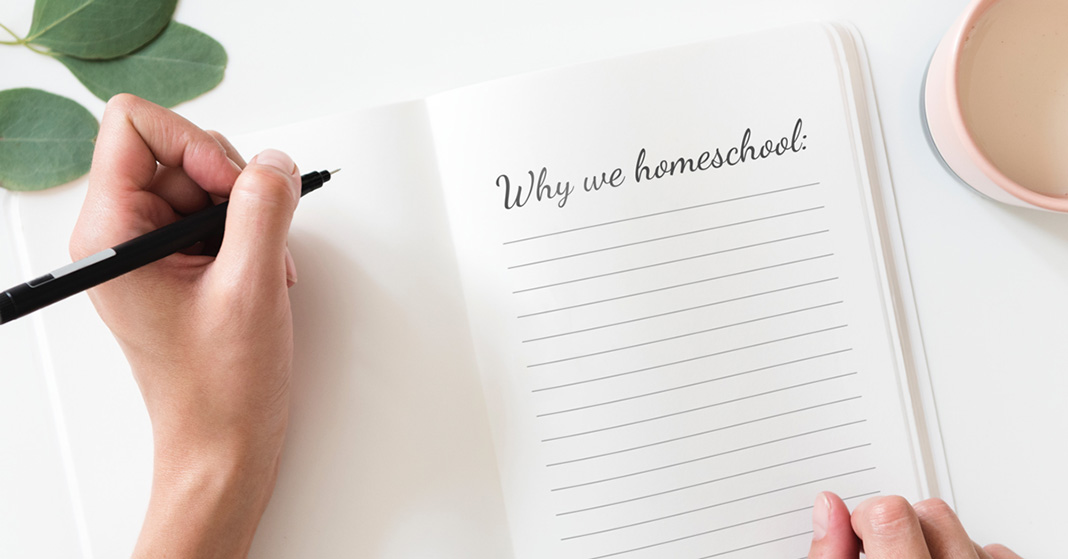
The start of a new homeschool year is a lot like New Year’s Day. As you’re setting your goals for the upcoming homeschool year, do you want them to be like those New Year’s resolutions that only last for a week or two? Of course not! Most of those New Year’s resolutions we make are goals we know we probably should set, but have very little reason to follow through on—like exercising regularly or eating right. We can’t commit to those goals because we don’t always believe in why we’re doing them. In contrast, your homeschool goals ought to be rooted in your commitment to homeschooling. If you can explain why you’re homeschooling, then sticking to the goals you set this year will become much easier.

Call a Family Meeting

Sit the whole family down to document the reasons you’ve decided to homeschool. If your children are old enough to contribute, then they should have the opportunity to share their opinions and add their own reasons. Make a list of reasons that will spell out your commitment to homeschooling. You might find several reasons for not participating in the school system, but negatives are hard to act on. If your reason is based on a negative, try to state it in a positive form. For example, if you feel that the school environment is a bad influence on your children, then your reason for homeschooling is to give them good role models or to help them become spiritually mature.

Look over your list. Mark out overlapping reasons. Maybe cross out a few that aren’t as important as the others. Condense it to five or fewer reasons that you really believe in.

Put Your Commitment on Display

In order to keep your commitment to homeschooling in front of your eyes, put the list of reasons on display where you’ll see them a lot. You can put them under a magnet on your refrigerator. Maybe you can print them out on nice paper in a curly font and have them matted and framed to hang in that one bare spot on the wall in your living room. Or, more fun, you can turn them into an art project for each child to hang in his or her room.

Set Your Goals

Once you’ve laid out your commitment to homeschooling clearly, the goals will be easier to choose and easier to focus on. Goals that flow naturally from your reasons for homeschooling will make the most sense to work toward.

Homeschooling takes a lot of hard work and planning. Even though you know you’re not going to quit or give up on it, you can easily be tempted to cut corners or not give each day your best. Your commitment to homeschooling keeps you on track as you’re weathering hard days as well as when you’re enjoying times of smooth sailing.

Filed Under: Successful Learning Tagged With: homeschool, homeschool commitment, homeschool goals

Steve Case Puts Online Learning in Context

August 28, 2018 by Jenna

Steve Case organizing Distance Learning courses
In our behind-the-scenes looks at BJU Press textbooks and Online Learning videos, we’ve had a lot of fun talking to artists about their art. But there’s another kind of art that goes into creating a successful video course. As a homeschool parent, you know better than most that organization is an art in and of itself. In the midst of homeschooling, do you really have time to stop and think about how each course is set up? We talked with Steve Case, our instructional design supervisor, to find out about the art of organizing online courses.

Both of Steve’s parents were teachers. He acquired their love of education and went on to study it in college. After graduation, he went into teaching and eventually became an administrator at a school. When he came to BJU Press, he brought along his knowledge of successful education and applied it to online courses. No artist is ever fully satisfied with a piece, so he made it his commitment to create better learning experiences for your children.

Better Efficiency in Distance Learning

In the early days of online courses, there were few standards for how to put a course together. Each course differed according to the instructor’s style. Parents and students had to learn how each teacher did assessments, gave notes, and set up schedules. Today, Steve works to standardize the courses so that you always know what to expect from a new course.

Better Engagement in Online Learning

Keeping your children engaged goes beyond getting their attention through the teacher’s personality—though it is hard to ignore Mrs. Walker when she’s excited. Keeping students engaged means making sure they’re involved in the instruction. Steve has been working with the teachers to add academic supports that encourage student involvement, such as the guided notes and clear visuals that you may have already benefited from.

Better Effectiveness in Online Learning

In order to make the courses as effective as they can be, Steve evaluates each course carefully. He and his team look at how courses present information and whether the videos provide manageable chunks of material. They also make sure that all other material complements the information, so that together, the lesson becomes a balanced meal.

When approaching each new course, Steve’s primary goal focuses on making the course better. There’s always a new and flashy way to create art, but he’s not just after new. He takes a careful look at the previous edition of that course, sees what can be improved, and ensures that what was already excellent comes through just as well as before, if not better. He wants parents to look at our catalog, see a new course, and know that it’s better than before.

Filed Under: Successful Learning Tagged With: Distance Learning Online, effective learning, efficient learning, student engagement

Decluttering Without Discarding

August 9, 2018 by Jenna

decluttering colored pencils
Textbooks, notebooks, binders, handouts, tablets, portable DVD players, pencils, manipulatives, art supplies—these are the things that crowd your homeschool space. With all that stuff lying around, it can seem cluttered and overwhelming. How can learning happen with so many distractions? Decluttering is a great idea, but you can’t get rid of any of those things because they’re a part of your homeschool.

One of the first things I discovered when I got my own place was that as life goes on, things accumulate. And you can’t always get rid of them. That’s where the old adage, “a place for everything and everything in its place,” comes into play.

The more you take the time to find homes for your homeschool materials—or anything else in your house—the less cluttered it will seem. So how do you find homes for all your homeschool materials?

Find a setup that works for your family

The space you use for homeschooling changes where you’re going to put things. If you have a whole room dedicated to homeschooling, then you may have more storage space. If your whole house is your homeschool space, then you may be able to store your materials wherever they seem most natural. And if your dining room table doubles as your homeschool space, you may have to get creative about storing your books.

Check out what some other homeschool moms have done with their homeschool spaces. You might get a great idea!

Invest in storage equipment

Sometimes, the difference between an organized space and a cluttered mess is having things to put other things in. What will work best for you—bookshelves or storage-cubes? How are you going to keep track of the little things? If you like the office look, you might go for mini drawer sets that sit on top of a desk. If you’re crafty, mason jars with cute labels can make perfect desk organizers.

Here are three tips for keeping your homeschool space decluttered and organized.

Feel free to be creative when decluttering

There are plenty of storage issues that you’ll run into as you go. You can’t plan for everything, but you can make the decision to be creative in getting to a solution. Here are some ideas you can think about ahead of time.

Decluttering doesn’t always mean discarding things. If all your possessions have homes to go to, then decluttering your house just means putting everything back in its place. And when everything has a place to go to, cleaning gets a lot easier.

Filed Under: Simplified Homeschool Tagged With: decluttering, homeschool materials, homeschool organization

  • « Go to Previous Page
  • Page 1
  • Interim pages omitted …
  • Page 11
  • Page 12
  • Page 13
  • Page 14
  • Page 15
  • Interim pages omitted …
  • Page 23
  • Go to Next Page »

Primary Sidebar

As parents, teachers, or former homeschool students, we are passionate about homeschooling from a biblical worldview. We hope these teaching tips, fun activities, and inspirational stories support you in teaching your children.

Email Signup

Sign up for our homeschool newsletter and receive select blog posts, discounts, and more right to your inbox!

Connect with Us!

                    Instagram     

Read Posts on Specific Subjects

Early Learning
Foreign Language
History
Language Arts
Math
Science

Footer

Disclaimer

The BJU Press blog publishes content by different writers for the purpose of relating to our varied readers. Views and opinions expressed by these writers do not necessarily state or reflect the views of BJU Press or its affiliates. The fact that a link is listed on this blog does not represent or imply that BJU Press endorses its site or contents from the standpoint of ethics, philosophy, theology, or scientific hypotheses. Links are posted on the basis of the information and/or services that the sites offer. If you have comments, suggestions, questions, or find that one of the links no longer works, please contact us.

Pages

  • About BJU Press
  • Conversation Guidelines
  • Terms of Use & Copyright

Archives

© 2026 · BJU Press Homeschool