• Skip to primary navigation
  • Skip to main content
  • Skip to primary sidebar
  • Skip to footer

BJU Press Blog

  • Home
  • Shop
    • Shaping Worldview
  • Simplified Homeschool
  • Successful Learning

Activity: Changing the States of Matter

February 8, 2018 by Jenna

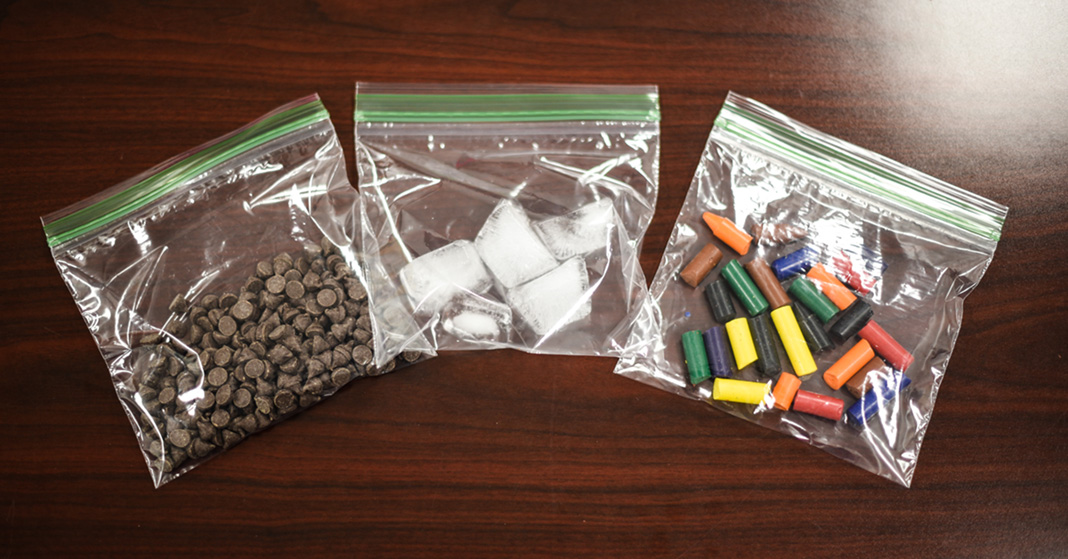
States of matter samples
As adults, we often forget that our experiences have helped us understand how God’s creation works. Your children are still looking for those experiences.

For example, how many of us have heard about a child who has misheard a hymn so that the lyrics don’t make any sense? They only need to understand the meaning once, and then the words will make sense to them. But until that happens, they will often accept the wrong lyrics without question. Similarly, they may accept that everything is matter without understanding how any of it works. Experiencing the changing states of matter helps the knowledge fall into place and become comprehension.

This activity gives your child an opportunity to both see and feel the change. And, if you’re having fun with the activity, you can take it a few steps further.

Materials Needed for States of Matter Activity

  • Measuring spoon (1 Tbsp)
  • Timer
  • Sealable bags (3)
  • Chocolate chips
  • Crayon pieces
  • Ice chunks
  • Parchment paper (optional)
  • Oven or hair dryer (optional)

Instructions
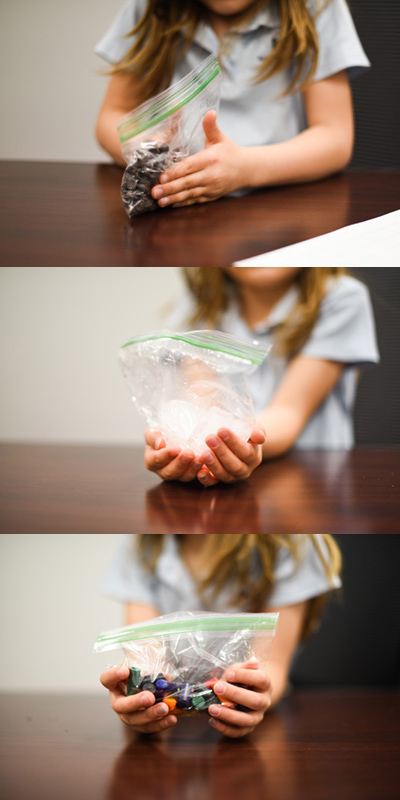
  1. Have your child measure 1 Tbsp of chocolate chips into one of the sealable bags, 1 Tbsp of crayon pieces into the second bag, and 1 Tbsp of ice chunks into the third bag.
  2. Before he starts, ask him which he thinks will melt the fastest and record his prediction on the chart.
  3. After he starts the timer, have him take a bag in his hands and rub his hands together slightly to mix the contents of the bag. Stop the timer once what’s in the bag has noticeably changed. If nothing happens after two minutes, stop the timer and move on. Record how long it took for the contents of the bag to change.
  4. Repeat with the other two bags.
  5. Ask: “Which melted first? Was your prediction right? How did each solid change? If they’re no longer solids, what are they? Describe the liquids. Are they thin? Thick? Sticky?”

Optional: Take It a Step Further

  1. Since crayons weren’t made to melt at skin temperature—otherwise they would be a parent’s worst nightmare—your child probably hasn’t succeeded in melting the crayons with his hands alone. Ask: “Why didn’t the crayons melt? What would make them melt?” Try out your child’s suggestions as appropriate (e.g., put the crayons on several layers of parchment paper on a cookie sheet in the oven or warm them with a hair dryer).
  2. Ask: “How could you turn the liquids back into solids?” Let him experiment with the chocolate chips and ice cubes in their bags and then record his results on the chart.

If you finish this project and find yourself with leftover melted ice, melted chocolate, and melted crayons, there are tons of other activities you could do with them. Maybe your kids would like to water a plant, make some candy, or do a crayon art project? Check out how we used our leftover bits in our blog post “Repurposing Leftover Crayons and Chocolate.”
Save

Save

Save

Save

Save

Save

Save

Save

Save

Filed Under: Successful Learning Tagged With: homeschool science, liquids, science activity, solids, states of matter

Repurposing Leftovers: Crayons and Chocolate

February 8, 2018 by Jenna

repurposing leftovers crayons and chocolate
If you decide to do the changing states of matter activity with your children, you may find yourself with leftover bits of crayon and chocolate. You could throw it all away and move on, but some of us have the old adage “waste not, want not” echoing in our heads. Here are some great ideas for repurposing leftovers with chocolate chips and crayon pieces.

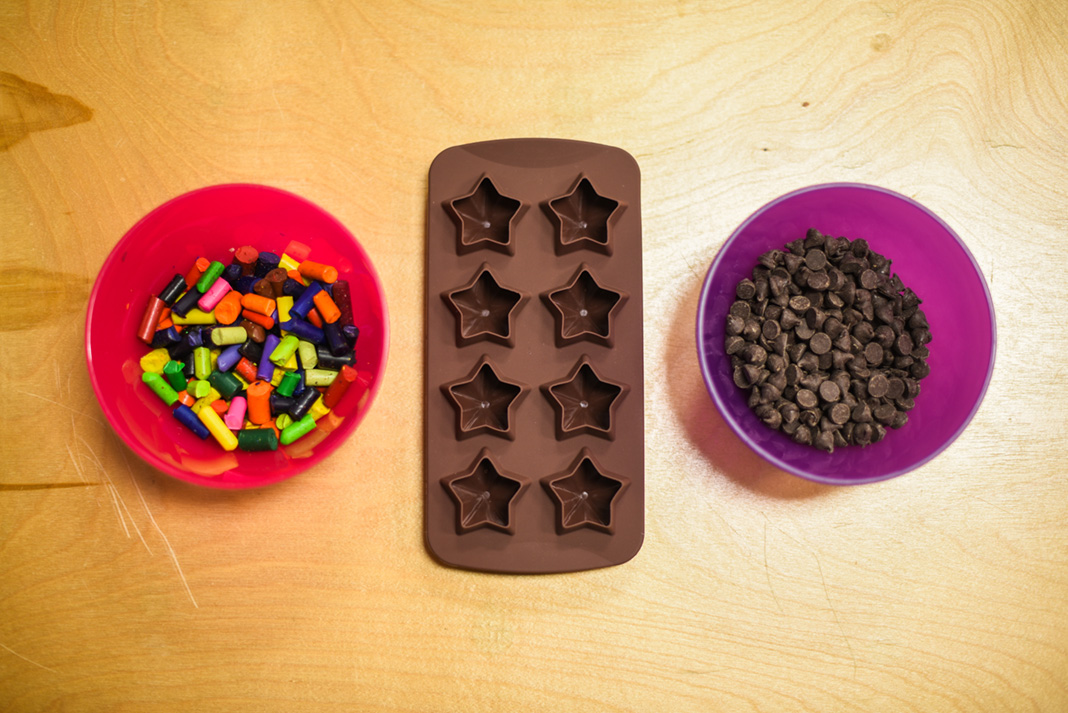
repurposing leftovers materials

Make Chocolate Candies 

Materials

  • Silicone mold
  • Leftover chocolate chips
  • Microwave
  • Microwave-safe bowl
  • Refrigerator

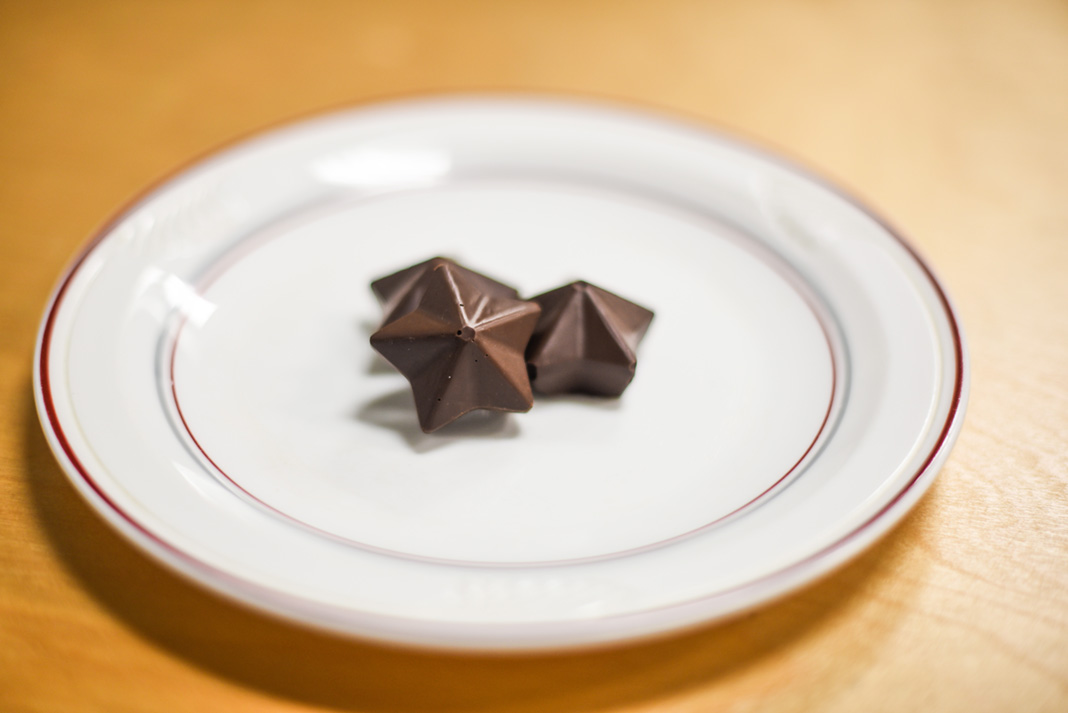
We had a lot of fun melting our leftover chocolate chips and pouring them into a silicone mold to harden. Making chocolate candies is one of the easiest, and tastiest, kitchen activities that little ones can help with. Simply heat the chocolate in the microwave for about 1 minute, stir, then continue heating it for much shorter intervals (15–20 seconds), stirring frequently until it melts completely. Be careful not to burn it, or the chocolate will seize. Pour the melted chocolate into your mold and then refrigerate it for 20 minutes or until chocolate no longer looks glossy.

If you want to make candies, you can also explore a fascinating area of food science called tempering chocolate with older children. As you probably know, tempered chocolate has a glossy look. It also has a crisp snap when it breaks and a higher melting temperature. The science behind tempered chocolate may seem complicated, but it all boils down to getting all the fats to bind together in the same way by using both heat and motion. When it cools, the structure of the fats will be stronger and more like a coiled rope than a jumbled mess. You can temper chocolate in a microwave, but it’s best done using a double boiler.

repurposing leftovers chocolate

Make Your Own Recycled Crayons

Materials

  • Silicone mold
  • Baking sheet
  • Small crayon pieces
  • Oven or toaster oven

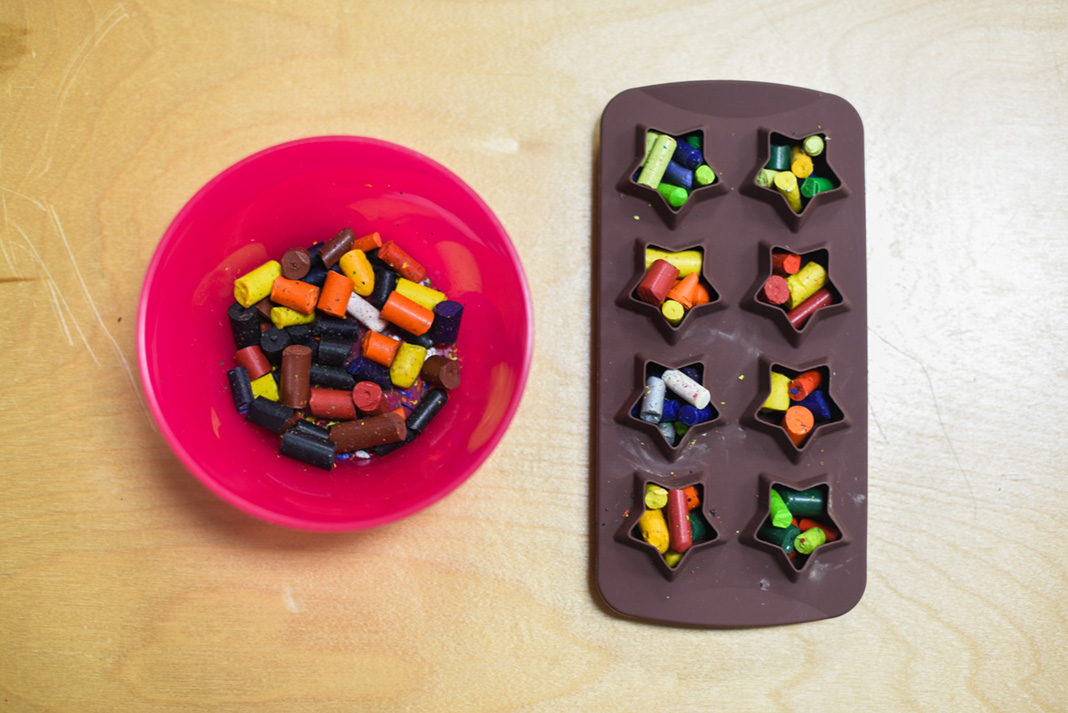
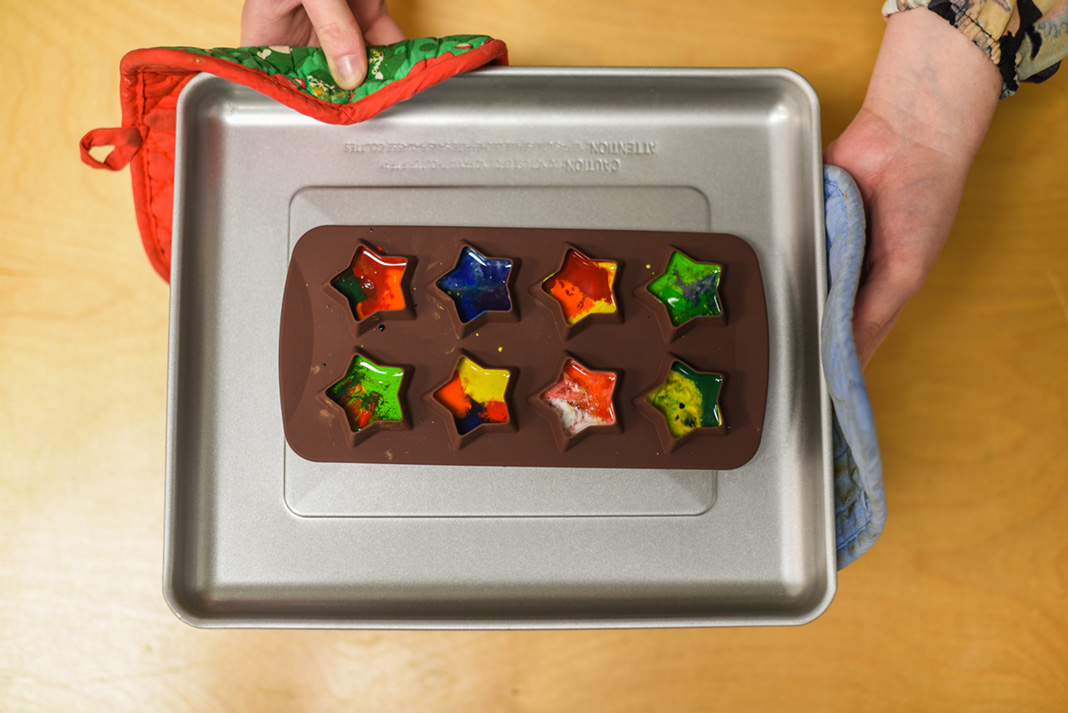
Once we finished the chocolates, we were able to clean out our mold to make recycled rainbow crayons. This process is even easier than making chocolate candies. Set your mold on a baking sheet, fill it with your crayon bits—making sure they aren’t too big—and bake in the oven for 15 minutes at 230°, or until the crayons are fully melted. We also found that you can use a toaster oven. [Note: Please refer to the guidelines from Crayola™ (or other manufacturer) for Craft Safety before melting crayons.]

repurposing leftovers crayons
repurposing leftovers crayons melted

Make Christmas Ornaments

Materials

  • Crayon pieces
  • Clear glass Christmas ornaments
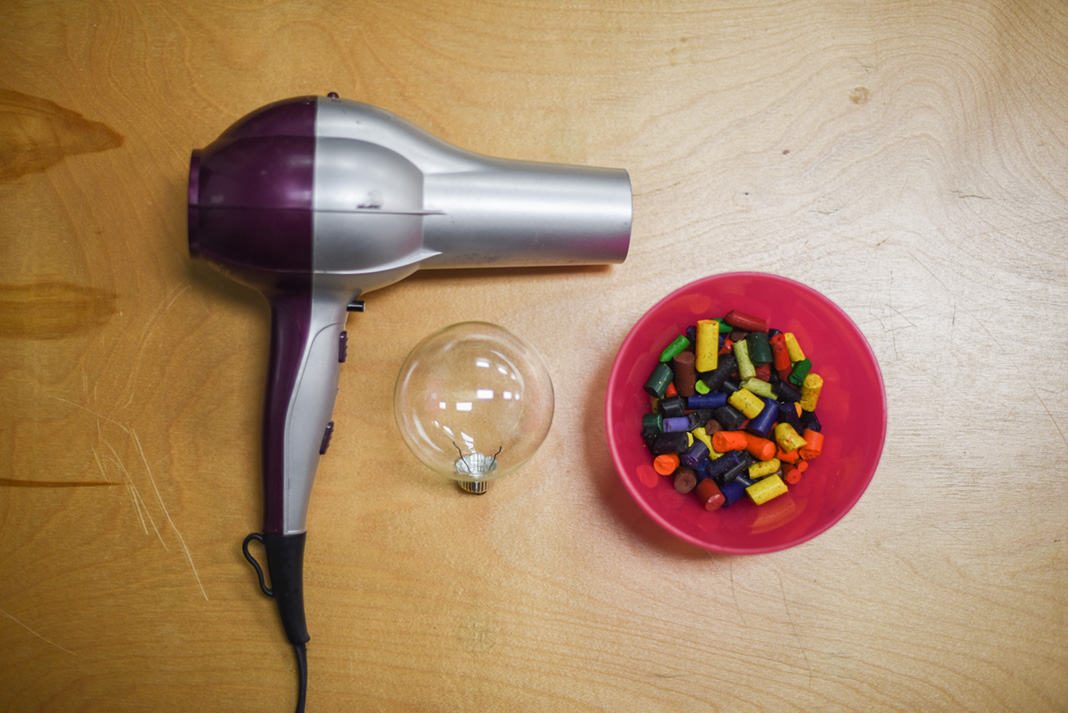
  • Hair dryer

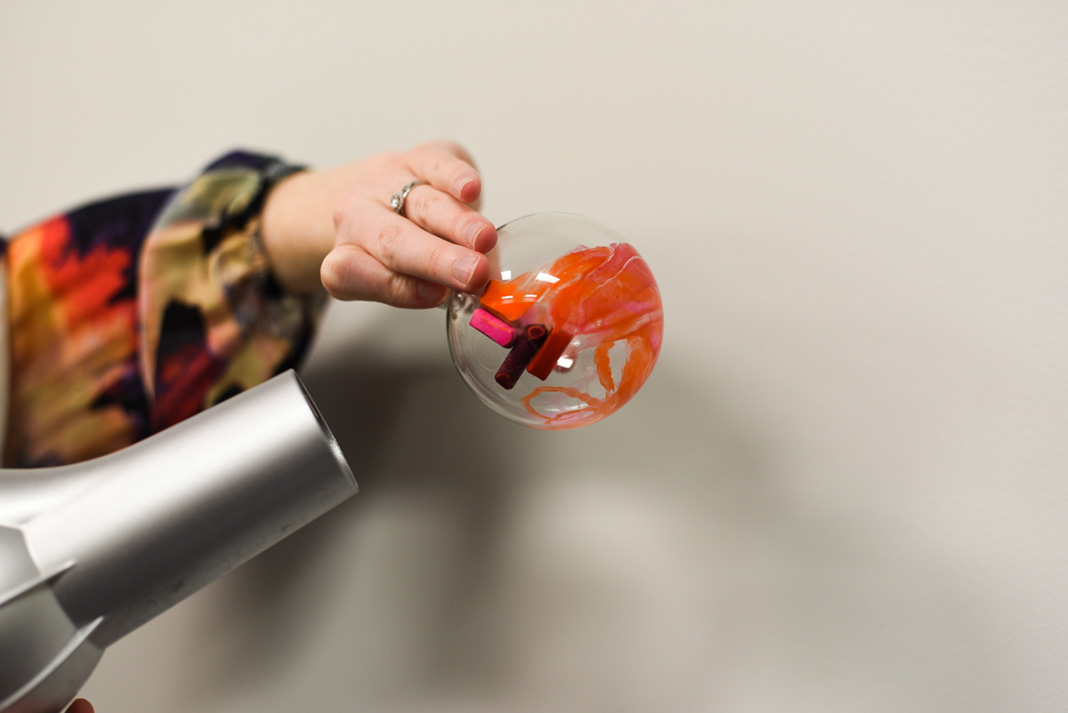
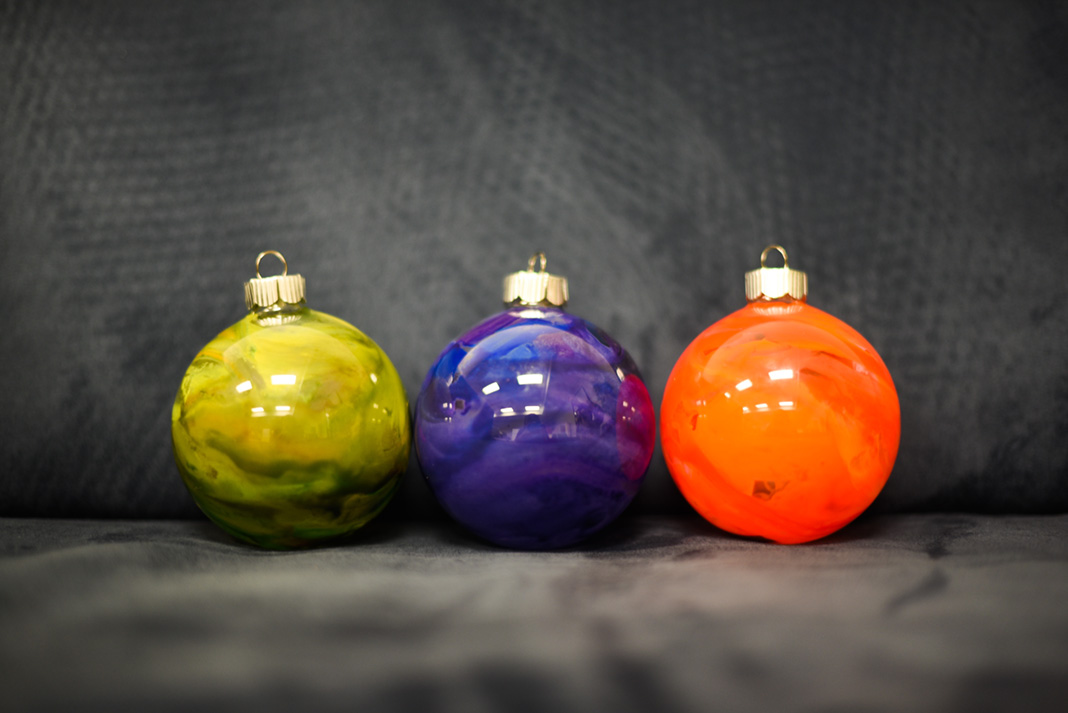
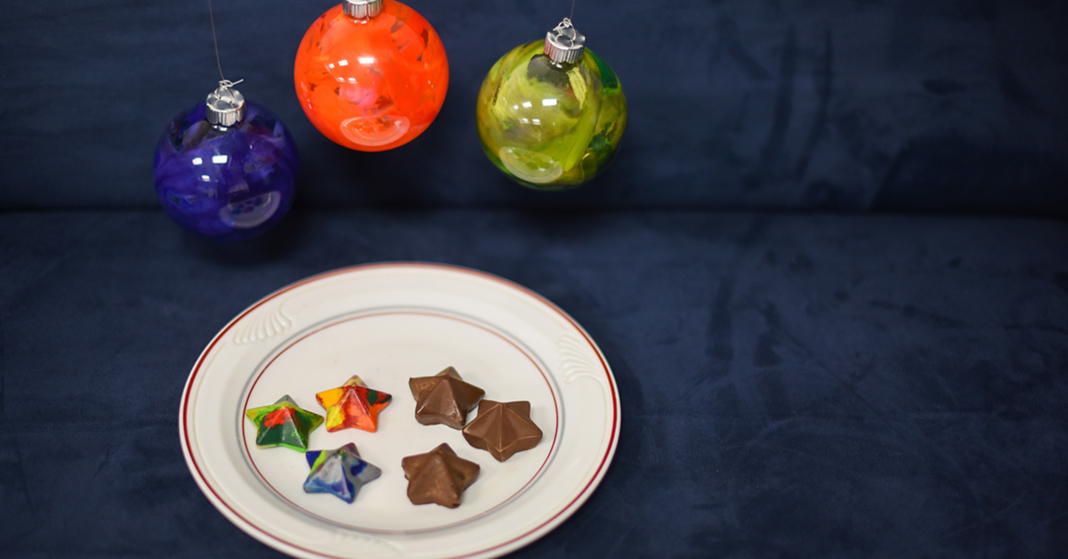
Who says you can make Christmas ornaments only during the Christmas season? For this project, take a clear glass Christmas ornament and drop several crayon pieces inside. Heat the crayons through the glass with a blow dryer while turning the ornament to spread the colors. You may want to hold the ornament with an oven mitt since you may have to keep the blow dryer on high heat to get the crayons to melt. Mixing colors can turn a simple clear globe into a planet. Ours turned out looking something like Mars, Neptune, and Earth without water. You could even add glitter and make it look like a galaxy. With resourcefulness and creativity, the possibilities are endless!

How did you use your leftover bits? Share with us on our Facebook or Instagram page (tag @bjupresshomeschool) with the hashtag #RepurposingCrafts. We’d love to see your ideas!

repurposing leftovers crayon ornaments
repurposing leftovers crayon melting ornament
repurposing leftovers finished ornaments

Filed Under: Successful Learning Tagged With: chocolate, Christmas ornaments, crayons, food science, homeschool science, recycled crayons, science activity

First Ladies Who Led the Nation

February 6, 2018 by Jenna

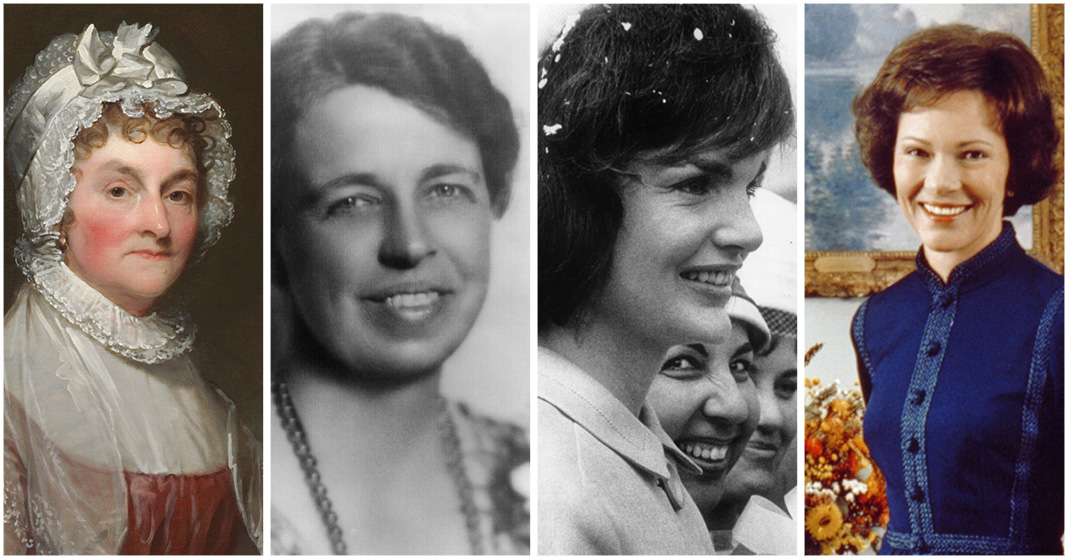
first ladiesPresident’s Day is coming up in a few days, so now’s a good time to honor some of the lesser-known but no less influential people in American history—our First Ladies. While presidents often become a driving force for political changes, First Ladies have taken the lead in social changes. Though some of these women were reluctant to become leaders, God has His own plan for who will help lead a nation. In His sovereignty, many of our First Ladies have become influential, not just as presidential spouses, but as leaders themselves.
Take a moment with your children to learn about these influential First Ladies and what they’re known for.

Abigail Adams (First Lady 1797–1801)

As the nation’s second First Lady, Abigail Adams took many of her cues from her predecessor and friend, Martha Washington. She took household matters in stride and hosted many events. The trend of First Ladies hosting special events continues to today. But more importantly, Mrs. Adams was her husband’s advisor and confidante in political matters. The couple exchanged more than a thousand letters during his political career, in which they would often discuss the policies of the new government. In one notable letter, she exhorted him to “Remember the Ladies.”

Eleanor Roosevelt (First Lady 1933–1945)

The best-known First Lady in American history, Eleanor Roosevelt led a change in how the nation viewed her position. She refused to be a background player who focused on high society dinners and simple beautification projects. Mrs. Roosevelt actively used her position and influence to change the face of American politics. She brought social issues to the forefront by speaking about them. In her speeches, she covered issues such as children’s causes, women’s health, and racial equality. She also became a successful delegate to the United Nations after her husband’s death. She continued her work for social reform until she died in 1962.

Jacqueline Kennedy Onassis (First Lady 1961–1963)

The elegant and refined Jacqueline Kennedy spent her term in office using her talents and education to reach out to the artists and scientists of her day. One of her most notable accomplishments was the restoration of the White House as a museum—not to redecorate and beautify it, but to preserve and display the development of America. It was as much an act of scholarship as one of redecoration. She recorded and broadcasted the restoration to the nation, guiding a special tour of the White House herself. After John F. Kennedy’s assassination, Mrs. Kennedy captured the emotions of the moment by calling her husband’s term in office “Camelot.” There would be other great leaders, but Camelot’s time was over.

Rosalynn Carter (First Lady 1977–1981)

In supporting her husband’s efforts to win the presidency, Rosalynn Carter spent many months campaigning. It was during this time that she found a passion that would follow her into office. The first First Lady to make a campaign promise, Mrs. Carter promised her husband’s supporters that she would use her influence to improve the lives of people with mental illnesses. Her work lead to the Mental Health Systems Bill and the Age Discrimination Act. Today, she is a member of the National Women’s Hall of Fame—along with only four other First Ladies—and she continues to work for the benefit of mental health issues.

While the changes our First Ladies have inspired may have been subtle, their influence has helped to shape the culture of America today. Even though we may question the end of those changes, we can take comfort in knowing that each president’s heart was in God’s hand when he chose his wife.

This post was updated on 2/19/2018 for the purpose of correcting Eleanor Roosevelt’s death date from 1960 to 1962.

Filed Under: Successful Learning Tagged With: American history, first ladies, social changes

Celebrate the Brilliance of African American Inventors

February 2, 2018 by Guest Writer

african-american inventors
African American inventors had a difficult time in past decades, struggling against the racism and segregation that was prevalent throughout the US, yet they still succeeded in giving the world many important inventions. Remember to highlight these brilliant, hard-working people as you teach heritage studies in your homeschool.

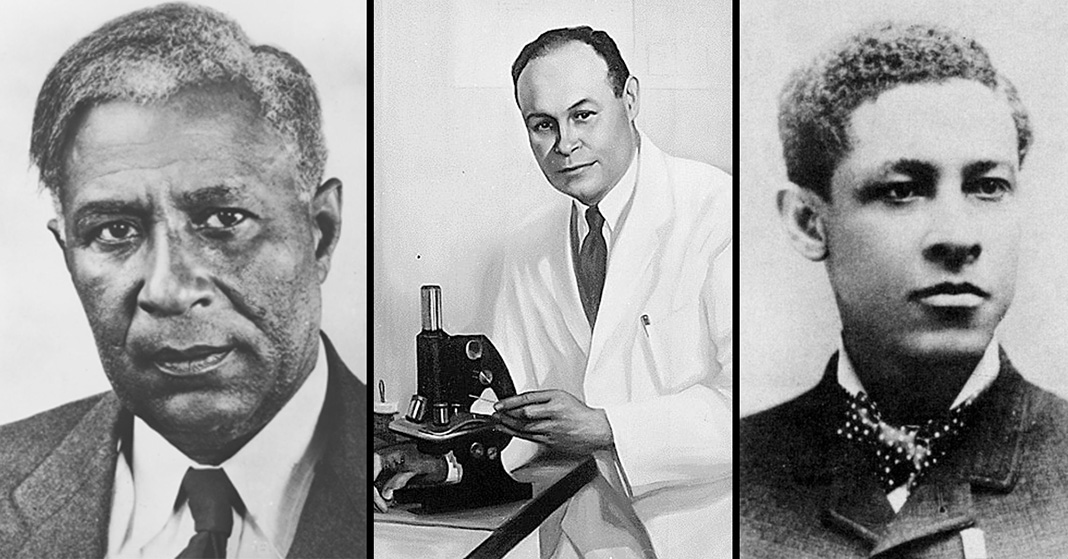
Garrett Morgan: The Gas Mask and the Traffic Light (above left)

Garrett Morgan dedicated his life to making the world a safer place through his inventions. He invented and patented a type of mechanical traffic signal, an early form of the modern traffic light. He also developed a safety hood to protect firefighters and soldiers from harmful smoke or gases.

When he first pitched his gas mask idea to Southern fire departments, they rejected him; so he paid a friend to help him stage a demonstration of the hood in a smoke-filled tent. After that successful test, his invention sold widely to fire departments throughout the Northern states. Later, it was even adopted by the US military and used during World War I.

Charles Drew: America’s First Blood Bank (above middle)

During his younger years, Charles Drew was more famous for his achievements in football and track than for his skill in biology. After an injury, however, he began to focus more on the medical sciences. He enrolled at the minority-friendly McGill University Faculty of Medicine in Montreal and excelled there, eventually finding a career at Howard University College of Medicine.

In 1940, Drew began directing the Blood for Britain project from New York City. He set up important standards and procedures for the collection and processing of donated blood plasma. Later, he pioneered America’s national blood banking system, as well as coming up with the concept of mobile donation stations.

Though he struggled against racism and segregation throughout his life, he received many awards and honorary doctorates for his important work in the field of blood banking and blood donation.

Jan Matzeliger: The Automatic Shoe-Laster (above right)

Born to a slave on a coffee plantation in Suriname, South America, Jan Matzeliger came to the United States as a young man. In those days, shoemaking was done by hand in a slow, painstaking, expensive process. Matzeliger worked tirelessly on a machine that could attach a shoe’s upper to the sole automatically. A quick-fingered human “hand laster” completed fifty pairs of shoes on a good day, working long hours. But Matzeliger’s “shoe-lasting machine” could produce up to seven hundred pairs in a day. Thanks to his invention, shoes became more affordable for everyone, all across the nation. Dying of tuberculosis in his thirties, Matzeliger wasn’t able to reap the profits of his work.

In a time when America still undervalued them, these inventors still practiced dominion over God’s creation and loved their neighbors by working hard to make their world a better place.

• • • • •

Rebecca is a work-at-home freelance writer, novelist, wife, and the mom of two bright-eyed little ones. She credits her success in writing and her love of books to her own mom, who homeschooled three kids from pre-K through high school.

Filed Under: Successful Learning Tagged With: African Americans, African-American Inventors, homeschool, homeschool studies

Playing with Spelling Words

February 1, 2018 by Megan

learn spelling words
From my daughter’s very first spelling test in first grade, I knew that she was going to struggle. And I knew that I was going to have to find ways to help her learn those spelling words. I soon realized that even though writing the words and spelling them aloud helped a little, in order for the spelling patterns to really solidify in her mind, my kinesthetic learner needed to be able to touch and manipulate the words. Here are some activities that we tried that really helped my struggling speller.

Spelling with Dough

Play Doh®, cookie dough, salt dough, and even bread dough are all perfect for forming letters and words. Start by having your children make a word family (like ar) and then ask them to add different letters to that base to make different words (like star or tar). Ask them questions like, “How could I change tar to make star?”

Spelling with Alphabet Cards

If you don’t want to bother with the mess of dough, you can do a similar activity with alphabet flash cards (you may need more than one set). Start again by asking your child to form the word family with the cards, and then add and subtract letters to make different words.

Spelling with Sand

For some reason, writing with a stick (or your finger) is way more fun than writing with a pencil. And erasing letters with your foot is much better than erasing with an actual eraser. So practice writing spelling words in the sand (or dirt). Your kids probably won’t even notice that they’re doing schoolwork!

My daughter learns best when she can touch and manipulate her environment, so making spelling a sensory activity has really helped her learn and remember her spelling lists. How do you help your children learn their weekly spelling words? I would love to hear your ideas in the comments below!

Filed Under: Successful Learning Tagged With: hands-on learning, kinesthetic learner, sensory activity, spelling

  • « Go to Previous Page
  • Page 1
  • Interim pages omitted …
  • Page 67
  • Page 68
  • Page 69
  • Page 70
  • Page 71
  • Interim pages omitted …
  • Page 152
  • Go to Next Page »

Primary Sidebar

As parents, teachers, or former homeschool students, we are passionate about homeschooling from a biblical worldview. We hope these teaching tips, fun activities, and inspirational stories support you in teaching your children.

Email Signup

Sign up for our homeschool newsletter and receive select blog posts, discounts, and more right to your inbox!

Connect with Us!

                    Instagram     

Read Posts on Specific Subjects

Early Learning
Foreign Language
History
Language Arts
Math
Science

Footer

Disclaimer

The BJU Press blog publishes content by different writers for the purpose of relating to our varied readers. Views and opinions expressed by these writers do not necessarily state or reflect the views of BJU Press or its affiliates. The fact that a link is listed on this blog does not represent or imply that BJU Press endorses its site or contents from the standpoint of ethics, philosophy, theology, or scientific hypotheses. Links are posted on the basis of the information and/or services that the sites offer. If you have comments, suggestions, questions, or find that one of the links no longer works, please contact us.

Pages

  • About BJU Press
  • Conversation Guidelines
  • Terms of Use & Copyright

Archives

© 2026 · BJU Press Homeschool