• Skip to primary navigation
  • Skip to main content
  • Skip to primary sidebar
  • Skip to footer

BJU Press Blog

  • Home
  • Shop
    • Shaping Worldview
  • Simplified Homeschool
  • Successful Learning

A Blackout Poem Writing Activity

April 12, 2018 by Jenna

biology blackout poem
Teaching elementary poetry writing can be enjoyable, especially when working with sensory poems or even simple shape poems. And there are hundreds of engaging poems for elementary ages that can help kids get interested in poetry. One of my favorites is “I Wave Good-bye When Butter Flies” by Jack Prelutsky. But what about teaching high school poetry writing? While sensory poems and shape poems are good for any age, many high schoolers are capable of more challenging activities. A blackout poem might be just the kind of poetry exercise your high schooler will find intriguing.

What Is a Blackout Poem?

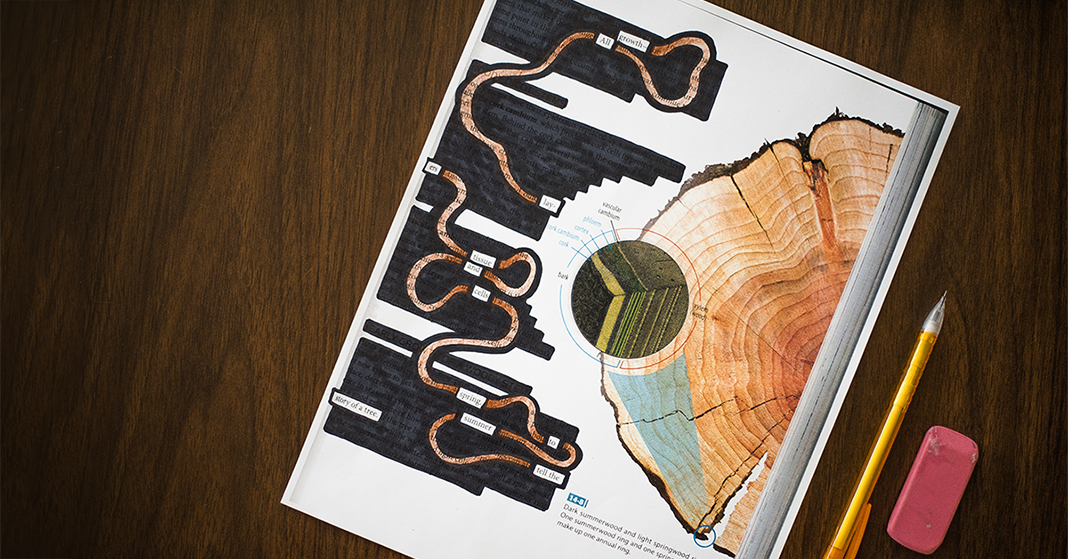
Blackout poetry is made by highlighting certain words on a published page and then marking out all the rest. You can use cheap thrift-store books you don’t want to keep or photocopied pages of books you already have. You could also use magazine or newspaper pages.

How Do You Make a Blackout Poem?

Pick a book, magazine article, or newspaper story. Any long text will work, but keep in mind that what you choose will affect the words your high schooler will have to work with. Choose material that uses descriptive language and strong verbs. And it helps if it’s about a topic he enjoys.

  1. Show him the example and explain that the goal is to “find” a poem within the text, selecting words from the text that can be connected together to make a poem.
  2. Let your teen pick a page that he thinks will give him enough material to create a poem.
  3. He should read his page several times. He’ll need to be familiar with the content in order to decide what he can do with the words. If he finds that his page won’t work, he should choose a new one.
  4. Using a pencil, he should circle or underline all the words that may be useful in crafting his poem. Knowing where conjunctions and strong verbs are will also help him in shaping the poem.
  5. Once he’s chosen his words, he should black out all remaining words on the page with a marker. Blackout poems are most often read from top to bottom and from left to right. He may need to get creative in order to clearly connect his words.

Why Blackout Poetry?

Since your teen will be creating a poem out of words he already has, this activity should work well with even the most reluctant of poets. He won’t have to come up with the ideas himself, and he can even choose a page from one of his favorite books.

By creating a blackout poem, your high schooler will learn to create a poem using just the words he has available. He may be surprised by the beauty of his final product, even if he’s skeptical at first.

Filed Under: Successful Learning Tagged With: blackout poem, blackout poem on textbooks, blackout poetry, national poetry month

Attitude Affects Outcome

April 10, 2018 by Guest Writer

good attitude in flowers
“Remember, Jennifer, attitude affects outcome.”

I don’t know how many times I heard my dad say that to me when I was growing up, but it was obviously enough times that I find myself saying it to my own children now! It was one of those many “parent sayings” that I didn’t fully understand or really want to hear as a child or teenager. Now, like so many things, it’s one that I definitely understand and appreciate. What my dad was trying to teach me is that our attitude directly impacts the outcome of everything we’re trying to accomplish—from sports to music to chores to schoolwork.

Positive Versus Negative Attitude

As a homeschool mom for the past five years, I have witnessed the truth of my dad’s statement during school. Whenever my children are excited about or good at a particular subject, they have a good attitude. They sit up, pay close attention, carefully follow instructions, and do their best. I’ll even notice them smiling as they do it. And the result is always positive whether a high grade on a test, a neat worksheet, or a thorough project.

But if it’s a subject they don’t like or understand very well, their attitude takes a nosedive. A sigh, a groan, slumped shoulders, or an audible “Not this again” is a pretty good indicator of how their lesson is going to turn out. They slouch, daydream, and make only a half-hearted attempt to follow instructions in their workbooks. Sometimes they’ll rush in order to get it over with. And the result is usually sloppy handwriting, inaccurate answers, and incomplete assignments. I’ll even see tears of frustration as they struggle through their work. Then they end up having to redo it, which makes their attitude even worse, and then I find myself starting to have a bad attitude—not an ideal atmosphere for homeschooling!

Encouraging Right Attitudes

The bottom line is that a wrong attitude reveals wrong thinking. My child thinks something like this: I really don’t like math, it’s hard, I don’t understand it, it’s boring, and I don’t want to do it. That then translates into the disposition I described earlier. My job as a teacher and parent is to help my children realize that even if they don’t like a subject, they can still choose to have a good attitude about it with God’s help. A good verse to memorize is Romans 12:11,“Not slothful in business, fervent in spirit, serving the Lord.” Another one is Colossians 3:23, “And whatsoever ye do, do it heartily, as to the Lord, and not unto men.”

I have seen God work in my children’s hearts and help them change their outlook, dramatically improving their schoolwork. Helping our kids develop Christ-honoring attitudes now in school will prepare them to handle even greater challenges in the future.

• • • • •

 Jennifer is a pastor’s wife and mom of two young girls and loves being able to homeschool them. During her own twelve years of homeschooling, Jennifer developed a passion for reading and writing. She earned a bachelor’s degree in creative writing and relishes writing during her free time.

Filed Under: Successful Learning Tagged With: homeschool attitudes, right attitude, successful homeschool

The Macroscopic World: Making a Moon Model

April 5, 2018 by Jenna

moon model landscape
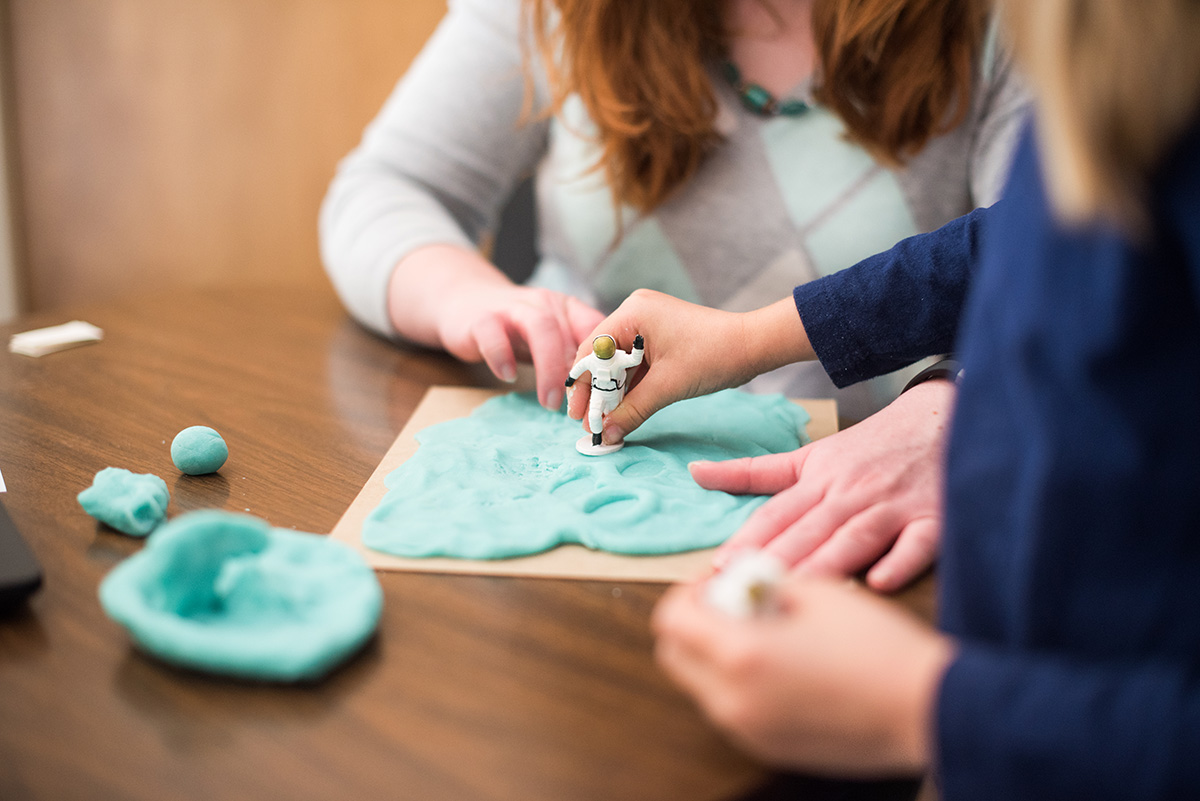
Just as it can be difficult to study the world on a microscopic level, it can also be hard to study things that are too large to make sense of. Models of large objects must be scaled down so that we can better understand them. In this activity from the BJU Press Science 4 Teacher’s Edition, we’ll create a moon model. (The clay we use here may be edible, but we don’t recommend eating it.)

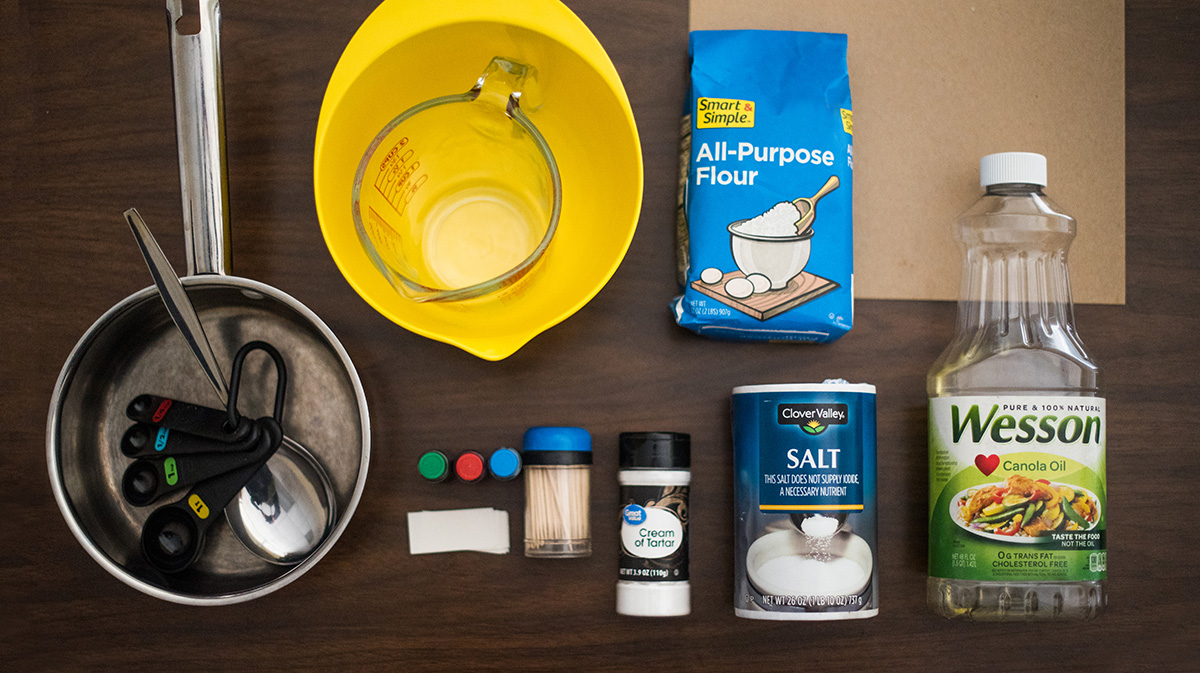
Materials for a Moon Model

  • 1 cup flour
  • ½ cup salt
  • 2 tsp cream of tartar
  • 1 tbsp cooking oil
  • 1 cup water
  • Saucepan
  • Spoon
  • 12″ x 12″ square of cardboard
  • Toothpicks
  • Paper, cut into thin strips
  • Red, green, and blue food coloring (optional)

moon model materialsMaking the Model

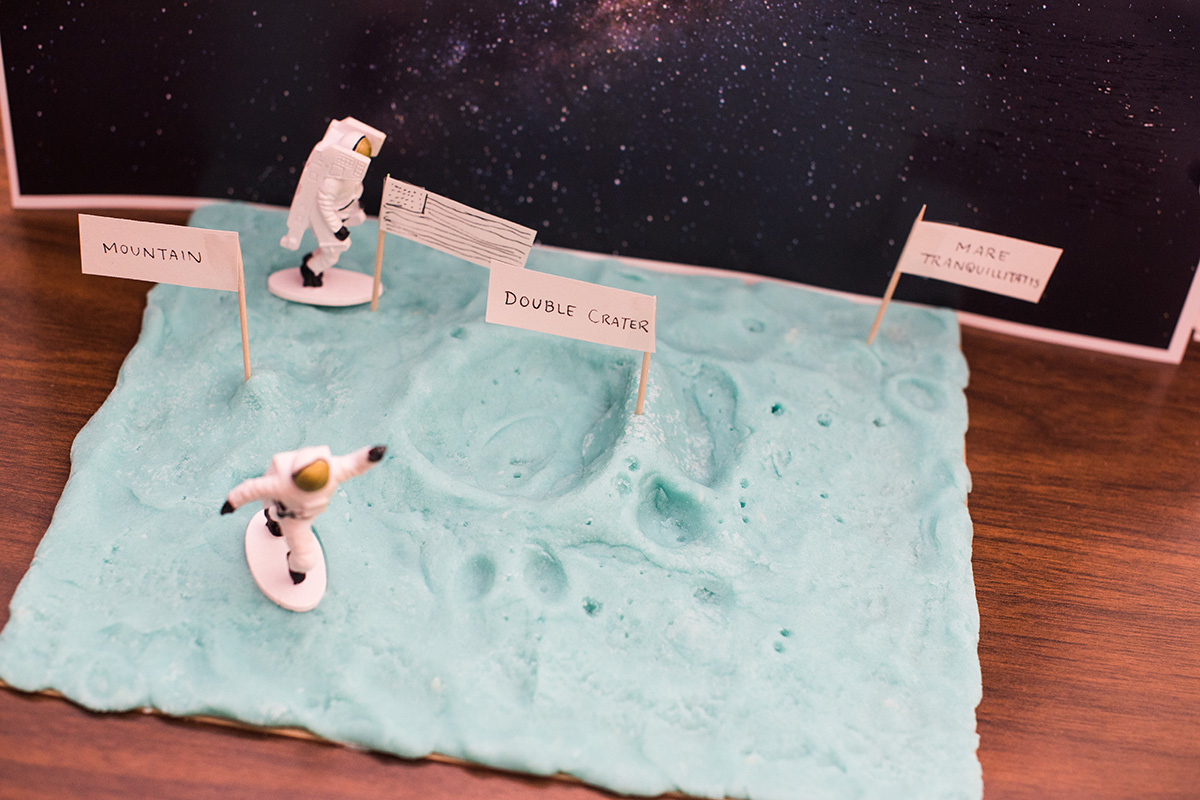
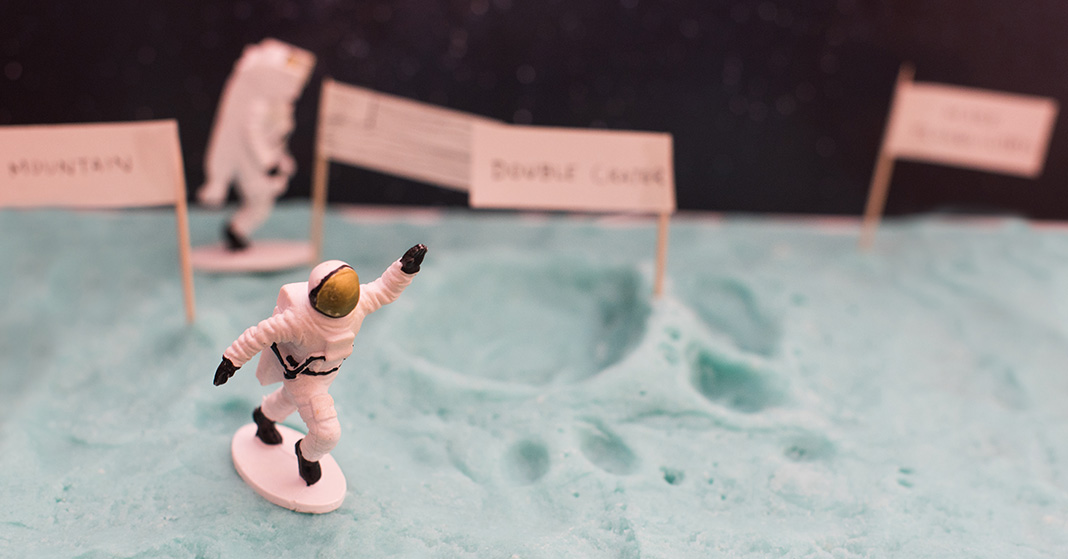
  1. Help your child pick an area of the moon to model. The desktop version of Google Earth will let you explore the moon’s surface in some detail. Otherwise, you can explore the moon on Google Moon. You will also find interesting facts about the Apollo space missions. We chose an area visited by Apollo 11 called Double Crater, on the edge of the Mare Tranquillitatis.
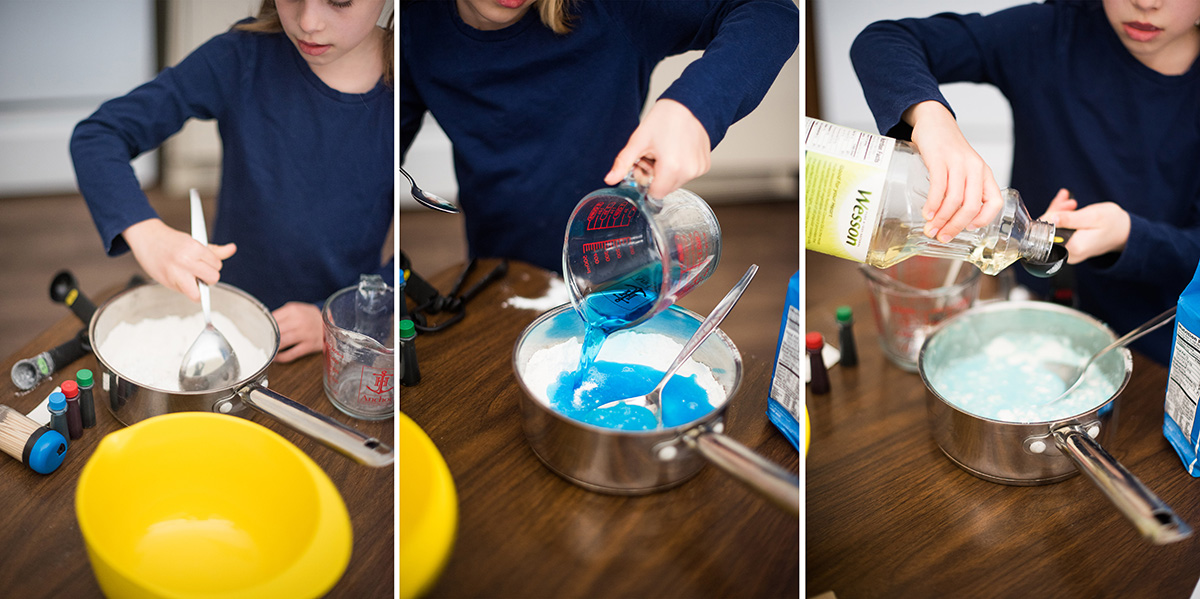
  2. Have your child combine 1 cup flour, ½ cup salt, and 2 teaspoons cream of tartar in a saucepan.
  3. (optional) If your child wants to make a model the same color as the moon, she may add 1 drop each of the red, blue, and green food coloring to the water to turn the clay gray.moon model clay making
  4. Have her add 1 tablespoon cooking oil and 1 cup water to the dry ingredients.
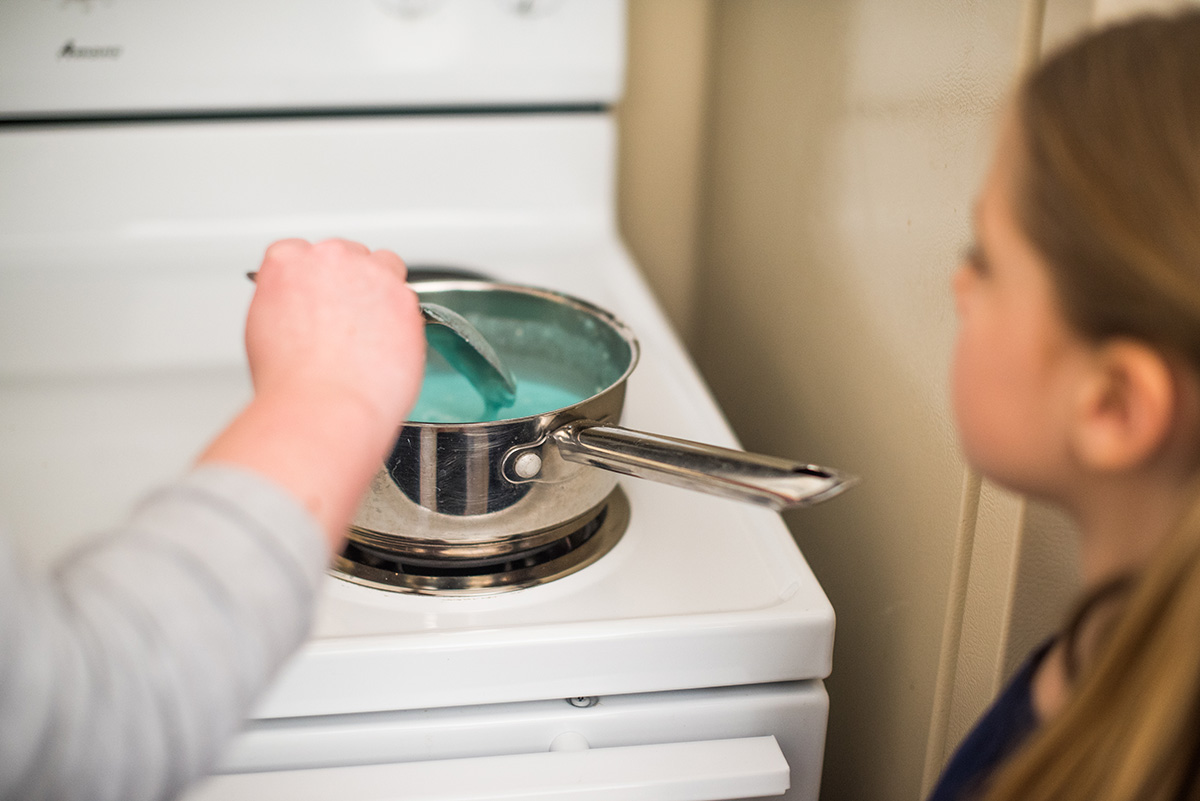
  5. Heat the mixture over medium heat, stirring constantly, until the clay begins pulling away from the pan.moon model cookingmoon model kneading
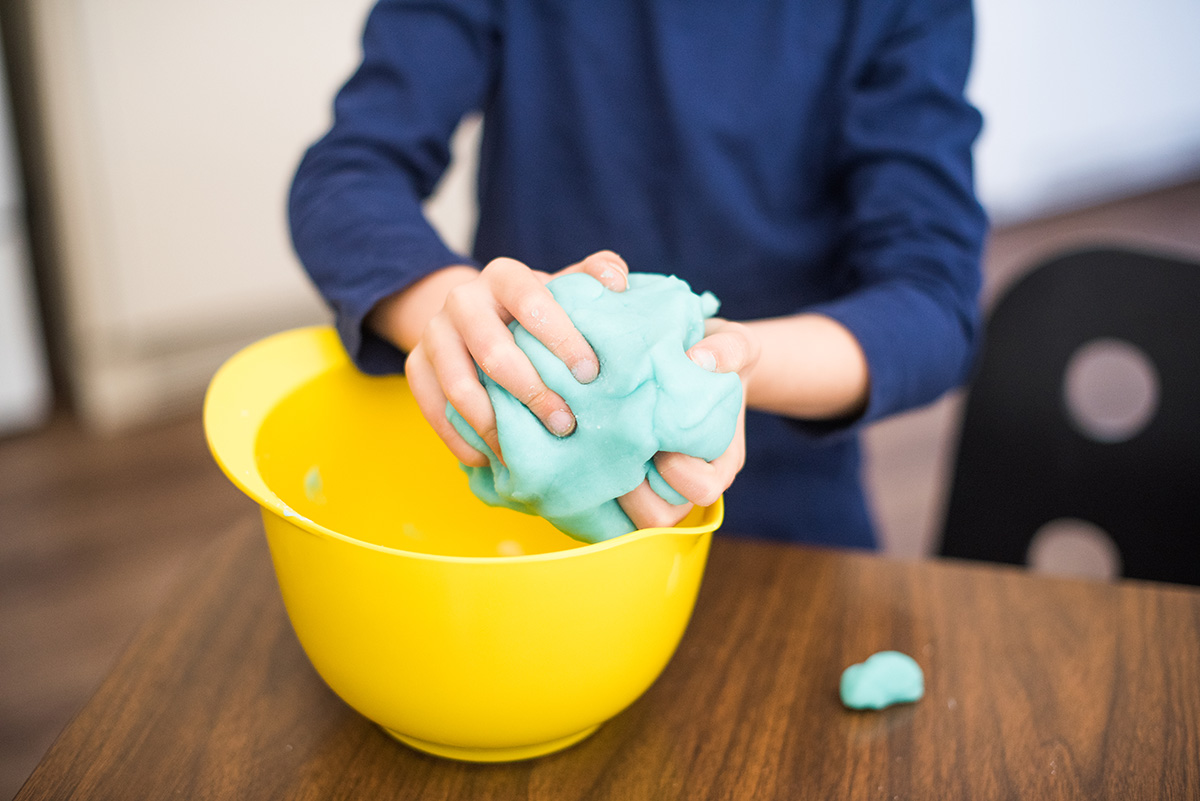
  6. Take the pan off the heat and remove the clay from the pan. Since the clay may be too hot to handle right away, this may be an excellent time to teach the benefits of cleaning as you go. Once the tools she’s used are clean and the clay is safe to touch, she should knead the clay until it’s cool.
  7. Have your child spread the clay (using the cardboard as a base) and mold it to show the features of the area selected in step 1.
  8. She can use the paper strips and toothpicks to make little flags to mark important features.

Your clay will harden in about a day, leaving you with an excellent tool for activating prior learning in the future. It can become the landscape for Lego astronauts reenacting the Apollo missions, or an adventure straight from your child’s imagination. Your child will be able to add the terms she used in the lesson for the moon’s landscape to her play, solidifying learning even more.

We’d love for you to share your moon models with us! Please feel free to share your photos on Facebook or Instagram and tag us with @bjupresshomeschool.moon model moldingmoon model finished

Filed Under: Successful Learning Tagged With: homeschool science, moon model, teaching science

A Sensory Poem Writing Activity (Printable)

April 3, 2018 by Megan

sensory poem activity
April is National Poetry Month. Here in South Carolina, it’s also one of the most beautiful months of the year—the temperature is nearly perfect (no stifling heat and humidity yet!), the mosquito population is under control, and the worst of allergy season is behind us. Do my kids and I want to sit inside and write poetry? Not really.

Thankfully, writing and studying poetry doesn’t have to be an indoor activity. In fact, the great outdoors is the perfect place to practice writing a sensory poem.

A simple definition

A sensory poem describes a scene, an object, or an idea with vivid words that appeal to the five senses. It tells how the subject looks, feels, smells, tastes, and sounds.

A workable plan

• Plan an outing

Take advantage of a beautiful April day and head outside. Even if spring hasn’t quite sprung where you live yet, you and your children will probably benefit from some time out of the house. Head to a local park, walk around the block, or plan an outing to somewhere you haven’t yet explored. Be sure to block out enough time so that you and your children won’t feel rushed.

Before you go, take time to explain to your children the purpose of the outing. Explain what a sensory poem is and share some examples.

• Observe something special

While you are out, look for things that spark your child’s interest such as an unusual plant, an insect, or a special vista. The things that excite your child will make good subjects for his or her sensory poem. Use our sensory poem planning printable to help focus your child’s observation skills. You will also want to take pictures (or even a short video) of the subject for later use.

• Draft a sensory poem

After your child has finished planning his or her poem, it’s time to write. Sensory poems don’t have to stick to a certain meter; they don’t even have to rhyme. Encourage your child to refer to the completed planning sheet and describe how the subject sounded, smelled, looked, and felt. You might want to challenge an older child to try including some sound devices such as assonance, consonance, or onomatopoeia in the poem. Be sure to have your child illustrate the final copy of the poem with a drawing or a photograph.

Filed Under: Successful Learning Tagged With: elementary poetry, homeschool writing, national poetry month, writing poetry

Meet Your Online Learning Teachers: Jessica Ingersoll

March 29, 2018 by Jenna

distance learning teacher Jessica Ingersoll
If you went to school as a kid, you may have had the odd experience of running into a teacher at the store. It’s still easy for kids who go to school to forget that teachers are real people who need groceries. But for kids who use only videos, it’s even easier to start thinking of their Online Learning teachers as celebrities. It’s always fun to get to know our celebrities, so I sat down with Miss Ingersoll for an interview. Here are some things I learned about her.

She loves . . .

Food!

One of the reasons she’s excited about the World Studies course is getting to introduce her students to new foods from around the world. She has a wonderful selection of cultural cuisines lined up for her students!

Traveling!

One part of studying history and science that we don’t often consider is that it takes us to new places. Miss Ingersoll loves to travel. She’s even gone hiking in Alaska and Hawaii. In her classes, she gets to create interest in other cultures by bringing in elements of other places and times. In her elementary class, she puts on fun hats, and in world studies, she has filled her classroom with items from all around the world.

Teaching!

One big ways Online Learning differs from a regular classroom is that the teacher doesn’t always get to immediately know the impact of her teaching on her students. Miss Ingersoll wants to inspire her students to love learning. To do that, she uses various tools and techniques to make sure her students stay engaged. She keeps lessons as hands-on as they can be, and she shares interesting facts in each lesson. But she can’t help but wonder how God will use her lessons. She loves hearing from her students!

Teaching WWII!

I never thought of World War II as interesting until Miss Ingersoll started talking about it. Many of the factors in play during that part of history are things we don’t often think about, like how different cultures interacting contributed to the war and how soldiers had to make do with the equipment they had. She tries to start every lesson by being excited about the day’s topic, but I can tell she is most excited about teaching World War II.

Remember, Miss Ingersoll won’t be Miss Ingersoll for much longer. In May, she’ll become Mrs. Bancroft, and we’re all praying for her as she makes preparations!

Stay tuned for more opportunities to get to know your Online Learning teachers on Facebook, Instagram, and right here on the BJU Press Homeschool blog. If you’d like to learn more about Mrs. Walker, check out some of her secrets for unforgettable teaching.

Filed Under: Simplified Homeschool Tagged With: BJU Press Distance Learning, distance learning teachers, homeschool, homeschool teachers

  • « Go to Previous Page
  • Page 1
  • Interim pages omitted …
  • Page 64
  • Page 65
  • Page 66
  • Page 67
  • Page 68
  • Interim pages omitted …
  • Page 152
  • Go to Next Page »

Primary Sidebar

As parents, teachers, or former homeschool students, we are passionate about homeschooling from a biblical worldview. We hope these teaching tips, fun activities, and inspirational stories support you in teaching your children.

Email Signup

Sign up for our homeschool newsletter and receive select blog posts, discounts, and more right to your inbox!

Connect with Us!

                    Instagram     

Read Posts on Specific Subjects

Early Learning
Foreign Language
History
Language Arts
Math
Science

Footer

Disclaimer

The BJU Press blog publishes content by different writers for the purpose of relating to our varied readers. Views and opinions expressed by these writers do not necessarily state or reflect the views of BJU Press or its affiliates. The fact that a link is listed on this blog does not represent or imply that BJU Press endorses its site or contents from the standpoint of ethics, philosophy, theology, or scientific hypotheses. Links are posted on the basis of the information and/or services that the sites offer. If you have comments, suggestions, questions, or find that one of the links no longer works, please contact us.

Pages

  • About BJU Press
  • Conversation Guidelines
  • Terms of Use & Copyright

Archives

© 2026 · BJU Press Homeschool