• Skip to primary navigation
  • Skip to main content
  • Skip to primary sidebar
  • Skip to footer

BJU Press Blog

  • Home
  • Shop
    • Shaping Worldview
  • Simplified Homeschool
  • Successful Learning

Cooking Classes with Kids

May 22, 2018 by Guest Writer

cooking classes with kids
Kids can be notoriously picky when it comes to new foods, but when you involve them in the cooking process, suddenly the dish has more appeal! Plus, cooking with your kids helps them build valuable life skills. They won’t always have you there to cook healthy meals for them, so they need to know how to assemble and prepare food on their own. Check out these easy recipes and cooking tasks that you can do with all your kids as part of your homeschool.

Food Safety Basics Class

Food-borne illness is a serious matter. It’s never too early to start educating your kids about the safe way to handle food in the kitchen. You could start with a demonstration about germs and how they spread, using a Glo Germ Powder Kit or a similar experiment. After showing them how germs are transferred, have your kids practice handling raw meat or fish, then washing their hands thoroughly. Teach them to sanitize counters, to use separate cutting boards for items like vegetables and raw meat, and to wash their hands after using raw eggs in a recipe. Talk about safe temperatures for different foods and about washing a knife or dish after it has come in contact with raw food.

Cooking Essentials Classes

Do your kids know how to crack an egg? Can they boil pasta, peel a potato, measure flour accurately, snap beans, or cut up vegetables? Make a list of essential skills that you want your kids to learn, and create mini cooking classes for your homeschool. One mini cooking class could cover all the different ways to prepare a particular vegetable, such as potatoes or carrots. Another class might focus on dexterity-related kitchen skills, such as cracking eggs, chopping onions, or flipping pancakes.

French Bread Pizza Class

Remember to keep the cooking classes tasty and enjoyable for the toddler set as well. These French bread pizzas are fun to make, and they’re the perfect size for little kids to handle. Even the smallest children can spread sauce on crusty bread, and they’ll be delighted to choose their own veggies, meats, and cheeses for topping the pizzas. After eight to ten minutes in the oven at 375 degrees, the delicious personalized pizzas will be ready for the table.

Dinner Series

If you have older kids who have already mastered the basic skills, you can work on more advanced meal preparation. Make a list of five to ten simple dinners, and then create an instruction sheet for each meal, complete with ingredients, recipes, and instructions. Each week, help your older kids make one of those dinners. When they’ve gone through the entire set of meals, they have a final test—to choose one of the meals and create it again, this time on their own without any help.

Doing mini cooking classes with kids might be frustrating and messy at first, but if you persevere, you’ll have the joy of knowing that your kids can handle food safely and skillfully. It’s well worth the effort—and you might find that you love having a couple of little sous-chefs in the kitchen!

• • • • •

Rebecca is a work-at-home freelance writer, novelist, wife, and the mom of two bright-eyed little ones. She credits her success in writing and her love of books to her own mom, who homeschooled three kids from pre-K through high school.
Filed Under: Successful Learning Tagged With: cooking classes, homeschool cooking, homeschool learning, mini cooking classes

Learning Place Value with a Hands-on Activity

May 17, 2018 by Ben

place value cover
As a homeschool dad, I found it easy to fall into the trap of believing that my young child understood a number because she could say it and count to it. When my second daughter was in kindergarten, we enjoyed skip counting to a trillion by 100 billions. She felt like she grasped the number 1 trillion. But I was overlooking place value and the role it plays in deep understanding of foundational math concepts.

The concept of place value is crucial not only in gigantic numbers but also in more relatable numbers. It’s so easy for a six-year-old to recognize and count to a number such as 23 but not understand what the 2 and the 3 mean in practical, real-life experience.

One of the best ways to develop your child’s understanding of place value is through less-than and greater-than activities. Doing hands-on exercises develops number sense that will enable your child to solve real-world problems.

Preparing

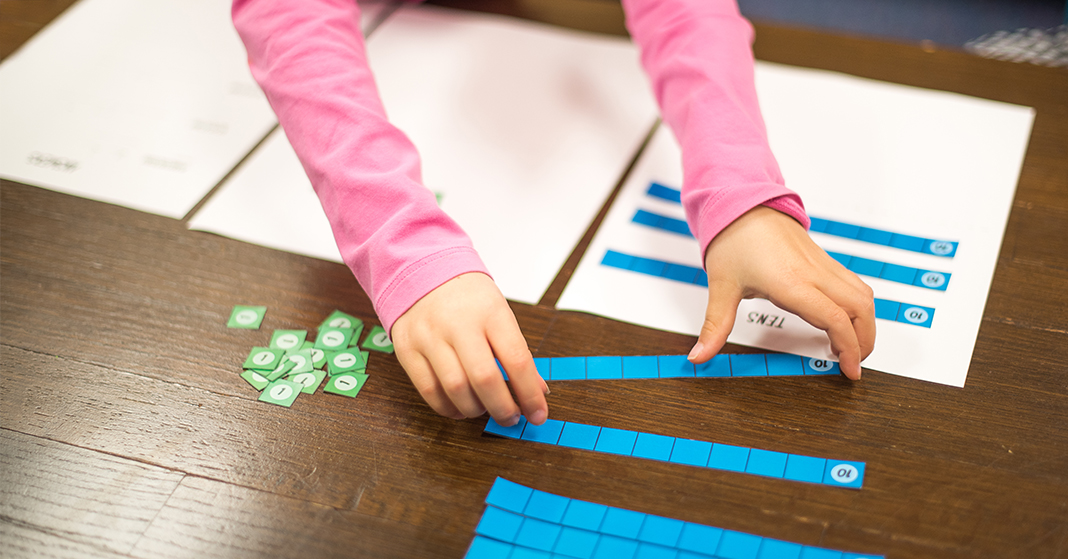
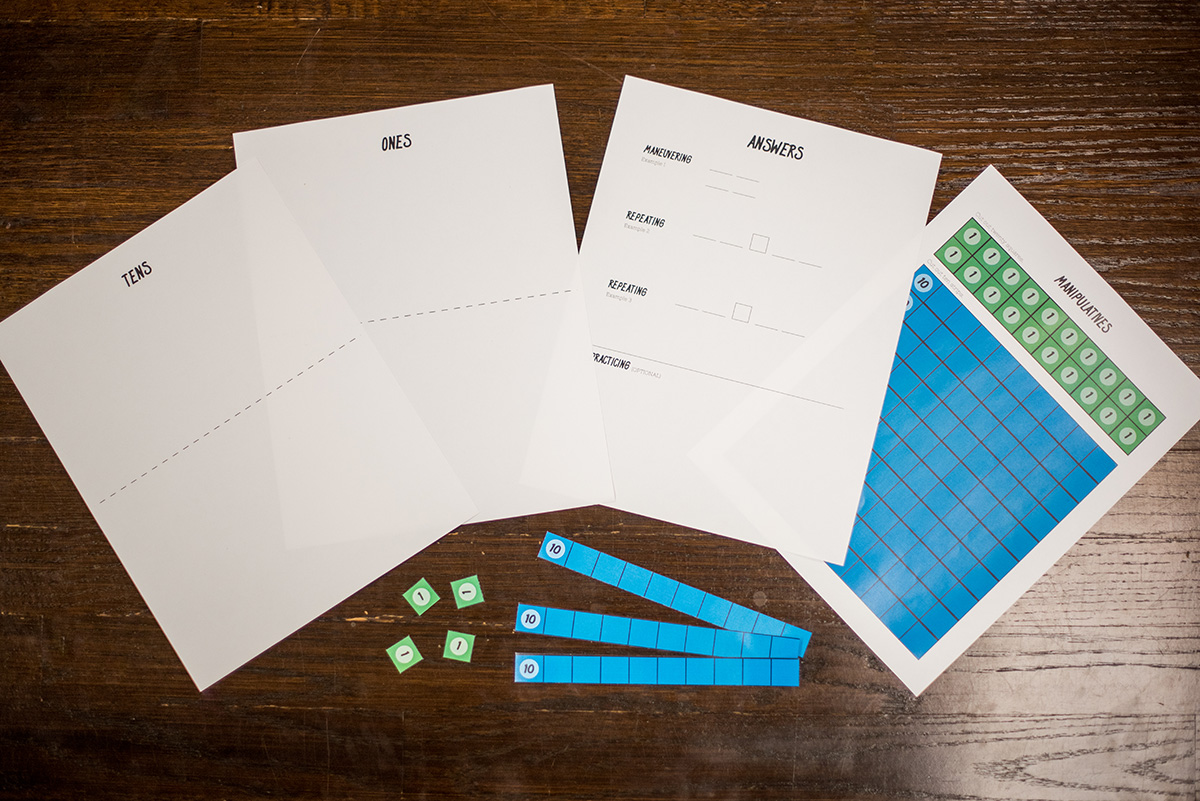
  • Cut out twenty small squares of paper and ten strips of paper (ten squares each). [You can make strips and squares using the first page of this printable.
  • Label three sheets of paper, the first as “Ones,” the second as “Tens,” and the third as “Answers,” or use pages 2–4 of the printable.

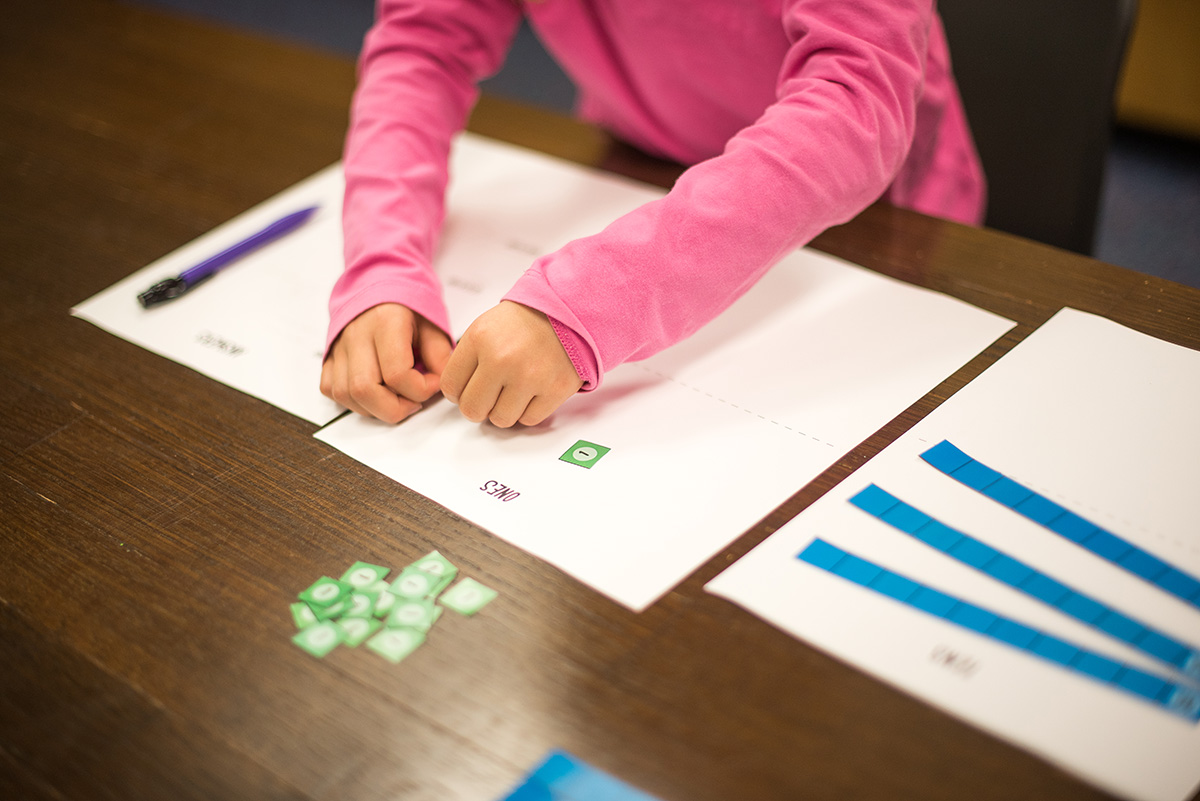
place value activity materialsManeuvering

Give your child the following instructions orally, and guide him in carrying them out.

  1. Position the Tens paper and the Ones paper side by side with the Tens on the left. Make the number 32 on the top half of the Tens paper and the Ones paper.
  2. Skip count the tens aloud (i.e., count 10, 20, 30).
  3. Count the ones aloud (i.e., count 1, 2).
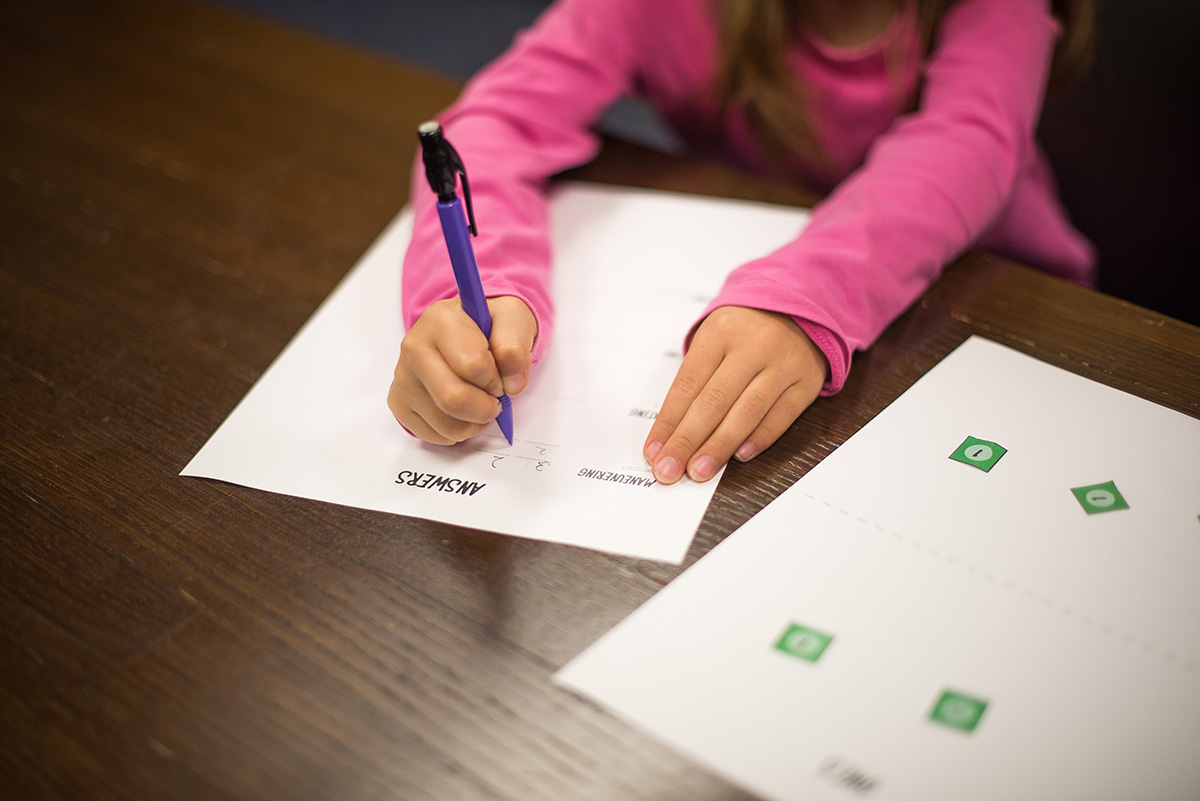
  4. Write the number on the answer sheet (i.e., 32).
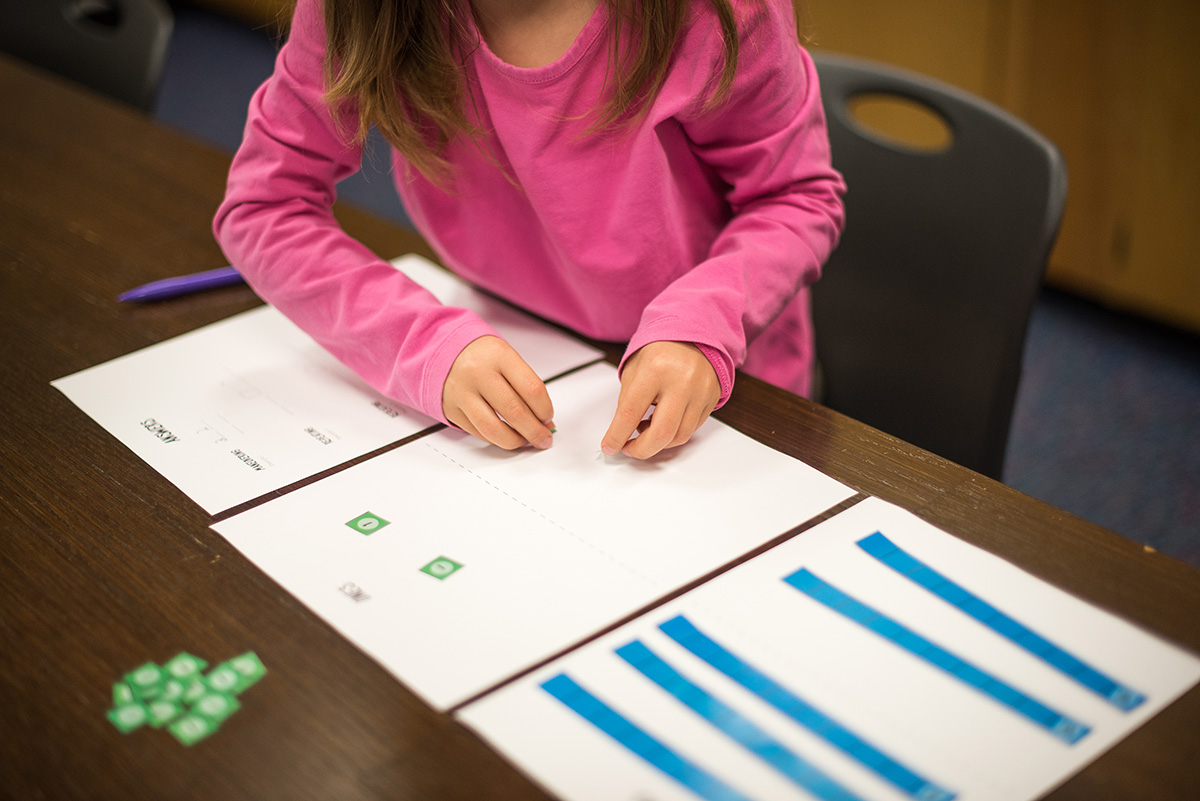
  5. Now make the number 23 using the bottom half of the Tens paper and the Ones paper.
  6. Skip count the tens and count the ones.
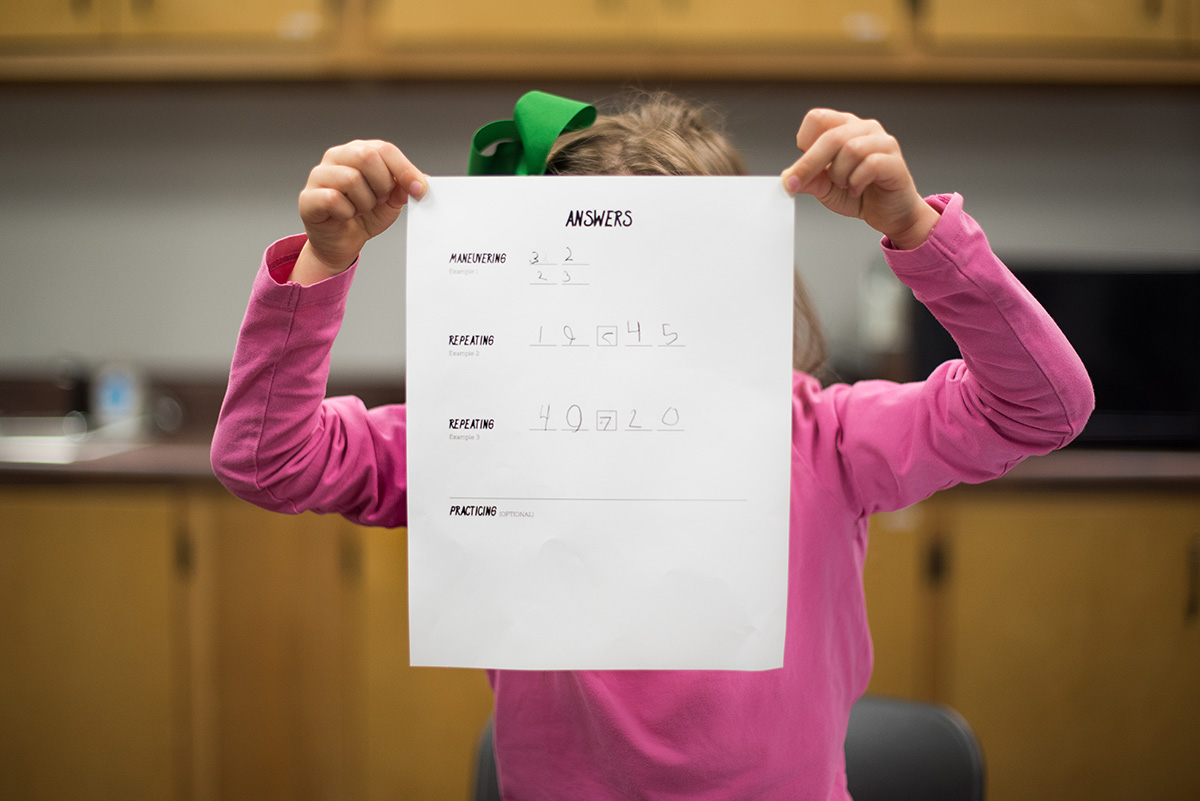
  7. Write the number immediately below the 32 on the answer sheet (Example 1).

place value onesplace value more onesplace value answersObserving

This is the key point in the activity. You’re ready to ask your first-grade child to make some comparisons based on what he’s observing with the manipulatives.

  1. Ask, “Which group is bigger, the one on the top (32) or the one on the bottom (23)?”
  2. Follow up with, “Which one has more ones?” and “Which one has more tens?”
  3. Finally ask, “Which place should you look at to determine which number is bigger (greater), the ones place or the tens place?” Have your child respond by circling the correct digit on the answer sheet.

Repeating

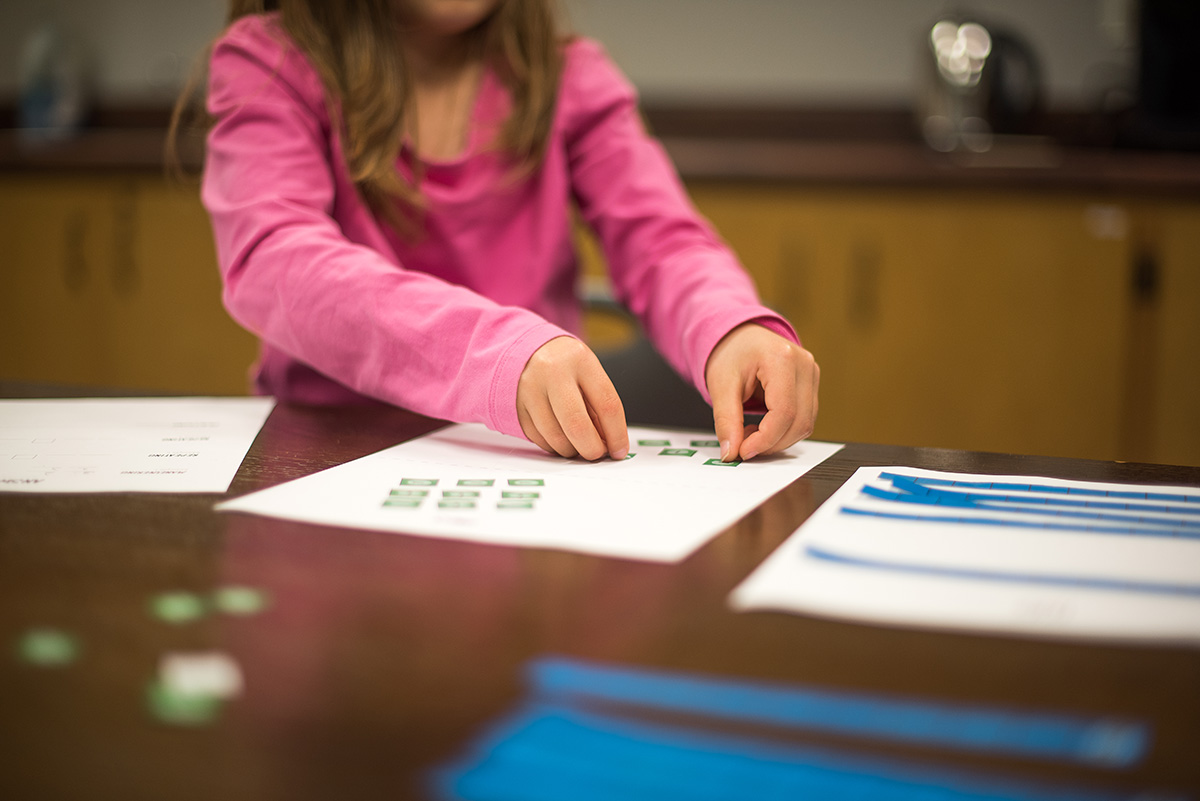
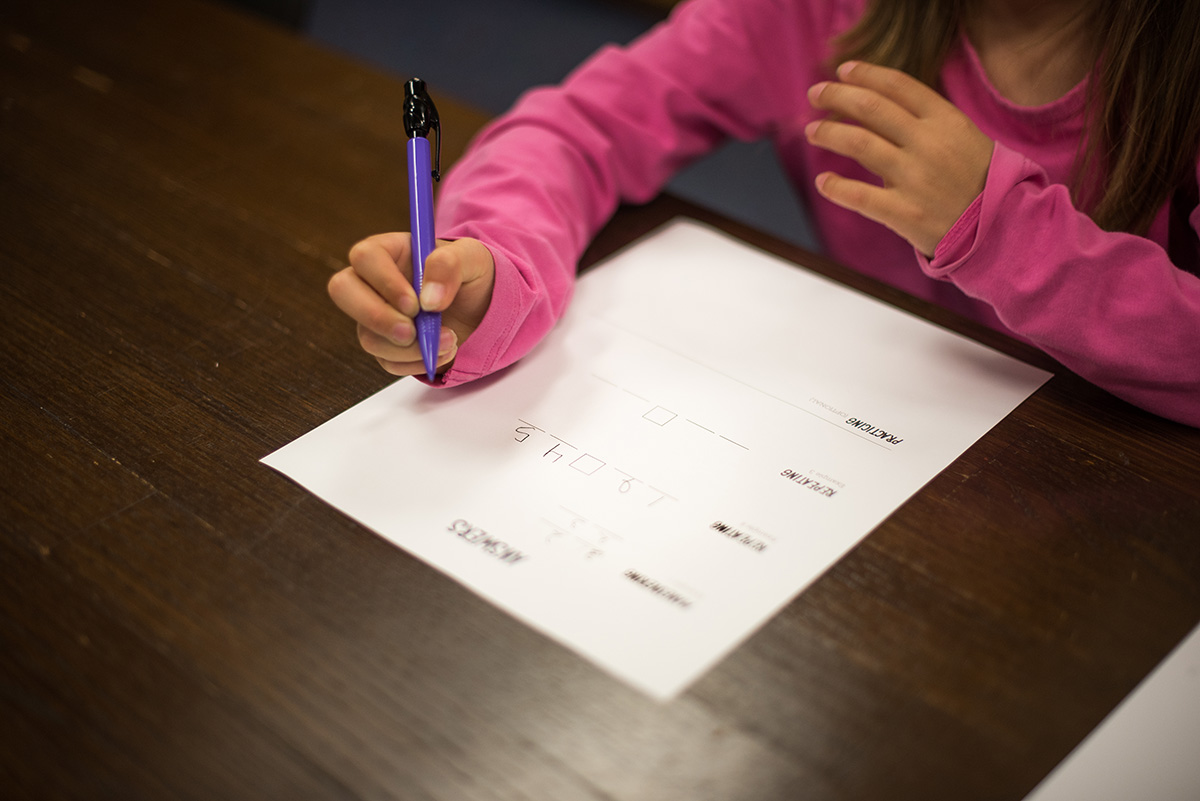
  1. Remove the strips and squares from the Tens and Ones pages. Go through the process of building 19 and 45 but without the counting steps.
  2. Tell the child to write the numbers side by side with a box in between (Example 2).
  3. Ask which number is larger. The child should indicate his answer in the box by drawing the < symbol in the box.
  4. Now have your child pick two numbers (greater than 10 and less than 50) to repeat the activity.
  5. Have your child guess which number is larger before building the two numbers.
  6. Guide him in writing the numbers with a box in between and then drawing the correct symbol in the box (Example 3).

place value counting onesplace value more answersPracticing

Write out five or six less-than or greater-than problems for your child to practice what he just learned. Encourage him to make each number on the Tens and Ones pages before writing in the greater-than or less-than sign.

Try to spend about twenty-five minutes on this activity before moving on to something else.

Do the the activity again on another day with different numbers to continue developing your child’s number sense and understanding of the critical role that place value plays in determining how large a number is.place value finished answers

Filed Under: Successful Learning Tagged With: hands-on learning, math, Math 1, number sense

Darkness in Dystopian Fiction and the Hope After

May 15, 2018 by Jenna

dystopian fiction today
In the last few years, there has been a trend towards dystopian literature in young adult fiction. Though the trend may eventually die down, the books it has produced are still popular. If your children start asking about reading these books or watching the movie adaptations, what will you say? It’s always better if you read them yourself first. But you may still find yourself uncertain about whether dystopian fiction is appropriate for your children.

Let’s address a few of the basic questions you may have and point out some things to consider when approaching this genre of literature.

What is dystopian fiction?

Dystopian fiction is the opposite of utopian fiction. Instead of living in a perfect world, the characters typically live in a post-apocalyptic world with highly isolated societies. Dominant themes include an overly controlling, and often broken, government and a socialistic structure of society. Series such as The Hunger Games and The Giver are examples of popular dystopian fiction, but the genre is far from new. Though there is some debate, the earliest dystopian novel is either The Time Machine (1895) or When the Sleeper Wakes (1899), both by H. G. Wells. Rebellion against an oppressive government and violence because of that rebellion often characterizes the genre. It also has a tendency to be hopeless and repressively dark.

Why is dystopian fiction popular now?

Of course, a work of literature makes more sense when you understand its author’s background, but it’s also true that what a society chooses to highlight often reveals a great deal about that society. The culture that’s drawn to dystopian literature often identifies with the darkness, fear, death, and hopelessness that dystopian works portray. It’s a society that lacks security and dreads an uncertain future. It sees itself reflected in solitary heroes who try to repair a system that was broken long before they were born. It’s a society that is deeply afraid, with nowhere to turn. Even when their heroes win, it often feels like a broken victory.

The people in this society are your children’s peers and friends.

How can dystopian fiction be valuable?

Just like many other books, dystopian novels offer an opportunity to discuss a biblical worldview of the issues they raise. Naturally, mature children or those whose parents are reading along with them will be better equipped to critique those ideas. The following questions may also help direct your discussion of dystopian fiction: What does the Bible say about obeying the laws of governments? What does it say about obeying laws that are contrary to God’s law? How could the protagonist have handled a bad situation differently? What is a biblical response to a fearful and troubled society?

But perhaps even more importantly, familiarity with these stories opens up pathways of communication for your children with their peers. Yes, we live in a dark and broken world, but its future is by no means uncertain. We have a greater hope in Christ, who has already won a complete victory, and in His hands those who trust in Him are secure for all eternity. Your child might have a wonderful opportunity to share the hope we have in Christ with others who are deeply discouraged.

Filed Under: Shaping Worldview Tagged With: dystopian fiction, homeschool reading, young adult literature

The High Calling of Motherhood

May 10, 2018 by Guest Writer

motherhood
Two words come to my mind when I think of motherhood—servanthood and sacrifice—because the truth is that we can’t be the moms God wants us to be without either one of these. In fact, He commands all Christians to practice servanthood and sacrifice. Jesus told His disciples, “If any man will come after me, let him deny himself, and take up his cross, and follow me” (Matt. 16:24). However, there’s a big difference between serving our families and being a slave to them.

Servanthood doesn’t mean we should wait on our children hand and foot and make sure they always have everything they want. God put us, along with our husbands, over our children to be their parents—not their best friends or personal genies to grant them their every wish. But it does mean that we mothers are to willingly sacrifice our own desires in order to serve our families.

The Example

I think of my own mom and how grateful I am for her. She is a true Proverbs 31 lady who made our home a place of security, happiness, and love. She homeschooled my three older brothers and me—and lived to tell about it! She did it in a disciplined, organized, gracious, and patient manner. It wasn’t until I was in college that I began to really understand and appreciate all the work she put into our home education and just how well she prepared us for the challenges of higher education. But Mom helped prepare me for something even greater than earning a college degree—the high calling of marriage and motherhood. She not only modeled what a God-honoring wife and mother should be, she also helped me grow with biblical instruction and reproof. Those conversations served as a spiritual compass to guide me through life-changing decisions.

The Purpose

Now I’m the homeschooling mommy, and I’m more appreciative of the sacrifices my mom and dad made for our family. No doubt there are moms reading this right now who can echo this sentiment. You can relate to the unique responsibility of educating your children full-time, day in, day out. The lessons continue long after the school day ends. You are constantly switching roles as mother and teacher; and yes, it can grow wearisome at times. But you can also relate to the unique joy and fulfillment of homeschooling and agree that it’s worth the sacrifices. Because you have a higher purpose than merely grooming good children and good students: your goal should be to rear children who will grow up to love, serve, and glorify God.

We get one chance, moms. Embrace and enjoy the high calling of motherhood!

• • • • •

Jennifer is a pastor’s wife and mom of two young girls and loves being able to homeschool them. During her own twelve years of homeschooling, Jennifer developed a passion for reading and writing. She earned a bachelor’s degree in creative writing and relishes writing during her free time.

Filed Under: Simplified Homeschool Tagged With: homeschool, homeschooling moms, mom appreciation

Finishing Strong with Review Activities

May 8, 2018 by Guest Writer

review activities for kids
The grass is green again, the air is warm, and summer is just weeks away! As you wrap up the school year, you may want to review and reinforce some of the things your kids have learned this year. Here are a few review activities to cover the material while engaging their attention and keeping it fun!

Jeopardy Review Game

With a large whiteboard and some sticky notes of various colors, you can make your own Jeopardy-style review game. You can play this with all your kids at the same time; give extra points if a child knows the answer to a question above his or her grade level! Make different Jeopardy boards for each subject. For example, the heritage studies game might include headings such as “Inventors” or “Explorers” or “Important Battles.” The kids will love saying things like, “Landforms for 200” or “Bible Heroes for 300.” Erase and refill the board with questions as many times as you like.

Candy Land Math Review

How about adding an element of review to the favorite children’s game Candy Land? Every time your child draws a card, he or she must answer a review question. If the answer is correct, the child gets to move to the corresponding colored space. If not, he or she must stay in the same spot. Double squares require two questions and two correct answers!

Multiplication with Dice

Do you have a second grader or third grader who is learning the multiplication tables? As you play a game that involves a pair of dice, require the child to multiply each number he or she rolls before continuing the turn. For example, if the child rolls a 3 and a 5, he must multiply the two numbers as well as adding them up. A game like Monopoly is excellent for review of addition, subtraction, multiplication, and other math-related concepts.

Fishing for Questions

For younger children who like to move while learning, try a fishing game. With tape or string, make a line on the floor for the children to stand behind. Cut out fish shapes from paper (a different color for each grade level) and write age-appropriate review questions on the back. Glue a large, child-safe magnet to each fish and attach another child-safe magnet to a pretend fishing line. The kids will love “fishing” for their review questions.

Jumping Review

Here’s another easy review game that involves movement. Write questions on sheets of colored construction paper—one question on each. Use painter’s tape to attach each paper to the floor with the question face down. Roll a die and have each child jump that number of colored spaces. The child must answer the question he or she lands on. You can make up your own rules for moving and winning, depending on the ages of your kids.

You’ll find more ideas for games and activities in the Teacher’s Editions of each subject in the BJU Press curriculum. Why not do one or two of these activities per week throughout the summer to keep that knowledge fresh in their minds? Have fun with review as you celebrate another successful school year!

• • • • •

Rebecca is a work-at-home freelance writer, novelist, wife, and the mom of two bright-eyed little ones. She credits her success in writing and her love of books to her own mom, who homeschooled three kids from pre-K through high school.

Filed Under: Successful Learning Tagged With: homeschool, homeschool review, review game

  • « Go to Previous Page
  • Page 1
  • Interim pages omitted …
  • Page 62
  • Page 63
  • Page 64
  • Page 65
  • Page 66
  • Interim pages omitted …
  • Page 152
  • Go to Next Page »

Primary Sidebar

As parents, teachers, or former homeschool students, we are passionate about homeschooling from a biblical worldview. We hope these teaching tips, fun activities, and inspirational stories support you in teaching your children.

Email Signup

Sign up for our homeschool newsletter and receive select blog posts, discounts, and more right to your inbox!

Connect with Us!

                    Instagram     

Read Posts on Specific Subjects

Early Learning
Foreign Language
History
Language Arts
Math
Science

Footer

Disclaimer

The BJU Press blog publishes content by different writers for the purpose of relating to our varied readers. Views and opinions expressed by these writers do not necessarily state or reflect the views of BJU Press or its affiliates. The fact that a link is listed on this blog does not represent or imply that BJU Press endorses its site or contents from the standpoint of ethics, philosophy, theology, or scientific hypotheses. Links are posted on the basis of the information and/or services that the sites offer. If you have comments, suggestions, questions, or find that one of the links no longer works, please contact us.

Pages

  • About BJU Press
  • Conversation Guidelines
  • Terms of Use & Copyright

Archives

© 2026 · BJU Press Homeschool