• Skip to primary navigation
  • Skip to main content
  • Skip to primary sidebar
  • Skip to footer

BJU Press Blog

  • Home
  • Shop
    • Shaping Worldview
  • Simplified Homeschool
  • Successful Learning

history

An Experience That Changed Everything

August 8, 2017 by Justin

Civil War Experience

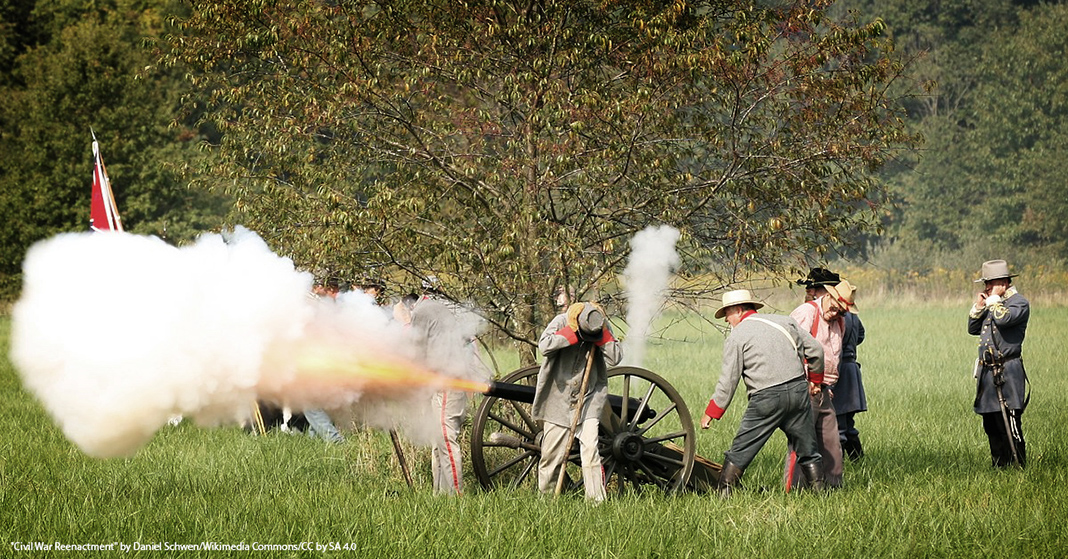
When I was about nine years old, my dad decided to take me to a local Civil War reenactment. I’m from a small town that’s famous for having one of the best reenactments around, drawing thousands of people every year. I loved history and had studied the Civil War, so my excitement for this trip rivaled that of going to Disney World.

I walked around taking it all in. Everything was just as I had read and expected it to be—men and women cooking over campfires next to their tents, sharing stories from the past; the sound of cannon blasts so loud that my ears hurt; soldiers in uncomfortable-looking uniforms carrying rifles with bayonets that made them taller than the men carrying them. It was all so epic.

Then I heard it. A man screaming in pain, or at least acting like it. I turned the corner and saw the medical tent. I froze. The pile of severed limbs covered in “blood” had probably been purchased from a novelty store, but they were all too real to my pre-adolescent eyes. A man in a once white, now crimson apron was wielding an instrument that looked a lot like my dad’s hacksaw. Then I noticed the “wounded” man surrounded by several other men holding him down. Young as I was, I could easily figure out what was going to happen next. The experience shocked me. What I had just witnessed was all I could think about for the rest of the day.

My entire understanding of the Civil War changed in an instant. It wasn’t as though I hadn’t read about the medical treatments of the time, but that was just words in a textbook that I quickly glossed over to get to the exciting battles. Now the realities of the war had become palpable for me.

Sometimes the only way to learn about something in a way that allows for true understanding is to experience it. In many cases, we think we (or our children) understand a topic only to find out that we really didn’t comprehend it at all. That’s why learning activities are so important. Actually experiencing something builds a foundation for learning that you can’t create by merely reading a book or watching a video. Not all activities and experiences need to be shocking like my example. In fact, most won’t be. But simple activities, such as this balloon craft, put skills taught in a lesson into a physical form and accomplish the same thing.

That’s why I always encourage homeschool parents to also purchase the Teacher Editions of BJU Press textbooks.  Parents typically don’t have time to come up with creative activities to reinforce each lesson. The Teacher Editions make this simple by including a large variety of activities for different learning styles.  The time you save in planning and the benefit to your child’s learning experience easily offset the extra expense.

Be sure to check out some learning activity ideas in the posts below.
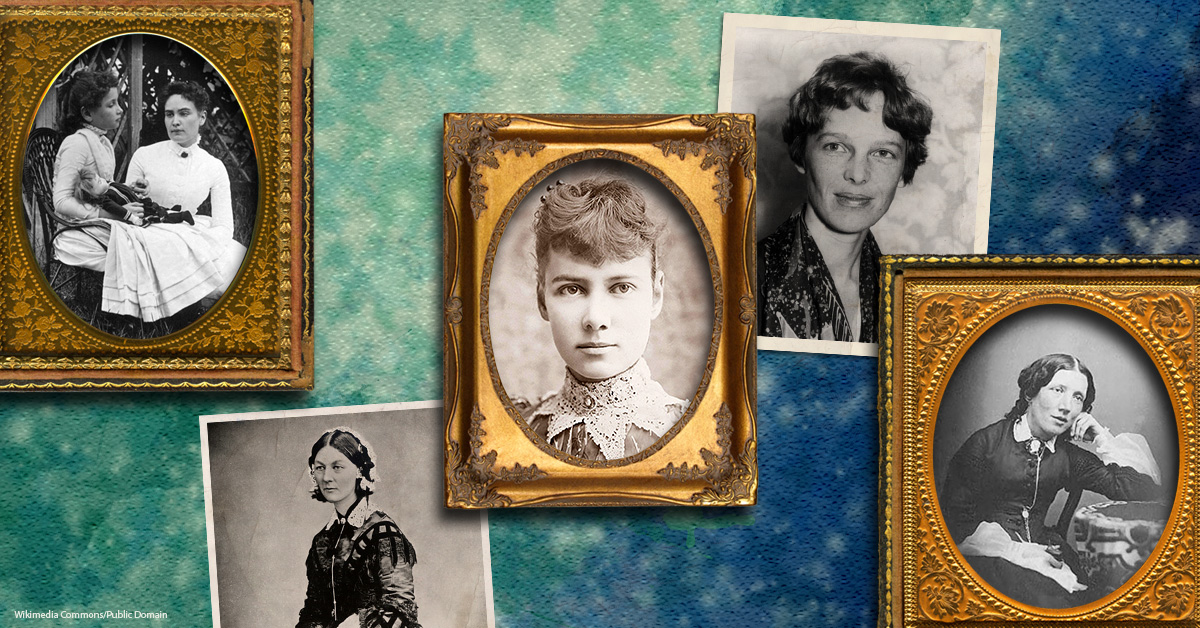
Image Source

Filed Under: Simplified Homeschool, Successful Learning Tagged With: activities, Civil War, experience, history

Teaching About Inspiring Women from History

February 23, 2017 by Meredith

Who inspires you? Maybe it’s the mom at your church whose children have all learned their multiplication tables with minimum tears, or your local librarian who always knows where to find that book. Everyone has a God-given purpose and sphere of influence during his or her lifetime. We each have a story—also called a biography.

Merriam-Webster defines biography as “the story of a real person’s life written by someone other than that person.” It’s not just the facts of birth, marriage, and death, but the in-between moments that make up the excitement in a person’s life story. Right now, your children are developing the gifts and abilities from God that they will use to impact their world.

Women’s History Month in March is a good opportunity to inspire them to grow and make a difference by teaching them about the following women who shaped history in their own unique ways. (Included throughout are links to resources for additional learning.)

Elizabeth Everts “Betty” Greene (1920–1997): Pilot and Missionary

Betty grew up in the Pacific Northwest and took an early interest in flying. In 1936, she earned her pilot’s license and soon began serving her country in the Women’s Airforce Service Pilots (WASPs) by delivering supplies and participating in military training exercises. Because of her advanced flying skills, she also was recruited to test aircraft at high altitudes. After World War II, Miss Greene used aviation to advance the gospel. Her trips took her to South America, Africa, and the Pacific to places that were hard to reach on foot. Today, the Missionary Aviation Fellowship, an organization that she helped found, continues to combine two things Betty loved—service to God and flying.

MAF biography of Betty Greene

Betty Greene: Flying High

Sandra Day O’Connor (1930– ): Justice of the Supreme Court

A graduate of Stanford Law School, Sandra’s accomplishments reveal not only her well-trained mind but also an admirable gracious spirit as she chose to rise above the social barriers placed before her. Mrs. O’Connor served as an attorney and then the first woman majority leader of the Arizona State Senate before President Ronald Reagan appointed her to be the first woman Supreme Court Justice in 1981. Throughout her career, the Honorable Sandra Day O’Connor made decisions based on careful research and consideration of a ruling’s impact on our country. Since retiring from the Supreme Court, she has increased awareness of American civic education by starting the iCivics online learning platform for students.

Justice Sandra Day O’Connor, video interview

Harriet Beecher Stowe (1811–1896): Writer and Social Reformer

Harriet’s famous father, Lyman Beecher, presented his children with unique learning opportunities that shaped their worldview and enabled them to defend their beliefs. She married young and had several children. But she had a gift. Her use of writing proved a valuable tool for sharing Christian truths during a time when women’s opinions were often overlooked. It also allowed her to earn money to support her family. Mrs. Stowe’s most famous work is Uncle Tom’s Cabin, which incorporates first-hand accounts of the mistreatment of enslaved people. Published as a novel in 1852, it stirred up a great deal of controversy. But Harriet was not afraid to shed light on the social evils of her day. After the Civil War, she continued to support the equal treatment and education of all people as human beings created in God’s image.

Biography for Kids

Johanna “Anne” Mansfield Sullivan Macy (1866–1936): Educator

Limited eyesight didn’t stop Anne from being motivated to learn. She graduated from Perkins School for the Blind as valedictorian. Miss Sullivan’s impact on the world of education started with one student—Helen Keller. Anne homeschooled her deaf-blind student, teaching her to communicate by spelling on the hand. Her outside-the-box methods of individualized teaching brought respect from other teachers and helped to broaden education for people with physical limitations.

Primary sources about Anne Sullivan

Anne Sullivan Macy online museum

Video with Anne Sullivan and Helen Keller

What woman from history would you add to this list?

Save

Filed Under: Successful Learning Tagged With: biography, history, women

An Activity for Making History Memorable (Printable)

January 24, 2017 by Jenna

You never know when a fun little activity might become one of your child’s favorite memories. And what mother wouldn’t be pleased if one of her child’s favorite memories turns out to be about learning something new?

Recently I sat down with Michelle Jarrell, one of our Online Learning teachers, to talk about the file folder games that she developed for one of her classes. As we were talking, I couldn’t help but remember something I did when I was a kid. One day I got into the filing cabinet where my mom kept all the homeschool supplies and pulled out the laminated file folders she used to teach numbers, colors, and shapes. There were labels where the shapes and numbers went, and each piece had Velcro on the back. Now I laugh about the fact that at the time I was more fascinated by hearing the ripping sound than by putting the shapes where they belonged.

Mrs. Jarrell’s file folder games give a visual and hands-on element to heritage studies, which can be a not-so-visual and hands-on subject. A bit like lapbooks, file folder games focus on specific lessons rather than on broad overviews. And, they’re a lot of fun to make and to play.

In her class, Mrs. Jarrell gives her students the option to add four to six dates to the master timeline that she designed. Here’s how you and your child can put together your own master timeline from AD 1000 to 1800.

Master Timeline Activity

Things you will need

  • Three file folders
  • Hook-and-loop fasteners (like Velcro®) or adhesive putty (like Sticky Tack)
  • Tape
  • Glue
  • Master timeline activity (printable)

Directions for timeline

  1. Print out the master timeline activity.
  2. Open all three file folders and line them up, side by side.
  3. Tape the folders together to make a single sheet approximately three feet by one foot.
  4. Cut out the timeline strips and glue them onto the folders, starting with 1000 at the top.
  5. Cut out the date and event tiles.
  6. As a review or as your child encounters new events in the history textbook, have him stick each tile where it belongs on the vertical timeline using tape, adhesive putty, or a hook-and-loop fastener.

Filed Under: Successful Learning Tagged With: activities, file folder games, heritage studies, history, lapbooks

Remembering Dr. Martin Luther King Jr.

January 10, 2017 by Justin

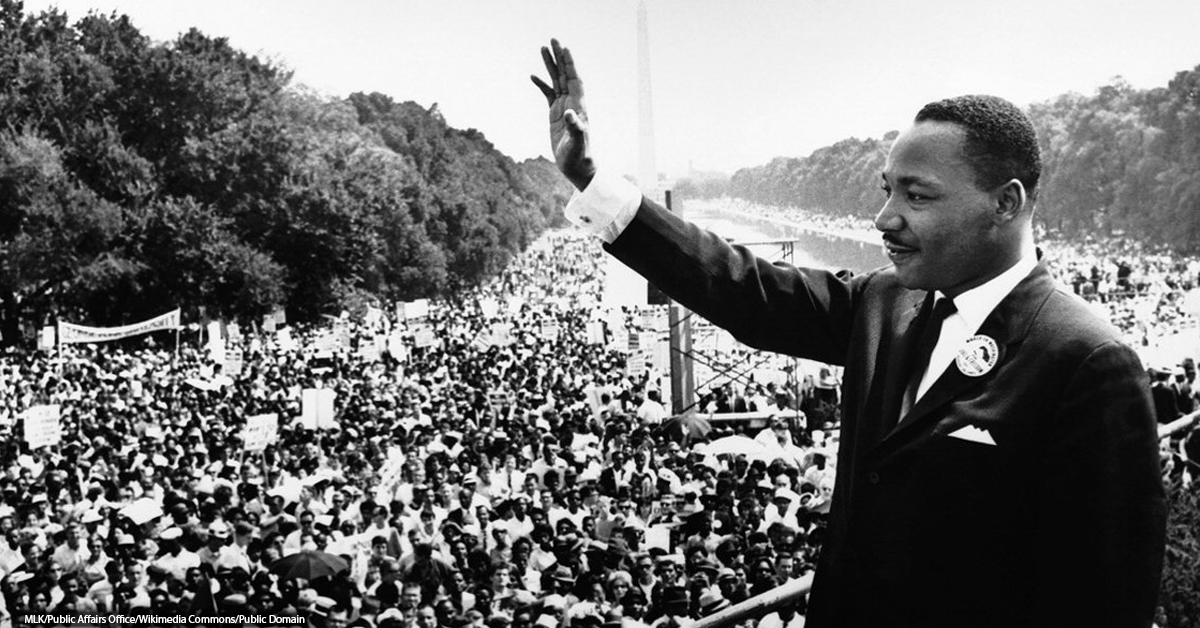
“The glory of the Lord shall be revealed, and all flesh shall see it together.” You might recognize this text from Isaiah 40:5. Some might also recognize it from Dr. Martin Luther King Jr.’s historic “I Have a Dream” speech, which he delivered more than fifty years ago.

Dr. King quoted God’s Word as he sought unity among the races. He reminded the people of his day that they all had a single unifying bond that connected them regardless of race, culture, and wealth—the idea that “all men are created equal”—which is fundamentally a biblical concept. La Shawn Barber, a columnist at World magazine, has said, “As the church grapples with racial issues today, King’s life may serve as an example of someone who challenged the church to live up to biblical ideals and invoked Christ in the name of racial justice. . . . He infused the civil rights movement with Christian principles.”

Today race relations in our nation have improved and basic civil rights are extended to all Americans. And Martin Luther King Jr.’s words are now most commonly seen in history books—except Isaiah 40:5.

Like the rest of the Bible, this piece of God’s Word is timeless. It’s just as relevant today as it was in 1963 and in Old Testament times. “Black only” drinking fountains or “white only” lunch counters are artifacts of the past, but our nation remains divided. Today there are more lines: black, white, brown, tan, red, and blue. Even Bible-believing Christians are divided and often distracted from what really matters.

While it is true that Dr. King was a man with flaws, we find in his speech an acknowledgement that God’s Word speaks to mankind’s problem of division. He also had the courage to say it in front of the world. Today, few public figures or leaders would make such a bold statement. Few would risk the backlash from the media in a culture that is becoming increasingly hostile to the Truth. It’s critical that we train the next generation of leaders to understand and correctly apply the truths of the Bible. God’s Word transcends all debate and must be the foundation on which Christians base our relationships with one another (Philippians 2:1–4).

Image Source: The appearance of U.S. Department of Defense (DoD) visual information does not imply or constitute DoD endorsement.

Filed Under: Successful Learning Tagged With: history, Isaiah, martin luther king, mlk

Celebrate America’s Past with Christmas Traditions

December 20, 2016 by Ben

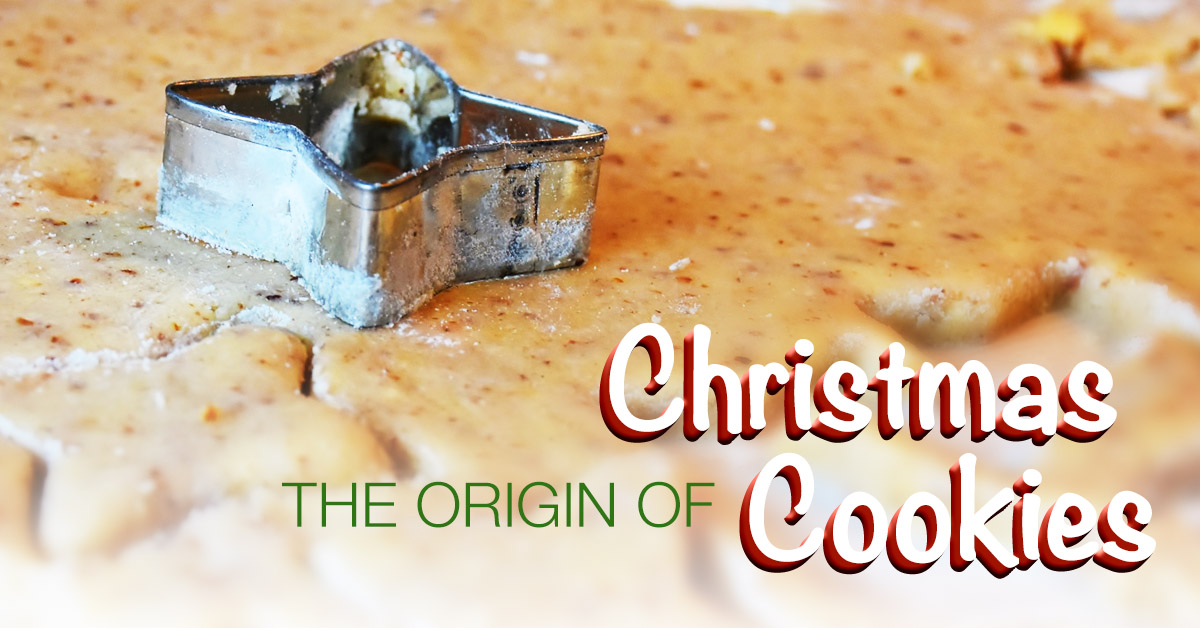
We all enjoy different Christmas traditions, but one is a special delight for almost all Americans—Christmas cookies. Whether at church fellowships or at home on Christmas Eve, these holiday treats seem to be everywhere. But where do Christmas cookies come from? I confess that I hadn’t thought about the origin of this tradition until I was preparing to teach my second grader about the middle colonies in colonial America using BJU Press Heritage Studies.

The Middle Colonies

The middle colonies were uniquely diverse among the English colonies. New York and New Jersey were both settled by Dutch people. And Pennsylvania’s religious freedom attracted large numbers of Germans and Dutch even though it was founded by the English Quaker William Penn. The multicultural nature of these colonies had an impact on US history, but that fact can easily be lost on a seven-year-old. So BJU Press Heritage Studies 2 uses Christmas traditions to illustrate how these different nationalities contributed to America’s unique cultural identity.

(Image use) WP 12/2016

Our Christmas Traditions

As Heritage Studies 2 presents the story of the founding of the middle colonies, it discusses how the different nationalities brought different Christmas traditions with them. Germans brought Christmas trees and nativity scenes, and the English decorated their homes with evergreens, berries, and candles.

Then there were the Dutch. Since cooks in those days didn’t have a way of measuring the temperature in their ovens before baking cakes, they would take a small amount of batter and put it in the woodstove ovens to test the temperature. People in Holland called these test cakes koekje (KOOK-yieh), which means “little cake.” Eventually, they started making koekjes into people shapes that could be decorated after being baked. That was the basis for gingerbread men and other Christmas cookies we still enjoy every year.

As my daughter and I learn about the founding of these critical American colonies, it has been fun and insightful to see how BJU Press helps me use Christmas traditions to demonstrate how the nationalities in those early colonies influence our lives even today.

Find out more about how BJU Press textbooks support teaching history.

Filed Under: Successful Learning Tagged With: christmas traditions, cookies, history, middle colonies

  • « Go to Previous Page
  • Page 1
  • Page 2
  • Page 3
  • Page 4
  • Interim pages omitted …
  • Page 8
  • Go to Next Page »

Primary Sidebar

As parents, teachers, or former homeschool students, we are passionate about homeschooling from a biblical worldview. We hope these teaching tips, fun activities, and inspirational stories support you in teaching your children.

Email Signup

Sign up for our homeschool newsletter and receive select blog posts, discounts, and more right to your inbox!

Connect with Us!

                    Instagram     

Read Posts on Specific Subjects

Early Learning
Foreign Language
History
Language Arts
Math
Science

Footer

Disclaimer

The BJU Press blog publishes content by different writers for the purpose of relating to our varied readers. Views and opinions expressed by these writers do not necessarily state or reflect the views of BJU Press or its affiliates. The fact that a link is listed on this blog does not represent or imply that BJU Press endorses its site or contents from the standpoint of ethics, philosophy, theology, or scientific hypotheses. Links are posted on the basis of the information and/or services that the sites offer. If you have comments, suggestions, questions, or find that one of the links no longer works, please contact us.

Pages

  • About BJU Press
  • Conversation Guidelines
  • Terms of Use & Copyright

Archives

© 2026 · BJU Press Homeschool