
• Skip to primary navigation
  • Skip to main content
  • Skip to primary sidebar
  • Skip to footer

BJU Press Blog

  • Home
  • Shop
    • Shaping Worldview
  • Simplified Homeschool
  • Successful Learning

Shaping Worldview

You homeschool because your child’s faith is important to you. We want to support you in training up your child. These blog posts show how to give your child a biblical worldview of each subject.
Start here:

  • How Is God Involved in Math?
  • The GEM Approach: A Biblical Approach to Objectional Elements in Literature
  • Understanding Science Through Faith

What Is the Bigger Purpose of Science?

October 3, 2017 by Jenna

Science
The aftermath of the Fall is all around us. Today’s mounting concern about issues such as global warming, deforestation, and animal extinction is evidence of that, and homeschool families like yours are often more aware of current issues and events than others.

Though we don’t have the power to stop the deterioration of our environment, it’s our duty as good stewards to care for the world God has given us to the best of our ability. While it may be true that those who spend their lives studying the climate, plants, and animals know best how to care for them, that doesn’t mean we all have to become meteorologists, ecologists, and botanists in order to fulfill our responsibilities. You may have dreamed of your child one day making a great scientific contribution—what parent wouldn’t?—but not every child can be a scientist.

So what is the bigger purpose of your children studying science from elementary to high school? Studying science should give your children the tools they need to take better care of creation.

There are two key tools that your children will gain in science lessons.

• A practical understanding of how the world works

When they know how the world works, they can make informed decisions about real-world issues. If your children don’t know the factors that contribute to climate change, they won’t be able to choose a practical solution to incorporate into everyday life. They may choose something that seems effective without knowing the consequences of that choice. On the other hand, if your children do know those factors, they’ll be able to recognize when suggested solutions either won’t last or will merely substitute one problem for another.

• The ability to think like scientists

Science should teach your children to research, observe, and verify under varying circumstances. Rather than expecting them to go into their adult lives pre-equipped with all the knowledge they will need, we should make sure our children are able and willing to do the work of finding answers to problems they’ve never encountered before.

As a graduate assistant, I helped teach a rhetorical writing class. My students all had to write their research papers on energy technology and policy, a subject most of them knew very little about. It was always obvious when my students thought they could succeed in writing the paper through their own knowledge of the subject alone. They weren’t willing to find out what they needed to know about energy in order to do well on the paper.

BJU Press textbooks drive home a practical understanding of the world and of scientific thinking as they weave together a biblical worldview (presenting the Creation Mandate for Christians as well as the demonstration of God’s character in nature) and the discipline of the scientific method. Life Science for Grade 7 explores the potential benefits of biofuels, while Biology for Grade 10 focuses on a balanced view of the conservation of the earth’s resources.

Armed with both an understanding of the world and a willingness to learn, your children will be better equipped to appropriately use creation, even if they don’t develop a revolutionary new fuel system.

Filed Under: Shaping Worldview, Successful Learning Tagged With: biblical worldview, biofuels, Creation Mandate, homeschool science, purpose, science

Socialization: My Main Reason for Homeschooling

August 22, 2017 by Ben

homeschool socializationIf you’re a homeschooler, you’ve probably often been asked, “What about socialization?” Both the skeptical and the concerned like to broach that question. Sometimes it takes a more subtle form: “Are your children involved in sports?” I suspect that some people ask me that just to make sure that my children have interactions with other human beings. Well, of course, they do!
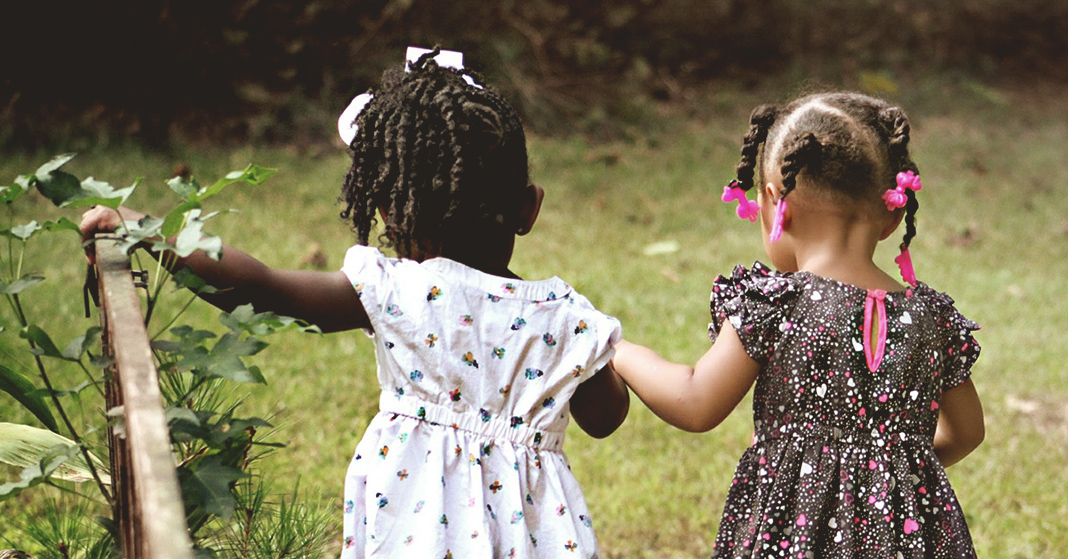
Homeschool families face this concern from generation to generation even though the movement has produced many well-adjusted adults. So is socialization a legitimate reason to not homeschool? As a homeschool father, I believe socialization is one of the best reasons to homeschool.

Will homeschooling produce social misfits?

Concerned friends and family members often worry that our children will become social misfits. Of course, we share this concern. We want our children to develop social graces.

But the worst place to learn social grace is from a group of peers. Trust me, I’ve worked with junior high boys at summer camps; you don’t want your children learning social graces from their peers. The truth is that most children learn social grace from their parents, regardless of where they get their schooling. When parents of publicly educated children fail to teach their children how to interact with others, their children are socially awkward.

What is socialization, really?

Generally, when people talk about socialization, they’re referring to interacting socially with others. But that isn’t what sociologists and educators mean. They define it as the Oxford English Dictionary does: “the process by which a person learns to function within a particular society or group by internalizing its values and norms.” In other words, socialization is children coming to understand what attitudes, values, and behaviors a culture considers normal.

What does public school socialization produce?

What does society think is normal behavior for our children? All sorts of immorality, substance abuse, conspicuous consumption, and disregard for authority.

Paul’s description in Romans 1:29–31 captures much of what our society considers normal: “[People are] filled with all unrighteousness, fornication, wickedness, covetousness, maliciousness; full of envy . . . , deceit, malignity; whisperers, backbiters, haters of God, despiteful, proud, boasters, inventors of evil things, disobedient to parents, without understanding, covenant breakers, without natural affection.”

This is what society considers normal, and public schools have been very effective at socializing generation after generation in these norms. I certainly don’t want that socialization for my children.

What socialization do I want for my children?

As my wife and I teach our children, we’re also trying to socialize them. But we want them to consider God’s values and His expectations normal. We want them to graduate from high school producing the fruit of the Spirit.

As Christians, we’re not supposed to fit in. Romans 12:2 commands us not to be conformed to the spirit of this age. When our children reject the world’s norms in favor of God’s norms, I consider that successful parenting. So when people talk to me about socialization, I tell them that socialization is the number one reason I homeschool.

Filed Under: Shaping Worldview Tagged With: Christian education, Christian Homeschooling, Public Schools, Socialization

7 Ways to Help Your Child Be a True Friend

August 1, 2017 by Guest Writer

making a friendHaving friends—and being a friend—is important for every child. Good friends provide emotional support, companionship, and love. They help your children to develop social graces and to understand people with backgrounds and perspectives different from their own.


Becoming a good friend doesn’t happen by accident; like many important skills, it requires some guidance and training. Whether you choose to educate your children at home, in a private or Christian school, or in public school, teaching your child how to be a true friend is part of your role as a parent.

1. Greeting People

The best way to make a friend is to be one.  As the Bible says, “A man that hath friends must show himself friendly” (Proverbs 18:24). Does your child know how to start and end a conversation? Is he or she comfortable approaching and greeting new people or familiar acquaintances? Before a social situation, you can be your child’s coach and offer some tips about making new friends and greeting old friends.

2. Paying Attention

Is your child relaxed when talking to others? Does he or she remember to smile? Teach your child how to ask questions and take an interest in what others are saying. Help him or her learn to make good eye contact with someone during a conversation.

3. Practicing Social Graces

Purposely place your children in settings that compel them to use social skills. If a child is shy or uncomfortable in certain situations, invent fun ways to role-play those scenarios at home until he or she feels more comfortable.

4. Explaining Etiquette

Depending on their age and permitted use of technology, your children should be able to compose a congenial letter or email to a friend, as well as send a polite, correctly spelled text. Role-play the correct way to answer the phone or close out a phone conversation. To teach the proper etiquette to use at a party or another social event, why not host a pretend dinner party, complete with invitations and RSVP cards?

5. Sacrificing Self

Friendships are not one-sided but should enrich, inspire, and help both people in the relationship. A genuine friend puts time, love, and effort into the relationship, without the expectation of being repaid. Christ said, “Greater love hath no man than this, that a man lay down his life for his friends” (John 15:13). For younger kids, that idea of self-sacrifice could begin with sharing toys or participating in games that the other person wants to play.

6. Learning Value

Teach your children to treasure their friends. Those friendships enrich your kids’ lives and personalities, as well as allowing them to share their gifts and blessings with others. Expressing gratitude to a friend through a note, an email, or a phone call is a wonderful way to teach your kids to appreciate their friends.

7. Praying to Their Best Friend

God is the most important friend your children will ever have. Jesus told his disciples, “Ye are my friends, if ye do whatsoever I command you” (John 15:14). Through prayer, Bible reading, and obedience to God’s Word, your kids can have a close friendship with their Creator.

While perseverance, creativity, and intelligence help determine a child’s pathway in life, creating quality friendships may be just as crucial to future success. Even the Lord Jesus had His friends on earth, including the twelve disciples and others, with Peter, James, and John being His closest earthly relationships. With your help, your children can begin learning the value of making and keeping true friends.

Image Source

• • • • •

Rebecca is a work-at-home freelance writer, novelist, wife, and the mom of two bright-eyed little ones. She credits her success in writing and her love of books to her own mom, who homeschooled three kids from pre-K through high school.

Filed Under: Shaping Worldview Tagged With: friendship, homeschool co-op, homeschoolers

Teaching Your Boys to Be Men of God

June 15, 2017 by Guest Writer

A number of organizations, both secular and religious, have noted our culture’s lack of attention to the importance of strong males in both home and society. A lot of attention has been focused on myriads of other social issues, but the cultivation of strong, wise men has been neglected. As a homeschooling parent, you are uniquely positioned to direct your son toward biblical manhood.

Leadership

God has ordained at least three institutions—the home, the state, and the church—and in at least two of them, Scripture directs that the leadership should be male. This means that most men will be in some kind of leadership role; so it is vital to prepare boys for that future role.

Scripture is filled with examples of godly men, from Job to Moses to David to Paul (and of course, Jesus Himself, who though fully God is fully man as well). You can study these scriptural accounts with your boys and encourage them to note the key characteristics of each man of God.

Humility

Biblical leaders recognize that they are under leaders as well (Ephesians 6:9) and that they are prone to sinfulness as well as all the other characteristics of imperfection (Romans 3:10). They make mistakes, and when they do, they correct them. David repented of his sin with Bathsheba (2 Samuel 12:13), but he did not fail to meet his kingly obligations when facing the consequences of his sin (2 Samuel 12:20).

Self-Control

Self-control is one of the most important traits that a godly man can learn. In a world overflowing with temptations of all kinds, the ability to say “no” to oneself is crucial. Help your sons learn to say “no” to themselves when they are tempted by anger, lust, and selfish desires; and teach them how to focus on joy, gratitude, and service to others instead.

Love

Love is the key to self-control. It is putting the needs of others ahead of your own. Love is the opposite of pride and self-centeredness; and while it is necessary for all believers (Matthew 22:36–40), it’s especially vital for leaders, who have a bigger sphere of influence.

A key element of love— selflessness—comes from working with other people. Group projects (with siblings or other homeschooled children) can encourage your sons to work together and help one another succeed.

Responsibility and Courage

Often, being in charge means doing things that are not fun, and in some cases, not even pleasant. Leaders do those things anyway (2 Corinthians 7:8). They establish a vision, make a plan, and do what is necessary to accomplish it. Sometimes, leaders also have to make unpopular decisions. A godly man should be able to do the right thing despite opposition, even from those he loves; and that takes courage.

It can be healthy, if done in an encouraging environment, to stretch your sons by giving them a little bit more to do than they think they are capable of. Give your boys carefully measured opportunities to be responsible, and reward them with greater responsibility—and freedom—when they do well and make the right choices.

Attentiveness and Empathy

In order to recognize their responsibilities and make good decisions, leaders need to know what’s going on around them. They need to pay attention, listen, and consider carefully the actions and words of other people.

Good leaders have an understanding of how their own actions affect others. They recognize the emotional, physical, and spiritual needs of those they are responsible for, and they seek to meet them in appropriate ways.

Christlikeness and Obedience

Whether a man is a leader or not, he is to be like Christ. Reading Christ’s great prayer (John 17), we are struck by the poignancy of His need for fellowship with His Father. The lowest point of His life was when He cried out from the cross, agonizing over the separation from His Father that occurred when He took on our sin. Being dependent on God is not weakness; it’s the wisdom of recognizing where a man finds his ultimate strength.

Christ also obeyed His Father (John 4:34) even though He is His Father’s equal (John 10:30; 14:9). We are even told that He “learned . . . obedience by the things which he suffered” (Hebrews 5:8).

Knowledge

The Bible clearly says that Christ developed as a boy in all the growth areas of the human condition: intellectual, physical, spiritual, and social (Luke 2:52). He apparenlty learned to speak three different languages fluently: Greek, Aramaic, and Hebrew. He observed carefully the nature of creation (Matthew 6:28) as well as human culture (Luke 7:32). If He could be both omniscient and thirsty for knowledge, each godly boy or man should also strive to be a lifelong student.

Endurance

Your son might be overwhelmed with the idea that he has to cultivate all these characteristics. Like everyone else, he is a work in progress that will not be finished until Christ returns again. To develop these traits in themselves, a boy needs endurance.

Christ is the ultimate example of endurance (Hebrews 12:2). He lived in a fallen, broken, soiled world in a flimsy body of flesh among sinners. He had to face every day knowing what anguish lay ahead for Him in the form of a cross, but He kept going. Through the filth, the faithlessness, and the failures of his followers, He persevered. At last, He “became sin for us” (2 Corinthians 5:21) and the object of the Father’s curse (Galatians 3:13). He completed His mission even though it took years of toil and trouble; and He can walk with your sons, giving them the endurance they need.

Good men do not develop by accident. They are the product of the work of the Holy Spirit, the study of Scripture, diligent prayer, and careful discipleship. In God’s providence, you have been placed in a discipling role for your sons. Disciple on purpose.

• • • • •

Rebecca is a work-at-home freelance writer, novelist, wife, and the mom of two bright-eyed little ones. She credits her success in writing and her love of books to her own mom, who homeschooled three kids from pre-K through high school.

Filed Under: Shaping Worldview Tagged With: Bibilical leaders, homeschooled children, homeschooling parent

3 Connections Between Faith and Learning

June 8, 2017 by Ben

Biblical vs secular worldview

According to the National Center for Educational Statistics, almost 60 percent of homeschoolers choose to teach their children at home because they want to “provide religious instruction.” That was true for my parents when they decided to homeschool me, and it is true for my family as my wife and I now homeschool our children. Secular public education is not an option for us. We want to provide our kids with a Christian education that makes the connection between faith and learning in our homeschool.

Secular Disconnect

If you ask most Christian parents whether they use secular lessons in their homeschool, they typically say, “No way!” But that’s assuming that secular means denying God’s existence. Actually, secularism claims that religion is a private matter and as such shouldn’t influence considerations regarding public life. So we have public officials who say, “I’m a Christian, but I don’t let that affect my decision-making.”

When we take a secular-based teaching of math, science, or English into our homeschool and place religious education around it, we present education and faith as unrelated. We’re still giving our children a secular education by acknowledging a disconnect between faith and learning.

Worldview Connection

The connection between faith and homeschooling comes from a strong biblical worldview. The basis of any worldview is a big narrative that answers crucial life questions such as “Who am I?” and “Where did I come from?”

The Bible gives us the narrative of Creation, Fall, Redemption. Understanding this story and its implications for homeschooling enables us to connect faith and learning. Let’s look at how each part of this narrative connects faith and learning.

1. Creation Connection

God created humans in His own image and blessed them with stewardship over all the rest of His other creation. These truths from the creation account enable us to make the first and foundational connection to learning. We learn because God blessed us with His image and gave us a job. Our learning reflects God’s glory and it is a powerful tool for fulfilling His command to exercise rule over creation.

2. Fallen Disruption

When Adam sinned, his heart became fallen. It loves wrongly and so thinks wrongly. The account of the fall points to a second, deeper connection between faith and learning. As we learn, we must be vigilant of wrong thoughts based on wrong loves. That doesn’t frighten us from education. Instead we should use the Bible as a corrective lens in all that we’re learning so that we can evaluate the ideas within any subject and reject the false ones.

3. Redemption Connection

God’s plan for redemption is as sweeping as the fall. It can straighten out all of those twisted thoughts we encounter in science, literature, and history. As believers, we’re obligated to bring every thought into obedience to Christ. This is the final, deepest connection between our faith and learning. When we evaluate an erroneous idea in a subject, we cannot simply identify it as false and move on. We must press it back toward God’s creational design.

Let’s take math and see how a biblical worldview enables us to connect faith and learning. Notice how each step makes a deeper connection.

  1. Creation: Since we’re made in God’s image, we can use math as a powerful tool. So we use it to rule over God’s creation and serve others to bring Him glory.
  2. Fall: God’s lordship over all creation disproves secularists’ claim that “math is neutral.”
  3. Redemption: Math must be governed by the Christian ethic laid out in Scripture. It should only be used to love my neighbor and never used to do my neighbor harm.

You and I know the account of Creation, Fall, and Redemption. But how are we doing bringing these big-story implications for learning to our children’s homeschooling? Take time to determine if your homeschooling is presenting faith and learning as unconnected or if it is reaching the kind of connection that a biblical worldview demands. At BJU Press, we’re committed to providing resources and curriculum that assist homeschool families in creating those connections between faith and learning. Each post below provides an in-depth look at the three connections—Creation, Fall, and Redemption.

Filed Under: Shaping Worldview Tagged With: biblical worldview, Christian education, Christian Homeschooling, Creation, Fall, homeschool, Redemption

  • « Go to Previous Page
  • Page 1
  • Interim pages omitted …
  • Page 9
  • Page 10
  • Page 11
  • Page 12
  • Page 13
  • Interim pages omitted …
  • Page 21
  • Go to Next Page »

Primary Sidebar

As parents, teachers, or former homeschool students, we are passionate about homeschooling from a biblical worldview. We hope these teaching tips, fun activities, and inspirational stories support you in teaching your children.

Email Signup

Sign up for our homeschool newsletter and receive select blog posts, discounts, and more right to your inbox!

Connect with Us!

                    Instagram     

Read Posts on Specific Subjects

Early Learning
Foreign Language
History
Language Arts
Math
Science

Footer

Disclaimer

The BJU Press blog publishes content by different writers for the purpose of relating to our varied readers. Views and opinions expressed by these writers do not necessarily state or reflect the views of BJU Press or its affiliates. The fact that a link is listed on this blog does not represent or imply that BJU Press endorses its site or contents from the standpoint of ethics, philosophy, theology, or scientific hypotheses. Links are posted on the basis of the information and/or services that the sites offer. If you have comments, suggestions, questions, or find that one of the links no longer works, please contact us.

Pages

  • About BJU Press
  • Conversation Guidelines
  • Terms of Use & Copyright

Archives

© 2026 · BJU Press Homeschool