• Skip to primary navigation
  • Skip to main content
  • Skip to primary sidebar
  • Skip to footer

BJU Press Blog

  • Home
  • Shop
    • Shaping Worldview
  • Simplified Homeschool
  • Successful Learning

Shaping Worldview

You homeschool because your child’s faith is important to you. We want to support you in training up your child. These blog posts show how to give your child a biblical worldview of each subject.
Start here:

  • How Is God Involved in Math?
  • The GEM Approach: A Biblical Approach to Objectional Elements in Literature
  • Understanding Science Through Faith

Wisdom’s Call and Homeschooling

November 14, 2017 by Ben

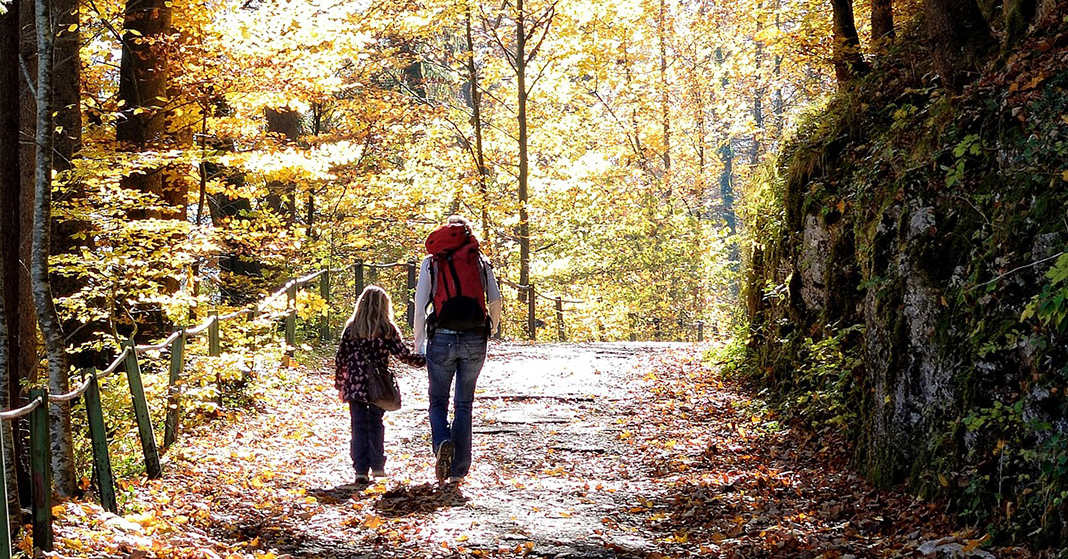
wisdom's call and homeschooling on a hike
At a recent conference, someone posed an interesting question related to using wisdom in homeschooling. “Should I be focusing so much energy teaching my child algebra when I need to teach him to serve?” I think this question goes to the heart of Christian homeschooling.

My wife and I started homeschooling because we want to have God’s words in our hearts and “teach them diligently” to our children (Deuteronomy 6:5–6). But so much of homeschooling has to do with math, science, and other subjects. At times we do feel like we’re teaching our children about God through these subjects, like when we’re refuting evolution, but at other times training our children to be servants of the Lord doesn’t seem central.

Does Christian homeschooling allow for in-depth study of algebra?

Proverbs 8 is a critical chapter in constructing our Christian philosophy of education. In it, wisdom, personified as a woman, calls to young people and urges them to listen to her so she can equip them to make sound judgments. With our focus on developing children for adulthood, we should give careful attention to this chapter.

What is wisdom?

Before we can apply this chapter, we need a clear understanding of who this woman is who’s calling to our children. What is the wisdom of Proverbs 8?

First, God created this wisdom before He created the world: “When there were no depths, [wisdom] was brought forth” (8:24). God made this wisdom, so it is something distinct from His eternal attribute of wisdom. While it is distinct, God delighted in it and used it to frame the world and to establish order.

Second, this wisdom is available all across the world. It is by wisdom that “all the judges of the earth [rule]” (8:16). This means that rulers from Asia to the Americas had access to wisdom even before the special revelation of God was available to them. That’s why wisdom’s call is universal and goes out to all youth everywhere. They all have access to it.

God used wisdom to create the universe, and He integrated its principles into the created order. We can call this wisdom “creational norms,” the principles God embedded in the creational order. And if we learn them, we can use them to live well.

As Christian parents, we can use the principles of Proverbs 8 in a least three ways:

1. Study creation

Teaching our children principles of algebra and physics is not incompatible with teaching them  the “things of God.” As we study God’s good creation and apply it, we are learning from God’s general revelation.

We should not put algebra and serving God at odds with each other. They go hand in hand. For example, the good Samaritan had learned the best medical practices of his time. When he had the opportunity, he used that knowledge of creational norms to serve. If he hadn’t learned those principles, he would have been severely limited in how he could serve.

We should make learning creational norms in math, science, history, and language arts an important part of our homeschooling. Because creational norms are more valuable than “choice gold” (8:10).

2. Listen to authority

At their best, our children are “simple,” and at their worst they are “fools” (8:5). Wisdom’s words then are, “Hearken unto me” and “Hear instruction, and be wise” (8:32–33). If children are going to heed wisdom’s call, they must forsake their own way and listen to their authorities.

As parents, we can set the example of listening. We can listen to more experienced homeschool parents. We can learn about best practices for teaching children. Whenever we learn principles about how life works best in God’s world, we are learning creational norms. And we’re setting an example for our children.

3. Resist evil influence

There’s nothing “perverse” about God’s wisdom (8:8). In contrast, secular experts discovering and teaching creational norms often twist them to suit their own worldview. They teach evolution, for example, so they can pretend they’re free from God.

Wherever we gain wisdom from general revelation, we need Scripture to guide, correct, and straighten out what has been twisted by the wicked.

Heeding wisdom

At the end of Proverbs 8  we see wisdom standing at the city gates urging children and teens to listen to her. Her teaching through creation is more valuable than precious metals. “For whoso findeth [her] findeth life, and shall obtain favour of the Lord” (8:35).

Fools try to live life as though creation doesn’t teach. Perhaps they’re spendthrifts, or maybe they don’t think they need to plow in the winter. Then they find trouble.

So, as we seek to diligently teach our children the ways of God, let’s not forget His teaching through His creation because those who find wisdom find life.
Filed Under: Shaping Worldview Tagged With: algebra, biblical worldview, Christian Homeschooling, Philosophy of Education, Proverbs, wisdom

Expressing Great Gratitude to God

November 7, 2017 by BJU Press Writer

our great God gives a corn harvest
Plenty of men and women have gone down in history with “the Great” after their names. Have any of the following shown up in your homeschool history lessons?

Cyrus, the king of ancient Persia who’s mentioned by name in the Old Testament, is now known as Cyrus the Great. In the New Testament, the king who ordered the massacre of the baby boys in Bethlehem (Matthew 2:16), is ironically called Herod the Great. And who hasn’t heard of Alexander the Great? Then there was Gregory the Great, a popular pope in the sixth century. Later on, the Russian Empire would be ruled by Peter the Great, Ivan the Great, and Catherine the Great. And the list goes on, reaching even to our day. Maybe your family has watched video clips of Wayne Gretzky, the Canadian hockey player known as the Great One.

These people and other “greats” have certainly done remarkable things, but as Christians, we know that no human is really great compared to our God. To declare ourselves great is something like a tiny spark (even though it can set ablaze a huge forest as the Bible says in James 3:5) claiming to be like the sun!

One November a couple of years ago, I was reading through Psalms and noticed how often the words great, greatly, and greatness crop up in those prayers—more than two dozen times! The psalmists were obviously convinced that not only is God great but so are His name, His works, and His attributes, such as His love, mercy, power, and goodness.

So I copied down some of their exclamations of praise to the Lord and about the Lord and stitched them together into what I called “A Psalm of Greatfulness.” Then on Thanksgiving Day, when my family gathered around the table, we read it aloud as a choral reading.

If you’d like to use it this year, feel free to download  “A Psalm of Greatfulness” and print out copies.

You can adapt it for the number of family members and guests who’ll be present at your Thanksgiving meal so that everyone gets to participate. (Of course, it’s also suitable to use as part of your family worship time during this season—or any other time of the year for that matter.)

Our God is great, and we are grateful!

• • • • •

An editor at BJU Press until 2020, Dennis and his wife spent seventeen years homeschooling their three sons. Dennis occasionally teaches at their church and in his spare time enjoys running, playing racquetball, and interacting with their five grandchildren.

Filed Under: Shaping Worldview Tagged With: family devotions, gratitude, Psalms, Thanksgiving

The Thankful Spot

November 2, 2017 by Guest Writer

Celebrating our blessings on a special day is a wonderful thing to do, but how do we teach our children to be grateful every day? How do we train them to see God’s hand in the little blessings as well as the big ones? Check out this Thanksgiving activity that offers weeks of thankfulness and fun for the whole family. It helps children develop an attitude of gratitude—and grownups may find it refreshing too!
1. Find a Thankful Spot

Remember how Winnie the Pooh had a “Thoughtful Spot”? Well, it’s time to find your family’s Thankful Spot! Is there an area of your home that everyone can view easily? Perhaps the refrigerator door, a wall near the front door, or the bathroom mirror? You could even use each bedroom door as the owner’s personal thankful spot.

2. Create Thankfulness Pages

Feel free to design your own pages, or use our handy printable “Days of Thankfulness.” You’ll need one copy for each person in your home. At the top of the “Days of Thankfulness” page, ask each child to write his or her name and the number of days till Thanksgiving.

3. Display the Pages

Now you’re ready to post the pages in your Thankful Spot. Younger children may have trouble writing on the paper while it is posted vertically on the wall, so you’ll need some way to remove the lists easily each day. Consider using painter’s tape to attach the lists to a door or wall, or use push pins to affix them to a bulletin board or cork board.

4. Add to Your Lists Daily

Remind everyone in the family to write something in one of the blank spaces on his or her list each day. For the first day, ask your kids if they can think of someone special in their lives, someone they’re thankful for. On the second day, they can write down something they like to eat. The third day, prompt them to think about a kind of technology that is useful or enjoyable. There are thirty items on the list, enough for a whole month—but you can keep the fun and thankfulness going as long as you like!

5. Set Aside Time to Be Thankful

Every day—at whatever time of day works best for your family—take a few minutes for everyone to share what (or who) you’re grateful for. Then pray together, expressing your gratitutde to God. You could do this every morning before you begin your homeschool day; or if mornings are too hectic, you could visit your Thankful Spot during lunch break, at suppertime, or in the evening before bed.

Explore Other Creative Ways to Be Thankful

There are other fun ways to stay mindful of all the great things God has given! You can make a paper tree and tape it to the wall in your homeschool classroom. Every day, have your children write some things they’re thankful for on colorful paper leaves, and tape those leaves to the tree branches.

You can also teach the letters of the alphabet and their sounds while being thankful! On the first day, ask your kids to think of something they are thankful for that begins with the letter A. Continue with a new letter each day until you reach Thanksgiving!

Even the littlest blessings are God saying “I love you” to His children. As you help your children find a new “thankful” every day, remember to seize those teachable moments to tell them more about the One who loves them best of all.

• • • • •

Rebecca is a work-at-home freelance writer, novelist, wife, and the mom of two bright-eyed little ones. She credits her success in writing and her love of books to her own mom, who homeschooled three kids from pre-K through high school.

Filed Under: Shaping Worldview Tagged With: homeschool, homeschool classroom, Thanksgiving activity

500 Years of Reformation and Education

October 17, 2017 by Ben

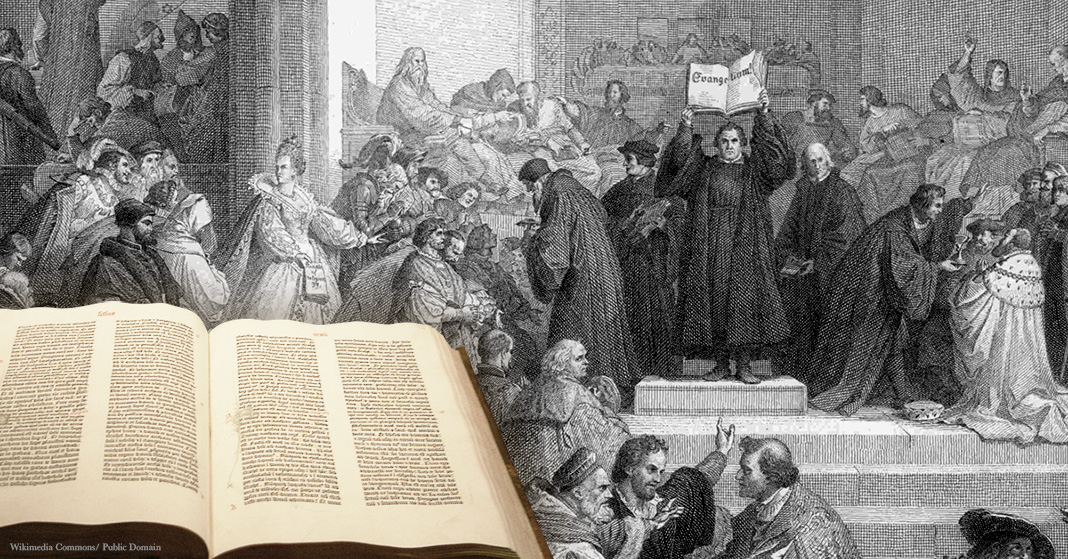
ETCHING: Die Reformation gustav Eilers nach Wilhelm von Kaulback.jpg<br /> BIBLE: Beinecke-gutenburg-bible.jpg

In our homeschool, we’ve been talking for a year now about how we’ll celebrate the five-hundredth anniversary of the beginning of the Reformation. We want our children, even at a very young age, to mark this milestone in the spread of the gospel. When Martin Luther issued his Ninety-Five Theses for debate, he probably had little idea what influence he would have on all of Western culture.

There’s so much I want my four little girls to know about the Reformation and how much God has blessed us through men He used to recover the Five Solas. We usually relate blessings from the Reformation to biblical doctrine, but there were also significant advances in education.

One area our secular society rarely acknowledges is the impact the reformers had on education. The reformers transformed the way Western civilization thinks about education—a transformation that reaches all the way to us today. And it’s a legacy that I want my little girls to know and appreciate.

Education for Bible Reading

The reformers taught that knowing the Bible was foundational to knowing God fully. And if everyone was going to know God through His Word, they needed to know how to read. So the reformers began to emphasize education. They wanted people to have the basic skills for reading so they could know their God through Scripture.

Education for All

In Germany at the time of the Reformation, education was only for the nobility, the professional classes, and the clergy. That left most of the peasantry without basic literacy instruction. There was no general expectation that every child would learn to read. But Luther and others believed that everyone should know God through Christ. That meant everyone needed to be able to read the Bible for themselves.

Although Luther didn’t come up with the idea of education for all, which is sometimes called universal education, his advocacy and influence contributed to making education for every child a priority in Western culture, so much so that some writers call him the inventor of modern education.

Education for Girls

As a father of daughters, I’m so grateful that when the reformers urged universal education they meant everyone, including women. Previously, women had been left out of education as far back as the Greeks and the Romans. The medieval church also left girls out when it came to education. But reformers such as Luther and Calvin recognized that women need to know God through His Word too. So they taught and practiced educating girls in reading and doctrine.

I want my daughters to know that, in large part, Western civilization’s emphasis on educating girls like them came from the reformers. And the reformers wanted girls to have the gift of education so they could read their Bibles.

Education by Parents

John Calvin picked up on the centrality of parents to their children’s education. Like homeschoolers today, he saw that Deuteronomy 6:7 teaches parents that it’s their duty to teach their children. He insisted that parents take responsibility for their children’s education and that religious morality should be a central aim of their learning.

We are so blessed to live in the shadow of the reformers. In one sense, my personal commitment to Christian homeschooling came from my parents. In another sense, each of us is an inheritor of a five-hundred-year-old tradition of training every child to read so that he or she can know God.

I’m not sure what celebrations my family is going to participate in for the anniversary of the reformation, but every day that you and I homeschool our children we’re paying tribute to these men’s efforts.

Save

Filed Under: Shaping Worldview Tagged With: Calvin, Christian education, Christian Homeschooling, homeschool, Luther, Reformation

Learning to Trust God for Your Harvest

October 12, 2017 by BJU Press Writer

harvest
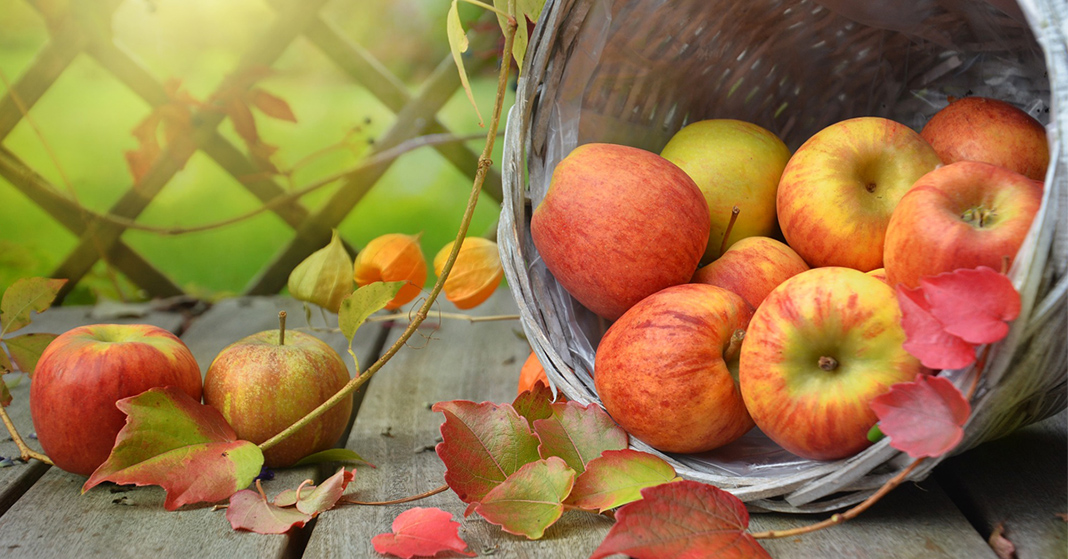
We think of autumn as the season of harvest. Even with the conveniences of grocery stores and restaurants, we all look forward to the cooler weather that brings fresh apples, blackberries, sweet potatoes, squash, and pumpkins to the produce aisle. For all the difficulties that a life on a farm involves, it must be rewarding to gather in the harvest. Imagine finally seeing the results of all the effort you’ve put into planting and maintaining the fields for those long months!

Tending to Your Family

Don’t we sometimes think about homeschooling and parenting the same way—wishing that the family were like a garden plot so that our diligent work throughout spring and summer would yield the satisfaction of tangible results by autumn? But tending a family is a year-round occupation. Homeschooling never ends—not even when the yellow school buses make their rounds at the end of the school day. We may hand out final grades to our children as the school year closes, but rarely do we get to see a final assessment or “harvest” of our work—there’s no concrete evaluation of our overall success level.

Instead, our harvest comes in bits and pieces as our children grow. When a daughter finally understands multiplication, when a son learns to ride his bike without training wheels, when brothers and sisters help each other and unselfishly share their toys (OK, so maybe we’re still working on that one!)—these are the things that show us that the time and effort and prayer we have put into our children’s lives are bearing fruit.

The difficulty comes when not all the plants in our home garden flourish. With some of our children, we can’t help but wonder whether we will ever see a harvest ripened and ready in their lives. “Where did I go wrong?” we wonder. “Did I use the wrong seed? Overwater? Hurt the roots when trying to pull the weeds?” Sometimes we plant, tend, and do everything we can think of, but instead of the fruit of the Spirit, we see only self-centeredness, pride, and rebellion. What can we do when the seeds we’ve tried so hard to cultivate seem to lie dormant or dead in the soil—when instead of producing godly fruit, a child prefers to sow “wild oats,” heedless of the harvest they will yield?

As much as we would like it to be, Proverbs 22:6 is not an ironclad promise—a guarantee that if we hold up our end of the bargain, God will make sure our children turn out all right. Instead it is an exhortation, wisdom we will never go wrong in following. “Train up a child. . . .” Plant, plow, tend, weed, water. Do everything we can to help these plants grow and flourish. And then? Step back in prayer and watch the Lord give the increase (1 Corinthians 3:7).

Waiting for the Harvest

Of course, stepping back to watch is never easy. But the farmer can’t be constantly digging around the roots of his wheat to see whether it is growing right. He can’t pull back the husks from every ear of corn to see whether the kernals are forming properly. No, the farmer has to wait and trust that the God who grew the Garden of Eden is also watching over his fields. And we have to watch our children make decisions for themselves daily. We can and should guide, sometimes even override, those decisions while the children are young, but there comes a point when they must answer for their own actions.

Search your own heart. Are you are walking with God as He requires? That’s all you can control. Don’t carry the weight of guilt for their actions when God doesn’t ask you to bear it. We all make mistakes. We sin. He knows—He died to save us from sin. And He also chose each one of us specifically to parent our specific children. Even when hopes, goals, personalities, and tastes seem to clash horribly between parent and child, God has a good purpose in store.

One of the dictionary definitions of harvest is “a supply of anything gathered at maturity and stowed.” None of us has reached full maturity yet. Do you feel ready to stand before God today, or would you like time to grow more? The same is true of our children, whether they appear to be flourishing, yielding a bumper crop of the good things we hope to see, or they are simply alive, tenaciously clinging to the dirt. We must give them—give ourselves—time to grow.

Trusting the Lord of the Harvest

The harvest we wait for may take much longer to ripen than autumn’s golden pumpkins. It’s possible that we won’t even get to see or share in the fruit of our love-labors. But that’s all the more reason to trust the Lord of the Harvest. He knows each unrolling leaf and bud, each bug and blight, and every different season that will be a part of our children’s growth. We may sow the seeds, but it’s God who gives the rain, sun, and life. Don’t give up hope in times of drought. Don’t uproot the browning stems even when plants appear dead—you don’t know what life still flows despite the brown leaves.

Trust the Lord of the Harvest. And in your trusting, give thanks that He has the greatest stake in the harvest for which you’re both waiting. Hasn’t He even given His Son to bring it in? Give thanks that He knows the outcome and that whatever the harvest yields, God is still and always will be good. And He delights in helping His children—of every age—to flourish “like a tree planted by the rivers of water, that bringeth forth his fruit in his season” (Psalm 1:3).

Filed Under: Shaping Worldview Tagged With: harvest, homeschool, parenting, trust, wait

  • « Go to Previous Page
  • Page 1
  • Interim pages omitted …
  • Page 8
  • Page 9
  • Page 10
  • Page 11
  • Page 12
  • Interim pages omitted …
  • Page 21
  • Go to Next Page »

Primary Sidebar

As parents, teachers, or former homeschool students, we are passionate about homeschooling from a biblical worldview. We hope these teaching tips, fun activities, and inspirational stories support you in teaching your children.

Email Signup

Sign up for our homeschool newsletter and receive select blog posts, discounts, and more right to your inbox!

Connect with Us!

                    Instagram     

Read Posts on Specific Subjects

Early Learning
Foreign Language
History
Language Arts
Math
Science

Footer

Disclaimer

The BJU Press blog publishes content by different writers for the purpose of relating to our varied readers. Views and opinions expressed by these writers do not necessarily state or reflect the views of BJU Press or its affiliates. The fact that a link is listed on this blog does not represent or imply that BJU Press endorses its site or contents from the standpoint of ethics, philosophy, theology, or scientific hypotheses. Links are posted on the basis of the information and/or services that the sites offer. If you have comments, suggestions, questions, or find that one of the links no longer works, please contact us.

Pages

  • About BJU Press
  • Conversation Guidelines
  • Terms of Use & Copyright

Archives

© 2026 · BJU Press Homeschool