
• Skip to primary navigation
  • Skip to main content
  • Skip to primary sidebar
  • Skip to footer

BJU Press Blog

  • Home
  • Shop
    • Shaping Worldview
  • Simplified Homeschool
  • Successful Learning

Shaping Worldview

You homeschool because your child’s faith is important to you. We want to support you in training up your child. These blog posts show how to give your child a biblical worldview of each subject.
Start here:

  • How Is God Involved in Math?
  • The GEM Approach: A Biblical Approach to Objectional Elements in Literature
  • Understanding Science Through Faith

The Dangers of Comparison

February 15, 2018 by Megan

pray about comparison“Homeschool moms are like bullies. They can be brutal to each other.”

Ouch. My friend’s blunt statement shocked me a bit, but I knew it was true, at least to a degree. My own heart’s wounds bore testimony, and, if I were really honest with myself, I knew I had probably inflicted wounds on other moms’ hearts too.

Sometimes my wounds came from direct hits—someone would say something that would sting, that would make me want to run and find a quiet place to weep. Sometimes the hits were more indirect as I struggled with being left out of some of the homeschool subgroups around me.

But none of those wounds compare to the ones that I continually inflict on myself. The ugly truth is that I am my own biggest bully through comparison.

Discouragement and Defeat

A lot of my heart-wounds have come from comparing myself to other people. I’m very good at uncovering the ways I come up short in comparison to others. So my thoughts are too often filled with if onlys. If only I were smarter, prettier, more in shape, had better-behaved children and so on, things would be so much better.  These lies do nothing but provide fuel for my feelings of discouragement and defeat.

Pride

Of course, comparing myself with others sometimes has the opposite effect, puffing me up with so much pride that I can’t see myself clearly. Sins go unnoticed and unconfessed. My relationships suffer. The damage is awful.

Fighting Comparison with the Gospel

So how do I fight back against my inner bully? By skillfully wielding the sharp, two-edged sword given to me by my heavenly Father—His Word. I must saturate my mind with the Bible if I am to have any hope of victory at all.

My best defense when I am tempted to compare myself with others is to meditate on the gospel. The gospel reminds me that I am precious in the sight of God—so precious that He paid the ultimate price for my redemption. I may not be as pretty as Mary, as smart as Jane, or as organized as Susan, but with all my faults and failings, I am beloved by my Father in heaven.

The gospel also reminds me that without Christ, I am nothing. So what if I excel in a particular area?  All those feelings of self-righteousness are filthy rags before an all-holy God.

Comparison is a dangerous business. If you struggle with this like I do, I highly recommend the book The Battle Within by J. Robin Wood. She includes scriptural battle plans for fighting off pride and other damaging emotions as well as showing how to deal biblically with the expectations that we place on ourselves. If you’re interested in learning more about how this book has helped me, check out my earlier post “Hope for a Weary Soul.”

Filed Under: Shaping Worldview Tagged With: comparing homeschools, comparison, encouragement, homeschool families

When Does a Tool Become an Idol?

January 16, 2018 by Justin

Technology is great. Computers allow us to do work not possible before. Smartphones give us access to a world of information in the palm of our hand. Even video games can be a good way to unwind or socialize. But what happens when technology becomes more like an idol than a tool?


You’ve probably seen a group of friends or family members sitting around a table without saying a word while everyone stares into his or her smartphone. Ever see a child who’s so fused into an iPad that she can’t be content without it? What about a young man who spends most of his life in a virtual game world to the neglect of his education, his career, and his walk with God?

Are these really idols?

When we think of idols we usually picture statues made by pagans that are worshiped as gods. We may not worship our electronic tools, but sometimes we give them a level of attention that only God deserves. The Bible says the greatest commandments are to “love the Lord your God with all your heart and with all your soul and with all your mind” and “love your neighbor as yourself” (Matthew 22:36–40). So when does technology become an idol? When it hinders our ability to act on those commandments.

Here’s a personal example:

Last week I sat on the couch with my four-month-old son on my lap making silly faces and laughing. I usually make a special effort to limit my smartphone usage around him and give him my full attention, but my pocket vibrated.  Completely without thinking I pulled out my phone to read the notification. It was not important, but I proceeded to let it hold my attention until I noticed that the huge smile on my son’s face had become a pushed-out bottom lip. I felt terrible and convicted.

My attention to my phone was preventing me from showing my son the love that the Bible commands me to. Would I want someone to suddenly ignore me for an email? Of course not.

What can we do?

• Be aware

Sometimes the most dastardly idols are the ones that disguise themselves as a normal and necessary part of our lives. I often ask myself, “Could I reasonably live without this?”  If the answer is no, the reasoning had better be that it helps me fulfill a biblical mandate such as providing for my family, loving God, or loving others. If the thing doesn’t meet that criteria and is taking up a sizable amount of my time and attention, it might be time to cut back.

• Power down or put away

Ever since the incident with my son, I’ve been trying to be extra careful. I put my phone in my office when I get home, and it stays there until I check it for important notifications before bed. The ringer is on loud enough for me to hear it ring if someone calls. At our house, video games are an infrequent activity that we do as a family, not individually. I know many families that have successfully boosted family time and reading time by limiting device usage at the dinner table and in the evenings. Do whatever works for your family.

• Clean house

Sometimes completely getting rid of a device is the best way to remove the temptation to idolize it. This has been hard for me in the past because technology is valuable and throwing it away or selling it at a loss seems wasteful. In these cases I’ve found that the best thing to do is to stick it in a closet somewhere. If it’s a game or app, uninstall it for a while. Taking a few weeks or months off from something can be eye opening. If you don’t miss it, you may not need it at all. If you miss it greatly for the wrong reasons, you’ve identified an idol.

What steps have you taken to identify and remove potential tech idols from your home? Let us know in the comments!

Filed Under: Shaping Worldview Tagged With: computer, idol, smartphone, technology, time

Following the Wise Men to Raise Wise Children

December 26, 2017 by Ben


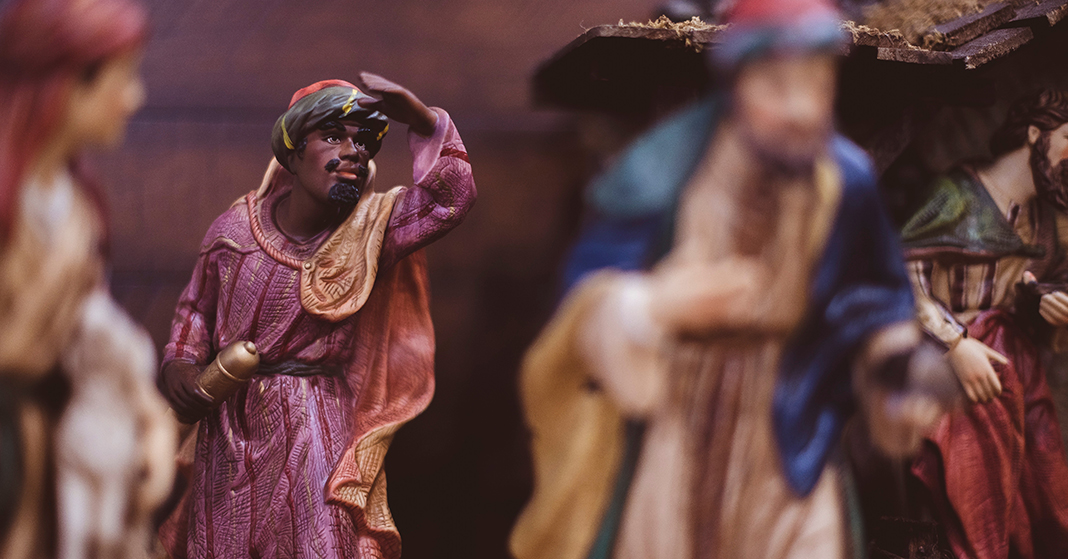
wise men manger scene
As a homeschool dad, I love seeing my girls put aside their rivalries to put on a Christmas pageant. Last Christmas, our first grader organized a Christmas Eve pageant that she and her sisters put on for us and their grandparents. Of course, one of the cutest parts was when three little “wise” girls presented gifts to their baby doll.

We often meditate on the symbolic nature the wise men’s gifts but may not realize that their presentation of gifts to the King plays a significant role in the unfolding story of creation, fall, and redemption. Their acts of worship before the Christ child are a pattern for what Christian parents are trying to accomplish in homeschooling. Let’s meditate together on the wise men, their role in “the old redemption story,” and how we can use it to inspire our homeschooling all year round.

The Past Worship of the Wise Men

Their Story

The wise men are mentioned in the Bible only in Matthew 2:1–12. Since they’re called wise men or magi (from the Greek magos), it is clear that they had wisdom in their work that was respected by their community. It was probably because of this wisdom that they had prospered enough to be able to afford gold, frankincense, and myrrh.

In some way, they also had a heart toward God. As scholars, they were familiar with the Scriptures and apparently knew the messianic prophecy of Numbers 24:17. Since they were watching the heavens for a sign of God’s Messiah, they saw the star when it appeared and immediately set out to find the child. When they arrived in Bethlehem, their hearts rejoiced—not that they had found a new source of earthly treasure but that they had found the child.

The wise men went in and humbly bowed down in worship. They opened their treasures and presented their gifts to the King.

Their Part in God’s Story

In the unfolding of God’s redemptive story, the wise men’s worship of Jesus was a sign that He was the King of the Jews. Jesus was the Christ, the Chosen One, who was coming to break the power of the fall and redeem people and the creation.

Part of that redemption involves how men and women use God’s blessing of dominion over creation (Genesis 1:26–28). Fallen people pursue wealth through dominion to be independent of God. Redeemed people use the prosperity produced by their wise dominion to accomplish God’s purposes and give Him glory.

This is exactly what the wise men did. They had grown in wisdom by observing God’s creation in the fear of the Lord. Their exercise of that wisdom in dominion over creation led to prosperity. And they took that prosperity and offered it to their God in worship.

The Future Worship of the Wise Men

The wise men of that first Christmas were prototypes of future wise men. At the end of story of Scripture, the Father and Son rule from the new Jerusalem. There “the nations of them which are saved shall walk in the light of it: and the kings of the earth do bring their glory and honour into [the new Jerusalem]” (Revelation 22:24). These kings of the saved nations are exercising dominion in the restored earth and bringing their treasures to the King in worship. Notice how the unique treasures of the kings are called “their glory.”

In the eternal state, redeemed men and women will still use math, science, social studies, and language arts. And the end of their labor will be God’s glory.

Homeschooling Wise Men (and Women!) Today

So what does this have to do with homeschooling? Everything! It demonstrates the redeemed purpose for learning history, math, science, and language arts. Here are three steps our children can take to follow the example of the wise men in the past and in the future.

Grow in Wisdom

The wise men didn’t become wise by being lazy in their study of God’s creation. Remember, when we study how God’s world works, we’re learning His wisdom.

Prosper in God’s Calling

Exercising God’s wisdom in His calling led to prosperity for the wise men. It can for your children as well. If they’re faithful in their mastery of science and math and God calls them to engineering, they should prosper as engineers.

Offer the Glory of the Calling

Prosperity is piece of glory that we receive for acting wisely in the fear of the Lord. We should take that glory and offer it to God. When we use our skills in service to our neighbor or in the household of God, we are worshiping. When we take a portion of our treasure and give it to God, we are worshiping Him in the exact same manner as the wise men of old. We are literally giving glory to God.

This Christmas, as my homeschooled girls perform their Christmas pageant, I want them to know that they can follow in the footsteps of the wise men. They can daily study to become wise women so they can offer their treasures to King Jesus.

Filed Under: Shaping Worldview Tagged With: Christian Homeschooling, Christmas, homeschooling, wisdom, Wise Men, worship

What Is the Bigger Purpose of English?

December 19, 2017 by Jenna

practice English

At times, it’s easy to start thinking that English is all about getting your kids to recite endless lists of grammatical rules or marking up their essays with red ink. But we should remember that, just as there’s a bigger purpose in science, there’s also a bigger purpose in studying writing and grammar.

At its heart, English is the study of written communication. And as followers of Christ, we believe that clear and effective communication best demonstrates Christlike character.

When your children are studying English, they should always know that they’re getting ready to share their testimony. Anything they write can either help or harm their testimony for Christ.

Veterans of the letter-writing generation may believe that the growth of technology means the death of the written word. On the contrary, written communication has exploded as more and more social media channels have appeared. Facebook users rely heavily on writing as they post status updates and comments on their friends’ updates. Even highly visual channels like Instagram and YouTube add written messages to pictures and videos.

Whenever your children enter the world of social media, whether they’re still at home or if they create accounts as adults on their own, they will be communicating their testimony in every status update and comment. It will not only come across in what they’re saying but also in how and how well they say it. Clear and effective communication can improve a believer’s testimony in two ways.

• Showing an appreciation and respect for truth

Clear communicators don’t want a small grammatical mistake to accidentally mislead the person they are communicating with. But in writing, grammatical correctness isn’t the only thing that matters. It’s also about being factual. Clear communicators double-check their facts and choose the best words for what they’re trying to say so that they’re understood. So long as your children are being careful in how they say things, people will value their honesty.

• Recognizing the value of people

The difference in today’s written word is that it’s highly condensed. If you want to share something online, you have to consider how much space you have to do it in and how much anyone will read. Those who learn to communicate effectively also communicate concisely because they believe that their messages have value and that people need to hear them. Today, many people may ignore a good message because it’s too long or too difficult to understand. Your children can show value for their friends’ time and energy by keeping messages clear and short.

This is what your children are working towards as they study grammar concepts or write essays in their English courses. They’re working to be able to communicate messages that matter, like sharing the gospel or encouraging a friend, so that no one will misunderstand or ignore them.

Filed Under: Shaping Worldview Tagged With: purpose of learning, teaching english, writing and grammar

A Default Setting of Gratitude

November 23, 2017 by Guest Writer

learning gratitude

Have you ever had to change your phone back to its default settings? Usually this happens when you’ve used and filled your phone to the point that it begins to malfunction; a reset to default settings often fixes whatever hiccups or problems it may have picked up. Remove all the extra noise and clutter of your customizations, and you restore the phone to a state of greater digital purity.

What if we took time to reset the focus of our hearts—a way to return to a default setting of renewed thinking and greater gratitude?

The Slide into Self-Pity

Left to itself, even a redeemed heart tends to drift towards self-pity and complaining. When it comes to giving thanks, it is easy to rehearse the good things—health, family, provisions. Yet too often we fail to express gratitude because our minds are taken up with the people and situations that trouble us.

To change our default setting to gratitude, we need to begin by thanking God for the things that bother us, not just the ones that we enjoy. Tough situations are often God’s gifts to reveal and change some unsanctified part of our hearts.

Sinking or Swimming?

One summer I was particularly unhappy with God because He prevented me from participating in the Christian camp where I longed to work. Instead, He gave me the opportunity to teach preschoolers how to swim. Day after day, under the scorching Phoenix sun, I was trying to get screaming toddlers to enjoy blowing bubbles and putting their faces in cold water.

Torn between their fear of the water and their desire for independence and control, they would push away, thrash around, or clamp onto me—even pinching me with their little toes. After a lesson or two, they had relaxed a bit and were delighted to let me bounce them around while I made motorboat noises or pretended to be a human washing machine. Eventually they learned that swimming lessons were great fun, that the water would hold them up, and that I would not let them drown.

Week after week, God gave me new students who screamed and cried and pinched. Finally I realized that God was trying to show me what I looked like to Him. I had my heart set on a specific ministry that was not open to me. I could continue my adult version of the toddler tantrum, or I could relax and trust Him to teach me how to stay afloat and actually enjoy the ministry He had given me.

The Bigger Plan

Once I understood that, I was able to identify with the children and thank God for them. They were showing me what I looked like as well as giving me insight into God Himself. I, a relative stranger, wanted to teach these kids the skills they needed to survive, and I wanted them to enjoy themselves too. Would God my Father want any less for me? So I surrendered my anger and went back to a default setting of thankfulness.

During the time I was working in aquatics, I renewed all my certifications as a Red Cross instructor for swimming, lifeguarding, CPR, and first aid. Later, those credentials gained me a place of ministry for the entire next decade at the very camp where I had wanted to work that summer.

God’s ways are above ours. We may never understand His methods, but we can always trust His motives. To reset and refresh our hearts, we have to clear out the clutter of busyness, worry, and self-pity. It’s time to go back and fix our minds on God’s truth and rest in a state of gratitude.

Several Bible studies published by JourneyForth are about topics Esther mentions in this post. Check out No Matter What You Can Rejoice, A Life Surrendered, and Refresh Our Hearts.

Filed Under: Shaping Worldview Tagged With: Christian camps, gratitude, ministry, Thankfulness

  • « Go to Previous Page
  • Page 1
  • Interim pages omitted …
  • Page 7
  • Page 8
  • Page 9
  • Page 10
  • Page 11
  • Interim pages omitted …
  • Page 21
  • Go to Next Page »

Primary Sidebar

As parents, teachers, or former homeschool students, we are passionate about homeschooling from a biblical worldview. We hope these teaching tips, fun activities, and inspirational stories support you in teaching your children.

Email Signup

Sign up for our homeschool newsletter and receive select blog posts, discounts, and more right to your inbox!

Connect with Us!

                    Instagram     

Read Posts on Specific Subjects

Early Learning
Foreign Language
History
Language Arts
Math
Science

Footer

Disclaimer

The BJU Press blog publishes content by different writers for the purpose of relating to our varied readers. Views and opinions expressed by these writers do not necessarily state or reflect the views of BJU Press or its affiliates. The fact that a link is listed on this blog does not represent or imply that BJU Press endorses its site or contents from the standpoint of ethics, philosophy, theology, or scientific hypotheses. Links are posted on the basis of the information and/or services that the sites offer. If you have comments, suggestions, questions, or find that one of the links no longer works, please contact us.

Pages

  • About BJU Press
  • Conversation Guidelines
  • Terms of Use & Copyright

Archives

© 2026 · BJU Press Homeschool