
• Skip to primary navigation
  • Skip to main content
  • Skip to primary sidebar
  • Skip to footer

BJU Press Blog

  • Home
  • Shop
    • Shaping Worldview
  • Simplified Homeschool
  • Successful Learning

Time Flies, So Make It Count

September 4, 2018 by Guest Writer

spending time with children
Recently my husband and I had a conversation that went something like this:

“Can you believe it’s almost time to start school again?”

“No, it seems like we just ordered last year’s materials!”

You can probably relate; and like us, you realize just how quickly the weeks, months, and years are speeding by. The time we still have left with our children at home will be over before we know it; and a good question to ask is, “Are we making the most of the opportunities we have with our children?” Ephesians 5:16 exhorts us to be “redeeming the time, because the days are evil.” The beginning phrase can also be translated as “making the best use of the time.” God wants us as parents to make the best use of the time He has given us with our children. How can we do that?

Time In School

As homeschoolers, we have chosen the role of teacher. Therefore, we have to make sure that our children are getting the most out of their education. This means taking time to assess our children’s academic growth. Are they developing critical thinking skills? Do they know how to accurately apply logic and reasoning in solving problems? Are they forming solid studying habits? Just getting them to complete their assignments and take their tests isn’t enough to redeem the time.

Outside School

In a world where parents and kids are busy with their own separate pursuits, it’s especially important to do family activities. As homeschoolers, we are obviously with our children a lot, but it’s crucial to make family time outside of school. Take walks, play board games, go bowling, throw a Frisbee®, catch fireflies—the list could go on and on. It’s not about doing huge exciting things; it’s about enjoying simple moments with our children, making memories, and drawing closer to each other.

Round the Clock

But the greatest way we can redeem the time is by reading and discussing God’s Word and praying together. Not just at breakfast or bedtime but throughout the day as various circumstances arise. Every success and every failure is an opportunity to teach our children about God and His Word. Deuteronomy 6:7 admonishes us to teach our children His Word when we’re sitting at home, when we’re going places, when we go to bed, and when we get up in the morning—in short, every chance we get! That means we as parents have to constantly keep our minds on eternal spiritual matters so we’ll be ready to engage our children in God-centered conversations. This doesn’t come easily. We have to put a lot of thought and effort into it, but isn’t it worth it? Time is flying, so let’s make the most of it!

• • • • •

Jennifer is a pastor’s wife and mom of two young girls and loves homeschooling them. During her own twelve years of being homeschooled, Jennifer developed a passion for reading and writing. She earned a bachelor’s degree in creative writing and relishes writing during her free time.
Filed Under: Shaping Worldview Tagged With: biblical worldview, homeschool, parenting

Reasons to Take a Spontaneous Field Trip

August 30, 2018 by Megan

cowpens field trip
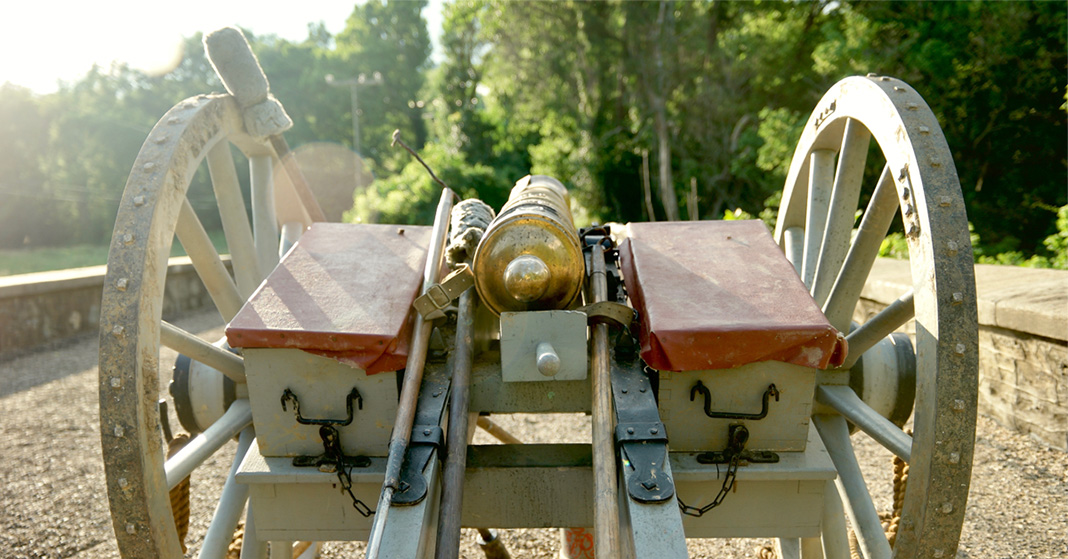
One day near the end of last summer, I sat looking at my Reading 3 Teacher Edition in preparation for the coming school year. One story near the beginning of the book caught my attention—”Alex the Drummer Boy.” It’s a historical fiction piece set in Cowpens, South Carolina, during the Revolutionary War. As I looked more closely at the piece, an idea began to take shape in my mind—we should take a field trip to Cowpens.

Was I crazy? The site was a little over an hour away, and my window of opportunity was small since we would be reading the selection in a couple of weeks. But it was a perfect educational opportunity. A visit to the historical site would not only provide valuable background information for reading the story, it would also build excitement for the upcoming lessons.

We made the trip a few days later, and we were so glad we did. You can read more about our experience in the post Learning Activities That Come Alive.

As a homeschooler, I love having the flexibility to enhance my curriculum with in-the-moment learning experiences like spontaneous field trips. If I had been teaching in a classroom, that trip to Cowpens probably wouldn’t have happened. But since I was a homeschool mom, I could take advantage of the opportunity the curriculum presented me.

Field trips are never easy, even when they are somewhat unplanned. But here are a couple reasons why they’re worth the effort.

A Field Trip Fuels Interest in Learning

There’s nothing like hands-on experiences to whet a child’s appetite for learning. When we returned home from Cowpens, my daughter suddenly couldn’t get enough of Revolutionary War history. She checked out historical fiction and nonfiction books at the library. I saw her play-acting battles and trying to fashion her own Revolutionary War uniforms. She was excited and ready to learn.

A Field Trip Boosts Comprehension

Sometimes field trips can also help students better comprehend what they’re learning. This week, my second-grade daughter and I are going to read a story in reading about non-furry pets. She has never seen a hermit crab, so before we read it, I’m planning to take her on a quick trip to a local pet store to observe a real one in action. Seeing one up-close will help her better understand the point of the story.

Taking spontaneous field trips has become a way for me to incorporate real-life learning into our homeschool, and it has been a fun way for our family to bond while learning. Have you ever taken a spur-of-the-moment field trip? Tell us about it in a comment!

Filed Under: Successful Learning Tagged With: field trips, homeschool, learning activities

Steve Case Puts Online Learning in Context

August 28, 2018 by Jenna

Steve Case organizing Distance Learning courses
In our behind-the-scenes looks at BJU Press textbooks and Online Learning videos, we’ve had a lot of fun talking to artists about their art. But there’s another kind of art that goes into creating a successful video course. As a homeschool parent, you know better than most that organization is an art in and of itself. In the midst of homeschooling, do you really have time to stop and think about how each course is set up? We talked with Steve Case, our instructional design supervisor, to find out about the art of organizing online courses.

Both of Steve’s parents were teachers. He acquired their love of education and went on to study it in college. After graduation, he went into teaching and eventually became an administrator at a school. When he came to BJU Press, he brought along his knowledge of successful education and applied it to online courses. No artist is ever fully satisfied with a piece, so he made it his commitment to create better learning experiences for your children.

Better Efficiency in Distance Learning

In the early days of online courses, there were few standards for how to put a course together. Each course differed according to the instructor’s style. Parents and students had to learn how each teacher did assessments, gave notes, and set up schedules. Today, Steve works to standardize the courses so that you always know what to expect from a new course.

Better Engagement in Online Learning

Keeping your children engaged goes beyond getting their attention through the teacher’s personality—though it is hard to ignore Mrs. Walker when she’s excited. Keeping students engaged means making sure they’re involved in the instruction. Steve has been working with the teachers to add academic supports that encourage student involvement, such as the guided notes and clear visuals that you may have already benefited from.

Better Effectiveness in Online Learning

In order to make the courses as effective as they can be, Steve evaluates each course carefully. He and his team look at how courses present information and whether the videos provide manageable chunks of material. They also make sure that all other material complements the information, so that together, the lesson becomes a balanced meal.

When approaching each new course, Steve’s primary goal focuses on making the course better. There’s always a new and flashy way to create art, but he’s not just after new. He takes a careful look at the previous edition of that course, sees what can be improved, and ensures that what was already excellent comes through just as well as before, if not better. He wants parents to look at our catalog, see a new course, and know that it’s better than before.

Filed Under: Successful Learning Tagged With: Distance Learning Online, effective learning, efficient learning, student engagement

The Standard for Thoughtful Readers

August 23, 2018 by BJU Press Writer

thoughtful readers
As a Christian, you know that there’s no such thing as reading for mindless entertainment. Books teach in ways that we often don’t understand. And as a Christian parent, you want your children to be taking in valuable lessons from the books they read. Your children’s ability to carefully evaluate everything they take in is a key part of their growth toward biblical maturity. This careful evaluation implies truly wrestling with the books they read. If your children can become thoughtful readers, then you know that they will be well equipped as adults in a world full of misdirection. So how do you encourage your children to be thoughtful readers? By building a familiarity with the only Book that truly matters.

The Foundation for Thoughtful Readers

Every thoughtful reader should approach other books on the basis of a constant and continuous study of the Book. The only reliable standard for the believer is Scripture itself. When the writers of Scripture penned God-breathed words, they wrote widely—of eternity past to eternity future, of battles and births, obedience and obstinacy. They wrote accounts of real people, recorded parables that came from the lips of our Savior, and produced the most beautiful literature known to man. And there is not a higher standard against which to evaluate a story.

Features of That Foundation

When Christ used the vehicle of story, He set the stage for contemplation that leads to biblical understanding. The same should be true of any worthy book. We can learn so much from these scriptural examples. There are good role models and bad ones as well as good actions and bad—but all for our instruction. Some stories clearly spell out the theme, while others require the reader to evaluate and draw a conclusion. Although the length and delivery of these stories differ, the resolution of the problem of sin—the central conflict—is true to the Book as it must be in lesser books as well.

The stories from the Old Testament include exciting plots, peopled by actual characters not unlike people we may know. There is sin, providing literary conflict, that sets each story in action; and before the conflict reaches a resolution (within varying timelines), the story addresses the sin.

The parables of the New Testament demonstrate our Lord’s creativity as He crafted each word picture or narrative to grab the attention of the listeners. Sometimes He told the story along with the lesson we should learn. Sometimes He spoke in metaphors that required the listener to read between the lines, as some may say. Other times He told the story but waited to give the explanation to certain listeners at another time. As these parables unfold, we see that some seeds flourished, and some withered and died; some wedding guests were welcomed, and some were turned away; some servants were faithful, and some were not.

Foundational Examples

In one account Jonah receives a command, runs the other way, and begins to experience the consequences in the space of three short verses. His whole story is a narrative told in only four chapters, woven into the fabric of the Old Testament. In another instance a longer story tells about Joseph, ill-treated by his brothers and sold into slavery. Long years pass as Joseph comes to manhood and becomes the instrument of God used to deliver his family. His brother Reuben’s guilt begins at the pit and ends in a palace many years later, recorded over several chapters in Genesis.

Biblical narratives demonstrate variety and creativity, and they offer many different topics to interest a range of readers. There is all of this and more in the inspired Word, the Book that is the guide for believers in all things. And all of these concepts can direct your children’s thinking in all their readings.

• • • • •

Nancy Lohr is acquisitions editor at JourneyForth, a division of BJU Press. She has edited dozens of books over the last twenty years and is a writer as well, having authored two historical novels for children, curriculum stories and articles, and numerous book reviews and articles for parents and educators. Nancy was an educator and children’s librarian before moving into publishing, and she loves to see young readers develop into capable and satisfied readers.

Filed Under: Successful Learning Tagged With: biblical worldview, homeschool, language arts, reading

4 Reasons to Include Labs in Your Homeschool

August 16, 2018 by Ben

homeschool labs
Let’s get real for a moment. Teaching high school science is intimidating. I still remember how nervous my homeschool mom was about high school science. When I got to physics, we couldn’t find any labs kits. It was a nightmare. My dad helped me do one physics lab without a kit. That single lab cost us around $75 in supplies. We also spent hours creating the tool we needed for the lab. And when we finished, it didn’t even work. We couldn’t collect reliable data, and I never finished that particular lab.

So what could my mom do? She knew she needed to keep homeschooling through high school—and that she needed to include labs. Before I tell you how she made high school labs work for our family, here are four reasons she was committed to teaching with labs.

1. Creational Approach

Science at its core examines the works of God. We’re looking at what He did at creation and how His creation functions. As much as nature documentaries and science textbooks can evoke awe  and wonder at God’s creation, they’re only presenting what others have discovered by investigating God’s world. If we teach our kids science without incorporating close, hands-on examination of creation, we’re doing it wrong.

2. Deep Understanding

There were a number of chemistry concepts that I thought I understood. After all, I could ace the reading quiz. Then we did the lab over the concept. I discovered I didn’t understand it nearly as well as my quiz grade suggested. Labs are where head knowledge meets real-world experience and critical thinking. If I hadn’t completed the labs, I would have only superficial knowledge of chemistry without deep understanding.

3. Student Scientists

We aren’t teaching our children science so they can win on a TV game show or in a trivia competition. That would reduce science to superficial answers for esoteric questions such as, “Why is the sky blue?” That isn’t what science is at all. Instead, it’s a powerful tool for investigating and solving real-world problems. So when we teach our children science, we want them to act like junior scientists instead of students learning about science facts. Labs are where children act like scientists. This is especially true in high school science. We need labs to give our students the opportunity to behave like scientists.

4. Required Courses

Many states require lab sciences for high school graduation. And even if your state doesn’t, the college your son or daughter wants to attend may require it. And colleges may view non-lab science courses with suspicion. So how many labs should you include? A good rule of thumb is thirty hours of labs for each course. If you figure your setup time, lab time, and post lab time, each lab can last two to three hours. So aim for ten to fifteen labs.

Making Labs Happen at Home

So what did my mom do? She found kits. A number of kits helped us complete high school biology and chemistry. These kits made high school labs achievable. My sister and I could do most of these labs without any parental aid. They also made it affordable. We could have spent thousands of dollars if we had tried to pull together all the individual components that were in these kits. Instead, they cost my parents around $200.

For me, these lab kits made science creational, deepened my understanding, and gave me an opportunity to practice being a scientist.

At BJU Press, we’ve worked with Logos Science, Inc., to create lab kits for all of our secondary science textbooks and video courses. If you’re looking for something to help you bring labs to your homeschool, check out our Logos Science Kits.


Filed Under: Successful Learning Tagged With: biblical worldview, Creational Learning, hands-on learning, high school, high school transcript, Labs, Logos Science, science

  • « Go to Previous Page
  • Page 1
  • Interim pages omitted …
  • Page 56
  • Page 57
  • Page 58
  • Page 59
  • Page 60
  • Interim pages omitted …
  • Page 152
  • Go to Next Page »

Primary Sidebar

As parents, teachers, or former homeschool students, we are passionate about homeschooling from a biblical worldview. We hope these teaching tips, fun activities, and inspirational stories support you in teaching your children.

Email Signup

Sign up for our homeschool newsletter and receive select blog posts, discounts, and more right to your inbox!

Connect with Us!

                    Instagram     

Read Posts on Specific Subjects

Early Learning
Foreign Language
History
Language Arts
Math
Science

Footer

Disclaimer

The BJU Press blog publishes content by different writers for the purpose of relating to our varied readers. Views and opinions expressed by these writers do not necessarily state or reflect the views of BJU Press or its affiliates. The fact that a link is listed on this blog does not represent or imply that BJU Press endorses its site or contents from the standpoint of ethics, philosophy, theology, or scientific hypotheses. Links are posted on the basis of the information and/or services that the sites offer. If you have comments, suggestions, questions, or find that one of the links no longer works, please contact us.

Pages

  • About BJU Press
  • Conversation Guidelines
  • Terms of Use & Copyright

Archives

© 2026 · BJU Press Homeschool