• Skip to primary navigation
  • Skip to main content
  • Skip to primary sidebar
  • Skip to footer

BJU Press Blog

  • Home
  • Shop
    • Shaping Worldview
  • Simplified Homeschool
  • Successful Learning

How to Train Young Scientists with Science Hikes

September 20, 2018 by Guest Writer

science hikes
Our family loves hiking. In fact, we think that any time except the dead of winter is the perfect time for a hike! We love the sense of freedom, of adventure, of separation from a too-busy world. And in the fall, hiking can be an even more enjoyable and educational experience.

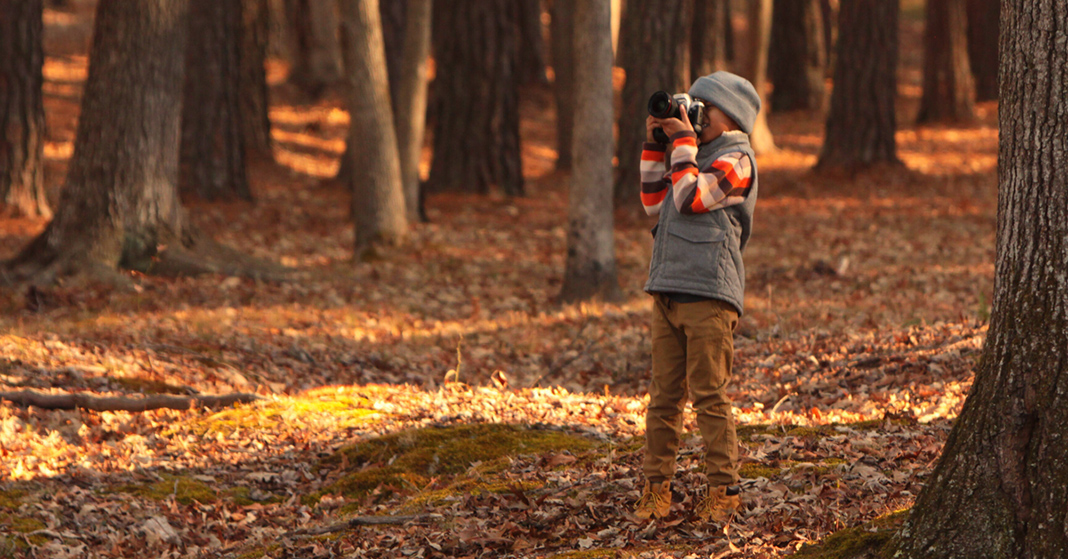
Creation reveals its Creator, and what better way to train up young scientists than by turning your trek through the forest into a science hike? Here are five things you’ll need for a science hike with your kids.

1. Notebooks for Recording Observations on the Science Hikes

Notebooks and pencils are a must-have on any science hike. Every child, from the toddler to the teen, can take notes about what he or she sees.

For the little ones, making drawings or writing down one-word labels might be as far as they go. Older kids can draw more detailed sketches of animals or plant life and make a few observational notes. You can take breaks throughout the science hike to allow time for drawing and writing.

2. Cameras for Taking Photos

Taking photos of nature is a great way to hone budding observation skills. You may not want to hand over your smartphone to your five-year-old, but there are sturdy, kid-friendly cameras on the market that are ideal for small hands. Or maybe you have an old phone in a drawer, one that you never use and don’t really need. Why not repurpose it as a kid-friendly camera?

Plants, trees, seeds, nuts, buds, flowers, earth, wildlife, insects, and bodies of water are perfect photography subjects for young scientists. If you have been focusing on a particular science unit in homeschool, such as plant life cycles or different kinds of clouds, encourage the kids to photograph anything related to that topic.

3. Sample Collection Containers for Found Items

Kids love to find “treasures” in nature—sparkly rocks, twisted twigs, interesting flowers, dead insects, and brightly colored leaves. Bring along some resealable bags or plastic containers to hold all the samples.

When you get home, have your kids work on identifying what they’ve found. Can they match a colorful leaf to the type of tree it came from? What sort of beetle did they find? Which minerals make that sparkly rock so pretty? They can write their findings on an index card and slip it into the box or bag that contains their treasure.

4. Drinks and Snacks 

As moms, we all know what happens when the kids get hungry and thirsty. It’s not a pretty picture! Keep those hunger pangs at bay by bringing along plenty of snacks and drinks for the trek, even if it’s not a long hike. If you’re carrying a baby on your back, recruit your older children to help tote the provisions.

5. A Sense of Adventure

While it’s a good idea to follow certain safety rules (no running out of sight, no straying too far off the trail, etc.), there’s also a time to let the restrictions relax and just have fun! Nature is beautiful and exciting to your children, and they’ll learn so much from simply running, climbing, scrambling, and skipping through it! Take your time, and enjoy their delight in the big world God has made.

• • • • •

Rebecca is a work-at-home freelance writer, novelist, wife, and the mom of two bright-eyed little ones. She credits her success in writing and her love of books to her own mom, who homeschooled three kids from pre-K through high school.


Filed Under: Successful Learning Tagged With: hiking, homeschool, observation, science hike

Life Skills Come from Life

September 18, 2018 by Sharon

teaching life skills
As a mom, I wanted to prepare my two boys to be fully capable adults and help them show love for others. As they were growing up, I found that life skills—though, at the time, I didn’t think of them as life skills—were the best way to get my boys where they needed to be. Cleaning, organizing, cooking, handling finances—these are all key in helping children show love. And I learned early on that the best way to teach life skills was by keeping my boys involved.

Enabling children to help when they’re young

Little kids love being involved, and they love helping. I may have been blessed with two boys who enjoyed being involved, but I also tried to encourage that love. Whenever my husband or I was cleaning, my boys would want to help out. But at first, there were a lot of things they couldn’t manage. Our adult dishes were heavy and easily chipped, the vacuum was large and heavy, and our broom was far too tall for a little kid to hold.

Instead of waiting until they were older, I just got more kid-friendly things. I traded out my big plates for light ones that the boys could carry, and I got the cheapest, lightest vacuum I could find. I even got little brooms and dust pans they could use to sweep up their crumbs after meals. They didn’t always do a good job, but they were learning motor skills and coordination—and they were helping Mom.

Teaching new life skills as they come up

I have boys. Boys eat—a lot! And, since we homeschooled, they thought they could eat pretty much whenever they wanted. They loved helping out in the kitchen, and since they enjoyed eating, I taught them how to cook. So when it was time to eat, and I was making one thing, they could make whatever they wanted for themselves. And today, they both really enjoy cooking all kinds of things.

As they grew older, they showed interest in watching their dad do taxes each spring. He would explain what he was doing and how he did it. Now that they both have jobs of their own, they know what to do, and my husband can advise them.

All these things that kids should learn as they grow up are a part of life. We didn’t have to spend class hours teaching life skills. Since my boys were actively involved in our lives, we had the opportunity to teach them new skills as they came up. And today, I hope they can see that cooking, cleaning, and other life skills are a ministry. My sons can show love to my husband and me by helping around the house. When they get married and have families of their own, they’ll be able to show love to their wives by taking on additional chores. But it all starts when they’re little and they just want to put the dishes away, saying, “I help, Mommy!”

Filed Under: Simplified Homeschool Tagged With: homeschool, homeschool life skills, life skills

Teaching the Constitution Early

September 13, 2018 by Ben

The Constitution of the United States
Recent surveys show that many Americans don’t know much about their own nation’s governing document. In our homeschool, one of our main objectives is to teach our children about the US Constitution. As believers, we want our children to exercise godly stewardship when it comes to voting (in the future). In order to help them understand the Constitution, we have decided to start early.

Framework

It’s important to provide children with an overview of the framework of the Constitution. A helpful place to begin is with the three branches our Constitution divides the duties of government into. Since our family is using BJU Press Heritage Studies textbooks, we introduce this concept in first grade. Every year, we repeat it—with more detail added each time. This might seem basic, but only one in four American adults can identify these branches, and even fewer can identify the duties of each. When children understand that the Constitution dictates who makes, enforces, and settles the laws, they have a solid working knowledge of what it does.

If you’re wondering if your little ones are ready for something as big as the Constitution, remember that this is just an introduction. Also, you can teach them with hands-on-activities. I found that even our verbal learner was helped by doing an activity. You can read how we used Legos® to learn about the Constitution .

Narrative

One thing that often makes studying government documents dull is a narrow focus on the mechanics of governing. The learning is more engaging if you place the Constitution within a narrative context. The Constitution arose out of a certain set of historical events, such as Shays’ Rebellion. Studying the document within its historical context provides interest and understanding.

Narrative also helps us understand one especially critical part of the Constitution—the Bill of Rights. Throughout our history as a nation, various people, groups, and movements have attacked our liberties . For example, even our second president, John Adams, threatened our First Amendment right to free speech. Exploring these historical events can help children understand what their rights are under the Constitution and how they’ve often been threatened in the past.

Capstone

Even though we lay a framework and expand understanding, we need to pull it all together in a single course. When I was in high school, I joined another group of homeschool seniors and juniors for an in-depth study of American Government. That class brought together the various threads of the Constitution I had learned through the American history I had studied over the years.

Teaching the Constitution enables our children to engage wisely. But if we try to pack it all into the final year of homeschooling, they’ll likely find it overwhelming and dull. Instead, we should attempt to give our children a foundation that they can build on all through the early years.

Filed Under: Devotions, Events, Group Learning, JourneyForth, Shaping Worldview, Simplified Homeschool, Successful Learning

No Ordinary Night, September 12, 2001

September 11, 2018 by Jenna

September 12 New York Skyline
On September 11, 2001, I woke up late on a Tuesday morning to find my mother in the living room, watching the news and crying. When we look back on a life-changing event, we can usually remember exactly where we were or what we were doing when we heard about it, but we don’t always remember much about the days that followed. As a ten-year-old, all I understood that day was that a plane had crashed in New York City. For many of us, fear and war scatter across our memories for the days that followed 9-11, and those memories are difficult to explain.

To help your children understand, share this pantoum by Morgan Reid Persun.

No Ordinary Night, September 12, 2001

No ordinary night, that, not with those fires smoldering;
the whole civilized world held out candles for us to see by.
And dawn’s early light found us standing, flags at half-mast,
the heavy artillery of the American spirit gathering. The silence ominous.

The whole civilized world held out candles for us to see by
as we looked through our ruined towers for a miracle,
the heavy artillery of the American spirit gathering. The silence ominous:
America had not gone down with the towers; she was revealed behind them.

As we looked through our ruined towers for a miracle,
the enemy believed we would crumble more easily within, but
America had not gone down with the towers; she was revealed behind them.
We looked up, one people, we the people, with terrible force.

The enemy believed we would crumble more easily within, but
we, sure that right would right itself, steeled to the cause.
We looked up, one people, we the people, with terrible force,
with liberty and justice for all. With justice for all.

And dawn’s early light found us standing, flags at half-mast,
we, sure that right would right itself, steeled to the cause:
With liberty and justice for all. With justice for all.
No ordinary night, that, not with those fires smoldering.

Filed Under: Successful Learning

Your Commitment to Homeschooling

September 6, 2018 by Jenna

making a commitment to homeschooling
The start of a new homeschool year is a lot like New Year’s Day. As you’re setting your goals for the upcoming homeschool year, do you want them to be like those New Year’s resolutions that only last for a week or two? Of course not! Most of those New Year’s resolutions we make are goals we know we probably should set, but have very little reason to follow through on—like exercising regularly or eating right. We can’t commit to those goals because we don’t always believe in why we’re doing them. In contrast, your homeschool goals ought to be rooted in your commitment to homeschooling. If you can explain why you’re homeschooling, then sticking to the goals you set this year will become much easier.

Call a Family Meeting

Sit the whole family down to document the reasons you’ve decided to homeschool. If your children are old enough to contribute, then they should have the opportunity to share their opinions and add their own reasons. Make a list of reasons that will spell out your commitment to homeschooling. You might find several reasons for not participating in the school system, but negatives are hard to act on. If your reason is based on a negative, try to state it in a positive form. For example, if you feel that the school environment is a bad influence on your children, then your reason for homeschooling is to give them good role models or to help them become spiritually mature.

Look over your list. Mark out overlapping reasons. Maybe cross out a few that aren’t as important as the others. Condense it to five or fewer reasons that you really believe in.

Put Your Commitment on Display

In order to keep your commitment to homeschooling in front of your eyes, put the list of reasons on display where you’ll see them a lot. You can put them under a magnet on your refrigerator. Maybe you can print them out on nice paper in a curly font and have them matted and framed to hang in that one bare spot on the wall in your living room. Or, more fun, you can turn them into an art project for each child to hang in his or her room.

Set Your Goals

Once you’ve laid out your commitment to homeschooling clearly, the goals will be easier to choose and easier to focus on. Goals that flow naturally from your reasons for homeschooling will make the most sense to work toward.

Homeschooling takes a lot of hard work and planning. Even though you know you’re not going to quit or give up on it, you can easily be tempted to cut corners or not give each day your best. Your commitment to homeschooling keeps you on track as you’re weathering hard days as well as when you’re enjoying times of smooth sailing.

Filed Under: Successful Learning Tagged With: homeschool, homeschool commitment, homeschool goals

  • « Go to Previous Page
  • Page 1
  • Interim pages omitted …
  • Page 55
  • Page 56
  • Page 57
  • Page 58
  • Page 59
  • Interim pages omitted …
  • Page 152
  • Go to Next Page »

Primary Sidebar

As parents, teachers, or former homeschool students, we are passionate about homeschooling from a biblical worldview. We hope these teaching tips, fun activities, and inspirational stories support you in teaching your children.

Email Signup

Sign up for our homeschool newsletter and receive select blog posts, discounts, and more right to your inbox!

Connect with Us!

                    Instagram     

Read Posts on Specific Subjects

Early Learning
Foreign Language
History
Language Arts
Math
Science

Footer

Disclaimer

The BJU Press blog publishes content by different writers for the purpose of relating to our varied readers. Views and opinions expressed by these writers do not necessarily state or reflect the views of BJU Press or its affiliates. The fact that a link is listed on this blog does not represent or imply that BJU Press endorses its site or contents from the standpoint of ethics, philosophy, theology, or scientific hypotheses. Links are posted on the basis of the information and/or services that the sites offer. If you have comments, suggestions, questions, or find that one of the links no longer works, please contact us.

Pages

  • About BJU Press
  • Conversation Guidelines
  • Terms of Use & Copyright

Archives

© 2026 · BJU Press Homeschool