• Skip to primary navigation
  • Skip to main content
  • Skip to primary sidebar
  • Skip to footer

BJU Press Blog

  • Home
  • Shop
    • Shaping Worldview
  • Simplified Homeschool
  • Successful Learning

Read Out for Oral Reading Skills!

July 16, 2019 by Guest Writer

teaching oral reading skills
An important part of teaching your child to read includes developing oral reading skills.

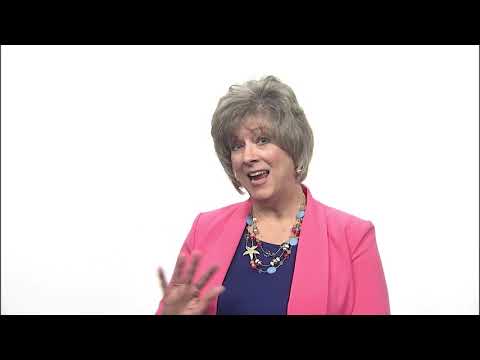
Mrs. Walker, who teaches reading for BJU Press Homeschool, has created more online videos to help demonstrate the value—and fun—of reading out loud! Here they are with a summary to introduce each one. I’d encourage you to watch them all and find out more about the importance of oral reading.

When Is Oral Reading Important?

The blog recently focused on silent reading as a valuable skill. The videos linked there show how silent reading helps your student focus and fully understand what he’s reading. But what about reading things out loud? Why is that important? And when’s the best time to do it?

While silent reading will help your student form his comprehensive skills, oral reading will help develop his communication skills. Reading a piece out loud will help your student take what he’s just learned and communicate that to someone else. It’s been said that the best way to learn something is to teach it to someone else. Having your child read aloud will not only help him communicate, it will also make sure he understands what he’s reading!

Save oral reading until after your student has read at least once silently. That way, he has already had time to engage with and process the material. Then he can work through sharing that information with others.

How Do I Grade Oral Reading?

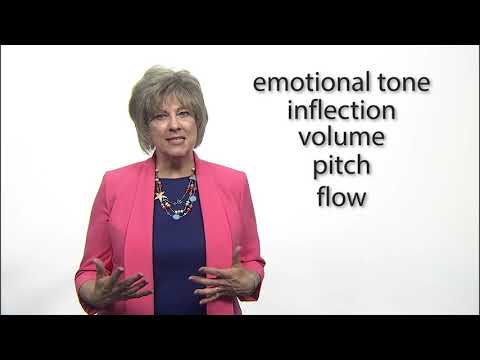
As your student begins reading aloud, you’ll want to grade and record his reading. Tracking his progress helps you determine what areas he might need a little more help with. BJU Press has provided multiple oral reading assessments to help with this—along with specific things to listen for as your child is reading.

Again, we recommend you let your child read the material silently first. You may even want to ask him a few questions to make sure he fully understands what he’s reading.

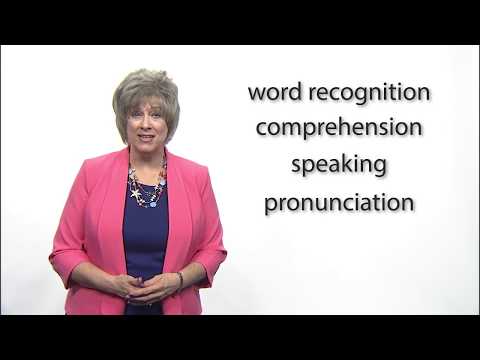
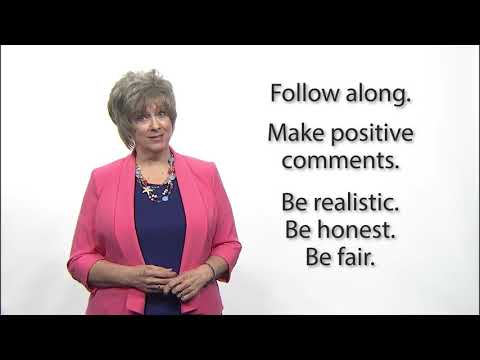
When he’s ready, listen for the criteria listed on the rubric. Be sure to rate each item honestly but fairly, and give your child positive comments on the things he does well. Oral reading is a difficult skill that requires speaking, pronouncing, and communicating the author’s meaning. He has to do these things all at the same time, so be sure to work through the reading with your child lovingly and patiently.

Why Is Poetry for the Ears?

Poetry is a form of writing that is well-suited for reading aloud. It’s a creative means of communicating information in a way that’s more memorable, more pleasant to listen to, and potentially simpler to understand. Many familiar songs are poems that express important truths in ways that stick with us and compel us to look at those truths in new and fresh ways.

Even though poetry is not a heavy component of BJU Press curriculum, we include it because we believe it’s important. Your child will likely encounter it regularly as he gets older. Large portions of Scripture are poetry, and we want students to be able to understand it and glean truth from it.

How Do We Perform Dramas at Home?

One more genre that’s meant to be both read and heard is theater! Performing dramas at home is a fun way to teach your student many important skills that he will use for the rest of his life. Public speaking, job interviews, and singing in a choir are all opportunities that doing theater at home will prepare him for.

Theater can also teach your child empathy. As he gets ready to be in a play, he’ll have to learn his lines, create a character, and explore why the character made the decisions he did. Being able to understand a fictional character’s motives will help your student interact with others.

You may also want to have your student go off-script and put things in his own words—which will demonstrate whether your child really understands everything that he’s performing!

We hope these videos have made it clear why reading things out loud is such an important life skill for your student. The more he is able to both understand and communicate what he reads, the more prepared he will be for communicating effectively in whatever positions God is preparing him for.

• • • • •

Matt recently graduated with an MA in communication studies and currently works as a freelance writer. He attributes the wild variety in his current opportunities to the exploration his parents gave him through the homeschooling experience. He enjoys theater, the gym, and choral music and will rarely say no to a cold glass of sweet tea.

Filed Under: Successful Learning Tagged With: grading, oral reading, performing dramas, reading aloud, reading poetry

Family Bible Time: The Habit Families Need Most

July 9, 2019 by Guest Writer

Family Bible Time

The most important pattern we can establish in our families is a consistent Bible time together. From the time our children can communicate until they leave home, we must be continually teaching them God’s Word. Deuteronomy 6:6–7 exhorts, “And these words . . . shall be in thine heart: and thou shalt teach them diligently unto thy children, and shalt talk of them when thou sittest in thine house, and when thou walkest by the way, and when thou liest down, and when thou risest up.” All throughout the day we should be bringing up Bible conversations with our children. Every opportunity we have, we are to point them to Christ. But it’s important to schedule a specific time during the day to put aside everything else and gather as a family to study God’s Word and pray together.

Why Family Bible Time

It’s a time to learn more about our great God! It’s a time to teach our children how to effectively study God’s Word. It’s a time to share close fellowship in the Bible and prayer. Maintaining this mindset will help keep us from viewing devotions as a chore or duty. If we are passionate about God’s Word, it will encourage our children to get excited about it as well.

When and Where

Try to have your family devotions at the same time and place every day. We like to have our family devotions in the evening, just before bedtime. Usually it takes place in our daughters’ bedroom on one of their beds. Perhaps mornings or afternoons work better for your family. Whenever it is, try to have everything done and put away before devotions so no one will be distracted.

What to Read

Scripture itself is always the best choice! Choose a book of the Bible to read through, such as one of the Gospels or the book of Proverbs. Depending on your children’s ages, you can read just a few verses or an entire chapter. Recently our family started reading through the book of Psalms.

How to Get Everyone Involved in Bible Time

Every family member should be engaged during family devotions. One way our girls participate is by taking turns reading Bible verses aloud. If your children are too young to read, you can involve them by asking them simple questions about some of the verses you read. After reading a psalm, my husband asks our daughters specific questions about what we just read. For example, from Psalm 1 he asked questions like these:

“What does the word blessed mean?”
“How do we delight in the law of the Lord?”
“What does it mean to meditate?”
“Why does God compare the righteous person to a tree?”

After discussing the passage, we sing some songs together. We quote a memory verse and then close with prayer. We like to use “prayer sticks”—craft sticks with names of loved ones, missionaries, and church members written on them. We keep them in a jar and each of us draws one prayer stick and prays for that person or family.

Let’s make family Bible time the most special part of our day!

• • • • •

Jennifer is a pastor’s wife and mom of two young girls and loves homeschooling them. During her own twelve years of being homeschooled, Jennifer developed a passion for reading and writing. She earned a bachelor’s degree in creative writing and relishes writing during her free time.

Filed Under: Shaping Worldview Tagged With: Bible time, children's devotions, family devotions

Encouraging Silent Reading

July 2, 2019 by Guest Writer

encouraging silent reading
Mrs. Walker has recorded some videos to give you tips on guiding your child’s reading. Find out what she has to say about silent reading in the videos below.

Why Is Silent Reading Important?

A primary focus of your child’s elementary homeschool education needs to be his ability to read silently. Reading silently is something that all of us do every single day. Imagine how tedious it would be if we were required to read every product tag, highway sign, blog post, and book out loud! But what is the value in teaching your child to read silently? Why is it worth it for him to learn it?

Practicing silent reading skills will enhance your child’s speed, comprehension, and focus in reading. It will activate his imagination and allow him to visualize what he is reading in his own mind. Reading silently will also enable him to engage with what he’s reading. If he has engaged with the content, he will be better able to discerning the author’s level of skill in writing and to discover the author’s intended message. Then he can ask meaningful questions and work to understand the material at a depth he can discuss with you instead of merely repeating back to you what he has read. Finally, reading silently will clear away distractions for your student and help him fully focus on what he’s reading. The more he is able to focus, the more he will get out of what he reads, and the more obvious the applications for his life will be.

In an age when the volume of information is constantly increasing, your child needs to be able to fully understand the content in front of him so that he can evaluate it from a biblical worldview. Training your child to read silently will empower him to work through the large amounts of information he encounters on a daily basis.

What Is Sustained Silent Reading?

Sustained silent reading involves giving your student large blocks of time to dedicate to reading silently. Scheduling times of the day for your child to do nothing but read will clear away the distractions and help your child engage with the content in a meaningful way. Sustained silent reading will also lengthen your child’s attention span, which will enable him to process large amounts of text into applicable truths for his life.

So how can you get your child ready for sustained silent reading? First, be intentional with what you put in front of him. Give him a selection to read that he will find both easy to understand and interesting. Also, make sure you’re available to help him with any difficult words and answer any questions he has. You can also include topics in the selection that cater to your child’s specific interests. Maybe he has specific genres he prefers or certain topics he likes to explore. Giving him things to read in those areas will encourage him to learn more about the things he already loves. Finally, you could set aside a designated spot in your home for him to read, such as a reading nook or a special chair. This way, your child will always know that any reading done there will be both peaceful and focused.

While advertisements and social media typically give us shorter messages, your child can definitely expect to encounter larger amounts of writing in everyday life. Creating long periods of time for your student to read silently will enable him to handle and process larger chunks of information.

How Do You Assess It?

Every skill your child is learning should be measured so that you know how he is growing. But silent reading can be a difficult skill to measure. So how can you evaluate it?

BJU Press Homeschool has provided numerous tools for assessing how well your student is doing with silent reading. Each worksheet contains several components to help you get a feel for your child’s strengths and weaknesses in reading. They provide a goal for your child’s reading—which will help him read both proactively and reactively. The worksheets contain a series of comprehensive questions to make sure your child is thoroughly understanding what he reads. Finally, the worksheets will build up to more difficult questions to stretch your student’s critical-thinking skills, appropriate to his reading level. The ability to measure where your child is with reading silently will help determine where your student needs to grow and encourage him in areas where he already excels.

Hopefully these videos have made it clear why silent reading is such an important practice for your student!

• • • • •

Matt recently graduated with an MA in communication studies and currently works as a freelance writer. He attributes the wild variety in his current opportunities to the exploration his parents gave him through the homeschooling experience. He enjoys theater, the gym, and choral music and will rarely say no to a cold glass of sweet tea.

Filed Under: Successful Learning Tagged With: distance learning, homeschool, reading, silent reading

STEM Activities and Real-World Learning

June 25, 2019 by Jenna

stem activities and real world learning
Have you ever considered how no single career your child could pursue leads back to just one subject? An artist draws on knowledge gained in both math and literature classes, a historian uses skills learned in science class as well as in heritage studies classes, and an astronomer needs strong foundations in both math and science to be successful. Even as a writer, I find myself drawing on skills from all subject areas to do my job well. That’s why interdisciplinary studies—studies covering several subjects—are so important in education. And STEM in particular is a big deal for parents and teachers alike. Let’s take a closer look at the world of STEM learning and what your children get from these activities.

What Is STEM?

STEM is an acronym for Science, Technology, Engineering, and Mathematics. You might also hear it called STEAM, which simply adds Art (or the arts) into the mix. But STEM and STEAM aren’t all that different because design is an inherent part in every such activity. STEM activities require students to use their knowledge in each area to complete a task or to solve a problem. For example, consider this activity for building a better thermos. Designed for high school students, the exercise is similar to an insulation experiment in Science 5. To complete it, students need to know something about heat and energy, they need to use technology resources to craft their container, they need to understand principles of engineering and design to make their container practical and functional, and they need math skills to measure the components and test the container.

Why Include STEM Activities?

STEM activities are a chance for your kids to apply otherwise isolated skills to real-world situations. In other words, it’s the reason your students have been learning all those weird math formulas and science facts. It’s one thing to learn how to calculate the surface area of an object in math and to understand how different materials and sound waves interact in science. It’s quite another to apply that knowledge to designing something to amplify sound coming from a small speaker. But doing STEM activities goes beyond simply applying skills.

STEM activities also help your children to understand what they can do. As Christians, we are called to be responsible caretakers of God’s creation. How can we take hold of that responsibility? What can we do for the world? The simple act of creating something that is useful and serves a purpose can help children to understand what they are capable of doing as human beings created in God’s image. God didn’t create some people to be geniuses who solve all of the problems and the rest of us to muddle through as best we can. God has given each of us tools to accomplish His will—whether in caring for His flock or His creation. STEM activities help your children to see how—through study and a bit of hard work—they can do some pretty cool things.

Does this mean that now you have to go and find a whole bunch of STEM activities to add to your lesson plans? Not at all. Chances are, many of your science and math activities already include elements of STEM, even if they’re not labeled as STEM activities. Just take the time with each activity to let your students learn everything they need to.

Filed Under: Successful Learning Tagged With: homeschool, science, STEM, STEM activities

Loving My Neighbor with a Strawberry Cobbler

June 18, 2019 by Megan

loving my neighbor with a strawberry cobbler
I love to cook, and I especially love to bake. But a while back, I found myself in a quandary. I had three guests in my house. One was on a grain-free diet. Another was vegan. And I had no idea what to make for dessert. I had some fresh fruit in the house—including a large container of fresh strawberries—but all my usual strawberry dessert recipes had been ruled out. How could I possibly make a dessert that had no eggs, no dairy products, and no grains of any kind? Did such a thing even exist?

Showing Love with Food

People all over the world use food to nurture relationships with each other. Many of my own relationships have been built and maintained over a shared meal, a shared plate of cookies, or even a shared table at the local coffee shop. Food is an important tool that we as Christian homeschool moms can use to show love to our neighbors.

But, as I realized that afternoon in my kitchen, sometimes cooking for other people can get complicated. I’ve been blessed with a husband and children who can eat just about anything I care to cook. But many families in my church and some members of my extended family deal with food allergies and other dietary restrictions on a daily basis. How could I love my neighbor when they come to my home? By caring enough to adjust my cooking to fit their needs.

That afternoon, I managed to substitute my way through a strawberry cobbler recipe in order to meet the needs of my guests. To be honest, it wasn’t awesome, and I probably wouldn’t duplicate it even if I could remember the recipe. But it wasn’t a disaster. And it said “I care” in a very tangible way that went a long way toward making my guests feel welcome. In that sense, it was a very big win.

Cooking for Others with Dietary Restrictions

Here are a few tips that I’ve learned about caring for people with dietary restrictions.

  • Before you take someone a food item or have people over to your home for a meal, ask if there is anything that they can’t eat or don’t prefer to eat or if they are on a specialized diet (such as paleo). That way, you can avoid any potentially awkward moments.
  • Read the ingredients lists on food labels. Some items have ingredients that you would never expect. (Bottled salad dressings and other sauces can be particularly tricky.)
  • Pay attention to how recipes work. If you know what each ingredient contributes, you’ll find it easier to figure out substitutions.
  • Encourage your kids to eat whatever you fix, especially if you have guests in your home. I fix vegan meals on a fairly regular basis now, and my four young daughters eat whatever is placed in front of them. It’s their way of loving our guests and making them feel welcome.

And here are a couple of my favorite variations on the classic strawberry pie that are tailored to meet some specific dietary needs.

  • Vegan & Gluten-Free Strawberry Pie (from the Where You Get Your Protein website)
  • Paleo Strawberry Pie (from the Yankee Homestead blog)

Filed Under: Shaping Worldview Tagged With: food allergens, showing love, strawberries

  • « Go to Previous Page
  • Page 1
  • Interim pages omitted …
  • Page 45
  • Page 46
  • Page 47
  • Page 48
  • Page 49
  • Interim pages omitted …
  • Page 151
  • Go to Next Page »

Primary Sidebar

As parents, teachers, or former homeschool students, we are passionate about homeschooling from a biblical worldview. We hope these teaching tips, fun activities, and inspirational stories support you in teaching your children.

Email Signup

Sign up for our homeschool newsletter and receive select blog posts, discounts, and more right to your inbox!

Connect with Us!

                    Instagram     

Read Posts on Specific Subjects

Early Learning
Foreign Language
History
Language Arts
Math
Science

Footer

Disclaimer

The BJU Press blog publishes content by different writers for the purpose of relating to our varied readers. Views and opinions expressed by these writers do not necessarily state or reflect the views of BJU Press or its affiliates. The fact that a link is listed on this blog does not represent or imply that BJU Press endorses its site or contents from the standpoint of ethics, philosophy, theology, or scientific hypotheses. Links are posted on the basis of the information and/or services that the sites offer. If you have comments, suggestions, questions, or find that one of the links no longer works, please contact us.

Pages

  • About BJU Press
  • Conversation Guidelines
  • Terms of Use & Copyright

Archives

© 2026 · BJU Press Homeschool