• Skip to primary navigation
  • Skip to main content
  • Skip to primary sidebar
  • Skip to footer

BJU Press Blog

  • Home
  • Shop
    • Shaping Worldview
  • Simplified Homeschool
  • Successful Learning

science

Homeschool Outside with These Ideas (Printable)

April 18, 2017 by Megan

Lately, my homeschool has been plagued by spring fever. Warm air, bright sunshine, blooming trees and flowers, playful squirrels, and visiting birds have all conspired together to distract my children. And I can hardly blame them for being distracted. There are days when I, too, would much rather be outside soaking up the sun than inside teaching a math lesson.

One of the great things about homeschooling is that it can happen anywhere. We don’t have to do our lessons in our homeschool room. We can do them outside while sitting on the porch or on a picnic table at the park. In fact, we don’t even have to sit anywhere. We can learn a lot by just walking through our neighborhood and observing the world around us.  Download our walking activity sheets and use some of the ideas below (or come up with some of your own) to keep the learning going while you enjoy some fresh air and exercise.

1. Gather Math Manipulatives

Who said that you have to use paper to do addition and subtraction? Take a walk and gather twigs, small rocks, pinecones (or whatever else interests your child), and use those as your manipulatives for the day if possible.

2. Review Math Concepts

Are you learning about geometry? See if your child can identify some solid figures. Are you learning about measurement? Measure the distance in feet, yards, or even steps between two trees in your yard. Or measure the distance between your front door and the mailbox. Need to work on statistics? Grab a stopwatch and time how long it takes for each family member to walk around the block. Then figure out the average walking time. Your neighborhood is a great place to practice real-world math.

3. Identify Nouns or Verbs

After you finish walking, encourage your children to write down twenty nouns or verbs that they observed during your walk. Nothing can be on the list more than once.

4. Write a Description

What interesting things are going on in your neighborhood? Is someone building a house? Are there baby ducks in a nearby pond? Snap a picture if you can and have your child write a descriptive paragraph about it using the writing sheet in the activity packet.

5. Review Science Concepts

This week in science, my daughter is learning about forces, so we’re going to take a ten-minute walk and list all the push-or-pull movements that we observe.  You could do something similar with other science concepts. Can your children find an example of a solid, liquid, and a gas? Can they list a dozen natural resources that they observed?

As homeschoolers, we know that learning is not confined to a specfic time or even to a designated space. So take advantage of the beautiful spring weather and move your learning outside. Everyone will be glad you did!
Filed Under: Simplified Homeschool Tagged With: language arts, learning outside, math, science, walking activity

Turn your science student into a student scientist (lab)

December 8, 2016 by Justin

Picture of experiment lab tools

Like most subjects (including reading, spelling, and math) science is a subject that is best learned by actually practicing it. For Science this is through labs where children can experiment. Being able to memorize and recite encyclopedic knowledge isn’t enough because it doesn’t build true understanding. For that, you need to turn your student into a scientist who knows how to use the scientific process as a road map that leads to making discoveries on his own.

You might be wondering how to guide your children through re-creating a nuclear reaction at home. Of course, that’s not the best approach for a number of reasons—the least of which is that it would get you in trouble with the International Atomic Energy Agency (IAEA). Your child doesn’t have to reenact every major scientific experiment ever conducted to learn how to use and apply science. The secret is mastering science process skills. Exercises and experiments should be geared toward not only understanding certain concepts but also learning the scientific process.

What does a student scientist lesson look like?

Chapter 4 of the BJU Press Science 5 Student Text is hot! It’s all about heat and energy. The chapter starts out by introducing some concepts such as conduction, convection, and radiation. It then goes on to explain how insulation works. Next, it presents the following fun, easy-to-do experiment that is designed to build science process skills:

Lab: Keeping Warm

What you’ll need

  • 5 plastic cups
  • cotton batting
  • rubber bands
  • craft foam
  • bubble wrap
  • aluminum foil
  • hot water
  • thermometer
  • plastic wrap

Problem

Which kind of insulation will keep hot water warm the best?

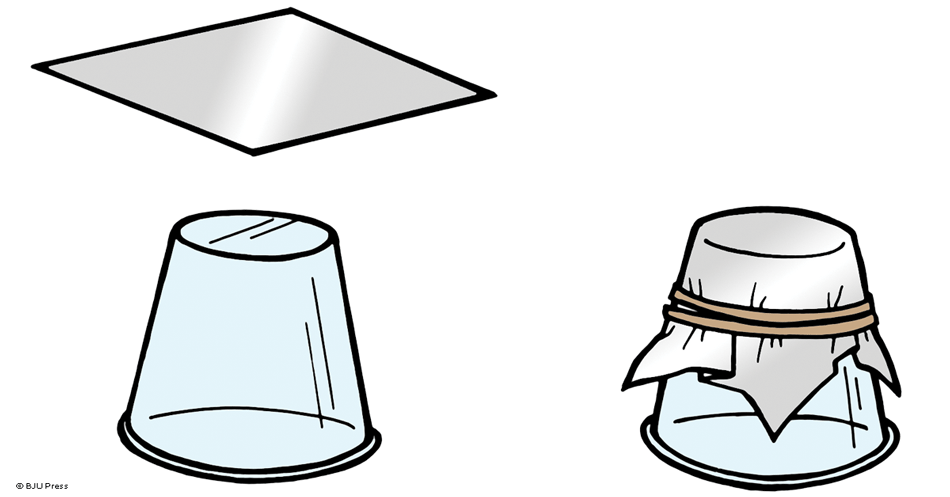
04-01-a-cup

Experiment Procedure

  1. Wrap cotton batting around one of the cups. Be sure to cover the bottom and the sides of the cup. Use a rubber band to keep the batting in place.
  2. Prepare three more cups: one wrapped with craft foam, one with bubble wrap, and one with a double thickness of aluminum foil. Use rubber bands to secure each material. Do not wrap anything around the fifth cup.
  3. Predict which cup will best keep the hot water warm. Write down your hypothesis.
  4. Fill the cups with hot water and put a thermometer in each.
  5. Cover the top of each cup with plastic wrap, leaving the top of the thermometer sticking out.
  6. Measure and record the starting temperature for each cup.
  7. Leave the cups undisturbed for five minutes. Then measure and record the water temperature in each cup. Measure and record the temperatures again after another five minutes.
  8. Calculate the difference between the starting and ending temperatures for each cup.

Conclusions

  • Did your results support your hypothesis?
  • Which cup had the greatest change in temperature? Why?
  • Which type of insulated cup would you choose to hold hot chocolate? Why?

Follow-up

  • Use ice cubes instead of hot water to determine which insulation is best for keeping ice cubes from melting.

Labs like this one help build the skills that can turn your science student into a student scientist. Check out this lab and many other great skill-building ones in BJU Press Science 5.

Save

Filed Under: Successful Learning Tagged With: energy, experiment, heat, lab, science

A Chocolate Chip’s State of Matter

November 29, 2016 by Meredith

Chocolate chip cookies—does your family like them gooey or crunchy? Either way, I’m sure everyone is a fan of this delicious treat. Some of you probably have the homemade recipe memorized, but if you’re like me, the boxed cookie mixes are a go-to especially when baking with kids. (Thank goodness it keeps things simple yet still delicious.)

Getting kids involved in the baking process is quite valuable in the long term, but sometimes it’s extra messy at the beginning! Not only does it give them the opportunity to apply math and science skills, but your kids also can show the ability to follow specific directions. Getting kids involved with hands-on learning experiences allows them to take an active role in their education and makes the lesson memorable.

So why not bake chocolate chip cookies to teach about matter and its different states? You probably won’t have any complaints!

Things You’ll Need

  • Kitchen helpers
  • Bowls, utensils, cookie sheets, cooling racks
  • Your family’s favorite chocolate chip cookie recipe (or this recipe)
  • Ingredients for the recipe
  • Extra chocolate chips for “experimenting” (and eating)

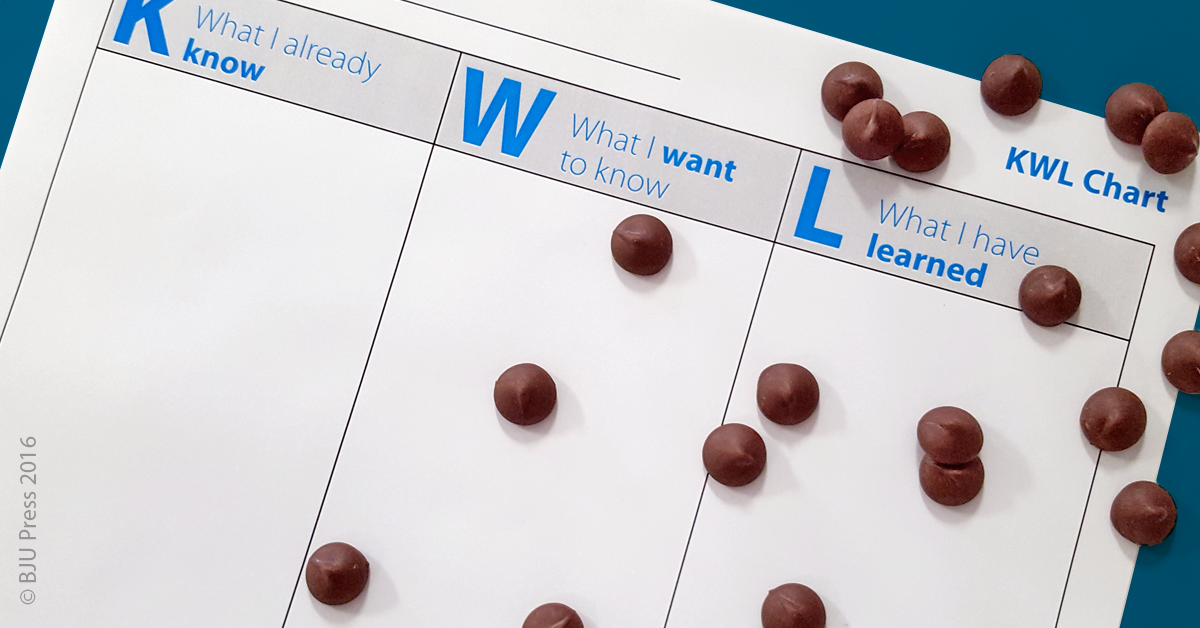
This object lesson is a great time to use a “Know, Want to Know, Learned” (KWL) chart. It helps you guide the lesson as well as gauge your kids’ knowledge and then compares it to what they learned through the activity. Download this KWL chart for them to fill out.

KWL learning activity chart with chocolate chips

Know

Have your kids list what they know in the first column of the KWL chart. You can simplify the exercise to focus on a specific ingredient like I’ll do here with chocolate chips. The most obvious things your kids will likely write down are related to our senses (for example, shape, color, and state of matter). Place a few chocolate chips on the counter to help them get started if you’d like.

Want to Know

In this column on the chart, your children can put anything they want to learn about the chocolate chips. If they need help thinking past how many you’ll let them eat, suggest these questions for their chart.

  • How much does an average chocolate chip weigh? (You’ll need a kitchen scale for the answer.)
  • What causes chocolate chips to change their state of matter?
  • How much space (volume) does a chocolate chip take up?
  • What is the density of chocolate chips?
  • How long does it take a chocolate chip to change from one state of matter to another?
  • What is the melting point of a chocolate chip?

While your children fill out these first two columns on their KWL charts, you can begin gathering all the needed ingredients and kitchen supplies for the cookie recipe. Then let the mixing and measuring begin! As the cookies are baking in the oven, take time to work through the questions in the second column, helping your kids answer as many of them as possible.

Taking the cookies out of the oven gives you a great opportunity to explain the changes that matter can go through. For example, the chocolate chips go through a physical change. Your children can observe that the chocolate chips only change their state of matter from solid to liquid (melted) and back to solid again. Other ingredients (particularly the liquids) undergo a chemical change. These ingredients have lost their individual properties to become a new substance with different properties—the cookie!

Learned

The third column can be filled out as your children discover the answers to their questions during the baking time. Or they could fill it in while enjoying a nice warm cookie. Either way, be sure they record what they learned through this very scientific baking experience.

Learning charts like the one suggested for this exercise can be applied to many different subjects. Choose a holiday, historical event, literary genre, or another science topic to explore in this same simple way. Don’t forget about this downloadable KWL chart for your immediate use.

Filed Under: Successful Learning Tagged With: chocolate chips, KWL, learning chart, matter, science

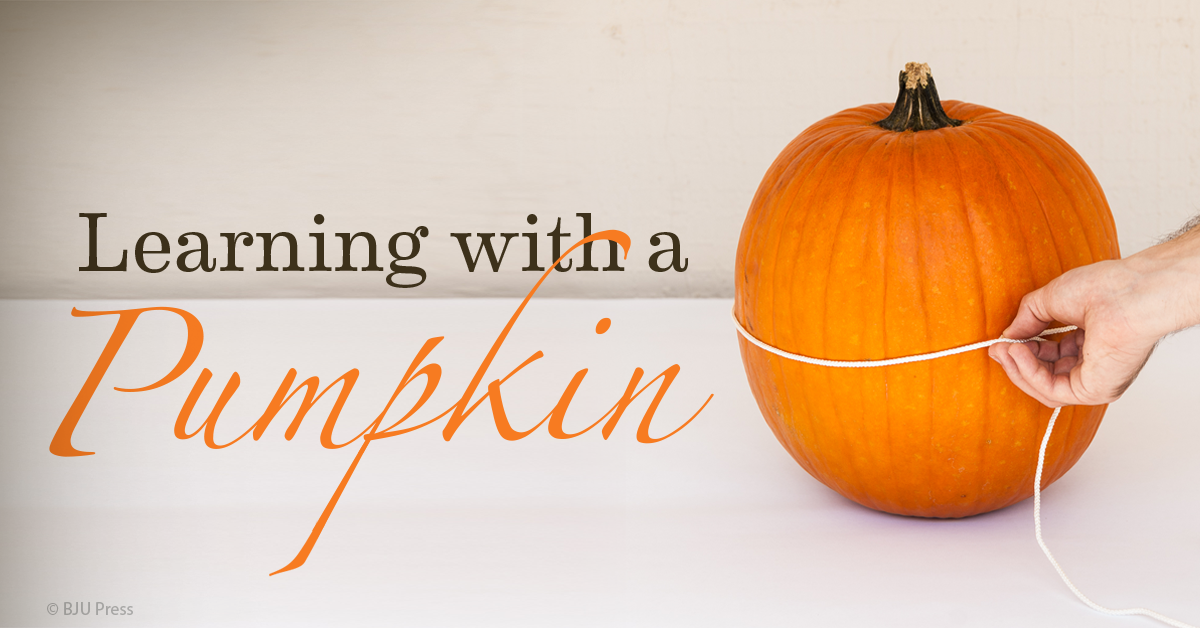
Activity: Learning with a Pumpkin

October 6, 2016 by Justin

One thing many children look forward to about fall is getting to carve or decorate a pumpkin. As a parent, you can capitalize on that excitement by squeezing some learning in with all of the fun. Here are some ways to practice science and math skills with your child while pumpkin carving.

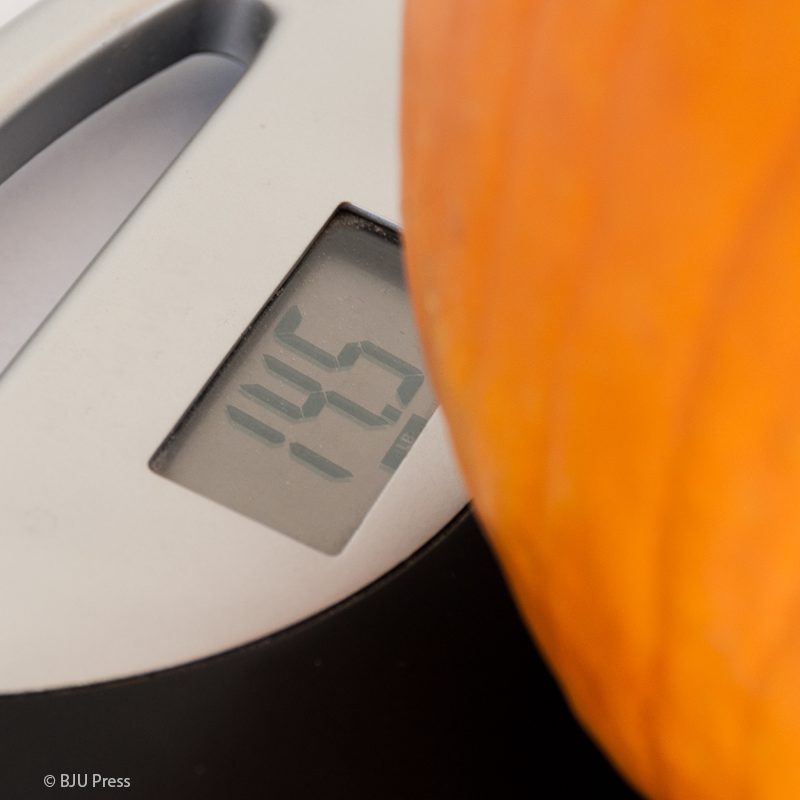
Before carving the pumpkin, start off by weighing it. A normal household scale will do. If the pumpkin is not too heavy, have your child pick it up and guess the weight. Then he can weigh it. This activity will help build his ability to associate perceived weight with an actual measurement. Our pumpkin weighed in at a whopping 14.5 pounds!

pumpkinblogpost-weight

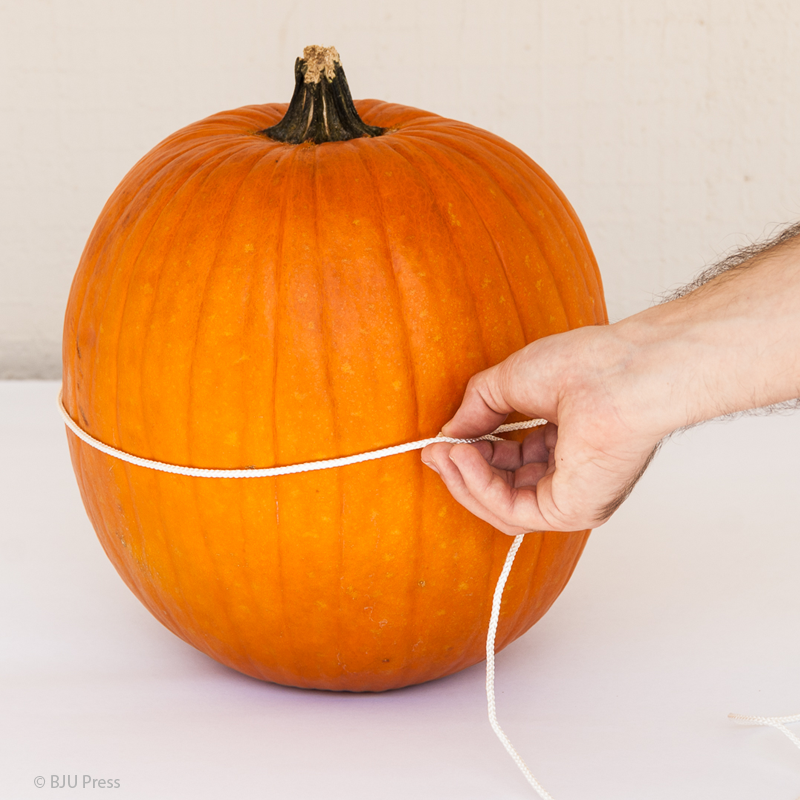
Next, your child can measure the pumpkin’s circumference using a piece of string or yarn along with a yardstick or tape measure. Once he has determined the circumference, take the calculations to the next level (if age appropriate) and have your child use the following geometric formulas to find the diameter and radius.

C = πd (circumference = 3.14 × diameter)

d = 2r (diameter = 2 × radius)

pumpkinblogpost-circumference

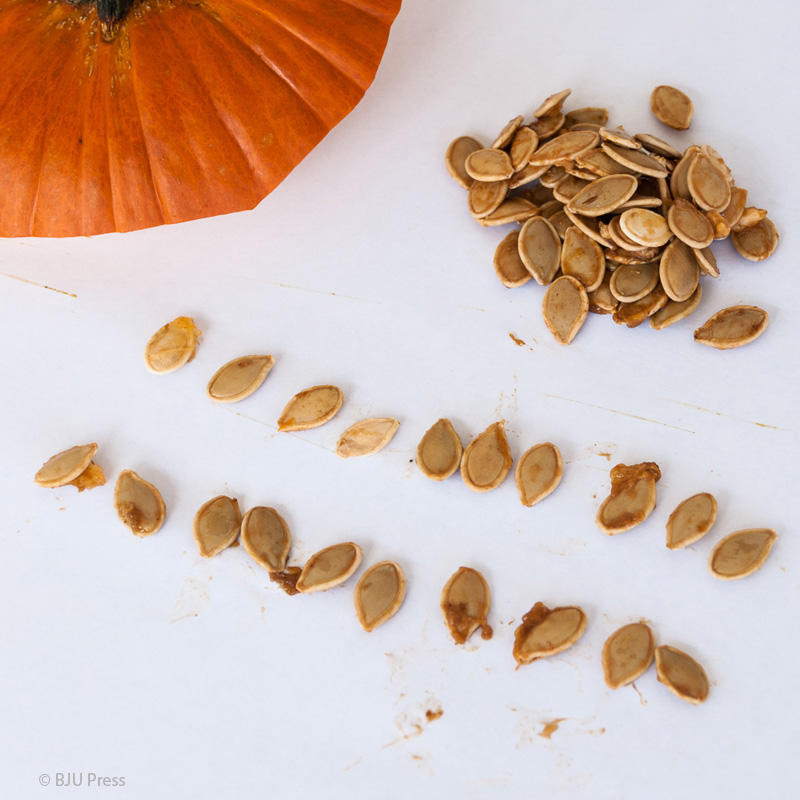
After you or your child cut the pumpkin open (we recommend providing supervision), have your children count the total number of pumpkin seeds by separating them into rows of five or ten. This practice is great for helping younger children understand multiplication.

Learning with a Pumpkin-Counting

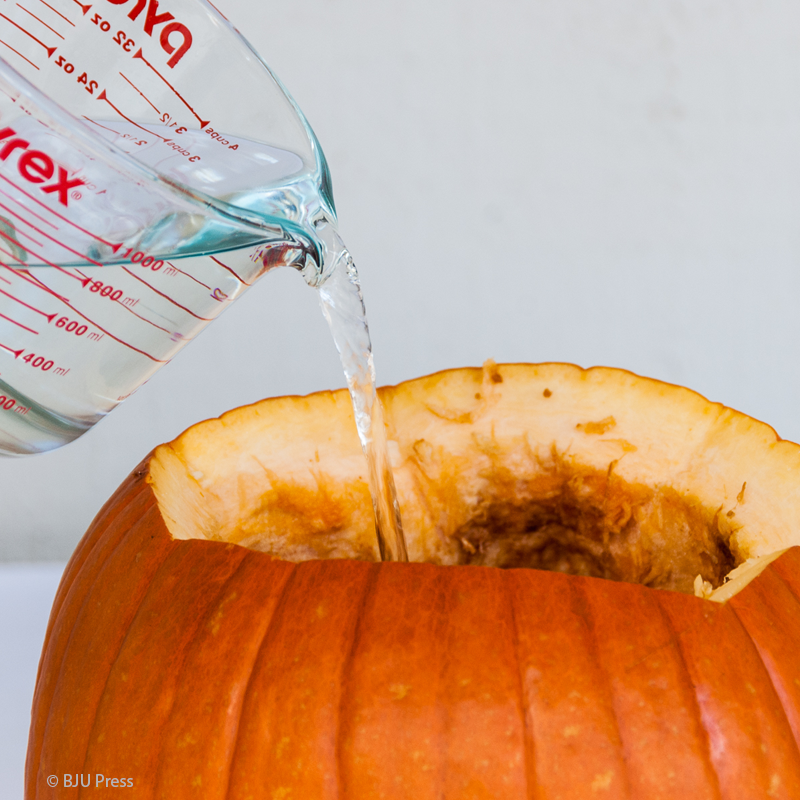
Once the inside of the pumpkin is cleaned out, have your child fill it with water using a measuring cup to determine how much liquid it can hold. Ask him to estimate beforehand how much he thinks it will hold and then compare that with his findings. Subtract to see how far off the estimate was. Our pumpkin held just over 5 liters of water.

pumpkinblogpost-volume

I hope you enjoy using this learning activity with your child. Be sure to subscribe to our homeschool email for more fun homeschooling ideas!

Filed Under: Successful Learning Tagged With: activity, craft, Fall, hands-on learning, math, pumpkin, science

The Creation Blessing

May 3, 2016 by Ben

Often when I leave for work, I say goodbye to my wife and children by offering good wishes. Have you ever thought about the common phrase “have a nice day”? Grammatically, it’s an imperative or command like “be good!”  The way it looks on paper it could be followed up with “or else” as in “have a nice day or else . . .” But no one ever says it that way. We say it more like “may you have a nice day.” We’re actually blessing one another in the form of a command.

Divine Blessing

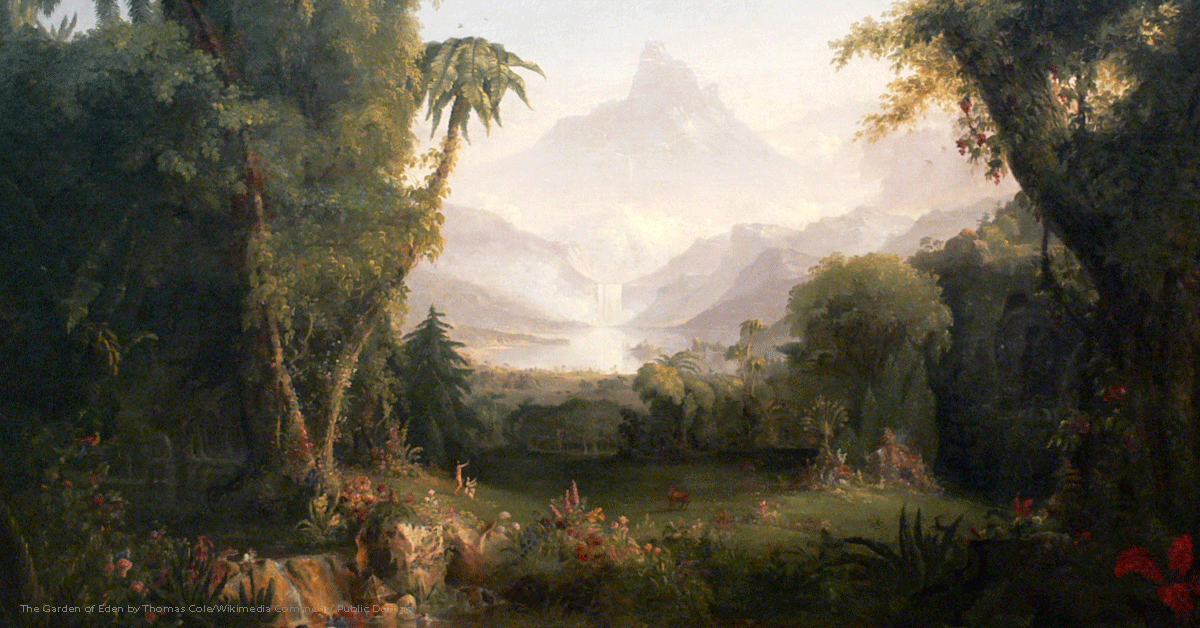
In Genesis 1:28 we read about a blessing given in the form of a command. After creating humans male and female in His own image, God blessed them. The wording of this blessing is a command; so we often refer to it as the Creation Mandate.

Be fruitful, and multiply, and replenish the earth, and subdue it: and have dominion over the fish of the sea, and over the fowl of the air, and over every living thing that moveth upon the earth.

The-Garden-of-Eden

Divine Command

Unlike our good wishes, God’s blessing carries the weight of a command. We shouldn’t resist His blessing from Genesis 1:28 and expect things to go well for us. For example, in Genesis 11 Noah’s descendants rejected God’s command and all gathered in one place to build the tower of Babel. As a result of their sin, God confused their language and sent the people throughout the world.

Unbelievers can share in God’s blessing by following the Creation Mandate. In fact, many do. In BJU Press science and math textbooks, we highlight how scientists and mathematicians use their knowledge of God’s world to “have dominion.” They use their skill to care for the creation and use the creation for others’ benefit. Many of those professionals following the Creation Mandate are experiencing the common grace of God’s creation blessing in their lives.

Divine Reach

Because I’m human, the blessings I speak are little more than well-wishing. I may say, “I hope you have a nice day.” But while I’m at work, I have little immediate control over what happens at home, and some days my wife feels overwhelmed. In contrast, God’s blessing on the first man and woman had power behind it to confer that blessing on all of humanity.

God’s power is infinite, so His action in Genesis 1:28 reaches through time and space to all people. Not even the Fall overthrew His blessing to fill the earth and exercise dominion. The long line of impressive civilizations throughout history with all their remarkable achievements, technological advancements, and beautiful artwork evidences God’s power and kindness to humanity expressed in His first words to mankind.

As parents, we have a tremendous opportunity to demonstrate God’s blessing. We get to teach our children how to follow God’s blessing to care for the world. Since our teaching is influenced by the textbooks we use, it’s important to choose a homeschool curriculum that reinforces the truth of God’s creation blessing.

Filed Under: Shaping Worldview Tagged With: Creation, Creation Blessing, Creation Mandate, math, parenting, science

  • « Go to Previous Page
  • Page 1
  • Page 2
  • Page 3
  • Page 4
  • Page 5
  • Interim pages omitted …
  • Page 7
  • Go to Next Page »

Primary Sidebar

As parents, teachers, or former homeschool students, we are passionate about homeschooling from a biblical worldview. We hope these teaching tips, fun activities, and inspirational stories support you in teaching your children.

Email Signup

Sign up for our homeschool newsletter and receive select blog posts, discounts, and more right to your inbox!

Connect with Us!

                    Instagram     

Read Posts on Specific Subjects

Early Learning
Foreign Language
History
Language Arts
Math
Science

Footer

Disclaimer

The BJU Press blog publishes content by different writers for the purpose of relating to our varied readers. Views and opinions expressed by these writers do not necessarily state or reflect the views of BJU Press or its affiliates. The fact that a link is listed on this blog does not represent or imply that BJU Press endorses its site or contents from the standpoint of ethics, philosophy, theology, or scientific hypotheses. Links are posted on the basis of the information and/or services that the sites offer. If you have comments, suggestions, questions, or find that one of the links no longer works, please contact us.

Pages

  • About BJU Press
  • Conversation Guidelines
  • Terms of Use & Copyright

Archives

© 2026 · BJU Press Homeschool