• Skip to primary navigation
  • Skip to main content
  • Skip to primary sidebar
  • Skip to footer

BJU Press Blog

  • Home
  • Shop
    • Shaping Worldview
  • Simplified Homeschool
  • Successful Learning

Expressing Great Gratitude to God

November 7, 2017 by BJU Press Writer

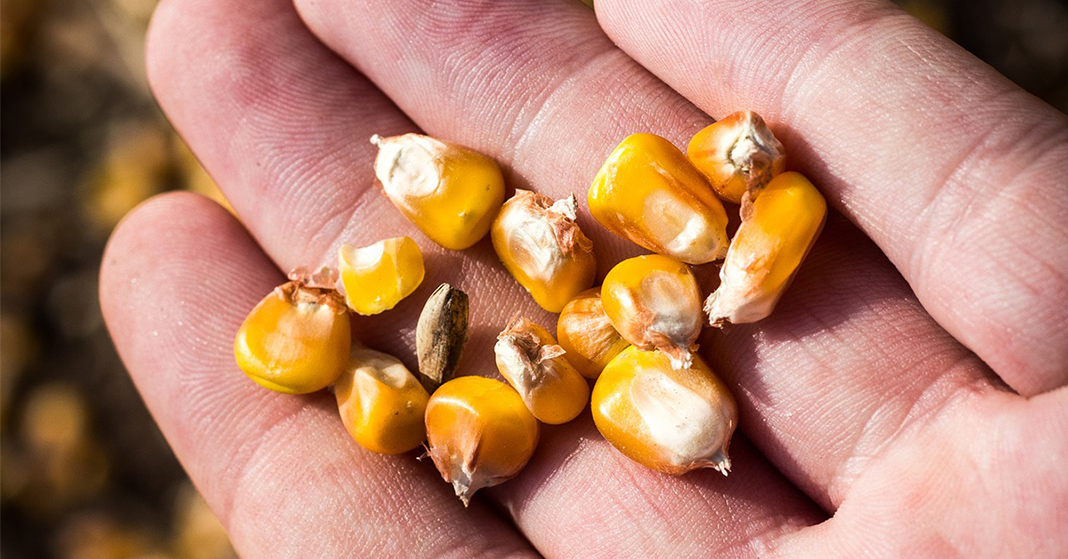
our great God gives a corn harvest
Plenty of men and women have gone down in history with “the Great” after their names. Have any of the following shown up in your homeschool history lessons?

Cyrus, the king of ancient Persia who’s mentioned by name in the Old Testament, is now known as Cyrus the Great. In the New Testament, the king who ordered the massacre of the baby boys in Bethlehem (Matthew 2:16), is ironically called Herod the Great. And who hasn’t heard of Alexander the Great? Then there was Gregory the Great, a popular pope in the sixth century. Later on, the Russian Empire would be ruled by Peter the Great, Ivan the Great, and Catherine the Great. And the list goes on, reaching even to our day. Maybe your family has watched video clips of Wayne Gretzky, the Canadian hockey player known as the Great One.

These people and other “greats” have certainly done remarkable things, but as Christians, we know that no human is really great compared to our God. To declare ourselves great is something like a tiny spark (even though it can set ablaze a huge forest as the Bible says in James 3:5) claiming to be like the sun!

One November a couple of years ago, I was reading through Psalms and noticed how often the words great, greatly, and greatness crop up in those prayers—more than two dozen times! The psalmists were obviously convinced that not only is God great but so are His name, His works, and His attributes, such as His love, mercy, power, and goodness.

So I copied down some of their exclamations of praise to the Lord and about the Lord and stitched them together into what I called “A Psalm of Greatfulness.” Then on Thanksgiving Day, when my family gathered around the table, we read it aloud as a choral reading.

If you’d like to use it this year, feel free to download  “A Psalm of Greatfulness” and print out copies.

You can adapt it for the number of family members and guests who’ll be present at your Thanksgiving meal so that everyone gets to participate. (Of course, it’s also suitable to use as part of your family worship time during this season—or any other time of the year for that matter.)

Our God is great, and we are grateful!

• • • • •

An editor at BJU Press until 2020, Dennis and his wife spent seventeen years homeschooling their three sons. Dennis occasionally teaches at their church and in his spare time enjoys running, playing racquetball, and interacting with their five grandchildren.
Filed Under: Shaping Worldview Tagged With: family devotions, gratitude, Psalms, Thanksgiving

The Thankful Spot

November 2, 2017 by Guest Writer

Celebrating our blessings on a special day is a wonderful thing to do, but how do we teach our children to be grateful every day? How do we train them to see God’s hand in the little blessings as well as the big ones? Check out this Thanksgiving activity that offers weeks of thankfulness and fun for the whole family. It helps children develop an attitude of gratitude—and grownups may find it refreshing too!



1. Find a Thankful Spot

Remember how Winnie the Pooh had a “Thoughtful Spot”? Well, it’s time to find your family’s Thankful Spot! Is there an area of your home that everyone can view easily? Perhaps the refrigerator door, a wall near the front door, or the bathroom mirror? You could even use each bedroom door as the owner’s personal thankful spot.

2. Create Thankfulness Pages

Feel free to design your own pages, or use our handy printable “Days of Thankfulness.” You’ll need one copy for each person in your home. At the top of the “Days of Thankfulness” page, ask each child to write his or her name and the number of days till Thanksgiving.

3. Display the Pages

Now you’re ready to post the pages in your Thankful Spot. Younger children may have trouble writing on the paper while it is posted vertically on the wall, so you’ll need some way to remove the lists easily each day. Consider using painter’s tape to attach the lists to a door or wall, or use push pins to affix them to a bulletin board or cork board.

4. Add to Your Lists Daily

Remind everyone in the family to write something in one of the blank spaces on his or her list each day. For the first day, ask your kids if they can think of someone special in their lives, someone they’re thankful for. On the second day, they can write down something they like to eat. The third day, prompt them to think about a kind of technology that is useful or enjoyable. There are thirty items on the list, enough for a whole month—but you can keep the fun and thankfulness going as long as you like!

5. Set Aside Time to Be Thankful

Every day—at whatever time of day works best for your family—take a few minutes for everyone to share what (or who) you’re grateful for. Then pray together, expressing your gratitutde to God. You could do this every morning before you begin your homeschool day; or if mornings are too hectic, you could visit your Thankful Spot during lunch break, at suppertime, or in the evening before bed.

Explore Other Creative Ways to Be Thankful

There are other fun ways to stay mindful of all the great things God has given! You can make a paper tree and tape it to the wall in your homeschool classroom. Every day, have your children write some things they’re thankful for on colorful paper leaves, and tape those leaves to the tree branches.

You can also teach the letters of the alphabet and their sounds while being thankful! On the first day, ask your kids to think of something they are thankful for that begins with the letter A. Continue with a new letter each day until you reach Thanksgiving!

Even the littlest blessings are God saying “I love you” to His children. As you help your children find a new “thankful” every day, remember to seize those teachable moments to tell them more about the One who loves them best of all.

• • • • •

Rebecca is a work-at-home freelance writer, novelist, wife, and the mom of two bright-eyed little ones. She credits her success in writing and her love of books to her own mom, who homeschooled three kids from pre-K through high school.

Filed Under: Shaping Worldview Tagged With: homeschool, homeschool classroom, Thanksgiving activity

Meditations for When I Don’t Measure Up

October 31, 2017 by Megan


Have you ever felt like you don’t quite measure up? As a homeschooler, I find that I often feel that way. I know some amazing homeschoolers. Some practically write their own curriculum. Some run businesses from their homes while homeschooling three, four, or five children. Some happily chauffeur their children to choir, strings lessons, youth orchestra, Chinese lessons, and painting classes.

But me? I struggle to keep up with the constant piles of laundry. I often feed my family leftovers. My three-year-old doesn’t recognize her letters yet, and my family struggles to stay on key when we sing hymns during our nightly family worship time.

Am I a homeschooling failure? Sometimes I feel that I am. Some days I feel so overwhelmed and discouraged that I can barely scrape my spirit off the floor. Other days my thoughts constantly accuse me—thoughts like I should be more creative in my lessons plans. I should be giving my daughters more extracurricular activities. I should be able to do it all. Why can’t I do it all?

On days like that, I desperately need to recalibrate my thoughts by meditating on God’s Word. Here are a couple of meditations that I constantly find myself going back to.

God’s approval is the only approval I need.

Robin Wood, in her book The Battle Within, challenges women to meditate on 1 Corinthians 4:2–4:

You and I are to be found faithful in pursuing God and reflecting His light to others. We don’t have to waste time trying to determine if somebody else is a successful woman, and it doesn’t matter if other moms judge or criticize us. We know that without God, we are nothing and can attain nothing good. Successfully meeting a list of obligations or merely fulfilling a role is not going to justify us before our Father in heaven. No. We have to know God to know what He wants us to be. When we finally realize that His primary goal for us is to reflect the love of Christ to others, then everything in our lives becomes a tool to that end. (p. 78)

Whenever I consider taking on something new, I always have to check my spirit. Do I want to do it for the right reason, or do I want to do it to gain approval from my peers? Let’s face it. Sometimes others (particularly other homeschool moms) can put a lot of pressure on us to run our homeschools or even our households in a certain way. We should listen to and prayerfully consider counsel from those who are older and more experienced, but before we launch into any new endeavor, we need to make sure that we’re doing so for the right reasons.

God will enable me to do everything He calls me to do.

Nancy Leigh DeMoss, in her book Lies Women Believe and the Truth that Sets Them Free, draws her readers’ attention to John 17:4:

All I have to do is the work God assigns to me. What a freedom it has been for me to accept that there is time for me to do everything that is on God’s “to do” list for my day, for my week, and for my life! (p. 119)

Whenever I find myself discouraged about my ability to “do it all,” I have to remember that I’m not supposed to “do it all.” I only have to do the things that God has called me to do. Usually, during these times of discouragement, I need to evaluate how I am spending my time. Are my priorities getting out of whack? Knowing what my priorities should be is something that requires a lot of wisdom, and therefore a lot of prayer. But it is so soul-strengthening to know that God will enable me to complete the work He has for me.

Homeschool Mom, take heart. You’re not alone in your struggle. Whenever you’re tempted to despair, remember that God is with you, and He has not left you defenseless. Meditate on God’s truths, bathe your days in prayer, and see God strengthen your soul.

Save

Save

Filed Under: Simplified Homeschool Tagged With: homeschooling failure, meditation, pressure, time, truth

3 Tough Questions Kids Ask and How to Answer Them

October 26, 2017 by BJU Press Writer

Dinosaur Questions
“What happens to us when we die?” Do your kids ever ask you questions like this? You know, ones that are hard to respond to because they touch on really important topics? When a major London newspaper ran a story about the top twenty questions parents find toughest to answer for their kids, the “what happens to us when we die” question was listed as number 11. And number 13 was “Is God real?”

Hard Questions

It’s no surprise that people think spiritual questions like these are tough to respond to. But since we as Christian parents have a Book that gives us the answers, the most difficult aspect for us may be making our answers simple enough for younger children to understand. But when we give our kids Bible-based answers, we can be confident we’re teaching them truth. In contrast, according to the article, 25 percent of parents in one survey said if they were asked, “Where do you go when you die?” they would tell their child, “You become an angel.” This correlates with another finding of the survey: When parents don’t know the answer to a child’s question, 63 percent of them will give one anyway—even if they think it might be wrong!

Most of the other questions on the list were requests for scientific explanations, such as “Why is the sky blue?” and “How do planes fly?” These can be hard to answer on the spot because we’ve forgotten (or never really understood) the scientific or technical details. But that kind of factual data is easily accessible these days. The bigger challenge for us as Christian parents is how to answers our children’s questions in a way that reinforces the biblical worldview we want them to grow up with.

Teachable Moments

When children ask questions, especially why questions, it can be a perfect opportunity to engage in biblical worldview shaping—helping them to learn to see the world and everything in it from God’s perspective. The Creation-Fall-Redemption metanarrative of the Bible has multiple layers of significance, yet it’s simple enough for even a young child to grasp:

Creation: God made the world.

Fall: People have messed it up.

Redemption: Someday God will fix it.

The key is to answer kids’ questions by telling them a small story that fits in with the big story of CFR.

Victoria Klein wrote an article in Parents magazine about questions kids often ask and how to answer them. For each of nine questions, she suggests an answer and quotes an expert’s advice on how to talk about the topic. Here are three of the questions and my suggestions for how to answer them to help kids think biblically.

1. “Why aren’t there any more dinosaurs?”

Klein cites the standard evolutionary scientific answer based on the secular worldview: Eons and eons before humans existed, dinosaurs evolved from simpler lifeforms. Then, 65 million years ago a huge asteroid crashed into the earth, resulting in climatic changes that the species couldn’t adapt to, and so they died out. But some of them “were the ancestors of today’s chickens, pigeons—even ostriches.”

The Bible tells a very different story: On the sixth day of creation, God made dinosaurs along with all the other land animals as well as Adam and Eve. So humans and dinosaurs lived at the same time. Then about 4,400 years ago, there was a worldwide Flood that wiped out almost all the land animals of every species. The animals that survived had to adjust to living in a very different habitat. Climate change brought about by the Flood (e.g., the Ice Age), disease, competition from other animals, and other factors eventually resulted in the extinction of dinosaurs.

To give a more theological answer, you might explain that the main reason dinosaurs (and other species) have gone extinct is the Fall. The Flood was God’s judgment on human sin.

2. “Why are there so many languages in the world?”

Again Klein accepts the evolutionary explanation that language developed as humans evolved and assumes that the reason for different languages is that the process occurred simultaneously in various places that were isolated from each other. The fact that the English of today is so different from the English of five hundred years ago is cited as evidence of this evolution.

In contrast, Scripture indicates that language was a gift God gave Adam and Eve when He created them. There was only one language until about a hundred years after the Flood. But then people rebelled against God at the Tower of Babel, and He punished them by dividing them into groups and making it so that they couldn’t understand each other. Those separate languages developed into the ones in use today. The existence of various languages is actually a strong argument against the notion that language evolved as an aspect of the transition from ape to human.

3. “Why do people get sick?”

Klein’s answer focuses on germs and the difference between contagious diseases and other medical conditions.

The CFR perspective on disease emphasizes the idea that in the world as God created it there was no sickness, pain, or death, but once people sinned against God, the door was opened to all of those. So in that sense, all disease is a result of the Fall—we get sick because of sin. That doesn’t mean that there is a direct cause-and-effect relationship between a particular illness and a specific act of disobedience. Job didn’t get boils because he had sinned, nor was the man in John 9 born blind because of his own or his parents’ sin. But any lack of good health confirms that we live in a fallen world.

Trustworthy Authority

What’s so important about answering from a biblical worldview frame of reference? The goal is not for children to comprehend all the whys and wherefores of the factual information we give them, but for them to absorb the way our worldview works. When they see that we examine every question in the light of Scripture, they will begin to understand that the ultimate authority is God’s Word not scientific evidence, historical documentation, or popular opinion.

What tough question has your child asked recently? Were you able to answer it from a biblical worldview perspective?

• • • • •

An editor at BJU Press until 2020, Dennis and his wife spent seventeen years homeschooling their three sons. Dennis occasionally teaches at their church and in his spare time enjoys running, playing racquetball, and interacting with their five grandchildren.

Filed Under: Successful Learning Tagged With: biblical worldview, Creation Fall Redemption, questions, teachable moment

What Is STEM and How Do I Teach It?

October 19, 2017 by Justin


If you’re like me, you have a hard time keeping up with all the new buzzwords in education. When you hear about STEM, it’s usually being talked about as if it’s a subject all its own—one more thing you need to worry about teaching your kids. The reality is that you’re probably already teaching it, especially if you are using BJU Press textbooks for science and math. We were doing STEM long before it was called STEM.

What STEM Is

STEM is an acronym for

  • Science
  • Technology
  • Engineering
  • Math

Technically, any lesson that falls into one of these subject areas is a “STEM lesson.” But the term is typically used when describing activities that seek to teach kids how to apply those subjects to real-world applications. If hearing about STEM brings to mind pictures of kids building robots, that’s because robotics and programming are examples of real-world applications. They are definitely STEM, but STEM isn’t limited to electronics. Exercises can also include chemistry experiments, math equations used to design buildings or vehicles, weather analysis, and more.

Why It’s Hot

The acronym actually dates back to 1998 but has recently gained a lot of popularity. Experts in the United States determined that we were behind other countries in these areas in terms of test scores and the number of college graduates holding degrees in those fields. The majority of high-paying new jobs fall into the STEM category, and there aren’t enough graduates to meet that demand.

Why It Matters

Homeschoolers usually aren’t big on educational fads, focusing instead on time-tested approaches that we know work. The acronym STEM might be trendy but the idea isn’t new. The fundamental processes used in math and science never change, but the way we apply them to the real world has to because the demands of the job market change. If we’re going to bring up our children to be good stewards of God’s creation and to love their neighbors, we have to equip them with the tools they need to accomplish those things in a modern world. That’s why BJU Press has been including these real-world applications in our science and math textbook lines from the beginning.

What to Do

One of the best things about homeschooling is that you can do what’s right for your family. I believe STEM is very important, so here are two things I plan to do with my own son:

  • I’m going to make sure that the curriculum I’m using has plenty of up-to-date STEM exercises that will help him learn.
  • I’m going to personally come at the activities with a learner’s attitude. A lot of the lessons, especially ones involving technology and programing might be foreign to parents who aren’t actively involved in fields that use them, but I’m excited about learning along with my son and certainly won’t skip over lessons that may seem unfamiliar or difficult. We’ll get through them together.

Did you find this post helpful? Would you like to share a STEM activity that has worked in your homeschool? Be sure to comment below! Also, to get you started, here are six free STEM activities from BJU Press science textbooks.

Save

Save

Filed Under: Simplified Homeschool, Successful Learning Tagged With: activities, activity, math, science, STEM, technology

  • « Go to Previous Page
  • Page 1
  • Interim pages omitted …
  • Page 73
  • Page 74
  • Page 75
  • Page 76
  • Page 77
  • Interim pages omitted …
  • Page 152
  • Go to Next Page »

Primary Sidebar

As parents, teachers, or former homeschool students, we are passionate about homeschooling from a biblical worldview. We hope these teaching tips, fun activities, and inspirational stories support you in teaching your children.

Email Signup

Sign up for our homeschool newsletter and receive select blog posts, discounts, and more right to your inbox!

Connect with Us!

                    Instagram     

Read Posts on Specific Subjects

Early Learning
Foreign Language
History
Language Arts
Math
Science

Footer

Disclaimer

The BJU Press blog publishes content by different writers for the purpose of relating to our varied readers. Views and opinions expressed by these writers do not necessarily state or reflect the views of BJU Press or its affiliates. The fact that a link is listed on this blog does not represent or imply that BJU Press endorses its site or contents from the standpoint of ethics, philosophy, theology, or scientific hypotheses. Links are posted on the basis of the information and/or services that the sites offer. If you have comments, suggestions, questions, or find that one of the links no longer works, please contact us.

Pages

  • About BJU Press
  • Conversation Guidelines
  • Terms of Use & Copyright

Archives

© 2026 · BJU Press Homeschool