• Skip to primary navigation
  • Skip to main content
  • Skip to primary sidebar
  • Skip to footer

BJU Press Blog

  • Home
  • Shop
    • Shaping Worldview
  • Simplified Homeschool
  • Successful Learning

Tips for Keeping Kids on Task

March 10, 2020 by Arianna

keeping kids on task
Keeping your children on task in their schooling can be a challenging job, but there are ways to encourage productivity that will help both you and your children. A couple weeks ago, we asked moms on our Facebook page to share their tips for encouraging their kids to stay on task during the school day. We thought we’d share some of their suggestions with you here!

Keep Them Accountable to Each Task

Some children may struggle to focus if you are not beside them. One mom commented on our Facebook post that her daughter works better when she is not alone in her room. She says, “Mine usually does her work . . . with me while I am working and she zips right through it. In her own room she gets distracted and it’s harder.” Another way to help them be responsible for their own time management is to schedule checkpoints throughout the day when you will review their progress. You can set specific goals for them to work on in between check-ins so they know what to expect. If they’re not making those goals, you can also see if they’re struggling. You’ll know when they need help and encouragement to continue.

Remove Distractions

We all know that distractions eat away at a productive school day. Electronics, toys, siblings, pets—all of these can become distractions. How do you eliminate screen-related distractions if you use screens for schoolwork? One way to remove distractions for children who do school on electronic devices is to block pop-up notifications on the screen they are working on. You can also add accountability by making sure the screen they’re working on faces the center of the room. Other distractions such as as toys, games, siblings, or pets can be just as disruptive as electronics. Instead of removing these distractions entirely, offer them during breaks as rewards for hard work. Some moms encourage these other interests by incorporating their children’s favorite games or topics into their lessons.

Offer Regular Breaks

We’ve all had that day when things never seem to stop or slow down. At the end of the day, we may actually scream if anyone asks us to do one more thing. Children will feel the same way when endlessly confined to school work. Downtime is an important part of everyone’s day. One mom shared how she breaks up her kids’ days, “For every 3 items on their list (they have a daily checklist showing all the school they need to do that day) they get a break to play. They seem to focus and stay on task so much better knowing exactly how much they have to do before each break.”

Try setting goals and tasks to work on in short intervals and then give a short break before working again. One productivity method recommends 25 minutes working hard without distractions and then a 5 minute break. During breaks, encourage your kids to stretch, eat a snack, go to the bathroom, or anything else that makes them get out of their seat. I use this method frequently to stay on task and get more done in a shorter amount of time.

Offer Encouragement for Completing a Task

In addition to suggesting frequent breaks, one mom recommends “words of affirmation and snacks they enjoy during the hard parts of the day like Math and Science.” Encouragement can be a powerful tool for keeping your children on task! My piano teacher would give prizes after her students gained points from practicing, passing songs, and playing in front of people. I looked forward to reaching those prizes and would work harder to get there. Remind your children that you recognize and appreciate their hard work. Along with verbal affirmation, rewards like snacks will encourage them and help them focus! Another mom told us she gives her daughter something to look forward to at the end of the day. She says that, during the winter months, getting “to play outside—sledding, skating, skiing, building snow forts, etc.—when the work is done” is “good motivation.” Setting specific goals for your children to meet and then giving them incentives for reaching them can be very effective.

Children may struggle to stay on task no matter how hard we try. But don’t be discouraged! You know your children and their needs. Embrace the journey and remember that homeschool education is about your children and not a to-do list.


Filed Under: Simplified Homeschool Tagged With: accountability, encouraging productivity, homeschool

Communication: The Key to Parenting

March 3, 2020 by Guest Writer

communication is key
As homeschooling parents, we understand the importance of clear communication. If our children don’t get what we’re trying to teach them in school and life, they’ll struggle academically, socially, and spiritually. We also understand that we have more opportunities than others to develop good communication with our children. We have them home with us all day. Each day we have hundreds of opportunities to create healthy communication habits for ourselves and for them. We all have room for improvement in our communication habits, so let’s look at some tips to help us become better communicators.

Just Saying

First, know what you want to say. You’ve heard the old adage, “Say what you mean and mean what you say.” That’s a good rule to follow! Be as clear as you can when telling your children what you expect them to do. For example, there’s a big difference between saying “finish your math” and saying “do problems 1 through 10 on page 30.”

If we don’t tell our children exactly what we expect from them, they’re likely to get confused and frustrated. Also, we can’t always assume that our children understood or even heard all of our instructions. Distractions—other children, pets, a large house, or guests—can override what you’re trying to communicate. A good way to make sure they understand is to ask them to repeat what you just told them.

Location, Location

Be mindful of where you are and what’s going on around you. Background noises in the room you’re in, or another room, can make it much harder for your children to hear and understand what you say, or vice versa. As often as possible, try to be in the same room as your children when you’re talking. Of course, that goes without saying when you’re teaching, but it’s a good practice to have all the time. It can be fun to holler down the hallway to talk, but not at the expense of clear communication.

Focus, Please

We’re surrounded by things that suck up our attention and block out the rest of the world. Buzzing phones and blaring TVs, crying children, dishwashers, washing machines—there are so many noises surrounding us at all times. Those noises can be the death of clear communication. If you want to have a meaningful conversation with your children, make sure you have their full attention. If they’re distracted while you’re talking to them, chances are, they won’t remember what you say.

On the flip side, make sure your children have your full attention when they want to talk to you. Texting, talking on the phone, scrolling through Facebook or checking email can wait when your children are trying to talk with you. They need to know you care enough to stop, look them in the eye, and listen. If you have to finish a text or an email before you can give your full attention, use a signal to let them know that you know they want to speak and that you’ll stop and listen to them as soon as you can.

Watch Your Tone

How we say something is just as important as what we say. It can be hard to teach children how to control their tones, especially if we struggle to do the same ourselves. Our tone of voice can communicate something entirely different from our words, and it certainly affects the way our children respond to us and how we respond to them. Children are excellent at picking up on attitudes and thoughts we have hidden in our tone. As impatient or frustrated as you might be with a situation or a certain kind of behavior, remember that letting that frustration into your tone will change the meaning of everything you say. A reminder to finish homework can come across as a punishment or an expression of disappointment—even if you didn’t mean either.

Remember the exhortation in Colossians 3:21. According to the Amplified Bible’s translation, it says, “Do not provoke or irritate or exasperate your children . . . so they will not lose heart and become discouraged or unmotivated [with their spirits broken.]” One unkind remark can undo hours of loving instruction. One snappy retort can erect a wall of resentment between you and your child. We must rely on the power of God to help us. Only He can master our tongues (and voices) so the law of kindness can reign in them. And when we do speak in a harsh tone of voice, we need to make it right as soon as possible. Immediately confess it to the Lord and ask your child to forgive you. Yes, it’s humbling (as I can well testify!), but if we are to maintain a right relationship with our children, it’s imperative. The best way to show our children how to control their tongue is to become masters of our own.

Communication in Body Language

If you have a teenager, you’re more than aware of how frustrating it is when your children roll their eyes or sigh at everything you say. It’s like they’re shouting “I don’t care what you say” or “you can’t tell me what to do.” In addition to our tones, what we’re saying, and our environment, we also need to be mindful of what we’re communicating through facial expressions, posture, and gestures. And we need to help our children understand what their bodies communicate, too.

How we use our bodies while we’re talking can influence our conversations in either a positive or negative way. For example, try not to cross your arms, roll your eyes, sigh, shake your head, or tap your foot during a discussion; all of these gestures can undermine healthy communication. By using positive gestures, like nodding or leaning forward, we can encourage a healthy conversation despite what either party might be feeling.

The Main Goal for Communication

Remember the purpose of communication: to glorify God by building others up with our words. God has given us the gift of language so we can encourage, motivate, and inspire others toward greater Christlikeness. He has also given us His own Word, Holy Spirit, and power to guide our communication. A wonderful scripture to pray each day is Psalm 19:14, “Let the words of my mouth, and the meditation of my heart, be acceptable in thy sight, O Lord, my strength, and my redeemer.”

• • • • •

Jennifer is a pastor’s wife and mom of two young girls and loves homeschooling them. During her own twelve years of being homeschooled, Jennifer developed a passion for reading and writing. She earned a bachelor’s degree in creative writing and relishes writing during her free time.

Filed Under: Shaping Worldview Tagged With: communication, heart, parenting

Treating Cabin Fever with Scriptural Truths

February 25, 2020 by Megan

treating cabin fever
Cabin fever. We’ve all had it—that awful sensation that the walls of our home are about to close in on us or maybe even collapse altogether because of the noise level of our children. Our family experienced it last winter when we received heavy rainfall for nine days in a row.  You may even be experiencing it now because of the weather, prolonged sickness, or other challenges.

Unfortunately, cabin fever often brings out the worst in us and our kids. We become impatient. We complain, act with selfishness, and stir up strife. It gets pretty ugly.

How can we cope with cabin fever?

There’s a lot of practical things we as moms can do. We can hop on Pinterest and collect ideas for all kinds of indoor crafts and games, or we can search online for local indoor events. We can fill the time with read-alouds, technology, and enrichment activities. We’re homeschoolers—we’re good at that kind of thing.

But simply filling the time doesn’t fix our problem. Because at its core, our problem is not due to our circumstances. The problem is not the nine consecutive days of heavy rainfall. The problem is the discontentment festering in our hearts and in the hearts of our children. And only meditation on the truths of God’s Word will truly help us. Here are a couple of scriptural truths to remember.

1. God is in charge of the weather.

Psalm 135:6 states, “Whatsoever the Lord pleased, that did He in heaven, and in earth, in the seas, and all deep places.” Dr. Layton Talbert, in his book Not by Chance: Learning to Trust a Sovereign God, writes:

In all these various spheres, the elements of earth are the tools of providence. He controls the clouds, the lightning, and the wind for His ends (Psalm 135:7)—fire and hail, snow and clouds, stormy winds all fulfill His word (Psalm 148:8) and respond to His commands (Psalm 147:15-18). Do you suppose that has any practical relevance for our attitude toward the weather? (p. 11)

2. God sends periods of affliction for our benefit.

A couple of months ago, my family was housebound for almost two weeks because of a relentless stomach virus. It was miserable. But it was also a time of unexpected blessing because during those long days, I was very aware of God’s grace to me personally.

Psalm 119:71 states, “It is good for me that I have been afflicted; that I might learn thy statutes.”

God often sends periods of prolonged sickness or other difficulties into our lives in order to teach us more about Himself. Rehearse those lessons to yourself and to your children. They will surely brighten your outlook!

Filed Under: Simplified Homeschool Tagged With: cabin fever, homeschool, staying focused

When Life Happens, But School Doesn’t

February 11, 2020 by Guest Writer

life happens
You had big plans this morning; lesson plans prepared, schoolbooks and supplies laid out, desks cleaned and organized. Projects and tests were going to be completed, units were going to be finished—you were even going to get ahead! But sometimes, life happens and school doesn’t.

Derailed Plans

Instead of helping to solve math equations, you had to resolve conflicts between siblings. Your toddler decided to conduct his own “science experiment” in the bathroom, which caused an extra hour of work for you to clean up. So you had to replace history lessons with lessons on obedience and respect. And potty training replaced spelling. On top of all this, you had the normal household responsibilities of laundry, cleaning, and meal prep. In between, there were nap times, diaper changes, and feedings. Just when it looked like you’d be able to squeeze in some school time, you had to hustle the kids off to music lessons and sports practices. When you got home, it was time to fix dinner. It was all you could do to make it to the kids’ bedtime so you could crash on the sofa and reclaim a little bit of your sanity.

Low Ebb

Weary, discouraged, and frustrated may best describe you at this moment. You may be tempted to think that you failed because you didn’t get any schoolwork accomplished. It’s easy to think that today was a total waste because all you had time for was that other stuff. You may be surveying a room strewn with toys that didn’t get put away before bed. You might be inwardly groaning at the thin layer of dust on the furniture you didn’t get to clean. But before you unload your frustrations on your husband or on Facebook, take a moment to hear from the experiences of a fellow homeschool mom who’s been right where you are.

Hope for Tomorrow

Let me reassure you by saying that these days are not a waste. When my daughters were little, I sometimes felt like all I did was correct, discipline, chase after them, and clean up after them. I’ve also cried out, disheartened, with, “I got nothing done today!” But I also learned something: education is important, but it cannot replace godly parenting. Sometimes you have to delay school so you can be the wife and mom you’re meant to be. Our first priority must be to “train up a child in the way he should go” (Prov. 22:6). When you choose to put God and your family first, you are teaching your children an invaluable lesson. They will see that you value them—and God—more than lesson plans, good grades, or a clean house. Commit each day to God. Try to make school happen. But even if only life happens, remember that it can happen for God’s glory if we live the day for Him.

• • • • •

Jennifer is a pastor’s wife and mom of two young girls and loves homeschooling them. During her own twelve years of being homeschooled, Jennifer developed a passion for reading and writing. She earned a bachelor’s degree in creative writing and relishes writing during her free time.

Filed Under: Simplified Homeschool Tagged With: homeschool life, parenting, planning

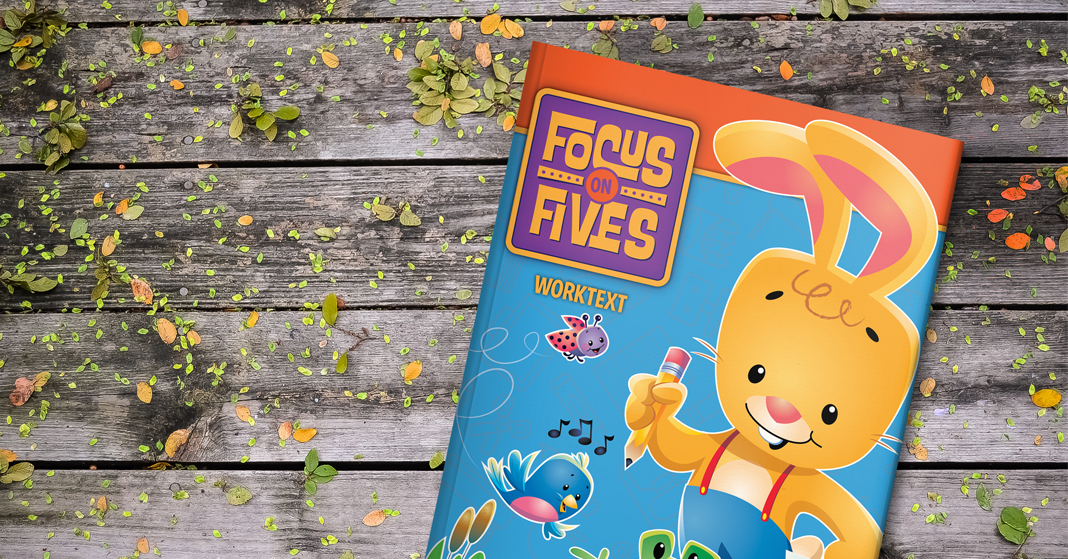
A Mom’s Experience with Focus on Fives

February 4, 2020 by Megan

focus on fives
I have a confession—I never wanted to homeschool a kindergartner. I was afraid to. My training didn’t include early childhood education. I didn’t know how to teach someone to read. And I didn’t think that I was a good enough to teach my child all the foundational skills that she would need to succeed in her education. But the Lord made it abundantly clear that I was to be my daughter’s kindergarten teacher. I wrestled with the Lord about it, and He reminded me of the promise of I Thessalonians 5:24, “Faithful is He that calleth you, who also will do it.” The Lord did equip me for the task of homeschooling my daughter, and the main means that He used was the Focus on Fives curriculum from BJU Press.

An Introduction to the Focus on Fives Curriculum

The Focus on Fives curriculum replaces BJU Press’s former kindergarten curriculum, K5 Beginnings, and it is a major upgrade. The pedagogy—or teaching methods—and the scope and sequence are very similar to K5 Beginnings, but the format is streamlined and the content, including the artwork, has been updated.

When you order the Focus on Fives textbook kit, be ready for a lot of stuff. You receive 6 teacher editions—which initially looks very overwhelming, but it’s actually wonderful because everything you need as a teacher is in one place. Your child receives 2 workbooks—a general workbook and a phonics workbook—as well as 34 full-color reading books. You’ll also get the K5 Phonics and Review Cards, the Write Now! workbook, the Phonics charts, and the teaching visuals packet.

BJU Press is releasing the Focus on Fives video course for the 2020–21 school year. Mrs. Becky Rulapaugh teaches this course. She currently teaches the K5 Math video course that my daughter loves. She’s very good at keeping my daughter engaged.

Lesson Features of Focus on Fives

Heritage Studies and Science

Every Focus on Fives lesson starts off with a heritage studies or science connection. For example, the program starts off with a unit about community helpers. We learned about police officers, firefighters and fire safety, postal workers, doctors, and dentists. The program introduces the topics with a listening story or a composition activity to encourage critical thinking skills. Some lessons also include simple activities, like demonstrating how brushing helps your teeth, to enhance comprehension.

Phonics Foundations

At the heart of every lesson is language arts instruction. BJU Press teaches children to read using a combination of a phonics-based word-family approach along with sight words. The word-family approach ensures that every new sound your child learns can be easily “hooked onto” previous knowledge, and the use of high-frequency sight words helps your child read meaningful text even before you’ve introduced all the sounds.

Language Arts

In addition to phonics instruction, the language arts portion of the lesson covers basic English topics like sentence punctuation, capitalization, the use of plurals and other concepts necessary for reading comprehension. Some lessons will also use phonics characters to help your child identify syllabic patterns to aid them in reading unfamiliar words. Finally, all lessons include handwriting instruction and practice.

Enrichment Activities

Every lesson also includes a list of enrichment activities that go along with the lesson’s topic. The teacher edition includes suggested read-alouds, games, crafts, special snacks, and more. I don’t usually have time to do all the suggested activities, but I do like to pick and choose as time allows.

Reading Books

Although we practice reading every day with short phonics stories, the highlight of our week is our reading book lesson. On those days, we unveil our “big book” of the week. These 8-page, 4-color books reinforce everything that we have learned during the previous weeks and give us good opportunities to develop comprehension and critical thinking skills.

What I love about Focus on Fives

The Focus on Fives teacher editions, in my estimation, are invaluable because they have given me the confidence to teach my daughter. Everything is laid out for me in one place, so I know exactly what I need to do each day. And even though the lessons are not scripted, the teacher edition gives me all the help I need. It’s kind of like having a relative with medical training come with you to a doctor’s appointment—that relative might not be the one in charge, but his or her expert presence certainly makes you feel more confident.

I also love how the curriculum is very flexible. It’s easy to figure out what is necessary to cover in every lesson and what is optional. If I only cover the essentials, we can get through a lesson in about 45 minutes. However, I try to include 1 or 2 of the optional activities every lesson, so usually it takes about an hour a day. And it works fine with my 4-day-a-week schedule even though it’s set up for a more traditional 5-day-a-week schedule.

But Does it Work?

I have really enjoyed seeing my daughter thrive with this curriculum. She gets excited every time I introduce a new sound or a new word family—she loves dreaming up sentences for the new words she learns. She reads with confidence, and she reads with joy.  And I have confidence that she’s going to do great as she continues in her journey.

To learn more about the Focus on Fives materials, check out the subject kit on the BJU Press Homeschool website!

Filed Under: Successful Learning Tagged With: early learning, focus on fives, homeschool, kindergarten curriculum

  • « Go to Previous Page
  • Page 1
  • Interim pages omitted …
  • Page 39
  • Page 40
  • Page 41
  • Page 42
  • Page 43
  • Interim pages omitted …
  • Page 152
  • Go to Next Page »

Primary Sidebar

As parents, teachers, or former homeschool students, we are passionate about homeschooling from a biblical worldview. We hope these teaching tips, fun activities, and inspirational stories support you in teaching your children.

Email Signup

Sign up for our homeschool newsletter and receive select blog posts, discounts, and more right to your inbox!

Connect with Us!

                    Instagram     

Read Posts on Specific Subjects

Early Learning
Foreign Language
History
Language Arts
Math
Science

Footer

Disclaimer

The BJU Press blog publishes content by different writers for the purpose of relating to our varied readers. Views and opinions expressed by these writers do not necessarily state or reflect the views of BJU Press or its affiliates. The fact that a link is listed on this blog does not represent or imply that BJU Press endorses its site or contents from the standpoint of ethics, philosophy, theology, or scientific hypotheses. Links are posted on the basis of the information and/or services that the sites offer. If you have comments, suggestions, questions, or find that one of the links no longer works, please contact us.

Pages

  • About BJU Press
  • Conversation Guidelines
  • Terms of Use & Copyright

Archives

© 2026 · BJU Press Homeschool