
• Skip to primary navigation
  • Skip to main content
  • Skip to primary sidebar
  • Skip to footer

BJU Press Blog

  • Home
  • Shop
    • Shaping Worldview
  • Simplified Homeschool
  • Successful Learning

The Building Blocks to Teaching Literature

May 12, 2020 by Jenna

teaching literature
If you love reading, you probably get excited about the idea of teaching reading and literature to your children. But literature can be one of the hardest subjects to teach well. The study of literature should open a student’s mind to new cultures, new perspectives, and new ideas. It should give students insight into experiences they aren’t likely to have. And it should challenge students to recognize biblical and unbiblical thinking in what they’re reading. It takes more than just a reading assignment and a list of comprehension questions to accomplish all that.

Teaching Literature with the Terms

Just like with poetry, you’ll need to build a foundation of terms you can use to talk about what your children are reading. Symbolism, satire, and allusion are all tools that writers use to tell their stories. Satire can help readers to reconsider the way they look at the world. Symbolism adds depth and meaning to stories. Allusion adds unity to a literary work by connecting different elements of the story.

Setting the Stage

You’ll also need to set the stage for your children. A writer’s history and family background has a huge influence on his or her literary work. Not only that, but the culture writers live in also affects how and what they write. Perhaps our children’s grandchildren and great-grandchildren will one day study the popularity of dystopian fiction in the late 20th century and early 21st century and what that says about how we think and believe as a culture.

Asking Thinking Questions

Once you’ve equipped your children with the relevant terminology and background, they should really think about what they’ve read. Those questions about who did what in a story are great for determining if your children understood what they read on a surface level, but they don’t get your child thinking about what’s below the surface. Asking what kind of creature Rikki-Tikki-Tavi is isn’t like asking what 499 ÷ 7 is. The math question requires a student to use and apply math skills to show understanding. The literature question only demonstrates recall. As your children progress in reading comprehension, questions should focus less on recall and more on critical thinking development. Focusing on critical thinking questions also helps make reading and literature lessons more interesting.

Confronting Unbiblical Thinking

Sadly, your children will not be able to go their whole lives without reading something that supports an unbiblical worldview. News articles, blogs, and even children’s books will support views you may not agree with—even something innocuous as “it’s ok to tell white lies to not hurt your friend’s feelings.” Those unbiblical concepts won’t be explicitly stated. Your children will need to learn to identify worldview implications so that they can respond appropriately. Studying literature can give your children the perfect opportunity to practice that kind of worldview discernment.

Recognizing God’s Design in Literature

Have you ever read about themes and symbolism in a certain piece of literature and thought “Maybe the author wasn’t thinking that at all”? It’s a tempting—and realistic—thought. As a writer myself, I enjoy using literary tools, but in general, my first priority is telling a good, cohesive story, not burying hidden meanings in what colors I use. But it’s undeniable that there is a unity of design in every work of literature—even if that unity is unintentional or accidental. You can find meaningful symbolism in seemingly random works, and you can trace themes in even the most chaotic literature. No matter how random a work of literature may seem, the image of God in the author—however marred—will come through in the writing. As we’re teaching literature, we can study man’s creative designs, and we can grow to appreciate God’s grand design as the ultimate Creator.
Filed Under: Successful Learning Tagged With: Critical Thinking, literary terms, teaching literature, worldview shaping

The BJU Press Approach to Phonics

May 5, 2020 by Jenna

bju press approach to phonicsFor most of us, by the time we reach adulthood, reading comes naturally. We don’t have to think about which letters make what sounds or the rules for making different sounds. We just read. But then you look at your young children who have only been talking for a short while. How do you even begin to teach them to read? Naturally, the ABCs are a great place to start, but what comes after that? What is phonics and how are you supposed to teach it?


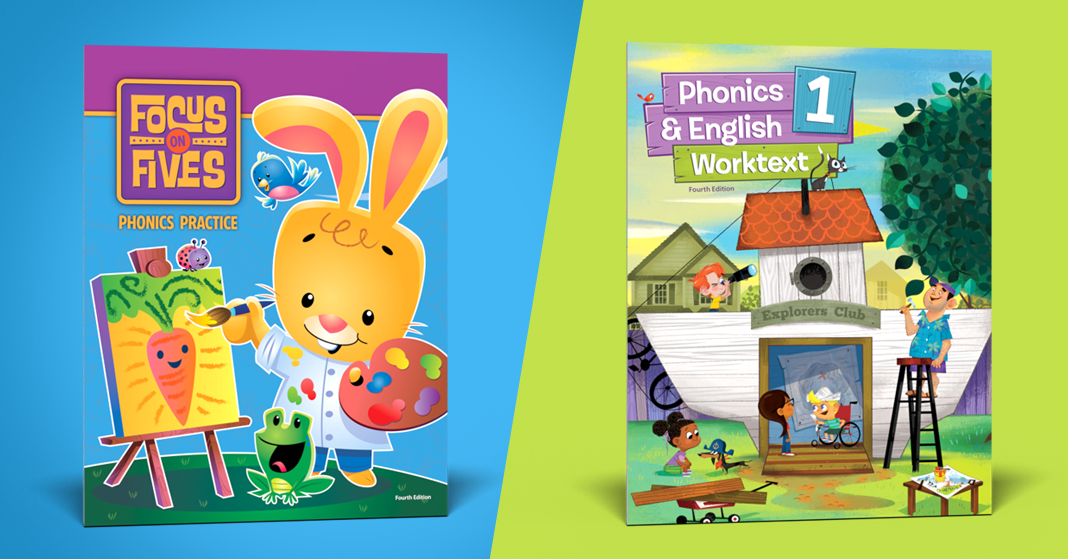
BJU Press’s approach to phonics in early learning and Grade 1—and even beyond to Grade 3—is fairly straightforward. If your children can talk, then they already know most of the words that they’ll be reading. You just need to give them the tools to read them.

Laying the Groundwork with Fun and Games

As a homeschool parent, you might hear a lot about sneaky learning—the idea of hiding learning opportunities in games and activities that your kids enjoy. But when your kids are just learning to read, there’s no point in hiding learning because all they do is learn, and most of the things they do are fun and games. All you need to do is direct them towards fun that will prepare them for future learning. Songs that teach rhymes, alphabet games, tracing activities, even reading to them while they look over your shoulder all help prepare your kids for the next step in learning to read. And it sets up a strong foundation to build on.

That’s why each of BJU Press’s early learning programs—Pathways for Preschool, Footsteps for Fours, and Focus on Fives—focuses heavily on activities, games, and characters that will keep children engaged and prepare them for learning.

Building Awareness

Why do you spend so much time laying the groundwork? You’re helping your children associate the sounds they hear and use to communicate with the letters and words they see on the page. It’s a big step from auditory and oral functions to visual functions.

Letter Sound Associations

Before they can read words, they’ll need to identify the sounds they hear. And that requires phonemic awareness—the ability to hear and recognize the individual sounds, or phonemes, that make up words. The s sound, the i sound, and the t sound in sit, for example. In Focus on Fives, Phonics 1, and English 1, we use numerous strategies for building phonemic awareness, including phonics stories and characters, phonics songs, rhyming songs, and read-alouds.

Manipulating Sounds

But phonemic awareness goes beyond just recognizing sounds. It’s also about being able to use and manipulate them. If your child knows the letter sounds for sit, as well as other consonant sounds, he or she can manipulate those consonant sounds into other members of the _it word family. With phonemic awareness and word families, children can learn proper pronunciation and find meaning rapidly. For children learning phonics, the words they’re starting with are usually words they already know. They need to be able to associate the letters they don’t know with the sounds they do know, so it’s less about building vocabulary and more about being able to decode sounds from letters. As they learn new sounds, they can practice combining letters and sounds into real words, and even find new words by looking for familiar patterns.

Keeping It Fun

Instead of teaching one word at a time, you’re equipping your children with the tools they need for reading all kinds of words. Tools like short and long vowels, consonant blends, r-influenced words, special vowel sounds, silent consonants, suffixes, and syllable division. Of course, most of these tools don’t have much meaning to a 5- or a 6-year-old who’s learning to read. That’s where we bring the fun back in with characters and games. Mr. Short, Miss Long, Marker E, Bossy R, and Miss Silent all give engaging visual cues that help your children learn and remember.

Reading Readiness

The goal of phonics instruction is for your children to be ready to read with comprehension and confidence. But teaching phonics alone can’t get you all the way there. Your children will also need opportunities to apply phonics principles in reading lessons. One key to that will be a phonics and reading program that supports them as they develop their skills. In Focus on Fives, we teach phonics and reading together, but in Grade 1, phonics and reading are two correlated subjects, and children practice and apply their skills separately. We continue to support phonics through Reading 3. Additionally, your children will need regular opportunities to read silently to develop reading comprehension, and to read orally to develop fluency. When children practice reading aloud, they learn to apply speaking rules (pauses, emphasis, and pacing) to their reading, adding depth and meaning. This kind of practice also improves their ability to communicate verbally.

Ultimately, you are preparing your children to read the Bible with confidence and clarity so that they can build their worldview on its principles. The way there is just one step after another. Your kids will be life-long readers before you know it!

Filed Under: Successful Learning Tagged With: homeschool, phonemic awareness, sound association, teaching phonics, teaching reading

Research Papers: Embrace the Opportunities

April 28, 2020 by Jenna

research papers and their opportunities

Sometimes, I feel like people don’t talk enough about research papers or give them enough credit. They might just be one of the most valuable learning opportunities you can give your children. After all, isn’t learning about a topic, knowing how to gather reliable information about that topic, formulating an opinion about it, and logically supporting that opinion with facts exactly what you want your children to be able to do?

Unfortunately, we’ve all seen—or written—one of those research papers that was all fluff, no substance, and somehow still got a good grade. I will readily admit that I’ve written a few of those myself. Obviously, the writer didn’t really learn anything, so what’s the point of assigning it? Research papers shouldn’t be just busywork. Each research paper you present to your kids is a beautiful opportunity for them to apply all the lessons you’ve been working on this year. And for you, a research paper is an opportunity to see how well your children have learned.

The Opportunity for Application

Science courses don’t include labs just for fun. Math courses don’t give math problems just to make it hard. Students need a chance to apply what they’ve learned in a new way so that it really sticks. And that’s as true for writing and reasoning skills as it is for the water cycle or long division. In a research paper, students can use those grammar rules they’ve learned to clearly communicate what they’re thinking. And, as they practice formulating an argument, they can use what they’ve learned about logical fallacies to make their argument strong.

Now, perhaps you think that the application questions in your child’s grammar workbook are enough. But applying grammar or logic rules to a sentence you’re expecting to be wrong is different from using those rules while you’re writing. Writers don’t think about the rules as they’re writing; they’re thinking about the next point they need to make or how thoughts connect. When you see your children’s writing, you’ll be able to know whether they really understand the rule. A research paper is a real-life, low-stakes opportunity to apply the rules—good practice for a job application letter or college entrance exam.

The Opportunity to Practice Critical Thinking

When students do a research paper properly, a lot of thought goes into the process. What kinds of information will validly support their thesis? How will they address information that contradicts their thesis? In addition to shaping their argument, they’re going to have to find and address questions that they might not expect. If they’ve never written a longer paper, they will need to learn how to adjust their process to account for the greater detail they’ll need. But it goes beyond just crafting the argument and planning out the project.

Researching also demands critical thinking skills. Remember that old saying, you can lead a horse to water, but you can’t make it drink? You can write book after book about research techniques and finding information, but it’s all useless if the students don’t read comprehensively and consider the meaning. To research any topic, students need to actually think about the information they’re reading—which is something you often try to have your children do in a literature course. When they’re looking for information that supports an argument, it demands a whole new level of reading comprehension. I’ve had countless students who cited inappropriate sources for support because they didn’t actually read what their sources said. A research paper will tell you whether your children have developed their reading comprehension well enough to read information critically and apply it to their argument.

The Opportunity for Excitement

Have you ever found that, after spending hours on a single topic, you develop a unique interest in that topic? Writing about anything will leave that kind of impact. No matter what your feelings were about a topic before you decided to write about it, once you’ve spent hours researching it, developing an opinion, and writing and rewriting your argument, you’re going to have an interest in it and—dare I say?—an excitement about it. The same thing happens for your children when they write a research paper. They might not admit it. They might not follow up on that interest. But in the process, they will come away knowing something new.

While it is important to allow your children to write about what they love, they also need to be able to embrace a new, unfamiliar subject. Research papers are a valuable way to introduce children to new topics—even though they may not want that introduction.

In your homeschool, every chapter, every lesson, and every assignment is another opportunity for your children. Research papers may be a more challenging opportunity, but clear communication, reasoning skills, and learning are worth the effort.

Filed Under: Successful Learning Tagged With: application, Critical Thinking, homeschool, Research Papers

How to Use Teacher Editions in Your Homeschool

April 21, 2020 by Megan

using teacher editions

Like many of you, I am in the process of figuring out my homeschool curriculum order for our next school year. I’m trying to decide what Online Learning subjects and textbook kits we want to order, what textbooks and teacher’s materials we can reuse from older children, and what “extras” we need. But there’s something that’s definitely going in my order—the teacher editions for any subjects that I plan to teach myself.

I don’t buy printed teacher editions for every subject. My children use Online Learning for many of their subjects, so I have access to the digital teacher editions for those courses if I ever need them. But I teach Reading 3 to my second daughter and Focus on Fives to my third daughter. I have found the teacher editions for those courses to be invaluable.

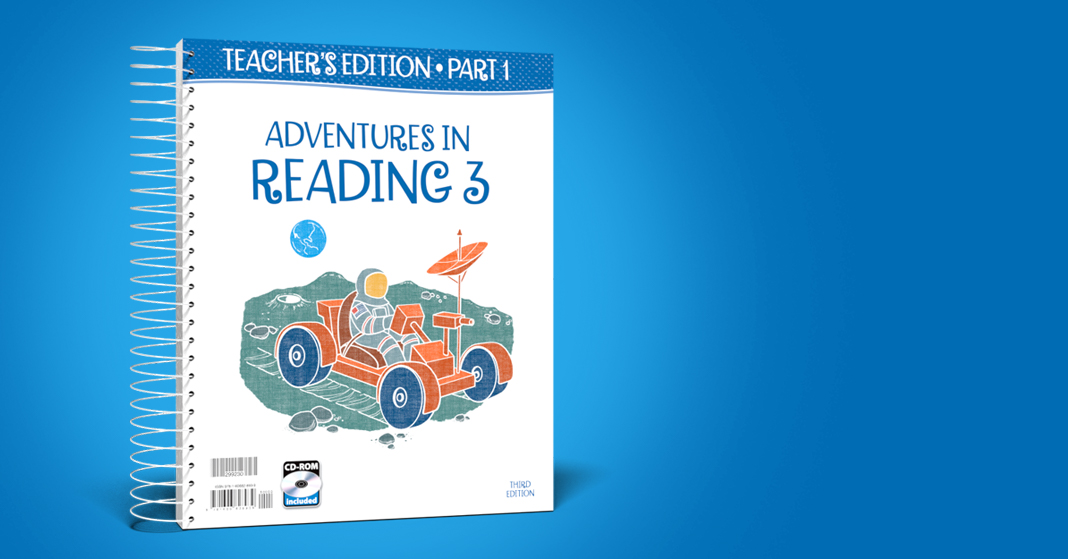
Let me walk you through my Reading 3 Teacher Edition to show you why I love it so much.

Clear Planning

Like all BJU Press teacher editions, Reading 3 includes a Lesson Plan Overview in the front of each volume. The Lesson Plan Overview gives me a bird’s-eye view of the course. I can see how many lessons we’ll spend on any particular selection and what skills we’ll be focusing on. I use this to help me build my homeschool calendar, but I always end up making adjustments. Sometimes I end up combining lessons or skipping lessons altogether (yes, it’s okay to skip lessons!) based on what else is happening in our homeschool.

Individual Lesson Guides in Teacher Editions

Every lesson in Reading 3 has been carefully thought out. When I open my teacher edition to an individual lesson, I have everything that I need to teach effectively.

Objectives

A glance at the top of the page tells me what pages we’re going to cover in the student textbook or worktext. The lesson objectives are clearly stated so I know exactly what my daughter needs to know by the end of the lesson. And I can clearly see what materials I need for the lesson and where I can find them.

Routine

Each lesson has a routine. We start with going over the vocabulary words that my daughter will need to know in order to understand what she’s reading. Each vocabulary word is presented in context so that my daughter will learn how to use context clues to figure out the meaning of unknown words when she comes across them in her own reading.

Reading Focus

Next we move on to our reading focus, which is the literary skill that the lesson is focusing on developing (like recognizing how the setting impacts the story).  Here, the teacher edition provides instructions on how to introduce these skills and questions that I can ask my daughter to make sure that she understands the instruction.

Reading Selections

Then we jump into the selection itself. The teacher edition provides me with reduced student pages, so I can see exactly what my daughter sees in her student textbook. But I get a few extra features. All the vocabulary words for this particular lesson are underlined in the text so that I can make sure my daughter understands them. I also get some additional notes that help me with biblical worldview shaping and text enrichment.

Guiding Questions

The biggest help for me is the questions and answers that the teacher edition provides. These questions, as I wrote in a previous post, help me develop and assess my daughter’s reading comprehension, and they also help me lead my daughter to have a deep appreciation for the selection. I know from experience that I would not be able to come up with questions like these on my own. Do I ask every question? No. Some we skip because of time. Some I end up expanding because of my daughter’s interest. Remember that the teacher edition is just a guide—you don’t have to do everything. You don’t even have to ask each question exactly as written. You are in charge. The teacher edition is just there to provide support.

Phonics Review

By the time you teach Reading 3, your child should have a good foundation of phonics knowledge. But many third graders (mine included) still need additional phonics practice. So every lesson in Reading 3 includes a review of a phonics principle, and most worktext pages assess that same phonics skill. Don’t feel as if you always have to teach that portion of the lesson. If your child breezes through that portion of the worktext page without mistakes, just move on.

Grading Resources

The teacher edition does include reduced student pages of the worktext pages (with answers), but they are very small. A digital copy of the worktext answer key is included on the CD that comes free with the teacher edition and a printed edition is available for separate purchase.

The CD contains a few other grading tools. The most valuable to me is the rubric that helps me assess my daughter’s oral reading.

Other Resources in Teacher Editions

The CD that comes with the teacher edition contains a wealth of other resources such as teaching aids and additional activities. These are particularly helpful for multisensory teaching. Find the ones that are useful for you and your child and ignore the rest.

While we have been focusing on the teacher edition for Reading 3, all BJU Press teacher materials include the same kinds of helpful resources for teaching your children. Some include a resource CD, some offer multiple volumes of teaching material, and some have online resources available. A teacher edition is one of the most valuable tools that you will find in your homeschool toolbox. But don’t feel bound to it. It is designed to help support you, so make it work for you and your homeschool situation.

If you are interested in previewing any of BJU Press’s teacher editions online, just click the Look Inside button at the bottom of the product image.

Filed Under: Successful Learning Tagged With: homeschool, reading, teacher edition

4 Ways to Complete Hymn Studies

April 14, 2020 by Guest Writer

Hymn Studies

Have you ever thought about the origins of the hymns you sing? In addition to being songs of devotion and worship, hymns are works of literature. You can study their mechanics, structure, and artistic form just like you’d study any other poem. When doing hymn studies, you often will gain a deep blessing by the end of the hymn study. Explore four important ways that you and your kids can dive into the origins and design of familiar hymns.

Hymn Studies for the Writer’s Backstory

We don’t know the story behind every hymn, but thanks to the internet and other resources, you can usually find some facts about the writer and the events surrounding the hymn text’s creation. The stories of John Newton, Fanny Crosby, William Cowper, Frances Ridley Havergal, Charles Wesley, and others reveal the writers not as paragons of biblical virtue, but as real people whose struggles and tragedies drew them closer to God. You’ll find yourself inspired and encouraged by their stories, and no doubt your children will be fascinated as well! As you plan your hymn study schedule, consider including the stories and texts of more recent hymn writers, not just those from the Golden Age of Hymns.

The Historical Context

Context is important, whether you’re studying the Bible itself or other forms of literature and art. As you move through your hymn studies, explain to your children how people spoke during the time when the hymn was written. Perhaps they used more formal language, or pronounced certain words differently than we do today. Occasionally, with older hymns, you may encounter a word with a totally different modern meaning, and your hymn study can cover both definitions. Ask your children how and why they think that definition or pronunciation may have changed over time.

The Artistic Value

Depending on the age of your kids, you can keep this part simple or take a more literary approach. For younger kids, ask them to identify rhyming words at the ends of hymn lines. Your middle graders can point out the rhyme scheme, such as abab or abba; older kids can identify the hymn’s poetic structure (such as iambic vs. trochaic) and count the metric feet.

Ask your children to point out instances of alliteration or internal rhyme, and suggest that they circle words in the hymn that seem especially beautiful or poignant to them.

Hymn Studies for the Spiritual Benefit

One of the most rewarding parts of studying hymns is unwrapping the spiritual truths they contain. Your hymn study takes you through the process of appreciating the writer, the historical context, and the literary value, but ultimately the greatest blessing comes from the revelation of God’s timeless truth. To close your hymn study, have your kids each write down one special biblical truth they learned from exploring the hymn.

• • • • •

Rebecca is a work-at-home freelance writer, novelist, wife, and mom of two bright-eyed little ones. She credits her success in writing and her love of books to her own mom, who homeschooled three kids from pre-K through high school.

Filed Under: Successful Learning Tagged With: hymn studies

  • « Go to Previous Page
  • Page 1
  • Interim pages omitted …
  • Page 37
  • Page 38
  • Page 39
  • Page 40
  • Page 41
  • Interim pages omitted …
  • Page 151
  • Go to Next Page »

Primary Sidebar

As parents, teachers, or former homeschool students, we are passionate about homeschooling from a biblical worldview. We hope these teaching tips, fun activities, and inspirational stories support you in teaching your children.

Email Signup

Sign up for our homeschool newsletter and receive select blog posts, discounts, and more right to your inbox!

Connect with Us!

                    Instagram     

Read Posts on Specific Subjects

Early Learning
Foreign Language
History
Language Arts
Math
Science

Footer

Disclaimer

The BJU Press blog publishes content by different writers for the purpose of relating to our varied readers. Views and opinions expressed by these writers do not necessarily state or reflect the views of BJU Press or its affiliates. The fact that a link is listed on this blog does not represent or imply that BJU Press endorses its site or contents from the standpoint of ethics, philosophy, theology, or scientific hypotheses. Links are posted on the basis of the information and/or services that the sites offer. If you have comments, suggestions, questions, or find that one of the links no longer works, please contact us.

Pages

  • About BJU Press
  • Conversation Guidelines
  • Terms of Use & Copyright

Archives

© 2026 · BJU Press Homeschool