• Skip to primary navigation
  • Skip to main content
  • Skip to primary sidebar
  • Skip to footer

BJU Press Blog

  • Home
  • Shop
    • Shaping Worldview
  • Simplified Homeschool
  • Successful Learning

Preparing Children for Sophisticated Unbelief

June 23, 2020 by Jenna

Heidi St. John and Renton Rathbun on sophisticated unbelief
In April, Renton Rathbun, a former college professor and current Biblical Worldview Specialist at BJU Press, joined Heidi St. John on her podcast. They came together to talk about the agenda of secular colleges and universities to undermine the faith of their students. While that agenda is very real, it may not manifest itself in the way you might expect. Christian young people are expecting to go into secular universities, trade schools, and work places and have their faith blatantly mocked or rejected. But what they encounter is something that Renton calls sophisticated unbelief.

Sophisticated unbelief is a tactic that university professors take towards students with faith-based backgrounds. They come alongside these students and appear to support and value faith while also emphasizing that that student’s faith does not apply in the classroom.

The Dangers of Sophisticated Unbelief

These professors will be genuine, likeable, intelligent, and approachable people. These men and women are not villains who will publically mock and condemn your children for their beliefs. In fact, they will see themselves as the heroes your children need. From their perspective, they’re there to rescue your children from a primitive and backwards worldview. The danger comes in when they divide what they’re teaching in the classroom from your children’s biblical worldview. They want your children to have a two-story view of the world, because if they can disconnect the secular world from the Christian world, your children won’t be able to argue about where their worldview applies. And if your children aren’t prepared to encounter sophisticated unbelief, it’s easy for them to see how this intelligent and friendly new authority in their lives might be right about some things.

The Solution

As Renton points out, the best defense is to teach your children to truly study the Scriptures. Not just to know the Scriptures, but to see how they connect to all areas of their lives—math,  science, history, and the English language arts. And to do that, they will need to be able to apply critical thinking skills to the Scriptures and to the subjects that they’re studying.

Studying the Bible and developing thinking skills will enable your children to defend their faith. Listen to the full discussion between Renton and Heidi for more!
Filed Under: Shaping Worldview Tagged With: biblical worldview, Heidi St. John, sophisticated unbelief

Making the Most of Breaks

June 16, 2020 by Guest Writer


We all need breaks—spaces of time where we step out of the regular routine and move into a different schedule, or perhaps no schedule at all. For a goal-minded homeschool parent, taking a break can lead to more stress than usual as kids have fewer tasks to occupy them. Let’s talk about a few different kinds of breaks, and discuss some tips for making the most of them.

The Adventure Break

This is the adventure you go on when you’re sick of all your usual haunts and familiar places. It’s a summer where you stuff backpacks with snacks and drinks and find all the trails you’ve never been on. Or you go to a different playground every day.

Your explorations might include visiting a nearby lake or waterfall, going horseback riding, taking a camping trip, or touring a historical site. A cave, a tunnel, a covered bridge, a rock formation, a nature preserve, a children’s museum, an arboretum—any point of interest within a day’s drive is fair game.

The best part? An adventure break often turns into an educational experience without much effort from you!

The “Anything Goes” Break

Sometimes, we all need a day or two where we do absolutely nothing useful. It’s the kind of break where kids get to do whatever they want all day long, with minimal rules. Maybe that’s extra TV or electronics while mom kicks her feet up and reads books. Maybe it’s take-out for every meal to minimize cleanup, and maybe you skip the household chores for a day or two.

The only trouble with this carefree break is that you eventually have to go back to normal, so be ready for that! Even so, this indulgent respite can be deeply refreshing and can help you appreciate your more structured way of life.

Peaceful, Purposeful Breaks

Perhaps the best summer break is a blend of adventure, activities, and rest. You can have days where you venture into the unknown, ready for anything, as well as days of quiet relaxation at home. Have some review papers and library books on hand for those hot summer afternoons. That way, your kids can keep their knowledge fresh. Puzzles, board games, Legos, water play, and art projects can keep kids busy for hours, even if you’re not feeling adventurous.

You could make a schedule for summer break. For example, some families prefer adventure in the morning and rest in the afternoon, while others prefer a day of adventure followed by a day of rest. Summer schedules differ for every family, especially if you have toddlers or babies in the mix. But the best experiences usually happen when you’re willing to bend the schedule, or toss it out altogether, and dive into a new experience with your children!

• • • • •

Rebecca is a work-at-home freelance writer, novelist, wife, and the mom of two bright-eyed little ones. She credits her success in writing and her love of books to her own mom, who homeschooled three kids from pre-K through high school.

Filed Under: Simplified Homeschool Tagged With: homeschool, summer breaks

Understanding Testing Norms

June 9, 2020 by Arianna

understanding testing norms
Trying to understand testing norms can be confusing. Thankfully, norms are not too complicated! Norms can be a great resource to help you identify your children’s educational needs. Our testing specialists have heard a lot of concern about testing norms being affected by COVID-19. We worked with Grant, one of our testing specialists, to put together some helpful information about testing norms and how to interpret them.

What are testing norms and how are they created?

Norms are the average results from a group of students using the same test. The publisher of each test or form gathers scores from a comparison group to create a norm group. This comparison group typically includes thousands of students, with the best norm standards coming from tens of thousands. Norm groups for most standardized tests are composed of a representative sample of students from various educational contexts across the United States. This diversity creates a balanced representation of students’ abilities to use for creating norms.

Creating norms is an expensive and time-consuming process. Because of the expense and time, the publishers update norms when new samples are necessary. For example, the original 2011 norms for Iowa Assessments Form E were updated in 2017.  If they measured norms each year, it would increase the wait time for scores while norms are created. Also, test prices would rise to pay for the resources and personnel needed to create the norm.

A norm update does not mean that the test has changed. When publishers revise a test’s content, it will have a different copyright date and will generally have an updated name or form number.

Why are they important?

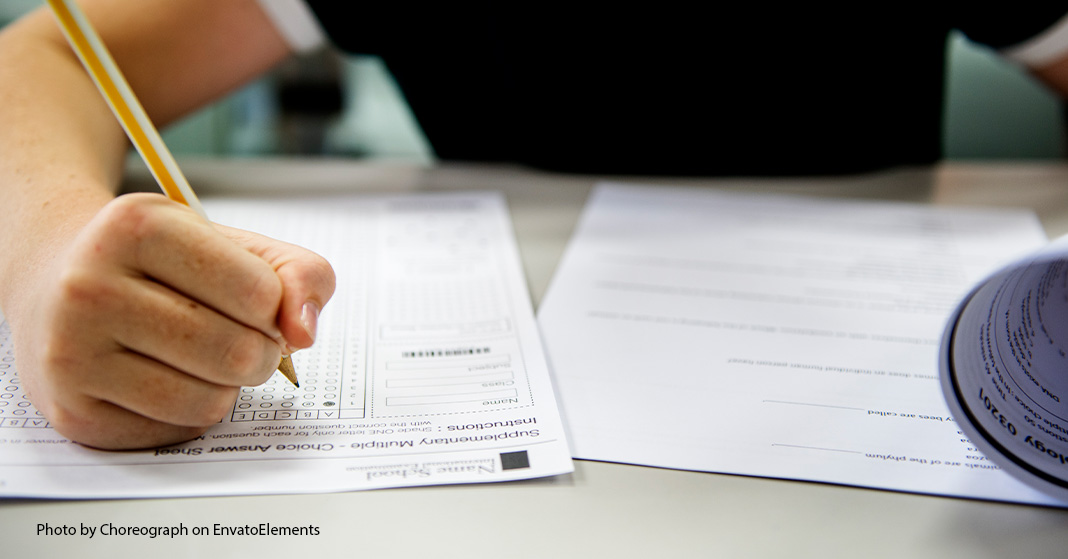
Test scorers, like the Testing and Evaluation team, compare the data for different students’ performances on the same test. Achievement test scores allow us to calculate two numbers. The first number is your student’s percentile rank, or what percentage of similar students your student has performed better than. The second number is the stanine, which quickly determines your child’s percentile ranks and makes it easier to see where your child’s scores fall. Both of these numbers show how your student compares to his or her peers and helps you understand your child’s strengths and weaknesses.

Testing norms create a benchmark to which you can compare your child’s scores. Without norms, achievement tests would be a single pass or fail grade. Also, they would not be as useful to organizations like honor societies, which need to know whether a student is in the top tier nationally.

Will COVID-19 affect norms?

Because testers don’t gather norms on a yearly basis, COVID-19 will not affect norms for Iowa Assessments or the Stanford 10. The Testing and Evaluation team is committed to providing accurate and reliable test results; if you test with BJU Press this year, you will receive the same precise scores you have come to expect from us.

Remember that testing norms do not reflect a standard that your child has to meet. You know your children and their needs better than any test. While test scores can be helpful, they are not authoritative. Testing is just a tool to track your child’s progress and identify areas for growth.

Filed Under: Successful Learning Tagged With: norms, standardized testing, testing

Homeschooling vs. Crisis Schooling

June 2, 2020 by Megan

truth about crisis-schooling
On March 16, 2020, both public and private schools in my state were suspended due to the COVID-19 pandemic. No longer would the yellow school buses rumble down my street. No longer would I have to dodge school car-lines on my way to an appointment. When my fifth-grade daughter heard the news, her reaction was jubilant: “Now every kid in the state is a homeschooler!” Not exactly. Every child in my state was now being schooled at home. But there are big differences between being schooled at home and being homeschooled. Many are calling the new situation “crisis schooling”—parents simply trying to continue their child’s education during a time of crisis. Most families probably have no long-term plans to continue educating their children this way.

But perhaps you know a family who is—or was—considering homeschooling their children and is now uncertain what homeschooling is all about. Now is the time to share the homeschooling vision with them. Here are some specific things that you may want them to know about the difference between homeschooling and crisis schooling.

Homeschool parents are in charge of their curriculum.

In a crisis schooling situation, the parents are not really in charge of their child’s education. The school is. The school decides what work students complete. It chooses the curriculum. The parents are facilitators.

If the child is enrolled in a public school (or any of the free online public school options), the situation is even worse. The government is in charge. And the curriculum it chooses is not “religiously neutral”—it is often at war with God’s law. This curriculum teaches the children of our nation that God is not Creator, that there is no absolute truth, and that there are no moral absolutes.

One of the great blessings of homeschooling is the fact that I, as the parent, get to be in charge. I get to choose my child’s curriculum. One of the main reasons that my husband and I have continued to use BJU Press Homeschool curriculum is that their curriculum aligns with our values. Every single textbook gives me the tools to shape my child’s worldview according to the Bible.

As a homeschool parent, I also have the freedom to make adjustments to my curriculum to meet the needs of my family and the learning needs of my individual children.  We can go at our own pace. We can add or omit assignments. Homeschool parents are not the slaves of the curriculum we choose. We are the masters of it.

Homeschool parents are in charge of their schedule.

Not only do I get to be in charge of my curriculum, but I also get to be in charge of my schedule. Of course I have to meet the attendance requirements of my state, but no one dictates a start date or an end date for me. I can choose to follow a traditional school-year schedule or homeschool year-round. My children can do their lessons in the morning or wait until later in the day.  I can even take a two-hour break for music lessons in the middle of the afternoon.  The flexibility of homeschooling is wonderful.

Homeschool parents are in charge of their children’s socialization.

One of my crisis-schooling neighbors told me the other day that I was lucky that I was a homeschooler before the COVID-19 crisis. “Not much has changed for you,” he commented.

He was wrong. It’s not normal for me to go weeks on a single tank of gas. I, like most homeschoolers, am not an isolationist. I just like the freedom to choose the company my children keep. My children may not have been surrounded by other children on a school bus or in a classroom all day, but before the current crisis they had plenty of social interaction—with people of differing ages, races, and socioeconomic backgrounds.

Homeschooling provides wonderful opportunities for relationship-building. We have the time and the freedom to get involved with church ministries and community outreaches. We meet people with shared interests as we pursue our children’s gifts in music, art, sports, and other hobbies. Plus, the homeschooling community itself is a pretty close community. I would be lost without the support of my local homeschool friends.

Homeschooling to me means freedom—the freedom to parent and educate my children according to my values. It is a not a freedom that I take for granted, and I am thankful for those who have worked hard to win me this freedom. I fear that our freedom to homeschool may be challenged in the near future thanks to the confusion between crisis schooling and homeschooling. So be sure to share the vision of homeschooling with others. Help them understand what homeschooling is all about!

Filed Under: Simplified Homeschool Tagged With: crisis-schooling, homeschooling

Beat the Heat Summer Activities for Kids

May 26, 2020 by Guest Writer

summer activities for kids
Summer is a time to get outside and enjoy the warm weather and sunshine. But what about those days when it’s just too hot or illness forces you to stay indoors? Here are some awesome indoor and outdoor summer activities for kids that help you beat the heat.

Mentos Geyser

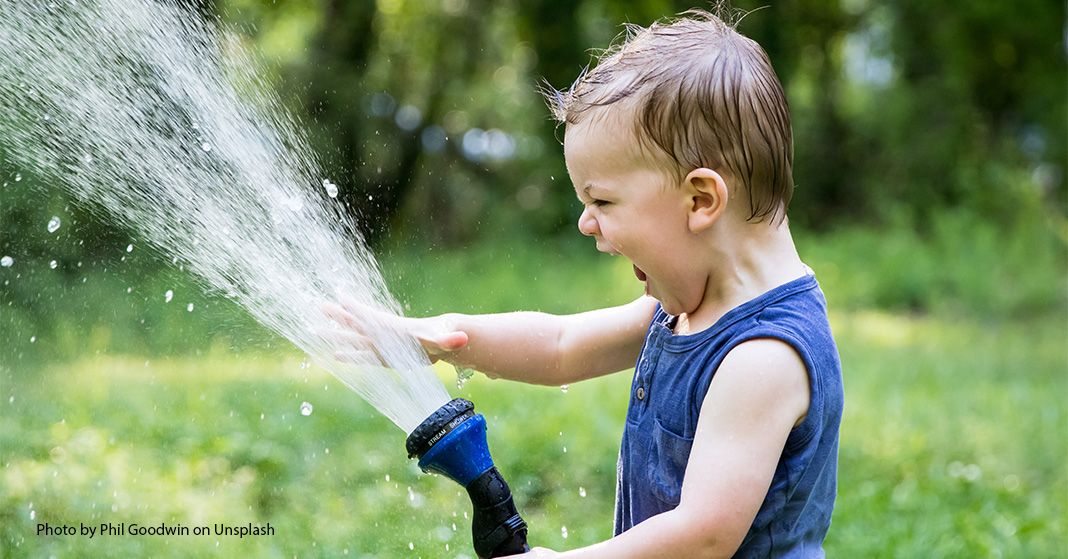
This one is perfect for the backyard! All you need is a bottle of Diet Coke and some Mentos (at least half a pack). You can also use a geyser tube, which improves the effect, but it’s optional. Best of all, you are actually teaching about chemical reactions with this explosive activity! Find all the instructions for this experiment right here. And, if the kids get all messy in the explosion, you can have fun hosing everyone off.

Frozen Paint Cubes

Use an old ice tray to freeze diluted watercolors, and then let your kids have fun painting with the ice cubes as they melt! This summer activity is also great for the backyard. All you need is the ice tray and watercolors, and a large roll of craft paper to spread over the grass or patio.

Bikes and Bubbles

Maybe your kids are reluctant riders, but they won’t be any more with this summer activity! Purchase a bubble blower or use your own bubble-blowing expertise to create a haze of bubbles across a quiet neighborhood street or bike path. Your kids will enjoy riding through the bubbles over and over! For even more fun, angle a sprinkler across the path so your kids can ride their bikes through it and stay cool.

Indoor Scavenger Hunt

Design a scavenger hunt that will keep your kids busy all morning—or at least for an hour. You can use objects readily available in your home, or plant certain items for the kids to find. Create a scavenger hunt list, maybe with creative clues for them to decipher. This idea is very flexible, and setup can be adapted to fit the time and energy you have.

Indoor Laser Maze

Do you have a hallway in your home? Use painter’s tape and string or yarn to create a laser maze zigzagging across the length of it! Your kids will have fun trying to get through the maze without touching or pulling down the string “lasers.” The best part is that you can tweak the design over and over to make it more challenging and keep their interest.

Paper Plate Skating

Got hardwood or vinyl floors? Use dryer sheets or paper plates as “skates,” and let the kids skate around on them. Add interest with a little music in the background and an obstacle course to skate around. Or turn off the lights and mark out a path with glow sticks!

With a little imagination and these cool summer activities, you can beat the heat anytime!

• • • • •

Rebecca is a work-at-home freelance writer, novelist, wife, and the mom of two bright-eyed little ones. She credits her success in writing and her love of books to her own mom, who homeschooled three kids from pre-K through high school.

Filed Under: Simplified Homeschool Tagged With: kids activities, kids learning, summer activities

  • « Go to Previous Page
  • Page 1
  • Interim pages omitted …
  • Page 36
  • Page 37
  • Page 38
  • Page 39
  • Page 40
  • Interim pages omitted …
  • Page 152
  • Go to Next Page »

Primary Sidebar

As parents, teachers, or former homeschool students, we are passionate about homeschooling from a biblical worldview. We hope these teaching tips, fun activities, and inspirational stories support you in teaching your children.

Email Signup

Sign up for our homeschool newsletter and receive select blog posts, discounts, and more right to your inbox!

Connect with Us!

                    Instagram     

Read Posts on Specific Subjects

Early Learning
Foreign Language
History
Language Arts
Math
Science

Footer

Disclaimer

The BJU Press blog publishes content by different writers for the purpose of relating to our varied readers. Views and opinions expressed by these writers do not necessarily state or reflect the views of BJU Press or its affiliates. The fact that a link is listed on this blog does not represent or imply that BJU Press endorses its site or contents from the standpoint of ethics, philosophy, theology, or scientific hypotheses. Links are posted on the basis of the information and/or services that the sites offer. If you have comments, suggestions, questions, or find that one of the links no longer works, please contact us.

Pages

  • About BJU Press
  • Conversation Guidelines
  • Terms of Use & Copyright

Archives

© 2026 · BJU Press Homeschool