• Skip to primary navigation
  • Skip to main content
  • Skip to primary sidebar
  • Skip to footer

BJU Press Blog

  • Home
  • Shop
    • Shaping Worldview
  • Simplified Homeschool
  • Successful Learning

language arts

Applying Bloom’s Taxonomy

July 19, 2016 by Jenna

As parents, you want your children to succeed in every area of their lives, and as home educators, you especially want them to succeed in their education. A good way to visualize your goals for your children’s education is through Bloom’s Taxonomy.

Dr. Benjamin Bloom described what he believed to be the best processes for learning. Though he identified three different domains of learning, we are all most familiar with the cognitive domain, which has to do with knowledge. Understanding his process can help you to fulfill the greater purpose of education—education isn’t just about learning facts and figures. It’s a process that continuously encourages children to grow and think critically. Bloom’s Taxonomy verbalizes the process so that we can aim for a clearer goal in education—being able to master concepts so that we can create new concepts.
BloomsTax

Since the best way to learn something is to see it applied, here is Bloom’s process for the cognitive domain applied to learning nouns. (To keep it simple, we’ll focus on the rule that says nouns are words that refer to persons, places, or things.)

Level One: Knowledge/Remembering

The first level focuses on facts and recall. It has nothing to do with what the rule means, implies, or suggests, it only focuses on knowing what the rule says. Our rule is “Nouns are words that refer to persons, places, or things.”

Level Two: Comprehension/Understanding

Comprehension is one step beyond simple recall. It demonstrates that you not only know what the rule is word for word, but you also know what those words mean and you can put the rule into your own words to express the same concept. To understand the “noun as a person, place, or thing” rule, you have to know what a person is, what a place is, and so on. Putting the rule into my own words, I might say that people’s names, specific or general locations, and objects are all referred to with nouns.

Level Three: Application/Applying

Level three begins the step where textbook practices and exercises come in. Here we take our rule and look at something it applies to. That means taking a sample sentence and finding and labeling all the nouns, based on our rule.

For example, “Amy (person) wanted to move back to Scotland (place), but her aunt (person) didn’t have enough money (thing) for the move (thing).”

Level Four: Analysis/Analyzing

Analysis involves grouping information into parts. It’s a question-and-answer process that might reveal more about our rule. When I put the rule into my own words, I changed things to objects because I felt that objects better indicates the tangible nature of things. But in the example sentence above, I’ve identified the second move as a noun, not a verb. Why is it a noun and not a verb? When we’re analyzing, we need to recognize that some words may be nouns that refer to persons, places, or things even if they’re normally used as a different part of speech. While we’re thinking about it, we may notice that we can classify the second move as a noun, but not the first one.

Levels Five and Six: Evaluation/Evaluating and Synthesis/Creating

Originally, Bloom’s fifth level was synthesis, and his sixth was evaluation. But a group of Bloom’s former students revised his original process in the 1990s. Under the revised version, evaluating became the fifth level, and creating became the sixth.

Evaluating involves forming conclusions based on new and prior knowledge and being able to support those conclusions with that knowledge. Here we should be able to look at what we discovered in our analysis step and explain why we came to the conclusion that we did. In the example sentence above, we know that move usually indicates an action, like when we first used it, but the second time it’s used in a tangible, countable sense, not as an action.

This step marks the end of most forms of practice exercises in many textbooks. But we need to go on to the last level in order to demonstrate true knowledge of a concept.

The final level in the revised model is creating. Creating requires using all prior knowledge in order to form a new idea. It goes beyond reading a new sentence and identifying parts of speech. Creation demonstrating a mastery of nouns would require putting together a new sentence using nouns intentionally and naturally. For example, in the following sentence, I’ve created a situation to use words that would often act as verbs (love and traveling) as nouns in order to show what we discovered about things.

“Amy decided that her love of traveling was more important to her than her love of Scotland.”

Bloom’s process relies on a widening foundation of knowledge, and BJU Press homeschool curriculum references the Revised Bloom’s Taxonomy, especially in math and vocabulary. Check out our math curriculum or vocabulary curriculum to see how we do it!
Filed Under: Successful Learning Tagged With: Bloom's taxonomy, English, language arts, teaching, writing

Developing a Passion for Reading

July 14, 2016 by Ben

Developing a passion for Reading

We all want our children not only to learn to read but also to love reading. Of course, it can be discouraging to have a reluctant reader in your home. And too often boys develop a distaste for reading, but any child is susceptible to this apathy. Veteran homeschool mom Cynda Moore has written a clever blog post titled “How to Build a Reluctant Reader.” In the style of C. S. Lewis’s Screwtape Letters, Cynda offers advice for achieving the opposite of what we want for our children. Her post shows how easy it is for us to cultivate an interest in reading for our children. She starts off the post with this advice.

Although we realize it is not always possible, the best way to build a reluctant reader is to avoid reading to your child. Not only should you avoid funny and meaningful chapter books read aloud to your whole family, but you should also avoid reading little things you may not even connect to literacy. For instance, don’t read his birthday card from Grandma or the highway signs as you are traveling.

My wife and I are so thankful for the eager reader we have in our house. Our second-grade daughter has an almost insatiable appetite for reading. Give her a stack of books, and she will be content for hours. It was natural for us to do these simple everyday activities Cynda mentions with our eldest child, but our challenge is repeating those same activities with our younger children. Cynda’s blog post was helpful to me in identifying what fostered a love for reading in our first child so that my wife and I can help our other daughters find a passion for reading. Read the rest of Cynda’s blog post on the HomeWorks by Precept blog.

Filed Under: Successful Learning Tagged With: C.S. Lewis, family, homeschool, language arts, reading

The Dilemma of Fantasy

June 28, 2016 by BJU Press Writer

fantasy

As your children pick out books for their summer reading, you may wonder whether fantasy is an appropriate option. Consider these key questions before making up your mind about fantasy.

What is fantasy, and what is its purpose?

Simply put, fantasy is a genre of literature with fanciful or imaginative settings, characters, or plot devices. The purpose, according to C. Hugh Holman, coauthor of A Handbook to Literature, may be “for the whimsical delight of the author or reader, or it may be a means used by the author for serious comment on reality.” Fantasy as a genre is much like a car, a means of getting from one place to another, and whether it’s good or bad depends on how a person uses it.

Why have some had a negative opinion of fantasy?

Some people argue that fantasy (and even fiction in general) is just “a lie” because the events and settings and characters aren’t found in real life. However, at least twice in the Bible, fanciful fiction appears in service of truth (Judges 9:8–15; 2 Kings 14:9). Again, it’s not the genre itself but rather the use it is put to that determines its value. Some Christians reject fantasy because some stories present lurid violence, graphic sensuality, or the triumph of evil over good. However, these characteristics are unacceptable in a work of any genre, not just in fantasy. Rather than judging a novel by its genre, we should determine whether the work has a solid moral tone (i.e., whether it presents good as desirable and evil as offensive). (For a thorough look at this topic, see The GEM Approach.)

How can fantasy benefit your children?

Fantasy offers an opportunity to teach children to think biblically. The whimsical element of fantasy allows young readers to enter a new world with new experiences where good and evil are easily seen and identified. They learn there to be discerning readers and develop literary skills that are key in understanding biblical themes. Reading The Pilgrim’s Progress, for example, which presents a journey as a metaphor for the Christian life, will enrich their appreciation for the beauty and meaning in Psalm 23 since it also speaks of life as a daily walk with dangers and joys.

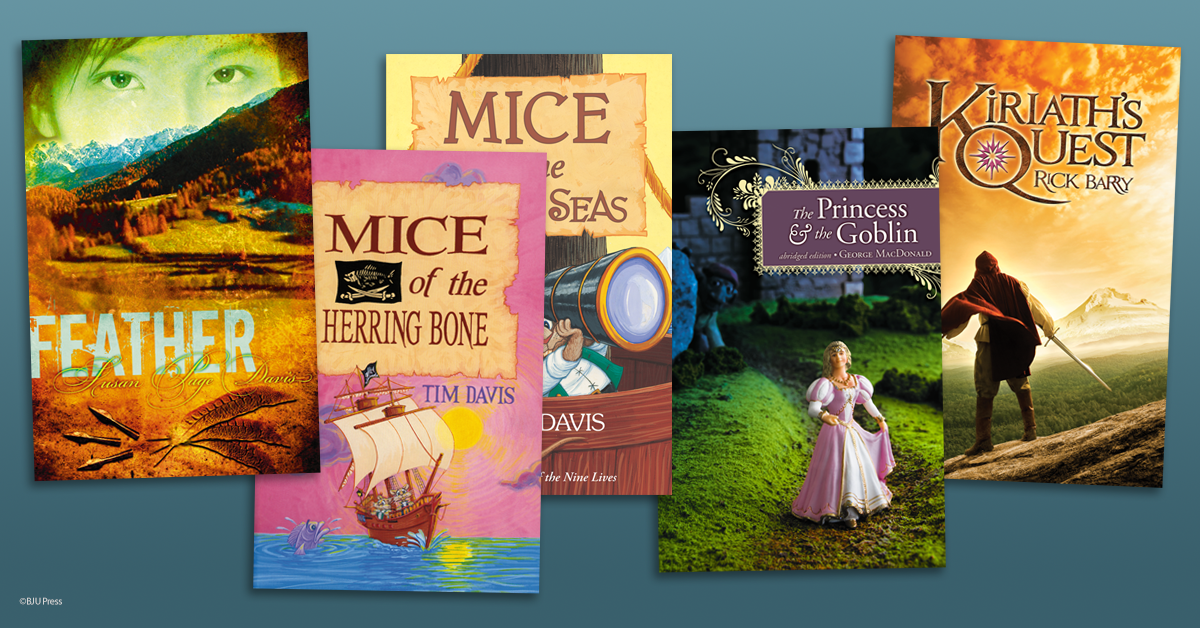
If you’re looking for good books from a Christian worldview, consider these fanciful fiction books from JourneyForth.

Filed Under: Shaping Worldview Tagged With: biblical worldview, fantasy, language arts, reading

The Importance of Developing Comprehension Skills in Elementary Reading

June 9, 2016 by Megan

render

My oldest daughter, a rising second-grader, reads everything—books, magazines, catalogs, advertisements. I even caught her reading the teacher’s edition for a high school Bible textbook one afternoon. Is she an awesome reader? Absolutely. Does she understand everything she reads? Probably not. That’s why reading is such an important part of her curriculum.

A reading curriculum in the elementary school years is not just about learning how to sound out words, even though phonics plays a big part in kindergarten and first grade. Reading class is primarily about the development of reading comprehension skills.

My daughter has been using the BJU Press curriculum since preschool. Below are some ways I have found that the BJU Press Reading program promotes reading comprehension.

Introducing New Vocabulary in Context

Our children won’t be able to understand a text’s meaning if they don’t understand the meaning of the individual words that make up that text. The Teacher’s Edition always directs us as teachers to introduce new vocabulary words before our children start reading.

 Teaching Reading Skills and Strategies

Before reading a selection, children are directed to a Reading Focus page(s), where a particular reading skill or strategy is emphasized. The information on these pages help children better understand and appreciate the accompanying story.  

Exercising Pre-reading Skills

Before reading, our children are also directed to take a look at the title page of the selection. We as teachers then ask a series of questions designed to challenge them to make predictions about the text. That exercise not only gets them excited about reading but also sets the stage for better comprehension.

Using Various Levels of Questions

If you are using any of the BJU Press elementary reading textbooks in your homeschool, you know that every teacher’s edition is full of questions. These questions, based on the four levels of Barrett’s taxonomy (literal recognition or recall, inference, evaluation, and appreciation) are designed to help our children think about the reading selection on a lot of different levels. They also help us assess how well our children understand the text.

Reinforcing Learning

After our children read a selection, we’ll have opportunities to review vocabulary and reading focus skills. We’ll also get another opportunity to read the selection, but usually in a different way (such as turning a narrative story into a drama). These exercises continue to build comprehension.

I’m really excited about using the BJU Press reading program next year. It’s filled with a lot of great selections that I know my daughter will enjoy. But, most of all, I’m anticipating that through this curriculum she will continue to grow in her ability to read with understanding.

Have you used BJU Press’s elementary reading curriculum? What was your favorite feature?

Filed Under: Successful Learning Tagged With: language arts, reading, reading comprehension, reading curriculum

June Is Reading Month!

June 2, 2016 by Justin

BJU Press JourneyForth book covers

Enjoying a good book while sitting in a deck chair on my patio is one of my favorite summertime activities. The relaxing sounds and smells of nature combined with the warm sun make it easy to be carried away by the pages.

June is reading month here at BJU Press and to celebrate I’d like to highlight some of my favorite blog posts about reading.

Tips for Teaching Reading

  • Help for Moms with Struggling Young Readers 
  • Benefits of Reading Aloud to Your Children 
  • Is a dedicated reading book necessary?

Fun Reading Activities

  • Summer Fun Meets Summer Reading 
  • A Mother-Daughter Reading Club 

Exciting Book Reviews

  • Pulling Together by Dawn L. Watkins 
  • The Role of a Lifetime by Claudia Barba 
  • Roses on Baker Street by Eileen Berry 

Need some extra reading material? JourneyForth has something for the entire family. Happy reading!


Filed Under: Successful Learning Tagged With: activities, books, June, language arts, reading, summer, summer reading, tips

  • « Go to Previous Page
  • Page 1
  • Interim pages omitted …
  • Page 3
  • Page 4
  • Page 5
  • Page 6
  • Page 7
  • Interim pages omitted …
  • Page 11
  • Go to Next Page »

Primary Sidebar

As parents, teachers, or former homeschool students, we are passionate about homeschooling from a biblical worldview. We hope these teaching tips, fun activities, and inspirational stories support you in teaching your children.

Email Signup

Sign up for our homeschool newsletter and receive select blog posts, discounts, and more right to your inbox!

Connect with Us!

                    Instagram     

Read Posts on Specific Subjects

Early Learning
Foreign Language
History
Language Arts
Math
Science

Footer

Disclaimer

The BJU Press blog publishes content by different writers for the purpose of relating to our varied readers. Views and opinions expressed by these writers do not necessarily state or reflect the views of BJU Press or its affiliates. The fact that a link is listed on this blog does not represent or imply that BJU Press endorses its site or contents from the standpoint of ethics, philosophy, theology, or scientific hypotheses. Links are posted on the basis of the information and/or services that the sites offer. If you have comments, suggestions, questions, or find that one of the links no longer works, please contact us.

Pages

  • About BJU Press
  • Conversation Guidelines
  • Terms of Use & Copyright

Archives

© 2026 · BJU Press Homeschool