My oldest daughter, a rising second-grader, reads everything—books, magazines, catalogs, advertisements. I even caught her reading the teacher’s edition for a high school Bible textbook one afternoon. Is she an awesome reader? Absolutely. Does she understand everything she reads? Probably not. That’s why reading is such an important part of her curriculum.
A reading curriculum in the elementary school years is not just about learning how to sound out words, even though phonics plays a big part in kindergarten and first grade. Reading class is primarily about the development of reading comprehension skills.
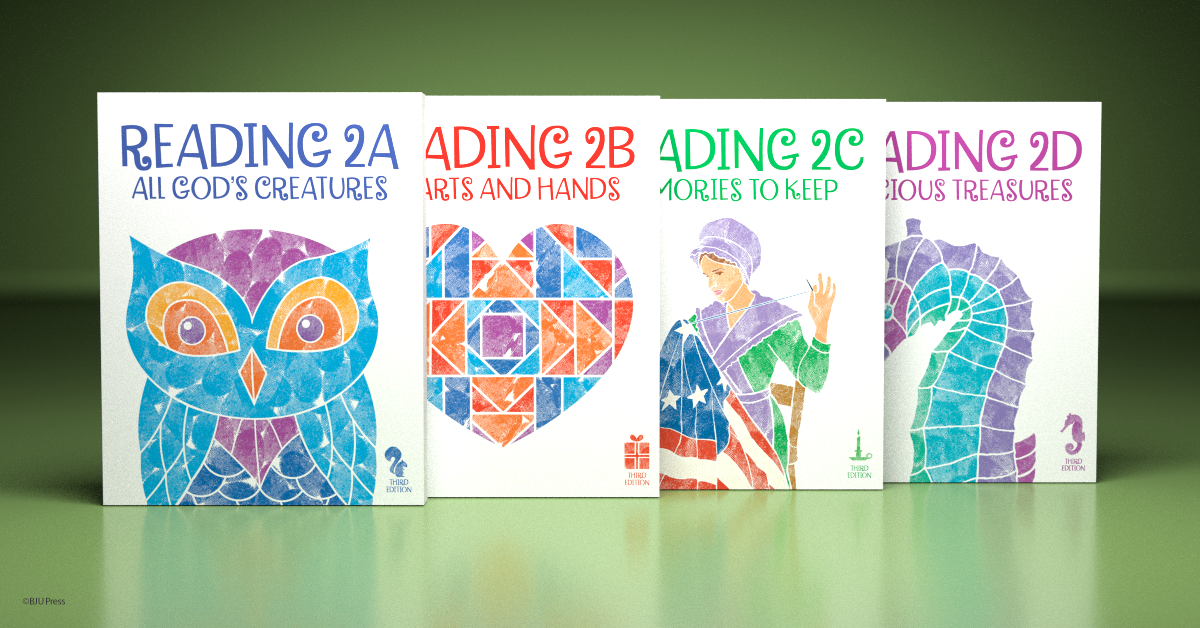
My daughter has been using the BJU Press curriculum since preschool. Below are some ways I have found that the BJU Press Reading program promotes reading comprehension.
Introducing New Vocabulary in Context
Our children won’t be able to understand a text’s meaning if they don’t understand the meaning of the individual words that make up that text. The Teacher’s Edition always directs us as teachers to introduce new vocabulary words before our children start reading.
Teaching Reading Skills and Strategies
Before reading a selection, children are directed to a Reading Focus page(s), where a particular reading skill or strategy is emphasized. The information on these pages help children better understand and appreciate the accompanying story.
Exercising Pre-reading Skills
Before reading, our children are also directed to take a look at the title page of the selection. We as teachers then ask a series of questions designed to challenge them to make predictions about the text. That exercise not only gets them excited about reading but also sets the stage for better comprehension.
Using Various Levels of Questions
If you are using any of the BJU Press elementary reading textbooks in your homeschool, you know that every teacher’s edition is full of questions. These questions, based on the four levels of Barrett’s taxonomy (literal recognition or recall, inference, evaluation, and appreciation) are designed to help our children think about the reading selection on a lot of different levels. They also help us assess how well our children understand the text.
Reinforcing Learning
After our children read a selection, we’ll have opportunities to review vocabulary and reading focus skills. We’ll also get another opportunity to read the selection, but usually in a different way (such as turning a narrative story into a drama). These exercises continue to build comprehension.
I’m really excited about using the BJU Press reading program next year. It’s filled with a lot of great selections that I know my daughter will enjoy. But, most of all, I’m anticipating that through this curriculum she will continue to grow in her ability to read with understanding.
Have you used BJU Press’s elementary reading curriculum? What was your favorite feature?