• Skip to primary navigation
  • Skip to main content
  • Skip to primary sidebar
  • Skip to footer

BJU Press Blog

  • Home
  • Shop
    • Shaping Worldview
  • Simplified Homeschool
  • Successful Learning

kindergarten

Help for Moms with Struggling Young Readers

September 8, 2015 by Megan

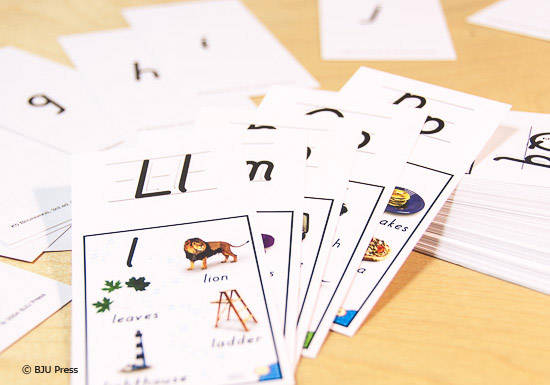
alphabet flashcards spread out on a table

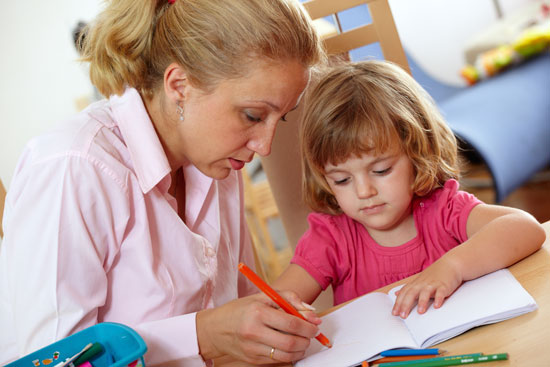
In July, I wrote a post about how to know when your child is ready to start kindergarten. But what if you’ve already started, and your child is having trouble? Let me tell you about my friend (whom I’ll refer to as Amanda) when her youngest son (Joel) was struggling with learning to read. Here’s how they found success.

Amanda had no worries about Joel starting kindergarten. He was four and a half, four months older than his older brother (William) had been when he had started. William had learned to read in K5 and had breezed through his early elementary years in a Christian school, exceeding both his parents’ and his teachers’ expectations. Although circumstances had changed and Amanda was now homeschooling, she didn’t expect Joel’s experience to be much different.

“I assumed that we would never have a problem,” Amanda told me. After all, Amanda was a former third-grade teacher. She was confident in her teaching ability. She was also confident in her curriculum choice—BJU Press—which “laid everything out for me. I knew exactly what to do.”

Joel completed K4 and K5.  He would often answer his brother’s third-grade math problems. But at the end of K5, Joel still wasn’t reading.

“I didn’t think that much about it,” Amanda admits. “BJU Press does not expect mastery of every concept at the kindergarten level, so I just thought that he would pick it up in first grade. I figured that he just needed more time.”

But they got into first grade, and Amanda found herself spending all morning with just the reading aspect of the curriculum. And Joel wasn’t getting it.

“I remember sitting at the dinner table one night. My husband asked Joel what he had learned in school that day. Joel didn’t remember. I said, ‘The letter T.’ My husband asked Joel what sound T made. Joel made several attempts at an answer, but none of them were right. We had spent all morning on this concept. And he still wasn’t getting it. I realized at that point that we were in trouble.”

“It was the most frustrating experience for both of us,” Amanda relates. “I was frustrated. Joel was frustrated. And I started thinking, ‘What do I do? Should I repeat him? Should I pull him back to kindergarten?’”

She sought the advice of a friend that taught K5 at a Christian school. Her friend advised her to just keep on going. She told Amanda that for a lot of boys, reading “clicks” the second half of first grade. Another friend of Amanda’s with a lot of teaching experience seconded that advice. “You’re homeschooling,” she reminded Amanda. “You can do whatever you want. Make accommodations. Think outside the box and try teaching it another way.”

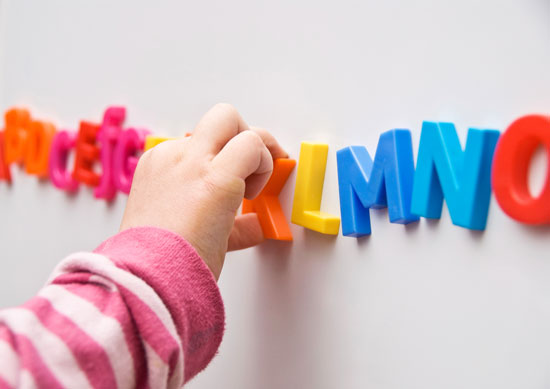
Amanda went to the craft store and bought decorative letters, punched them out, and let Joel paint them. She went to the hardware store and bought sandpaper and had Joel trace letters on it. “We did a lot of hands-on,” Amanda tells me. “Nothing by itself seemed to be making a difference, but we kept doing it.”

They kept plugging away, and then in the spring, something happened. Joel started reading.

“It finally just all came together for him,” Amanda remembers with a smile. “He wasn’t a great reader by the end of first grade, but he was reading. And he’s done fine ever since.”

Joel is indeed doing well. He’s entering his senior year in high school and is looking toward the future. He wants to attend college next year to study criminal justice and history. Amanda is obviously proud of the young man he has become. “Those days that we struggled were horrible—I wouldn’t want to repeat them. But I’m glad we didn’t pull Joel back into kindergarten or have him repeat first grade,” she tells me. “Intensely focusing on phonics instruction was the right thing to do even though it took a lot of time and energy. Joel ended up succeeding. And since we were homeschooling, his success was my success too.”

Filed Under: Successful Learning Tagged With: early learning, kindergarten, language arts, reading

Early Start to Homeschool Kindergarten

August 6, 2015 by Karin

Learning the Alphabet
© iStockphoto.com/pkfawcett

Last fall, I had big plans for starting kindergarten with my daughter. Though not yet five years old, she had mastered the K4-level materials, so why not move on to K5 and give her a head start on life? On the other hand, I wondered if I would be robbing her of her childhood or setting her up for failure by beginning before she was ready. It was with these questions in mind that I asked advice from Carol, a mom who has twenty-five years of homeschool experience. While her family’s situation was slightly different from my own, I knew her insight would be valuable as my husband and I made this decision.

Carol began by explaining that we should approach this decision just like any other decision—by praying for wisdom. She said, “Carefully consider the reasons for the early start, make a good assessment to determine if the child is ready, get counsel and input from a few others you respect, use a good curriculum, and keep praying for wisdom. Don’t forget to have fun right along with your child!”

That struck me as perfect advice for parents of four- and five-year-olds. But I wasn’t sure what specifics I should look for to answer the question “Is my child ready for kindergarten?” Carol explained, “Some of the signs I looked for to gauge my daughter’s readiness for K5 included attention span, cooperation, motor skills, maturity level, and a desire to learn.”

These signs resonated with me because my daughter was still developing fine motor skills and maturity. Carol chose to start K5 with most of her children when they were five years old, but she began K5 with her youngest child when she was four. “After much prayer, seeking God’s wisdom, and confirmation from my husband,” Carol said, “I decided to begin K5 with my youngest child a couple months before she turned five years old. Many factors went into that decision, including her desire and enthusiasm to start K5, her success in completing K4, and my knowledge of the BJU Press K5 curriculum and experience of teaching it to my other children.” She added, “I definitely would not recommend beginning K5 at that age unless the child is ready. K5 should be a successful foundation, not a frustration. As it turned out, my daughter handled kindergarten very well.”

That curriculum helped Carol’s children enjoy learning. The education materials you choose will have a major impact on your child’s enjoyment of learning. “Each child is unique,” she said, “but all four of my children loved the BJU Press K5 curriculum and were very successful in accomplishing the objectives. They had fun learning and looked forward to school.”

Carol’s youngest is now in high school, so I asked how the early start in kindergarten had affected her daughter’s transition into later grades. Carol’s answer relieved some of my concerns. “Up through the end of eighth grade, she seemed ready for each successive grade emotionally, physically, and academically. Her scores on the Iowa Tests® have always been well above average and confirmed that she was ready to move on to the next grade level. Her transition into high school this year has been the first ‘hitch’ so far.”

Not exactly sure what caused the “hitch,” Carol’s been learning to trust God through it. She says, “My daughter has seemed overwhelmed at times with the amount of material covered in a day and also the number of quizzes and tests required. I’m not sure that this current bumpy road is due to the school grade as much as just adjusting to the teen years. It’s keeping this mom humble and praying and depending on God.”

After thinking through Carol’s advice and discussing the matter, my husband and I decided to wait on kindergarten. Our family situation this past year included a move and a new baby. So we continued to do preschool activities along with some basic reading instruction. My daughter loved learning how to read, but I’m thankful I held back on a full kindergarten program. The short and sweet period before formal schooling gave her time to develop her fine motor skills and to mature emotionally so that kindergarten will be less of a challenge and more of a joy.

Filed Under: Simplified Homeschool Tagged With: early education, early learning, friendly advice, homeschool, kindergarten, parenting

Is Your Child Ready for Homeschooling?

July 21, 2015 by Megan

Closeup of cute little girl drawing with color pencils 10415731
© iStockphoto.com/vgajic

Is it time to start homeschooling your young child? As I pointed out in my previous post, people start homeschooling their children at different ages. Individual family situations play a large role in the decision about when to start homeschooling, so I listed a few questions to help you think through your unique situation. But there’s another major factor in the decision—your child. How can you tell if your child is ready?

If you were placing your child in a school setting, the school would probably give your child a kindergarten-readiness test.  You can do a similar assessment at home. Think about the following questions, and jot down your observations.

1. How well does your child listen and follow directions?

A good early childhood curriculum includes a lot of active learning, but your child does need to have the ability to sit and focus for short periods of time (ten to fifteen minutes is a good goal). Your child also needs to be able to listen carefully, to respond to questions, and to follow directions so that he or she can get the most out of learning activities.

2. Does your child have the necessary fine motor skills?

Can he or she use a child-sized pair of scissors? Does your child attempt to color within the lines when coloring? Is your child able to hold a pencil correctly and do simple tracking and tracing activities? (These skills should be refined before attempts are made at writing letters and numbers.) Your child needs to have strong fine motor skills in order to learn how to write.

3. Is your child enthusiastic about learning?

Most experts agree that a child’s individual enthusiasm for learning is the strongest indicator of future success in school. Does your child ask to “do school”? Does he or she pretend to read or write?

You know your child best, but if you want a second opinion about whether your child is ready for school, you might want to consult your child’s Sunday school teacher, pediatrician, or other family members and friends who have had multiple opportunities to observe your child. And don’t forget to pray! The Lord promises to give wisdom to all who come to Him in faith.

When my oldest daughter was ready to start formal schooling, BJU Press materials helped guide her learning. Next week I’ll share my family’s experience with their Footsteps for Fours curriculum.

Filed Under: Simplified Homeschool Tagged With: early learning, homeschool, kindergarten, readiness

Are You Ready to Start Homeschooling?

July 14, 2015 by Megan

Closeup of mother and her little girl coloring drawing 10415816
© iStockphoto.com/vgajic

I recently came across a copy of a homeschool magazine that contained a series of articles about homeschooling very young children (ages three to five). The articles all centered around one big question—at what age do you start homeschooling?

That is a big question, especially if you’ve never homeschooled before and your oldest child is three, four, or five, the age when most children around the country are starting preschool or kindergarten. Should you start this year? What if you wait a year or two—will your child fall behind?

There are a lot of different opinions about when a child should start school. Some educators seem to think “as early as possible,” thus the creation of programs such as Head Start® and other preschools. Other educators think it is best to wait as long as possible. There are homeschoolers at every point along that spectrum. Why? Each child is unique, and each family situation is unique.

Here are some questions to help you determine if you’re ready to begin homeschooling.

1. What does your state law require?

Your state homeschool laws may require you to register as a homeschooler and start instruction when your child reaches a certain age. Some require attendance records and/or other “proof” of homeschooling. Do some research or contact the Homeschool Legal Defense Association (HSLDA) to find out what your state requires. A friend of mine, Cindy, started homeschooling her children when each of them was five. Her only reason for doing so was that her state’s law required it. She said that otherwise she would have waited until they were older.

2. Do you plan to homeschool long-term?

Another friend of mine, Mary, started homeschooling her son with a preschool curriculum when he was four. She and her husband weren’t completely sure about homeschooling and were considering placing their son in a private Christian school for kindergarten. But she wanted to give homeschooling a try. She also wanted to make sure that their homeschool ran at a similar pace as the Christian school so that her son wouldn’t be behind if they decided to enroll him later.

3. How comfortable are you with homeschooling?

Sue also started homeschooling her four-year-old. She didn’t have any training or experience teaching, so although she was convinced that homeschooling was the best option for her family, she was really nervous about it. She began with a preschool curriculum when her daughter was four because she wanted to do a “trial run” before starting kindergarten material.

4. What’s going on in your life right now?

Although Rachel’s son is almost five, she has decided to wait another year to start homeschooling him. Her family is anticipating a move and a new baby within the next few months, so she and her husband have decided that homeschooling would add too much to their already stressed household.

So are you ready? Even if you are, your child might not be. Next week, I’m going to be giving some tips on how to assess whether your child is ready to start homeschooling.

Filed Under: Simplified Homeschool Tagged With: early learning, homeschooling, kindergarten, parenting

  • « Go to Previous Page
  • Page 1
  • Page 2

Primary Sidebar

As parents, teachers, or former homeschool students, we are passionate about homeschooling from a biblical worldview. We hope these teaching tips, fun activities, and inspirational stories support you in teaching your children.

Email Signup

Sign up for our homeschool newsletter and receive select blog posts, discounts, and more right to your inbox!

Connect with Us!

                    Instagram     

Read Posts on Specific Subjects

Early Learning
Foreign Language
History
Language Arts
Math
Science

Footer

Disclaimer

The BJU Press blog publishes content by different writers for the purpose of relating to our varied readers. Views and opinions expressed by these writers do not necessarily state or reflect the views of BJU Press or its affiliates. The fact that a link is listed on this blog does not represent or imply that BJU Press endorses its site or contents from the standpoint of ethics, philosophy, theology, or scientific hypotheses. Links are posted on the basis of the information and/or services that the sites offer. If you have comments, suggestions, questions, or find that one of the links no longer works, please contact us.

Pages

  • About BJU Press
  • Conversation Guidelines
  • Terms of Use & Copyright

Archives

© 2026 · BJU Press Homeschool