• Skip to primary navigation
  • Skip to main content
  • Skip to primary sidebar
  • Skip to footer

BJU Press Blog

  • Home
  • Shop
    • Shaping Worldview
  • Simplified Homeschool
  • Successful Learning

biblical worldview

In-Depth Worldview Education

March 15, 2018 by Ben

worldview education globes
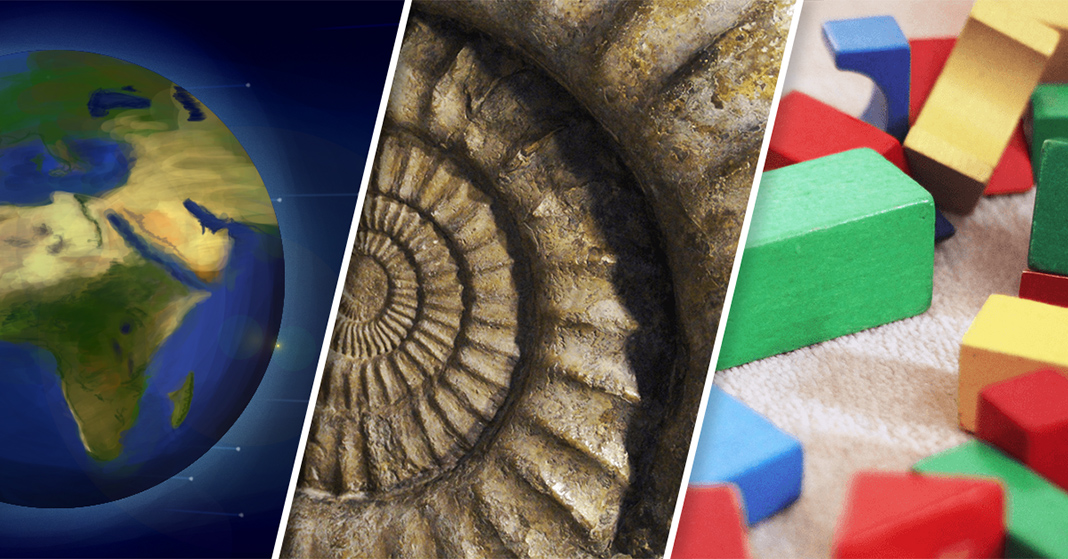
Some Christian educators watch with concern as students finish a “Christian worldview education.” They observe that sometimes these students are too quick to label ideas such as feminism and Marxism in order to dismiss them without engaging with understanding.

This can be a real problem. If students fail to understand ideas that they don’t agree with, they won’t be able to communicate thoughtfully about false worldviews. But what can we do to help them think biblically about distorted worldviews?

The problem is not with worldview education but with how worldview is taught. Worldview education must go beyond rote memorization of charts with categories. Instead, students must be taught to analyze from the correct biblical perspective (i.e., through the lens of  Creation, Fall, and Redemption). Only then will they be able to evaluate precisely how false worldviews twist God’s good design.

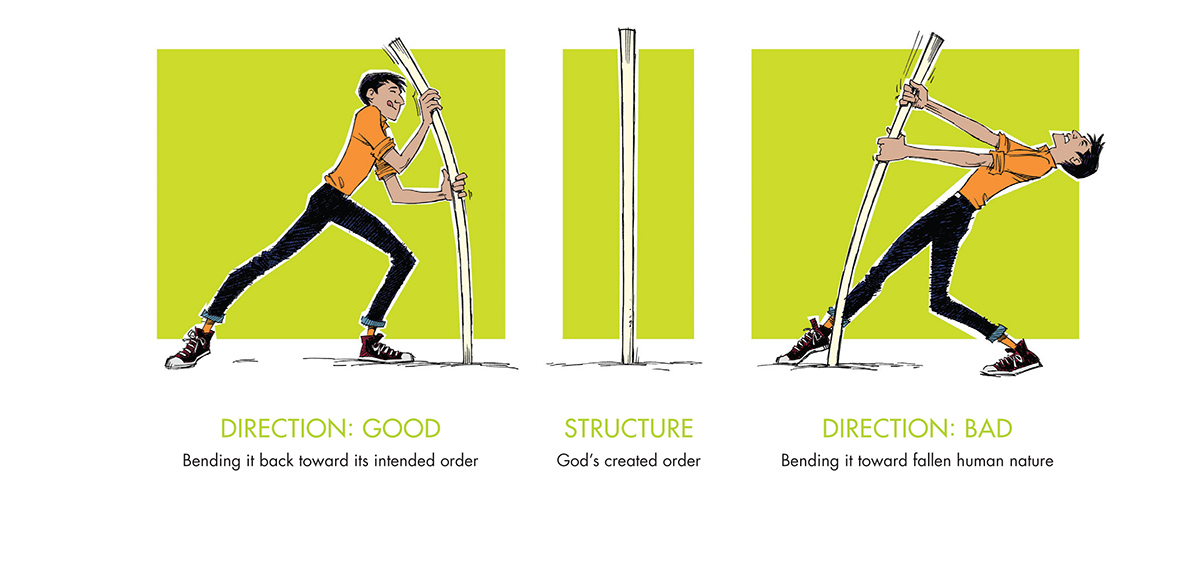
One way to represent Creation, Fall, Redemption is to illustrate it with the terms structure (God’s creational norms) and direction (bending God’s norms in a fallen direction or bending fallen direction back towards God’s creational design). In other words, children must understand how creational norms and sinful direction work in the formation of wrong ideas.

Creational Norms

We teach our children in order to impart wisdom to them, but where can wisdom be found? It begins when our children fear the Lord by submitting to His wisdom rather than embracing evil (Prov. 9:10). God reveals His wisdom in Scripture, but Scripture also directs us to observe God’s wise design in creation (Ps. 19:1; Prov. 8:22–31).God created His world to work in a certain way—according to His blueprint of wisdom.  So paying attention to how God created the world to work in the beginning reveals principles for living according to His wise design in the present. These principles can be called “creational norms” because they were present at creation.

There are creational norms for marriage (Matt. 19:4–8), economics (Exod. 20:9; 2 Thess. 3:11–12), science (Gen. 8:22), and every other facet of life (Isa. 28:24–29). In some areas, we have direct comment from God’s Word. Others come through careful observation of creation.

Sinful Direction

Of course, each of us is corrupted by the Fall. We inevitably bend God’s creational norms in a way that suits our sinful ways. Some people push against the norms a little and some push a lot. In every case, sinners think of their vision of bent norms as correct and natural. While false worldviews can’t completely ignore creational norms, they bend those norms to fit their vision for individuals and society. The creational norms are still present but in a twisted state.

Redemptive Direction

The challenge for believers is discerning between what part of the sinner’s vision is creational and what part is sinful direction. Christians have an obligation to identify creational norms. Of course, we’re going to engage with many ideas that push these norms in a bad direction. Some of these bad directions have been codified into law and large institutions.

When we encounter these norms, bent in a sinful direction, we should seek to live faithfully in light of redemption by pushing back in a redemptive direction, that is, back toward their creational state.worldview education direction vs. structure
The Case of Marriage

Creational Norm

A discussion of creational norms and sinful direction is difficult to understand without an example. So let’s examine marriage as an illustration of how these principles work out. God created marriage when He made humans male and female. He even gave us a direct word on what marriage should look like in Genesis 2:23–24. This passage outlines the creational norm for marriage.

Fallen Direction

Very quickly after the fall, people started bending marriage in various sinful directions. Polygamy and serial divorce were and continue to be serious examples of bending marriage in a sinful direction.
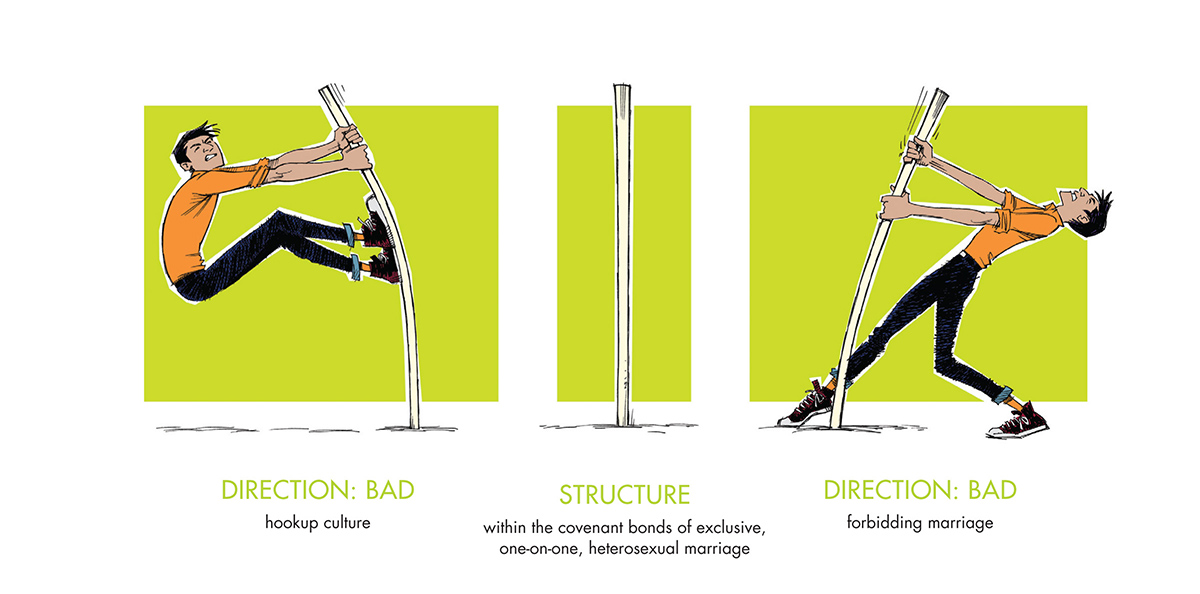
worldview education bad direction vs. structureRedemptive Direction

When God graciously gave his people the law, He pressed them towards the creational norm. We might have predicted that He would ban divorce, but He didn’t. He regulated it very strictly (Deuteronomy 24:1–5). God put in place legal protections for women being divorced by their husbands.

God still hates divorce; Jesus made that clear. But He understood that the people were evil and were going to divorce, so He established laws that protected a woman when a husband decides to divorce.

Reformation

When the Lord graciously gave Israel laws, He modeled a reformational approach to creational norms that has been twisted by the Fall. In a civil setting, He moved His people towards His creational norms without legally requiring something they would not do. To be clear, God calls us to take radical action against personal sin. But in the civil setting, His laws guided His people like children to make reasonable steps toward the norm.

Reformation requires nuance and understanding of the creational norms and the false worldview. Only then can we discern a corrective step that doesn’t create the chaos that comes with radical measures.

Effective Worldview Education

When we teach our children science, history, math, and literature, we want them to develop skills in finding creational norms. As our children grow, they need to learn to understand and evaluate false worldviews that twist creational norms. Finally, our children need to begin learning to create steps to reform within their context.

This kind of worldview education produces children who do more than dismiss. It enables them to create reformation steps in their generation. To help you equip your children to do just that, BJU Press provides in-depth treatment of these concepts in our Biblical Worldview textbook. 

 

Filed Under: Shaping Worldview Tagged With: biblical worldview, Christian Homeschooling, Creational Norms, Marriage

Wisdom’s Call and Homeschooling

November 14, 2017 by Ben

wisdom's call and homeschooling on a hike
At a recent conference, someone posed an interesting question related to using wisdom in homeschooling. “Should I be focusing so much energy teaching my child algebra when I need to teach him to serve?” I think this question goes to the heart of Christian homeschooling.

My wife and I started homeschooling because we want to have God’s words in our hearts and “teach them diligently” to our children (Deuteronomy 6:5–6). But so much of homeschooling has to do with math, science, and other subjects. At times we do feel like we’re teaching our children about God through these subjects, like when we’re refuting evolution, but at other times training our children to be servants of the Lord doesn’t seem central.

Does Christian homeschooling allow for in-depth study of algebra?

Proverbs 8 is a critical chapter in constructing our Christian philosophy of education. In it, wisdom, personified as a woman, calls to young people and urges them to listen to her so she can equip them to make sound judgments. With our focus on developing children for adulthood, we should give careful attention to this chapter.

What is wisdom?

Before we can apply this chapter, we need a clear understanding of who this woman is who’s calling to our children. What is the wisdom of Proverbs 8?

First, God created this wisdom before He created the world: “When there were no depths, [wisdom] was brought forth” (8:24). God made this wisdom, so it is something distinct from His eternal attribute of wisdom. While it is distinct, God delighted in it and used it to frame the world and to establish order.

Second, this wisdom is available all across the world. It is by wisdom that “all the judges of the earth [rule]” (8:16). This means that rulers from Asia to the Americas had access to wisdom even before the special revelation of God was available to them. That’s why wisdom’s call is universal and goes out to all youth everywhere. They all have access to it.

God used wisdom to create the universe, and He integrated its principles into the created order. We can call this wisdom “creational norms,” the principles God embedded in the creational order. And if we learn them, we can use them to live well.

As Christian parents, we can use the principles of Proverbs 8 in a least three ways:

1. Study creation

Teaching our children principles of algebra and physics is not incompatible with teaching them  the “things of God.” As we study God’s good creation and apply it, we are learning from God’s general revelation.

We should not put algebra and serving God at odds with each other. They go hand in hand. For example, the good Samaritan had learned the best medical practices of his time. When he had the opportunity, he used that knowledge of creational norms to serve. If he hadn’t learned those principles, he would have been severely limited in how he could serve.

We should make learning creational norms in math, science, history, and language arts an important part of our homeschooling. Because creational norms are more valuable than “choice gold” (8:10).

2. Listen to authority

At their best, our children are “simple,” and at their worst they are “fools” (8:5). Wisdom’s words then are, “Hearken unto me” and “Hear instruction, and be wise” (8:32–33). If children are going to heed wisdom’s call, they must forsake their own way and listen to their authorities.

As parents, we can set the example of listening. We can listen to more experienced homeschool parents. We can learn about best practices for teaching children. Whenever we learn principles about how life works best in God’s world, we are learning creational norms. And we’re setting an example for our children.

3. Resist evil influence

There’s nothing “perverse” about God’s wisdom (8:8). In contrast, secular experts discovering and teaching creational norms often twist them to suit their own worldview. They teach evolution, for example, so they can pretend they’re free from God.

Wherever we gain wisdom from general revelation, we need Scripture to guide, correct, and straighten out what has been twisted by the wicked.

Heeding wisdom

At the end of Proverbs 8  we see wisdom standing at the city gates urging children and teens to listen to her. Her teaching through creation is more valuable than precious metals. “For whoso findeth [her] findeth life, and shall obtain favour of the Lord” (8:35).

Fools try to live life as though creation doesn’t teach. Perhaps they’re spendthrifts, or maybe they don’t think they need to plow in the winter. Then they find trouble.

So, as we seek to diligently teach our children the ways of God, let’s not forget His teaching through His creation because those who find wisdom find life.

Filed Under: Shaping Worldview Tagged With: algebra, biblical worldview, Christian Homeschooling, Philosophy of Education, Proverbs, wisdom

3 Tough Questions Kids Ask and How to Answer Them

October 26, 2017 by BJU Press Writer

Dinosaur Questions
“What happens to us when we die?” Do your kids ever ask you questions like this? You know, ones that are hard to respond to because they touch on really important topics? When a major London newspaper ran a story about the top twenty questions parents find toughest to answer for their kids, the “what happens to us when we die” question was listed as number 11. And number 13 was “Is God real?”

Hard Questions

It’s no surprise that people think spiritual questions like these are tough to respond to. But since we as Christian parents have a Book that gives us the answers, the most difficult aspect for us may be making our answers simple enough for younger children to understand. But when we give our kids Bible-based answers, we can be confident we’re teaching them truth. In contrast, according to the article, 25 percent of parents in one survey said if they were asked, “Where do you go when you die?” they would tell their child, “You become an angel.” This correlates with another finding of the survey: When parents don’t know the answer to a child’s question, 63 percent of them will give one anyway—even if they think it might be wrong!

Most of the other questions on the list were requests for scientific explanations, such as “Why is the sky blue?” and “How do planes fly?” These can be hard to answer on the spot because we’ve forgotten (or never really understood) the scientific or technical details. But that kind of factual data is easily accessible these days. The bigger challenge for us as Christian parents is how to answers our children’s questions in a way that reinforces the biblical worldview we want them to grow up with.

Teachable Moments

When children ask questions, especially why questions, it can be a perfect opportunity to engage in biblical worldview shaping—helping them to learn to see the world and everything in it from God’s perspective. The Creation-Fall-Redemption metanarrative of the Bible has multiple layers of significance, yet it’s simple enough for even a young child to grasp:

Creation: God made the world.

Fall: People have messed it up.

Redemption: Someday God will fix it.

The key is to answer kids’ questions by telling them a small story that fits in with the big story of CFR.

Victoria Klein wrote an article in Parents magazine about questions kids often ask and how to answer them. For each of nine questions, she suggests an answer and quotes an expert’s advice on how to talk about the topic. Here are three of the questions and my suggestions for how to answer them to help kids think biblically.

1. “Why aren’t there any more dinosaurs?”

Klein cites the standard evolutionary scientific answer based on the secular worldview: Eons and eons before humans existed, dinosaurs evolved from simpler lifeforms. Then, 65 million years ago a huge asteroid crashed into the earth, resulting in climatic changes that the species couldn’t adapt to, and so they died out. But some of them “were the ancestors of today’s chickens, pigeons—even ostriches.”

The Bible tells a very different story: On the sixth day of creation, God made dinosaurs along with all the other land animals as well as Adam and Eve. So humans and dinosaurs lived at the same time. Then about 4,400 years ago, there was a worldwide Flood that wiped out almost all the land animals of every species. The animals that survived had to adjust to living in a very different habitat. Climate change brought about by the Flood (e.g., the Ice Age), disease, competition from other animals, and other factors eventually resulted in the extinction of dinosaurs.

To give a more theological answer, you might explain that the main reason dinosaurs (and other species) have gone extinct is the Fall. The Flood was God’s judgment on human sin.

2. “Why are there so many languages in the world?”

Again Klein accepts the evolutionary explanation that language developed as humans evolved and assumes that the reason for different languages is that the process occurred simultaneously in various places that were isolated from each other. The fact that the English of today is so different from the English of five hundred years ago is cited as evidence of this evolution.

In contrast, Scripture indicates that language was a gift God gave Adam and Eve when He created them. There was only one language until about a hundred years after the Flood. But then people rebelled against God at the Tower of Babel, and He punished them by dividing them into groups and making it so that they couldn’t understand each other. Those separate languages developed into the ones in use today. The existence of various languages is actually a strong argument against the notion that language evolved as an aspect of the transition from ape to human.

3. “Why do people get sick?”

Klein’s answer focuses on germs and the difference between contagious diseases and other medical conditions.

The CFR perspective on disease emphasizes the idea that in the world as God created it there was no sickness, pain, or death, but once people sinned against God, the door was opened to all of those. So in that sense, all disease is a result of the Fall—we get sick because of sin. That doesn’t mean that there is a direct cause-and-effect relationship between a particular illness and a specific act of disobedience. Job didn’t get boils because he had sinned, nor was the man in John 9 born blind because of his own or his parents’ sin. But any lack of good health confirms that we live in a fallen world.

Trustworthy Authority

What’s so important about answering from a biblical worldview frame of reference? The goal is not for children to comprehend all the whys and wherefores of the factual information we give them, but for them to absorb the way our worldview works. When they see that we examine every question in the light of Scripture, they will begin to understand that the ultimate authority is God’s Word not scientific evidence, historical documentation, or popular opinion.

What tough question has your child asked recently? Were you able to answer it from a biblical worldview perspective?

• • • • •

An editor at BJU Press until 2020, Dennis and his wife spent seventeen years homeschooling their three sons. Dennis occasionally teaches at their church and in his spare time enjoys running, playing racquetball, and interacting with their five grandchildren.

Filed Under: Successful Learning Tagged With: biblical worldview, Creation Fall Redemption, questions, teachable moment

What Is the Bigger Purpose of Science?

October 3, 2017 by Jenna

Science
The aftermath of the Fall is all around us. Today’s mounting concern about issues such as global warming, deforestation, and animal extinction is evidence of that, and homeschool families like yours are often more aware of current issues and events than others.

Though we don’t have the power to stop the deterioration of our environment, it’s our duty as good stewards to care for the world God has given us to the best of our ability. While it may be true that those who spend their lives studying the climate, plants, and animals know best how to care for them, that doesn’t mean we all have to become meteorologists, ecologists, and botanists in order to fulfill our responsibilities. You may have dreamed of your child one day making a great scientific contribution—what parent wouldn’t?—but not every child can be a scientist.

So what is the bigger purpose of your children studying science from elementary to high school? Studying science should give your children the tools they need to take better care of creation.

There are two key tools that your children will gain in science lessons.

• A practical understanding of how the world works

When they know how the world works, they can make informed decisions about real-world issues. If your children don’t know the factors that contribute to climate change, they won’t be able to choose a practical solution to incorporate into everyday life. They may choose something that seems effective without knowing the consequences of that choice. On the other hand, if your children do know those factors, they’ll be able to recognize when suggested solutions either won’t last or will merely substitute one problem for another.

• The ability to think like scientists

Science should teach your children to research, observe, and verify under varying circumstances. Rather than expecting them to go into their adult lives pre-equipped with all the knowledge they will need, we should make sure our children are able and willing to do the work of finding answers to problems they’ve never encountered before.

As a graduate assistant, I helped teach a rhetorical writing class. My students all had to write their research papers on energy technology and policy, a subject most of them knew very little about. It was always obvious when my students thought they could succeed in writing the paper through their own knowledge of the subject alone. They weren’t willing to find out what they needed to know about energy in order to do well on the paper.

BJU Press textbooks drive home a practical understanding of the world and of scientific thinking as they weave together a biblical worldview (presenting the Creation Mandate for Christians as well as the demonstration of God’s character in nature) and the discipline of the scientific method. Life Science for Grade 7 explores the potential benefits of biofuels, while Biology for Grade 10 focuses on a balanced view of the conservation of the earth’s resources.

Armed with both an understanding of the world and a willingness to learn, your children will be better equipped to appropriately use creation, even if they don’t develop a revolutionary new fuel system.

Filed Under: Shaping Worldview, Successful Learning Tagged With: biblical worldview, biofuels, Creation Mandate, homeschool science, purpose, science

3 Connections Between Faith and Learning

June 8, 2017 by Ben

Biblical vs secular worldview

According to the National Center for Educational Statistics, almost 60 percent of homeschoolers choose to teach their children at home because they want to “provide religious instruction.” That was true for my parents when they decided to homeschool me, and it is true for my family as my wife and I now homeschool our children. Secular public education is not an option for us. We want to provide our kids with a Christian education that makes the connection between faith and learning in our homeschool.

Secular Disconnect

If you ask most Christian parents whether they use secular lessons in their homeschool, they typically say, “No way!” But that’s assuming that secular means denying God’s existence. Actually, secularism claims that religion is a private matter and as such shouldn’t influence considerations regarding public life. So we have public officials who say, “I’m a Christian, but I don’t let that affect my decision-making.”

When we take a secular-based teaching of math, science, or English into our homeschool and place religious education around it, we present education and faith as unrelated. We’re still giving our children a secular education by acknowledging a disconnect between faith and learning.

Worldview Connection

The connection between faith and homeschooling comes from a strong biblical worldview. The basis of any worldview is a big narrative that answers crucial life questions such as “Who am I?” and “Where did I come from?”

The Bible gives us the narrative of Creation, Fall, Redemption. Understanding this story and its implications for homeschooling enables us to connect faith and learning. Let’s look at how each part of this narrative connects faith and learning.

1. Creation Connection

God created humans in His own image and blessed them with stewardship over all the rest of His other creation. These truths from the creation account enable us to make the first and foundational connection to learning. We learn because God blessed us with His image and gave us a job. Our learning reflects God’s glory and it is a powerful tool for fulfilling His command to exercise rule over creation.

2. Fallen Disruption

When Adam sinned, his heart became fallen. It loves wrongly and so thinks wrongly. The account of the fall points to a second, deeper connection between faith and learning. As we learn, we must be vigilant of wrong thoughts based on wrong loves. That doesn’t frighten us from education. Instead we should use the Bible as a corrective lens in all that we’re learning so that we can evaluate the ideas within any subject and reject the false ones.

3. Redemption Connection

God’s plan for redemption is as sweeping as the fall. It can straighten out all of those twisted thoughts we encounter in science, literature, and history. As believers, we’re obligated to bring every thought into obedience to Christ. This is the final, deepest connection between our faith and learning. When we evaluate an erroneous idea in a subject, we cannot simply identify it as false and move on. We must press it back toward God’s creational design.

Let’s take math and see how a biblical worldview enables us to connect faith and learning. Notice how each step makes a deeper connection.

  1. Creation: Since we’re made in God’s image, we can use math as a powerful tool. So we use it to rule over God’s creation and serve others to bring Him glory.
  2. Fall: God’s lordship over all creation disproves secularists’ claim that “math is neutral.”
  3. Redemption: Math must be governed by the Christian ethic laid out in Scripture. It should only be used to love my neighbor and never used to do my neighbor harm.

You and I know the account of Creation, Fall, and Redemption. But how are we doing bringing these big-story implications for learning to our children’s homeschooling? Take time to determine if your homeschooling is presenting faith and learning as unconnected or if it is reaching the kind of connection that a biblical worldview demands. At BJU Press, we’re committed to providing resources and curriculum that assist homeschool families in creating those connections between faith and learning. Each post below provides an in-depth look at the three connections—Creation, Fall, and Redemption.

Filed Under: Shaping Worldview Tagged With: biblical worldview, Christian education, Christian Homeschooling, Creation, Fall, homeschool, Redemption

  • « Go to Previous Page
  • Page 1
  • Page 2
  • Page 3
  • Page 4
  • Page 5
  • Interim pages omitted …
  • Page 8
  • Go to Next Page »

Primary Sidebar

As parents, teachers, or former homeschool students, we are passionate about homeschooling from a biblical worldview. We hope these teaching tips, fun activities, and inspirational stories support you in teaching your children.

Email Signup

Sign up for our homeschool newsletter and receive select blog posts, discounts, and more right to your inbox!

Connect with Us!

                    Instagram     

Read Posts on Specific Subjects

Early Learning
Foreign Language
History
Language Arts
Math
Science

Footer

Disclaimer

The BJU Press blog publishes content by different writers for the purpose of relating to our varied readers. Views and opinions expressed by these writers do not necessarily state or reflect the views of BJU Press or its affiliates. The fact that a link is listed on this blog does not represent or imply that BJU Press endorses its site or contents from the standpoint of ethics, philosophy, theology, or scientific hypotheses. Links are posted on the basis of the information and/or services that the sites offer. If you have comments, suggestions, questions, or find that one of the links no longer works, please contact us.

Pages

  • About BJU Press
  • Conversation Guidelines
  • Terms of Use & Copyright

Archives

© 2026 · BJU Press Homeschool