• Skip to primary navigation
  • Skip to main content
  • Skip to primary sidebar
  • Skip to footer

BJU Press Blog

  • Home
  • Shop
    • Shaping Worldview
  • Simplified Homeschool
  • Successful Learning

Jenna

What to Consider When Choosing Homeschool Assignments

July 18, 2017 by Jenna

Homeschool Assignments Moms do a lot of thinking about their children’s futures. As you consider your own child, you want to ensure that his education will set him on a good path for his future. In order to do that, you’ll need to place greater emphasis on the assignments that are most compatible with those goals. You’ll sometimes find yourself choosing one assignment over another.

You’re the director of your child’s education. No matter what curriculum you use, you get to make the final decision about what your child learns and how he learns it. But given the wealth of assignments in each textbook, how do you choose which assignments are most valuable for your child? In a previous post, I mentioned how Dynel Fuller allows her children to focus on subjects they enjoy. Here are some steps for directing your child’s education based on her experiences in homeschooling her ten children.

Know Your Child

To decide which assignments to focus on, you need to know your child. What’s his favorite subject and why? What subject is he weakest in? What subject is he strongest in? His best subject may not always be his favorite. The better you know your child, the easier it will be to shape his education to his particular needs. You’ll be able to ensure that he’s still being challenged in his strongest subject by giving him enrichment assignments that encourage him to use his knowledge of that subject in new ways. You’ll also be able to ensure that he’s not being overwhelmed in his weakest subject by only giving him assignments that encourage his comprehension.

Know the Field of Study

Dynel has an advantage in teaching her children a love for literature and writing because she herself is a writer and reader. She’s already familiar with which kinds of assignments will best encourage her children to grow in those areas. She’s also more equipped to add extra assignments where needed, such as reports and essays, and to decide which assignments may not be as important.

By learning about the field your child wants to study, you will be able to give him a solid foundation for future studies. So, if he wants to go into accounting, precalculus may be a good upper-level math course to stretch his mental ability. Whenever possible, always select the courses best suited to your child’s chosen field.

Keep Track of the Other Subjects

Just because you’re focusing more on one subject doesn’t mean you’re excluding the others. All subjects teach valuable skills that your child will need to call on throughout his life. For example, math isn’t only about algebra and geometry. It’s also an excellent way to learn problem solving skills. However, developing these skills may not require completing the assignments for every lesson in each textbook.

As Dynel observed, most schools don’t finish the textbooks either. Rather than working steadily through each textbook until summer break, you may choose to spend less time on earlier lessons in favor of the later ones. You may find that the bigger projects in certain subjects aren’t as necessary as they are in others. And that’s OK. You don’t need your child to complete every single assignment in a textbook in order to be a successful homeschool mom.

You don’t serve your curriculum; it serves you. You have the freedom to direct your child’s studies according to his skills, abilities, and goals.


Filed Under: Simplified Homeschool Tagged With: assignments, focused education, homeschool, valuable assignments

Why Is the Sky Blue and Other Kindergarten Mysteries

July 13, 2017 by Jenna

Hard Questions
If you have young children, you know that soon after they get over saying the word no, their favorite word quickly becomes why. Kindergarteners can ask an average of four hundred questions a day. They’re innately curious, and while their curiosity is healthy, some of their questions can throw you for a loop.

They might ask: Why is water wet? Where does the sky end? What happens if a man turns into a dinosaur while he’s being arrested?

How should you respond to your children’s questions? How do you answer when you know they won’t be able to fully understand? Keep the following points in mind when your children ask questions.

Opportunities for Learning Activities

Many of the questions your children ask could lead to activities that you can do together. Even though they may not understand the explanation, they will enjoy, and probably remember, the activity that goes along with that explanation.

If they ask why the sky is blue, they may not understand about wavelengths, the color spectrum, and how light scatters in the atmosphere, but they would have a lot of fun creating rainbows with water hoses.

If they ask how airplanes stay up, they may not fully realize the significance of thrust and lift, but they might enjoy making paper airplanes and watching how the shape changes the flight.

While these activities won’t completely answer the question, they’ll form a valuable foundation. Later, you will be able to refer back to it when your children can understand.

How Much Your Children Want to Know

A question is almost always a request to begin learning, but how much do your children want to learn? They may accept a short, concise answer that gives them a basic understanding of the concept. Or they may try to understand more complicated concepts by asking even more questions. Giving them a long explanation they didn’t want might make your children think that learning is boring.

So, if your children ask how fish breathe under water, telling them that they have gills might be enough. But you may also find yourself explaining how gills filter oxygen out of the water.

Taking Questions Seriously

It’s easy to brush off a complicated question with an empty explanation. For example, when I was little, my family liked to answer questions with “it’s magic.” For us, it was a code for “I don’t know, and you’re too young to understand anyway.”

How might children’s impressions of learning change if, every time adults didn’t know the answer, they responded with “I don’t know, but why don’t we see if we can find out together?”

By taking their questions seriously, you may instill in your children a willingness to find out, even about the simplest of questions, and you may catch them using your methods for finding out on their own.

There will never be enough time in a day to thoroughly answer all four hundred questions your kindergartners might ask. But by taking time to answer some of your children’s questions, you can foster their curiosity and love of learning. What kinds of unexpected or surprising questions have your children asked? How did you answer them?

Filed Under: Successful Learning Tagged With: asking questions, kindergarten, science

3 Ways to Master the Shift to Middle School

June 22, 2017 by Jenna

When you’re homeschooling, you get a wonderful opportunity to help your child through the most difficult stages of growing up. For Dynel Fuller, the transition from sixth grade to seventh grade has been her biggest challenge in homeschooling her ten children.

This shift is full of good changes but can make homeschooling more difficult for you partially because your children’s studies become more application focused in each subject. In addition, with the onset of puberty come strong emotions and, hopefully, a better understanding of their purpose in God’s plan. But as your children mature and make more choices independently, they still need your guidance and input.

Here are some of Dynel’s suggestions. Combined with prayer, these can make this transition smoother and easier for you and your children.

Teach them to take notes from their textbooks.

As the academic rigor of the textbooks increases with each new grade, studying directly from the textbook will become more difficult. The student needs to learn how to find key ideas within the wealth of information in each chapter. Dynel has found that taking notes from the textbook allows her children to practice recall while sorting through the information for key ideas.

Chapters in textbooks usually divide into clear sections that form a basic outline. All your student needs to do is write the section heading down and fill in the key idea or ideas from that section.

Keep communicating.

Since you’re both parent and teacher, it’s twice as important for your student to feel comfortable asking you questions. A child who knows that any academic discussion can easily rabbit trail into a life lesson may avoid asking questions about schoolwork if something else is disrupting your relationship. Praying with that child daily about the struggles he faces, no matter how big or small, assures him that you know and understand what he’s going through. Listening to his prayers may also give you insight into issues that he hasn’t been willing to share yet.

Put academic struggles in context.

With the influx of emotion that comes hand-in-hand with puberty, small issues appear a lot bigger than they are. Struggling to grasp a new concept may lead some students to conclude that they aren’t smart enough or that you’re disappointed in them. In context, any new concept is supposed to present  a challenge, so it’s OK if it takes them time to understand it.

Dynel has been able to put her students’ academic struggles into context by marking up her Teacher Edition with a student’s name and the date to keep track of the concepts that she’s taken time to explain. When another student has similar questions, she shares how an older sibling had the same problem and overcame it.

By being a wise counselor in this phase of your students’ lives, you will not only strengthen your parent-child relationships, but you will also encourage them to be more confident individuals—confident their studies and confident in their relationship with God.

Filed Under: Simplified Homeschool Tagged With: high school, middle school, transitioning

3 Reasons Your Child Should Be Reading Informational Books

June 13, 2017 by Jenna

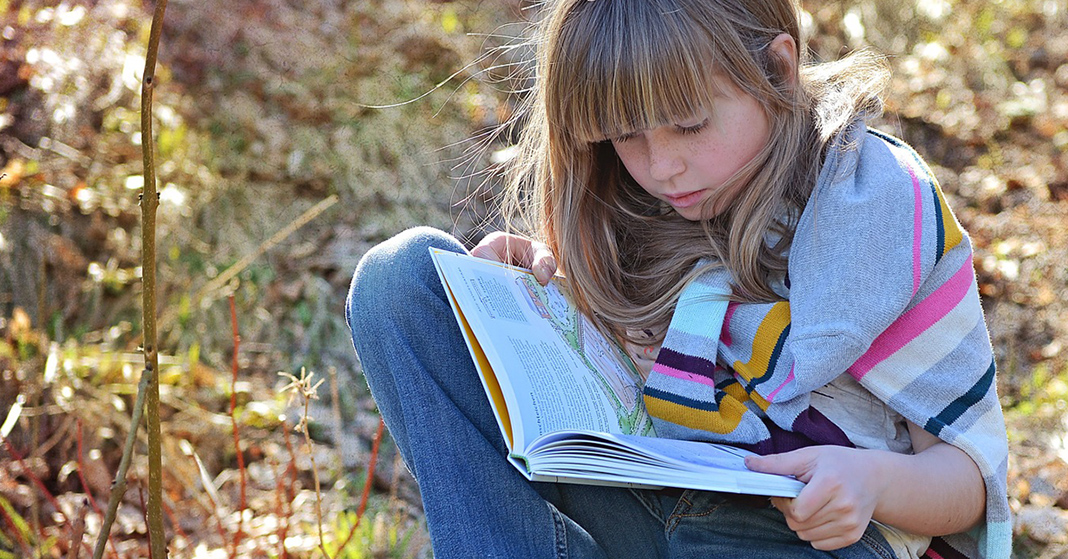
homeschooler reading books

Do you have a child who’s a picky reader? One who will only read fiction? As a kid, I was always like that too. Most nonfiction was boring to me, and informational books seemed good only for pictures. You may be tempted to say that it doesn’t matter whether it’s fiction or nonfiction, as long as your child is reading good books.

However, just as there needs to be a balance between subjects, there also needs to be a balance within the content of those subjects. The best reading programs contain both fiction and nonfiction selections. Here are a few reasons your child should read nonfiction, or informational books, plus some suggested titles.

1. They will expand your child’s vocabulary.

A carefully selected informational text can introduce children to each new word and connect it to a definition without their even realizing it. Well-written texts for a child’s age level will weave in necessary definitions or use illustrations and labels for easy reference. The focus is giving helpful information without breaking the flow of thought.

A popular series of informational texts, Eyewitness Books™, fills each page of each book with pictures and illustrations, and every illustration is carefully labeled. The more than one hundred titles in this series cover a wide range of subjects, such as plants, volcanoes, knights, and whales.

2. They allow young readers to explore their interests.

It’s easy for children to form impressions about topics or professions they don’t know much about. Informational texts that present each topic clearly and with as much detail as is appropriate will allow your child to come to a more informed opinion about his or her interests.

If your child is interested in farms, horses, and cows, Michael Rosen’s Our Farm presents a detailed picture of farm life through the responses of five children who live on a real farm. For one who’s more athletic, Dorling Kindersley®—the same company that created Eyewitness Books™—has also created a series of guides about playing certain sports called Superguides™.

3. They provide opportunities for practicing reading skills.

A series of basal readers, or reading books, gradually introduces your child to new skills and strategies for finding information. The text is controlled to ensure student achievement and understanding. However, an informational book typically doesn’t have a controlled text. New information and formats abound, and your child will need to call on various skills that have been taught during reading instruction. While a reading book contains selected vocabulary and limited content, an informational book may not be limited. Instead, it will provide as much information about the topic as possible. But perhaps most importantly, while a basal reading book from a Christian publisher may present information from a biblical worldview, an informational book from the library will require the reader to constantly be aware of what the author might be trying to teach and filter it through a biblical worldview.

Since they provide such an opportunity for building and testing new skills, informational texts make a great way to expand on topics your child is learning about in other subjects. A child who’s studying birds and animals in science might be interested in reading Susan H. Gray’s book Hornbill or Seymour Simon’s Horses. These books give a lot of information in just a few colorful pages.

Encourage your child to start reading informational books by adding a couple to the summer reading list, or suggest that every other book should be nonfiction. He or she may quickly find a new passion!

Filed Under: Successful Learning Tagged With: informational texts, nonfiction, reading

Should Reading Take More Time Than Science in Your Homeschool?

June 6, 2017 by Jenna

How to Balance Reading

Have you found yourself spending time emphasizing science rather than the language arts in teaching early learning and early elementary courses?

These days we see a lot of emphasis on science and STEM (Science, Technology, Engineering, and Math) activities in early education. That pull towards the sciences can change the emphasis of a child’s education. While it does encourage you to focus on a subject that’s often left behind, it also means giving less attention to another subject.

As a parent, you know that your child needs a balanced education, and this growing trend toward the sciences can cause you to take a closer look at what your child is learning. You may notice that, in the early grades, language arts can span across four subjects, and of those four, reading takes the most time. It makes sense to start balancing your child’s education by looking at the balance between reading and science in early grades—which leads to the following question.

How do you balance your child’s education?

Do you balance subjects by spending more time on one subject? Does equal time mean equal importance? Not necessarily.

Just as different kinds of matter have different weights, different subjects need more or less time for mastery. So a balanced education doesn’t mean equal time spent on all subjects. It simply means that you give your children enough time with each subject to develop mastery.

Why should reading take more time?

Since the best time for your child to master reading is by the end of Grade 4, it’s better to spend more time on reading in the early grades. Reading and the other language arts subjects are critical for your children’s early development. Proficiency in reading skills creates a foundation for their mastery of almost every area of study. Unless they first master reading, they will struggle to become independent learners, even in subjects they enjoy.

As much as one of your children may love doing science, he will be unable to comprehend his lessons or follow directions for experiments if he hasn’t first developed his reading skills.

What should you do?

Take time to build different reading skills—such as comprehension, critical thinking, and vocabulary—before Grade 4. Find topics that your children enjoy reading about and fill their shelves with books about those things. Books with strong visual and informational ties are a lot of fun to explore, and they build a foundation for research skills. Those visual and informational skills will better enable them to excel in the sciences later because they will be capable of comprehending the lessons and instructions that go along with studying those subjects.

As much as you want your children to have a balanced education, encourage them to become readers first!

Image Source

Filed Under: Successful Learning Tagged With: balanced education, reading, reading skills, science

  • « Go to Previous Page
  • Page 1
  • Interim pages omitted …
  • Page 17
  • Page 18
  • Page 19
  • Page 20
  • Page 21
  • Interim pages omitted …
  • Page 23
  • Go to Next Page »

Primary Sidebar

As parents, teachers, or former homeschool students, we are passionate about homeschooling from a biblical worldview. We hope these teaching tips, fun activities, and inspirational stories support you in teaching your children.

Email Signup

Sign up for our homeschool newsletter and receive select blog posts, discounts, and more right to your inbox!

Connect with Us!

                    Instagram     

Read Posts on Specific Subjects

Early Learning
Foreign Language
History
Language Arts
Math
Science

Footer

Disclaimer

The BJU Press blog publishes content by different writers for the purpose of relating to our varied readers. Views and opinions expressed by these writers do not necessarily state or reflect the views of BJU Press or its affiliates. The fact that a link is listed on this blog does not represent or imply that BJU Press endorses its site or contents from the standpoint of ethics, philosophy, theology, or scientific hypotheses. Links are posted on the basis of the information and/or services that the sites offer. If you have comments, suggestions, questions, or find that one of the links no longer works, please contact us.

Pages

  • About BJU Press
  • Conversation Guidelines
  • Terms of Use & Copyright

Archives

© 2026 · BJU Press Homeschool