
• Skip to primary navigation
  • Skip to main content
  • Skip to primary sidebar
  • Skip to footer

BJU Press Blog

  • Home
  • Shop
    • Shaping Worldview
  • Simplified Homeschool
  • Successful Learning

Guest Writer

This post was written by a guest writer for BJU Press. If you have any questions regarding this post, please direct them to [email protected].

Encouraging the Weary Homeschool Mom

October 1, 2015 by Guest Writer

tea cup with tea bag and dustpan in the background

On a faraway mission field in a land of hardened hearts, my mother labored day after day to teach my siblings and me all the things we would need to know for a successful, Christ-focused life. Through bitterly cold autumns and long, frozen winters, she pressed on, certain of her mission. Now and then there was a desperate note in her voice during morning prayer and a heavy sigh or two as she balanced housework with lesson plans. Notes, calls, or visits from friends always lifted her spirits, giving her the boost she needed to keep going.

Somewhere near you, there’s a homeschool mom with that hint of desperation in her eyes, that weary slump to her shoulders. There’s a worn-out young mother who has only just begun to teach her babies the ABC’s. With encouraging words, a simple gift, or a few hours of your time, you can be the hand of God to your homeschooling sisters in Christ, helping them through a time in their lives that is as exhausting as it is joyful.

1. Offer Your Help

When your friend who homeschools gets that weary look in her eye, get creative with offers of help. Maybe you can take that stack of books back to the library for her, and while you are there, pick up some new books that suit the family’s reading philosophy and fit the reading levels of the children. After assuring her that her house and yard look amazing, you may tactfully offer to pitch in with bathroom cleaning, vacuuming, weeding, raking, or anything else that she needs.

2. Give Her a Treat

Like many other moms, I wake up to tiny hands pulling at my legs, constant demands for explanations and help from the older child, and a house that seems to grow ever-deepening piles of laundry and stacks of dishes. Amid all the things that I do for everyone else, I often forget to care for myself. The same is true of young moms and homeschool moms the world over. A visit from a friend, who comes bearing a cup of specialty coffee or a box of soothing herbal tea, may make the difference between a bad day and a blessed one. If your budget allows, offer your friend a gift certificate for a manicure and pedicure or a full spa day.

3. Schedule a Field Trip

If the two of you are close friends, offer to take her children out for the day on an educational field trip. If you both homeschool, the setting should be one that works for both sets of children, given their ages and any special needs. The zoo, a local farm, a museum, or a nature preserve are all excellent options. While you and the munchkins are out, your friend can clean and organize the house─or stay in her pajamas in bed with a good book, enjoying a much-needed day off.

4. Combine Classes

If a field trip is not an option because of weather, location, or other factors, consider combining your families for a joint homeschool class. For something new, try the one-room-schoolhouse style with everyone in the same room, from the tiny learners to the older ones. Special topics and hands-on learning games make the experience even more fun. It may not be relaxing, but the change of pace will refresh you and your homeschooling friend and give you the opportunity to understand each other’s burdens a little better.

5. Support Her with Words

Tell her that you believe in what she’s doing. Whether your family chose to homeschool or not, tell her that you support her God-given passion to educate her little ones at home. Tell her again, in different words. Tell her in writing. Tell her with a homeschool mom mug, and then with a tote bag, and then with an e-card that simply says, “I’m praying for you today.” She needs to hear it often from those she loves and trusts.

• • • • •

Rebecca is a work-at-home freelance writer, novelist, wife, and the mom of two bright-eyed little ones. She credits her success in writing and her love of books to her own mom, who homeschooled three kids from pre-K through high school.

Filed Under: Simplified Homeschool Tagged With: encouragement, homeschool, homeschool mom, homeschool mom mug, learning games, young mother

Make It a Moon Day!

July 16, 2015 by Guest Writer

American Astronaut Buzz Aldrin on the moon
Astronaut Buzz Aldrin on the moon by NASA/Wikimedia Commons/Public Domain

On July 20, 1969, one man took a small step, and mankind leaped over another hurdle in its exploration of what lies beyond Earth. When Neil Armstrong set his foot on the moon’s surface, he became the first human being to ever stand on another celestial body besides our world. With some hands-on activities and interesting facts, you can make the moon landing more real and more amazing to your kids this July.

Fantastic Facts

Younger kids like my preschool-aged son appreciate the story aspect of the moon landing, while older children enjoy hearing fascinating facts. For example, Neil Armstrong and Buzz Aldrin gathered 47.5 pounds of moon objects, including rocks and other material, to bring back for scientists to study. Another key fact is that the Apollo 11 mission marked the end of the space race between the United States and Russia. Also, the mission’s command module, the Columbia, was named after the science fiction spacecraft in Jules Verne’s 1865 novel, From the Earth to the Moon.

The Unsung Hero

One astronaut on the mission never got to step onto the moon’s surface. His name was Michael Collins, and he was the pilot of the command craft orbiting the moon. He faithfully stayed at his post and waited for Aldrin and Armstrong to come back so that he could take everyone safely home. This Moon Day, let’s take a few moments to talk to our kids about Collins’s job. What was interesting and important about it? Although he didn’t get the opportunity to walk on the moon, he does have the distinction of being one of just twenty-four people who have flown to the moon.

Moon Modeling

Now it’s time to cement the facts into those young minds with a little hands-on fun! Try a moon model craft. For this activity, kids create their own model of the moon out of clay. Shape the clay into a ball if you want to make the entire moon or lay it out flat if you plan to model one section of the moon’s surface. Do an online search to find a close-up of the moon. Fingers, bottle caps, and pencils are great tools for creating the pits, dents, and ridges of the moonscape. If the kids have a tiny space shuttle, astronaut figure, or US flag, they can add it to their clay moon surface.

Moon Day Snack Time

Moon pies are the perfect snack on Moon Day. With a simple recipe, you can make the cookies the day before and then let your kids help you add the creamy white filling on Moon Day. If you have no time to make moon pies, substitute round creme-filled cookies or wheat crackers and spread out a chart of the moon’s phases on the table. Your kids will have fun taking smaller and larger bites to make their round crackers or cookies match the moon’s shape in each phase.

Moon Watch

In the evening, if the night is clear, your whole family can spread out blankets in the backyard for some good old-fashioned moon-watching. Powerful binoculars or a telescope make this activity much more interesting since the children will be able to see the night sky in more detail. As our kids identify the current phase of the moon, let’s remind them of its importance to our world, reflecting the sunlight at nighttime and moving the tides back and forth as God ordained.

Moon Movie Night

If the night is cloudy or rainy and you cannot spend time moon-gazing together, consider treating your little ones to an age-appropriate, moon-themed movie that fits your family’s entertainment guidelines. Gathering around the computer and watching a video of the moon landing helps children of any age understand the event more clearly. A quick clip of President John F. Kennedy making his moon landing promise to the American people helps children understand how important the event was for that generation of Americans. Goodnight Moon by Margaret Wise Brown and Papa, Please Get the Moon for Me by Eric Carle are two classic children’s books whose gentle tone, vivid illustrations, and simple storytelling make them ideal choices to close out a wonderful Moon Day.

As we tell our kids about the moon landing, the wonder in their eyes reminds us of one reason why we homeschool─to share these special moments with them.

• • • • •

Rebecca is a work-at-home freelance writer, novelist, wife, and the mom of two bright-eyed little ones. She credits her success in writing and her love of books to her own mom, who homeschooled three kids from pre-K through high school.
Filed Under: Successful Learning Tagged With: activities, Apollo 11, history, homeschool, moon landing, moon model, moon's phases, Neil Armstrong, science

Summer Fun Meets Summer Reading

June 23, 2015 by Guest Writer

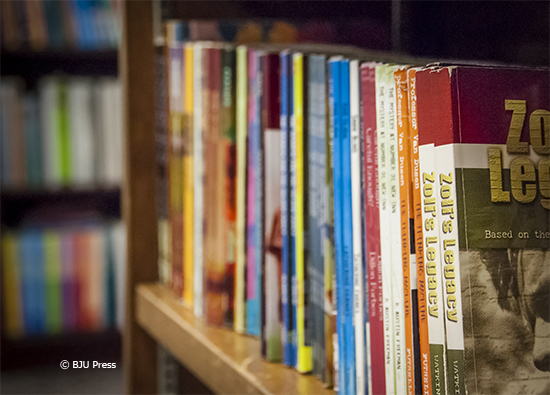
JourneyForth youth titles on a bookshelf

What’s the best way to keep your children learning during the summer? You guessed it─a nonstop parade of good books. With the strong pull of technology and outdoor fun, it may seem impossible for us to get our kids to sit still long enough to focus on a book. Regular library visits, a reward system, and some fun role-play after the summer reading session are just a few ways I recommend engaging your active brood in that most vital skill─reading.

Library Day

Scheduling a library day, either weekly or biweekly, sets aside a defined time for books and reading. If my kids have finished with their books, we return them on library day and get new ones. If a child is still enjoying a book, we renew it or bring it along to read while at the library. Make sure that the children know your family’s reading philosophy and guidelines; then set them free to wander among the shelves. They may come back with a random assortment of treasures─a pop-up book, a book about robots, a volume of fairy tales, and a historical novel─but if they’re excited about what they found, it’s a win-win.

Picture This!

Tiny preschoolers and early readers enjoy having plenty of pictures to go along with the story, like the beautiful illustrations in A King for Brass Cobweb. The images help their minds engage in the action, stimulating their imaginations. Eventually, the child’s imagination is mature enough to go off on its own, automatically creating the scenes and characters found in books without pictures. One way to help your little one’s imagination grow is to help him or her draw a new illustration for part of the story.

Chapter by Chapter

Once children pass the picture book phase, chapter books like Mice of the Herring Bone transition them to stories that last beyond a single reading session. They have a sense of accomplishment as each chapter ends, blended with anticipation for the next phase of the story. Read to them, and encourage them to read to you as well. Some parents of reluctant readers like to reward completion of chapters or whole books with a sticker, a treat, a trip to the playground, or a little time with the tablet or TV.

Girl Time

For moms of girls, starting a mother-daughter book club or girls’ reading time yields a closer bond and plenty of precious memories. My sister and I vividly recall curling up in our bunk bed each night, listening to my mother read Little Women by Louisa May Alcott. When I was older, I read the The Journeyman by Elizabeth Yates aloud to my mom while she cooked dinner every evening. To pique your daughter’s interest, find books that address current issues, such as Capturing Jasmina, with its thoughtful yet dramatic depiction of child labor and trafficking.

For the Guys

Boys typically love action-packed stories. They also appreciate strategy, cleverness, and a fight for survival. Wartime struggles or wild westerns are perfect for teenage boys. If elementary-aged boys have trouble settling down to read, promise to act out the story with them after they read a chapter or two. For example, after reading part of Brave the Wild Trail, you might set up a cowboy camp in the backyard.

With boys and girls alike, associating imaginative play and outdoor fun with a great book brings them that much closer to a lifelong love of reading.

• • • • •

Rebecca is a work-at-home freelance writer, novelist, wife, and the mom of two bright-eyed little ones. She credits her success in writing and her love of books to her own mom, who homeschooled three kids from pre-K through high school.

Filed Under: Successful Learning Tagged With: book club, chapter books, family, homeschool, language arts, reading, reluctant readers, summer reading

A Mother-Daughter Reading Club

May 7, 2015 by Guest Writer

Christy was not a reader. Neither was Karen, her mother. So they weren’t excited about the idea of a Homeschool Mother-Daughter Book Club—until they tried it. The dry run, which took place at their home, was so successful that the two decided to take part in several other club meetings!

The elements included in their reading club included four or five girls of similar ages, their mothers (age is not an issue here!), a book that they all agreed on, and a pair of hostesses with adventuresome spirits. Once the members had committed to reading a specific book by the day of the club meeting, the mother-daughter teams made their own reading schedules.

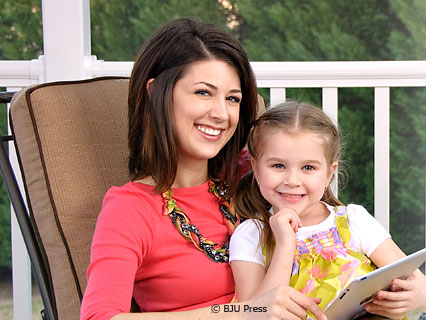
mother and daughter sitting on a porch reading from a tablet

What Mother Daughter Book Club Looked Like

Karen and Christy chose to set aside reading times through the week. Most days they tried to read on their own. But when Christy got bogged down, Karen would read to her. As the club meeting time drew closer, Christy often read aloud while Mom did the ironing. The other reading teams plugged along too, some making better progress than others, but everyone still keeping her eye on the goal—reading the whole book by the meeting time.

Activities to do at the club meeting evolved as Christy and her mom talked about the novel. They decided to start the meeting with a quiz to see who could match the characters with quotations from the book. Christy also searched for foods mentioned in the novel and then typed out the sections, including page numbers, where she found each one. She and Mom had to use some imagination, but those sections from the book determined what they served for refreshments at the meeting. Typed in a special font and printed on colored paper, the quotations made classy looking labels for the different foods. They brainstormed for other ideas and came up with a funny song from the novel’s time period and a game that families of that era used to play.

Excitement was high on the evening of that first Homeschool Mother-Daughter Book Club meeting. Even the few who hadn’t quite finished the book liked getting together, talking about the characters, and comparing favorite parts of the book. Of course, the snacks were a hit too. The meeting ended with another mother-daughter team claiming hostess duty for the next event.

If you’d like to start your own Homeschool Mother-Daughter Book Club, here’s a list of suggested titles to get you started.

Suggested Titles by Grade Level

Grades 2–3

  • Carolina’s Courage by Elizabeth Yates

Find adventure as Carolina Putnam’s family moves by covered wagon to the plains of Nebraska.

  • Jenny Wren by Dawn L. Watkins

Jenny, an orphan, learns to trust God and people who love her.

  • Roses on Baker Street by Eileen Berry

When Danae’s family goes on furlough, she has a difficult time “finding roses” in America.

  • Very Like a Star by Dawn Watkins

Rigel, the smallest bee in the hive, works to be dependable.

Grades 4–6

  • Captive Treasure by Milly Howard

Captured by a Cheyenne raiding party, Carrie learns to depend on God.

  • Mary Slessor: Missionary Mother by Terri B. Kelly

A biography of Mary Slessor a missionary to Africa

  • The Secret of the Golden Cowrie by Gloria Repp

Connie better understands her family as she solves the mystery of the golden cowrie shell.

  • Understood Betsy by Dorothy Canfield Fisher

Elizabeth Ann’s life is turned upside-down when she goes for an extended visit to the Putneys.

Grades 7–12

  • Ellanor’s Exchange by Linda Hayner

Miss Ellanor Fitzhugh finds herself in the middle of a dangerous political game as she enters society.

  • A Sparrow Alone by Alicia Petersen

An orphaned Jewish teenager, Mala meets Jesus of Nazareth, who changes her life.

• • • • •

Written by Gail Y.

Filed Under: Successful Learning Tagged With: family, homeschool, language arts, reading, summer reading

Write a Novel in a Month?!

November 3, 2014 by Guest Writer

Looking to inspire those budding novelists under your tutelage?

November is the perfect opportunity to get them to stretch those creative muscles. By introducing them to National Novel Writing Month, you just might see even timid and procrastinating writers start baby-stepping their way to literary greatness.

While the average novel is around 100,000 words, National Novel Writing Month (or NaNoWriMo as it is called) cuts that requirement in half, asking writers to produce a 50,000-word short novel in thirty days. By producing a shorter work, your writers are being trained to make it “meatier”—with no droning on about superfluous details or patience-testing fillers. This project calls for cutting to the chase, keeping things moving, and only letting in the important stuff. NaNoWriMo is all about getting a story on paper and worrying about fine-tuning it later.

Writers are also forced to map their strategy and organize their time. We all have other stuff to do, especially during the holiday season. Not many of us would choose to skip Thanksgiving dinner to write. So your writers will have to divide the number of words they need by the number of days they will actually be writing throughout November. A realistic goal would probably be a chapter a week.

Needless to say, having a firm grasp of the basics of fiction writing will go a long way toward your students’ success with this project. A review of plot, characterization, description,and so on before plunging forward will give added direction and confidence. Who knows where the journey will lead, once the first step is taken? NaNoWriMo mini-novel today, best-seller tomorrow.

NaNoWriMo Writing Project Tips

      1. Decide on the required number of words. Your students have other classes and projects, so you may need to make your minimum word count smaller than 50,000.
      2. Choose the start and end dates for the project. You can go with the traditional month of November time frame, or you can have it go shorter or longer if you need to. Whatever you decide, make sure it’s a reasonable period of time to meet your word-count requirements.
      3. Determine the grading criteria. Will you grade based on completion only or will you also check the quality of writing—sentence structure, spelling/grammar, and such? Be sure to let your students know this at the beginning of the project. (NaNoWriMo is typically focused on completing a rough draft.)
      4. Implement weekly (or other periodic) checks. If left alone, some of your students will fall behind in their writing. Help them out by giving occasional due dates and telling them what you will be looking for in those checks.

• • • • •

Rebecca is a work-at-home freelance writer, novelist, wife, and the mom of two bright-eyed little ones. She credits her success in writing and her love of books to her own mom, who homeschooled three kids from pre-K through high school.

Have you ever participated in NaNoWriMo or adapted it for your students? Tell us about your experience in a comment.

Filed Under: Successful Learning Tagged With: chapter, English, language arts, NaNoWriMo, novel, writing

  • « Go to Previous Page
  • Page 1
  • Interim pages omitted …
  • Page 27
  • Page 28
  • Page 29
  • Page 30
  • Go to Next Page »

Primary Sidebar

As parents, teachers, or former homeschool students, we are passionate about homeschooling from a biblical worldview. We hope these teaching tips, fun activities, and inspirational stories support you in teaching your children.

Email Signup

Sign up for our homeschool newsletter and receive select blog posts, discounts, and more right to your inbox!

Connect with Us!

                    Instagram     

Read Posts on Specific Subjects

Early Learning
Foreign Language
History
Language Arts
Math
Science

Footer

Disclaimer

The BJU Press blog publishes content by different writers for the purpose of relating to our varied readers. Views and opinions expressed by these writers do not necessarily state or reflect the views of BJU Press or its affiliates. The fact that a link is listed on this blog does not represent or imply that BJU Press endorses its site or contents from the standpoint of ethics, philosophy, theology, or scientific hypotheses. Links are posted on the basis of the information and/or services that the sites offer. If you have comments, suggestions, questions, or find that one of the links no longer works, please contact us.

Pages

  • About BJU Press
  • Conversation Guidelines
  • Terms of Use & Copyright

Archives

© 2026 · BJU Press Homeschool