• Skip to primary navigation
  • Skip to main content
  • Skip to primary sidebar
  • Skip to footer

BJU Press Blog

  • Home
  • Shop
    • Shaping Worldview
  • Simplified Homeschool
  • Successful Learning

Meredith

Hands-on Learning Involves the Whole Mind

September 17, 2015 by Meredith

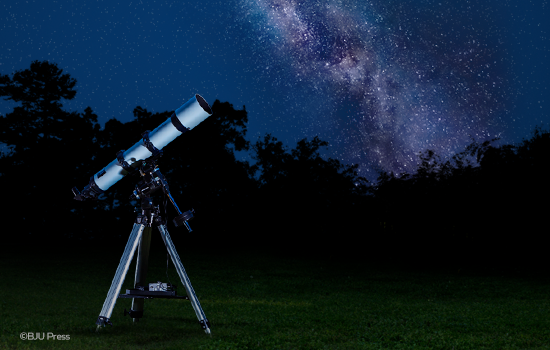
telescope outside in backyard on starry night

Family gatherings provide memorable educational experiences. When my dad’s side of the family gets together, we often spend time gazing up at the night sky. It can make for a long evening, but the whole experience is worth it!

Our family scientist sets up his telescope, someone checks the weather, and another person might pull up a star map of the night sky while the rest of us get chairs and blankets to make our hours outside in the cold night air more comfortable.

Once we’re all outside, the “lesson” gets started. We take turns viewing the surface of the moon, a nearby planet, or a passing meteor shower. Conversation centers on the local weather conditions, the size of a celestial object, the color something appears to be and why, or the speed of an object moving through our galaxy. Sometimes we just sit in awe of the greatness of our Creator.

By the end of our night together, we’ve all learned something new without even realizing it because our lesson has been conducted through hands-on learning.

Defining Hands-on Learning

Very simply, hands-on learning is involving one’s whole mind in understanding a concept or principle. The end goal is for the person to be actively involved in the learning process so that he or she can make connections and remember what has been taught. So how do you get that level of engagement for your child?

Involving the Whole Mind

There are two parts to facilitating hands-on learning. They also work hand-in-hand to make learning fun and memorable!

1. The Five Senses

God gave your child different senses that communicate to his brain and define memory. It’s through these experiences of hearing, seeing, smelling, touching, and tasting that he learns. These senses work together in that when something is experienced by more than one of the senses at the same time, that thing is more defined in his mind. There are times when his senses may be hindered (such as when he has a head cold). But maybe your child doesn’t have use of all five senses even when he’s healthy. God has given him everything he needs. If your child doesn’t have use of all five senses, he most likely has one or two heightened senses that compensate for any limitation.

2. Learning Styles

There’s more than one way to learn, but your child does have a predominant learning style that affects how he filters information. It’s important to understand what your child’s learning style is so that you can customize his lessons to fit his needs. Once you know how your child learns best, you can engage him in hands-on learning.

Applying Hands-on Learning

Hands-on learning involves including the different senses and your child’s primary learning styles as you teach and introduce concepts. Making connections in simple ways through different approaches (or senses) can be applied to all academic subjects. Here are some examples.

Science—constellations

  • View the night sky with your child. Sometimes the naked eye might work best when pointing out the whole constellation, but a pair of binoculars or a telescope could also be used. Your eyes will need about thirty minutes to adjust to the outside lighting.
  • Talk about the color, size, and distance of each star. Some constellations appear rather close together, but their stars are actually far apart.
  • Make a constellation finder or plot out the location of stars on a map of the night sky.

Heritage Studies—the American flag

  • Show your child a picture of the American flag. Point out the colors, stripes, and stars. Talk about the flag’s symbolism.
  • Listen to a recording of the national anthem and sing along. Be sure to point out the words that describe the American flag.
  • Draw, paint, or color a picture of the American flag. Discuss the proper way to display it.

Math—multiplication

  • Have an equation written out for your child to see. Another helpful visual might be to use a number chart.
  • Count out loud by a factor of the equation (2s, 3s, 4s, 5s, etc.) so that your child can hear the numbers.
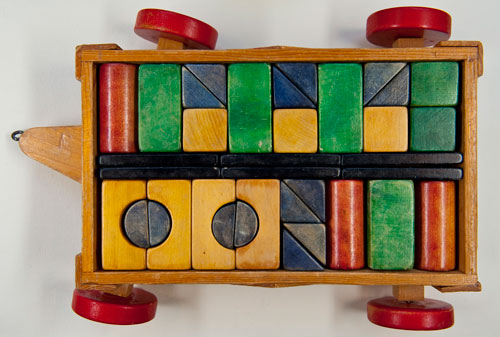
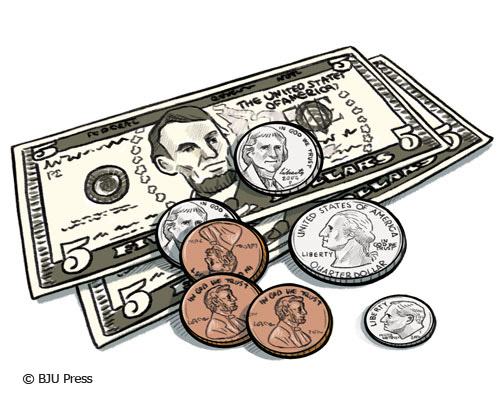
  • Use math manipulatives to make simple groupings. Blocks, coins, and edible treats work well and can add some excitement.

Each of these ideas is simple enough to do at home. They make the learning experience much more enjoyable and engaging for the whole family. That’s hands-on learning at its best!
Filed Under: Successful Learning Tagged With: hands-on learning, history, learning styles, math, science, senses

How We Build a Solid Foundation in Our Elementary English

September 3, 2015 by Meredith

building bricks
Building Bricks by Hannes Grobe/Wikimedia Commons/CC 3.0

Children love building tall towers. Their goals can be quite lofty (literally) and sometimes others are enlisted to complete the project. At some point, the simple tower always seems to come crashing down. For an unsuspecting child, his response to the fallen tower is often tears or outbursts of frustration. But a “demolished” tower made from building blocks can easily be rebuilt.

When it comes to your children’s education, the process of building their tower of success is more intricate and complex. It requires establishing a solid foundation before adding more levels of learning. Their future is at stake, and that’s not something to play around with.

One subject that affects your children’s educational success “tower” is their mastery of the English language. It plays a key role in preparing them to communicate clearly through their academic papers and projects now as well as for their meeting presentations in the future.

Did you know that all our BJU Press elementary English textbooks have been written with those goals in mind? Each textbook presents the parts of speech in a similar chapter order and includes alternating chapters on writing to provide immediate application. Every grade level also adds a more detailed explanation so that your children understand foundational concepts before their knowledge is increased.

  • Sentences are defined as expressing complete thoughts in English 2. This concept is then used to help students identify and properly use the parts of speech. By the time your child enters sixth grade, his grasp of the English language should allow him to form compound and complex sentences.
  • Nouns may be the easiest part of speech to understand in comparison to the others largely because they relate to what children are already familiar with—people, places, and things.
  • Verbs come next. They add another layer of understanding by showing action. Other types of verbs such as helping and linking also receive special attention in a separate chapter.
  • Pronouns are gradually introduced in English 2 to make sure students can distinguish between a noun and a pronoun. English 3 through English 6 include a separate chapter just for this part of speech.
  • Adjectives are explained in English 2 by relating them to the five senses—how things look, smell, sound, taste, and feel. Specific types of adjectives are included in later grades.
  • Adverbs come in English 3 where they are compared with adjectives. This pairing of the two parts of speech continues all the way through English 6.
  • Conjunctions appear in English 3. The role of this part of speech is outlined more thoroughly as your child learns to write compound sentences.
  • Prepositions are first presented in English 4 after the nouns and pronouns are clearly defined. They are connected with learning about phrases.

Children try to build their towers so that they reach the ceiling, and all of us at BJU Press want your children to reach their full potential when it comes to using the English language.

Check out the “Look Inside the Book” feature for our elementary English products.

Filed Under: Successful Learning Tagged With: elementary, English, grammar, homeschool, language arts, parts of speech, writing

Remember These Dates in September

August 27, 2015 by Meredith

artwork of United States currency

September 2

The US Department of the Treasury was instituted by an act of Congress on this date in 1789. This organization does a lot more than choosing Presidents’ portraits and printing them on our coins and currency. It primarily manages our country’s monetary resources. Take the family on a virtual field trip to the Bureau of Engraving and Printing with this Field Trip to the Money Factory video. It’s amazing to see the detail artists use when creating our currency.

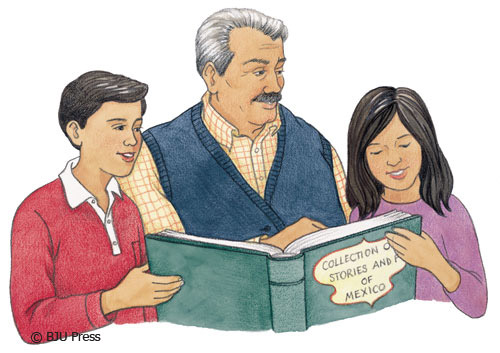
233825-023-reading; family reading stories of Mexico

September 8

Donate some books on International Literacy Day to a library, thrift store, or local prison. Literacy is an important key to an education worldwide. It is also a skill needed so that we can learn what God reveals about Himself to mankind in Scripture.

National September 11 Memorial South Pool
National September 11 Memorial South Pool by NormanB/Wikimedia Commons/CC-BY-SA-3.0

September 11

You and I have memories of what happened on 9/11, but your kids probably don’t. Remember why we should always observe Patriot Day and National Day of Service and Remembrance. You might want to have a discussion with your kids about this act of terrorism and how it impacts today’s world.

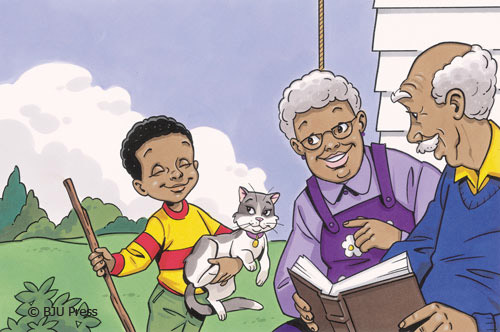
190330_03_08; illustration of grandparents with grandson who is holding a cat

September 13

Nana and Papa deserve a hug on Grandparents Day! Find ways to celebrate the influence of older generations on the lives of your kids. A homemade card, a phone call, or a quality visit can communicate that grandparents (or “grandfriends”) are loved. Spend time learning family history by completing this simple family tree.

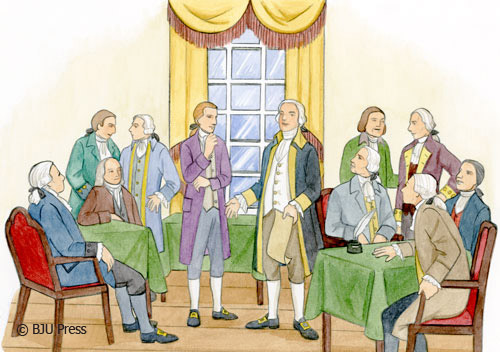
illustration of the founding fathers of America

September 17

“We the People” have the opportunity to observe Constitution Day. On this date 228 years ago, the United States Constitution was signed, creating a stable national government for our young nation. The key principles in this document reflect the need for government because of man’s sin nature and the tendency of that power to corrupt those who hold it. Use brief biographies of the delegates to the Constitutional Convention as examples to teach your kids how citizens can serve their country.

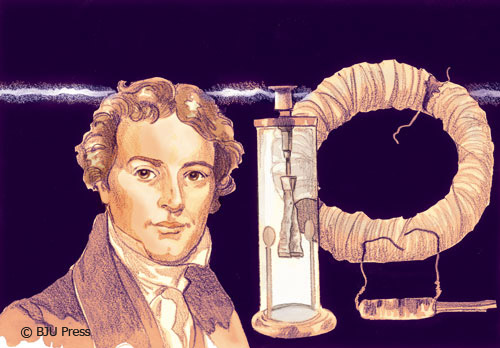
180141p333Faraday; illustration of Michael Faraday and his invention

September 22

Celebrate the birthday of Michael Faraday (1791–1867). A Christian physicist, Mr. Faraday is best known for his work in electromagnetism. He discovered that alternating magnetic fields can produce electrical currents, an essential principle in the development of our modern electric power industry. Children have also benefited from his experiments through a series of scientific lectures Faraday started just for them at the Royal Institution of London. Conduct an experiment with the kids and make an electromagnet.

Subscribe to the blog to receive the next event post about dates in October.

Filed Under: Successful Learning Tagged With: activities, family, history, homeschool, science, september, United States

Dates to Remember: August

July 30, 2015 by Meredith

Most people—especially students—would agree that learning should be fun and memorable. The question is how to meet that goal? One way is to include different events in your everyday life. With this idea in mind, I’ll be putting together a list of events to watch for each month. Here are some activity ideas for the month of August. Enjoy!

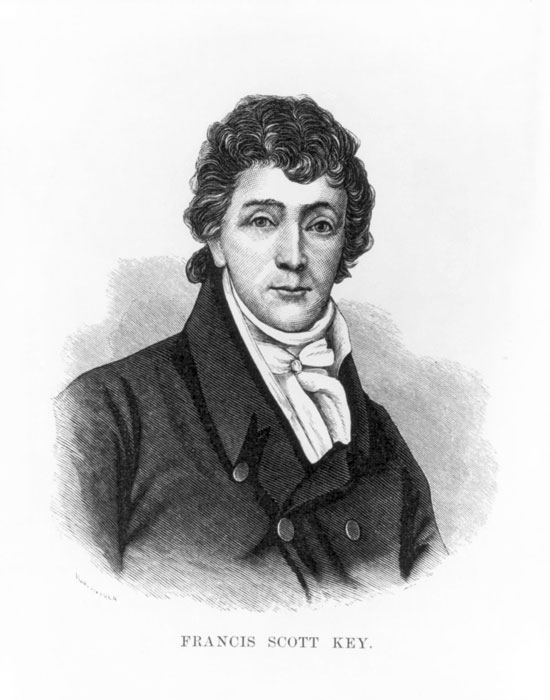
wood engraving of Francis Scott Key
Francis Scott Key/Library of Congress/Wikimedia Commons/Public Domain

August 1

Celebrate the birthday of Francis Scott Key (1779–1843) by singing our national anthem, “The Star-Spangled Banner.” He wrote the lyrics after seeing the American flag proudly wave as “the bombs [were] bursting in air” during an important battle in the War of 1812. Did you know that there are four stanzas to the song? Read all the lyrics online and then have everyone in the family pick a part to sing. If you need a soprano, let me know.

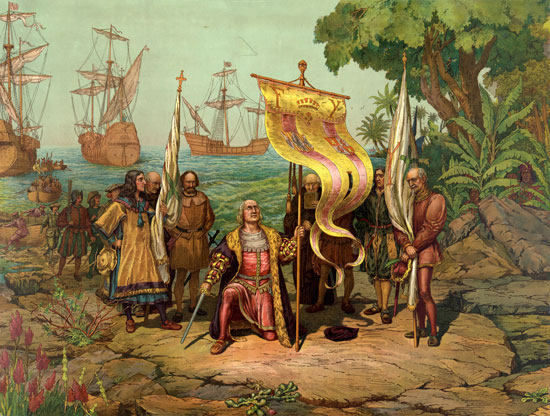
Christopher Columbus arrives in America
Christopher Columbus arrives in America by L. Prang & Co., Boston/Wikimedia Commons/Public Domain

August 3

“In 1492, Columbus sailed the ocean blue.” This little rhyme helps me every time to remember the year that Columbus came here. This day marks when Columbus left Spain on his first voyage to the New World. He and his crew would arrive in the Caribbean several months later. Columbus’s discovery changed the course of history despite the fact that he never made it to the North American continent. Don’t Celebrate Columbus Day? offers discussion points for how Christians should identify this explorer.

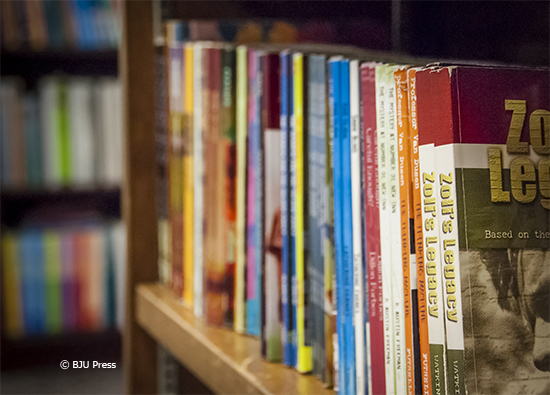
JourneyForth youth titles on a bookshelf

August 9

It’s officially National Book Lover’s Day. Taking a trip to the library or acting out a story are just two ideas mentioned in Summer Fun Meets Summer Reading. But if it’s a rainy day, spending time reading aloud together would be my vote.

August 13

Raise your left hand for International Lefthander’s Day! If you’re left-handed like I am, we can celebrate the fact that we’re always in our right minds. But sometimes our sanity doesn’t help when it comes to completing daily tasks in a dominantly right-handed world. We lefties often have our own “angle” for doing things. Get out some paper and pen to see what each left hand can do; it’ll be fun, ink smears and all.

poetry in letterpress type
© iStockphoto.com/marekuliasz

August 18

If you aren’t very poetic, don’t worry because this day is National Bad Poetry Day. Maybe your family would enjoy a bad poetry competition. Share a haiku, sonnet, “Roses are red / Violets are blue” rhyme, or autobiographical poem on the BJU Press Homeschool Facebook page.

Street in Pompeii overlooking the Vesuvius. Pompeii is an ancient Roman city died from the eruption of Mount Vesuvius in 79 AD.
© iStockphoto.com/scaliger

August 24

Get ready for an explosion of volcanic proportions! On this day in AD 79, Mount Vesuvius erupted, destroying Pompeii, Italy.  The city remained covered up for centuries until it was discovered and archaeologists unearthed it. Make Your Own Volcano to demonstrate the force behind a natural eruption.

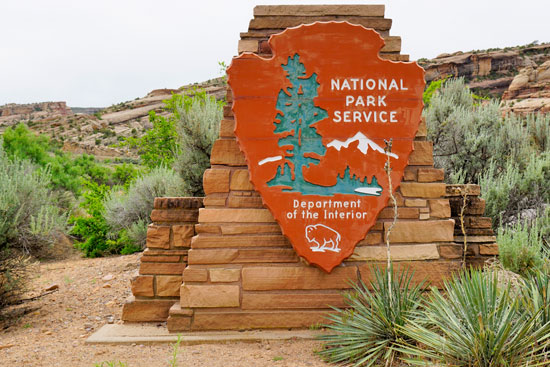
National Park Service
© iStockphoto.com/RiverNorthPhotography

August 25

Visit the great outdoors for the birthday of the National Park Service (NPS). Get tips on preparing for an enjoyable family hike and download a hiking trail journal.

Subscribe to the blog to receive my upcoming event post about events in September.

Filed Under: Successful Learning Tagged With: activities, August, English, family, history, homeschool, language arts, science

Grandmothers Can Be the Best Teachers

May 5, 2015 by Meredith

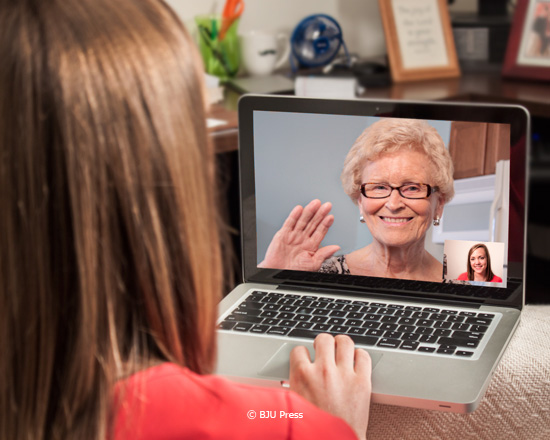
image of a grandmother and granddaughter video chatting.

With Mother’s Day just around the corner, I don’t want to overlook a very important group of women. They’re called grandmothers. And every child, no matter how old, knows just how grand they are. In fact, grandmothers often have the ability to encourage, inspire, motivate, and instruct children in a way that their own mothers cannot. At least, that’s the role my grandmothers have played in my own life, especially during the years I was homeschooled.

Distance often kept me from seeing my grandmothers face-to-face, but that didn’t stop them from taking an active part in my education. Here are some of the ways they got involved.

Language Arts

Grandma knew written words could make people feel special, and when I had to practice letter writing, she became my pen pal. Her round, flowing script wasn’t always easy to read, but what she wrote told me that I had sent her something important.

Another favorite past time Grandma shared with me as a child was reading. She would often send me books that Mom would incorporate into my lessons. Some of my favorite stories were the ones we read out loud while seated on her high, comfy bed. Uncle Wiggily was and still is quite the character.

Other ideas: Kids love solving puzzles, so try asking your grandkids to help you solve the newspaper’s daily crossword puzzle. Playing a simple game of hangman can reinforce proper spelling. Or start a reading club with just the two of you and later expand it to include their cousins and friends.

Math

Most of my time with both grandmothers was not spent in a kitchen. But in recent years, I’ve had the opportunity to collect their special family recipes and cookbooks. Cooking and baking can be great ways to practice math fractions, especially since the hard work results in a tasty treat.

Other ideas: Counting games are another way to teach sums and times tables. They can be done around the house or while running errands. If you work from home or own a business, your grandkids could play “office” by calculating orders. This teaching moment might work best with a mature young person.

History

Grammie told me stories she remembered about our family heritage. When I had a family genealogy project in elementary school, she sat on the couch for hours telling stories. This trip down memory lane for her gave me a deeper understanding of our family and broader perspective on the society in which she grew up.

Grandma took day trips with me and Mom to historical sites. It became “the thing to do” every time we visited. We often explored places on Georgia’s Antebellum Trail as well as the home sites of famous authors.

Other ideas: Share your perspective on a historical event that has taken place during your lifetime. Introduce your grandkids to people of character that you’re related to or who come from your area. This teaching moment can be done by viewing pictures or art, reading newspaper clippings, and visiting different places.

Science

Every morning Grammie would check her blood sugar and prepare her insulin. That daily routine of hers greatly fascinated me as a young child. It also helped me realize that science has many different facets—even if I didn’t want to learn them!

Other ideas: Demonstrate a plant’s life cycle by asking your grandkids to help you plant flowers or do yardwork. Spend time stargazing on a clear night, and share how our wonderful God made this planet a special place for us to live.

My grandmothers were my favorite teachers because they made ordinary events extraordinary and mundane tasks exciting. They helped me to gain perspective on the past, present, and future. But most importantly they simply invited me to be a part of their lives.

To all grandmothers: Thank you for choosing to invest in the next generation. May God bless you this Mother’s Day!

Filed Under: Successful Learning Tagged With: education, English, family, grandmothers, history, language arts, learning, math, Mother's Day, science

  • « Go to Previous Page
  • Page 1
  • Interim pages omitted …
  • Page 4
  • Page 5
  • Page 6
  • Page 7
  • Page 8
  • Go to Next Page »

Primary Sidebar

As parents, teachers, or former homeschool students, we are passionate about homeschooling from a biblical worldview. We hope these teaching tips, fun activities, and inspirational stories support you in teaching your children.

Email Signup

Sign up for our homeschool newsletter and receive select blog posts, discounts, and more right to your inbox!

Connect with Us!

                    Instagram     

Read Posts on Specific Subjects

Early Learning
Foreign Language
History
Language Arts
Math
Science

Footer

Disclaimer

The BJU Press blog publishes content by different writers for the purpose of relating to our varied readers. Views and opinions expressed by these writers do not necessarily state or reflect the views of BJU Press or its affiliates. The fact that a link is listed on this blog does not represent or imply that BJU Press endorses its site or contents from the standpoint of ethics, philosophy, theology, or scientific hypotheses. Links are posted on the basis of the information and/or services that the sites offer. If you have comments, suggestions, questions, or find that one of the links no longer works, please contact us.

Pages

  • About BJU Press
  • Conversation Guidelines
  • Terms of Use & Copyright

Archives

© 2026 · BJU Press Homeschool