• Skip to primary navigation
  • Skip to main content
  • Skip to primary sidebar
  • Skip to footer

BJU Press Blog

  • Home
  • Shop
    • Shaping Worldview
  • Simplified Homeschool
  • Successful Learning

Meredith

How to Make Sense of Math

March 3, 2016 by Meredith

Growing up, I didn’t like math. The subject became slightly more enjoyable for me when I got to “play” with the math manipulatives. Shapes were for making art mosaics. Paper money facilitated a pretend shopping spree to the bookstore. And Unifix cubes were (and still are!) just plain awesome for making patterns or sculptures.

You see, I was the homeschooled child who was unwilling to memorize number facts or equations unless I knew the reason why. Using manipulatives gave me a better understanding of the concepts being introduced in BJU Press Math. Instead of trying to calculate abstract numbers in my head, I was able to associate the equation with a concrete object.

A good math curriculum links concepts with tangible elements that visually demonstrate the problem.
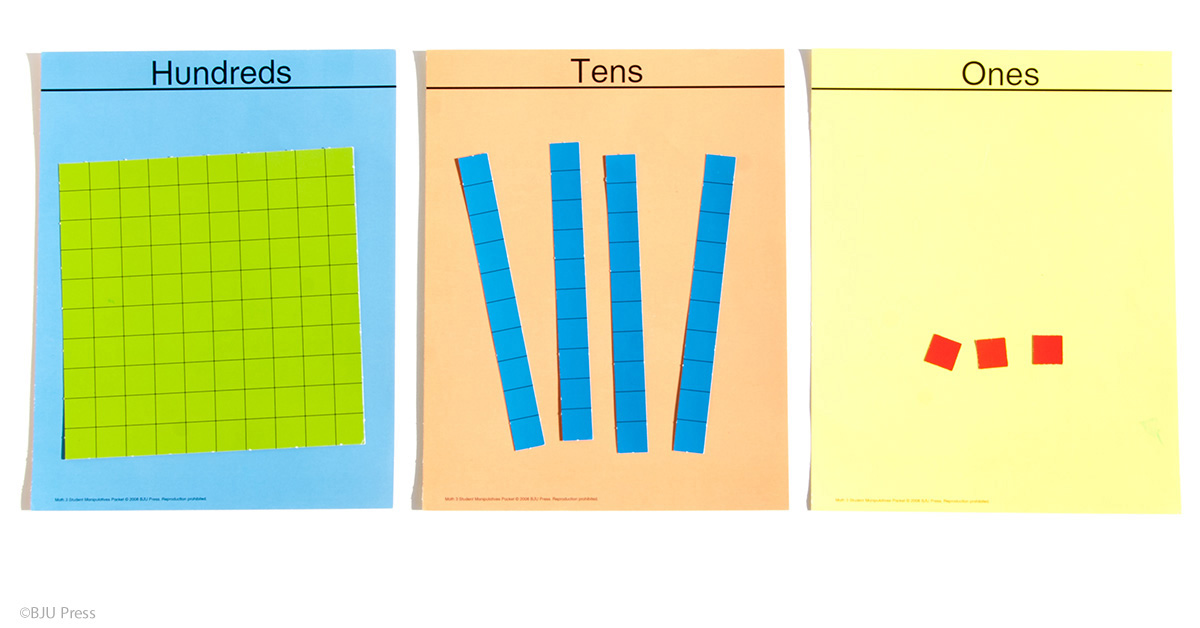
BJU Press Math manipulative place value mat

Place Value Mat

Take, for instance, the concept of renaming in subtraction. How can a child understand that adding ten to the next place value (such as the tens or ones place) allows her to accurately find the answer? Using a place value kit with ones, tens, and hundreds reinforces the mental calculation of an equation using the senses of sight, touch, and sound (if she counts aloud).

Build Understanding over Memory

Building number sense through this hands-on learning experience allows your child to understand how a problem is solved and not just memorize a formula to get an answer. Teaching what math feels and looks like by using manipulatives builds a true understanding of the subject. This fun math “playing” helped to develop my number sense without my even knowing it, and other children can benefit from this same experience.

The BJU Press Elementary Math curriculum introduces new concepts using manipulatives. Beginning with a tangible demonstration of math concepts builds your child’s understanding so that she can solve problems when those concepts are presented on paper. The goal is to develop her thinking skills so that she can be a lifelong problem solver because knowing how math applies to everyday life prepares your child for success in the role God has planned for her.

Today, math isn’t my favorite subject, but I do credit my ability to understand and solve real-life math equations in the kitchen, at the office, or at the store to my hands-on learning experiences as a child. Yes, math manipulatives are that foundational.

Which math manipulatives do your kids enjoy the most?
Save

Save

Save

Filed Under: Successful Learning Tagged With: curriculum, math, math manipulatives

Remember These Dates in February

January 28, 2016 by Meredith

Can I let you in on a little secret? February is one of my favorite months. Historically, culturally, scientifically, and personally—it holds events that have shaped the world and my own life. Plus, it’s during this month that those of us in the South sometimes get to experience a winter (or more likely icy) wonderland.

black-history-month-collage-2016

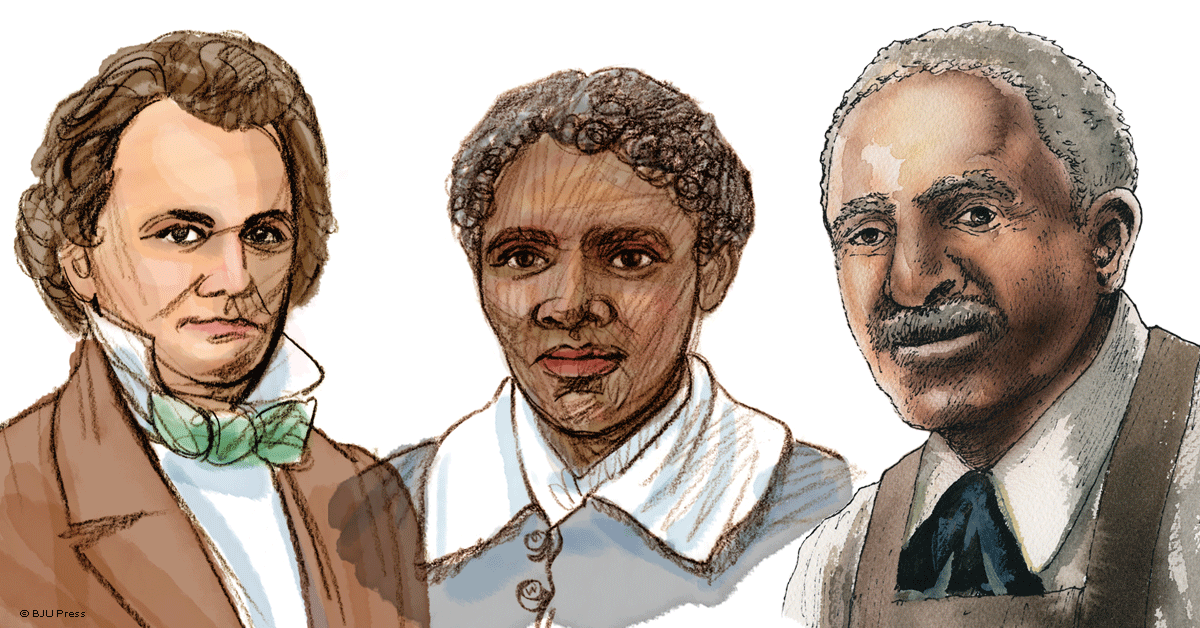
A month-long celebration we shouldn’t overlook is Black History Month. It honors the achievements of men and women who have influenced American society. God gives each of us unique circumstances through which we can choose to serve Him and others. Highlight the inventions, literary works, brave actions, and fight for justice of notable African Americans.

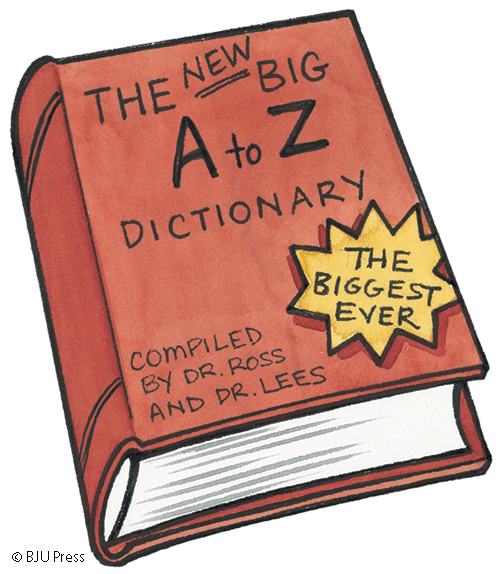
AtoZ-dictionary-2016

February 1

The first installment of the Oxford English Dictionary was printed on this date in 1884. This project initially began with the intent of recording English words used as early as 1150 AD through the mid-1800s. It took forty years to publish the complete volume. However, the English language continues to develop with new words and different pronunciations or meanings. Today anyone can access this dictionary of the English language online. Just for fun check out OED’s definition of homeschool.

inventions-collage-2016

February 11

Celebrate National Inventors’ Day by having everyone put on an imaginary “thinking cap” and spend time exploring what life would be like with (or without) certain inventions. Make this activity like a science fair project where your child can test his hypothesis. Studying these inventors who were born in February might provide some inspiration: Thomas Edison, George Ferris Jr., and Levi Strauss. It amazes me what power one person’s idea can have to change the world (within the limits given by our sovereign God). Each invention is a fulfillment of God’s command for humans to take dominion over the earth.

February 14

Don’t forget to make Valentine’s Day special! Last year, I had the opportunity to make homemade valentine crafts with some young friends. Find Scripture valentine printables in this blog post.

red and blue graphic that says Presidents DayFebruary 15

Honor the Chief Executive of the United States on President’s Day. The third Monday of February was selected for this holiday because it’s close to George Washington’s birthday. Any citizen born in our country could grow up to be president. But with leadership comes the responsibility to serve the people who have elected you. Gain insight into the beginnings of three presidents and see how their experiences prepared them for the biggest job in the world.

February 18

On this day in 1930, Pluto, which used to be considered the ninth planet in our solar system, was discovered by Clyde Tombaugh at the Lowell Observatory. Tombaugh found Pluto mostly by accident. Today, Pluto is considered a dwarf planet by the International Astronomical Union because it shares its orbit with another celestial object of similar size. If you’re ever near Flagstaff, Arizona, stop by and visit the Lowell Observatory. It’s a great field trip for aspiring astronomers as well as those who might be less than thrilled with science. I enjoyed my family’s visit several years ago!

Iwo-Jima-flag-raising-woodcut-2016

February 23

This was the date in 1945 during World War II when a famous picture of the Battle of Iwo Jima was taken by Associated Press photographer Joe Rosenthal. US forces continued this battle for weeks after the flag raisings. In fact, of the six men shown in the photo, only three survived the battle. This image also served as the model for the monument that honors all the Marines who have died in service to our nation. Seeing this memorial in Washington, DC, is a privilege I don’t think I’ll ever forget, especially now that I know the history of the Marine Corps War Memorial. Share the bravery of these young men with your kids.boy-writing-letter-at-desk-2016

February 29

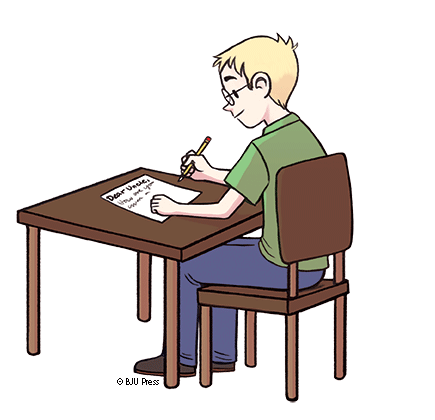
Leap Day is here! Wondering what to do? I’m pretty sure your kids will rejoice if you surprise them by making today a play day instead of a learning day. But if you decide to put something educational on the agenda, why not have them write letters to themselves to be opened on the next Leap Day? Be sure to seal the letters in envelopes so no one peeks before 2020!

Check back with us next month for more activities and events!

Filed Under: Successful Learning Tagged With: dictionary, flag raising, inventions, Iwo Jima, Lowell Observatory, OED, Pluto, presidents day, Valentine's Day

Remember These Dates in January

December 29, 2015 by Meredith

As we think toward a new year and all that it has to offer, take time to set some goals. Personally, I love the truth of Lamentations 3:22–23, which provides hope for each day! May you rejoice in new beginnings and take time to share your faith with others. And when you need something to recognize, remember these dates in January in your homeschooling.

dates in January

January 1

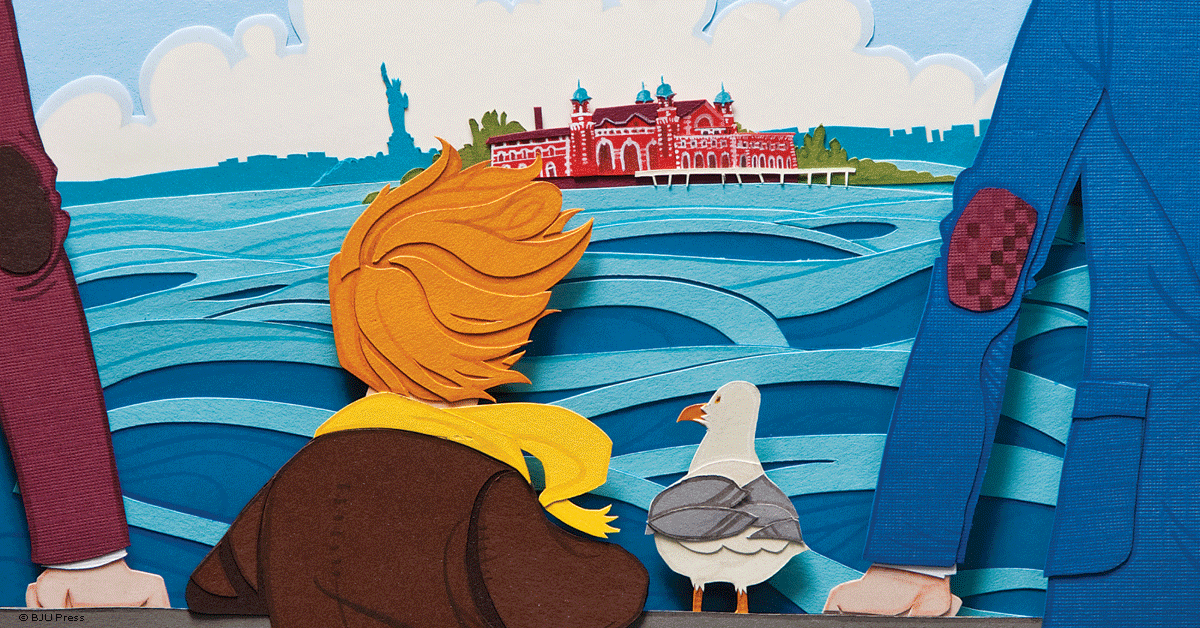
The Ellis Island federal immigration station opened in 1892. This small speck of land in New York Harbor holds such an important place in our nation’s history because Ellis Island is the place where many immigrants first began to experience what it truly means to be an American—the freedoms, joys, hopes, and sacrifices. My own family’s history has connections to Ellis Island since my great-grandfather was one of the millions of people who started their journey here. Link this island to your kids’ understanding of history by completing a passenger search for your own ancestors or view a timeline of Ellis Island.

WP-Jupiter-moons-12-2015

January 7

On this date in 1610, Galileo Galilei saw Jupiter’s largest moons. These four moons—Io, Europa, Callisto, and Ganymede—are called the Galilean moons. His discovery of these celestial bodies orbiting another planet convinced Galileo that Earth was not at the center of our universe. Make a telescope as a family and enjoy viewing the night sky. You’ll want to bundle up!

workers on an assembly line

January 14

Henry Ford introduced the assembly line on this day  in 1914, and processes have never been the same since! The principles of supply and demand probably played a major role in Mr. Ford’s implementation of the assembly line. He recognized that having someone become an expert at one task instead of trying to do many tasks would speed up the process of building a car. It would also make the cars more secure as workers focused on one part at a time. Henry Ford’s influence on the American auto industry was largely due to his success at increasing car production. Introduce your kids to the idea of an assembly line by setting one up as you make sandwiches or set the table for lunch!

photograph of Martin Luther King Jr.

January 15

Reverend Martin Luther King Jr. was born this day in 1929.  Dr. King used his gifts as a speaker to gather support for civil rights legislation. He advocated nonviolent resistance to bring political pressure on cities and on the nation to change unjust laws and practices. Dr. Martin Luther King Jr. is probably best known for organizing the march on Washington where he delivered his now-famous “I Have a Dream” speech. Sadly, despite Dr. King’s support of nonviolence, it was a violent time in our nation’s history. He himself was murdered on April 4, 1968. Talk to your kids about the dreams Dr. King mentioned in his speech. Have his dreams been achieved?

WP-raven-12-2015

January 19

Edgar Allan Poe entered the scene on this date in 1809. Poe stands as the first American writer to influence others in poetry, fiction, and literary criticism. The short story genre in particular took a clearer shape as he contributed the principles of brevity (short enough to read in one sitting) and unity (producing a single emotional effect). Poe wasn’t a Christian and believed that beauty and truth are mutually exclusive, so he failed to appreciate a literary work’s ability to teach. His stories may be entertaining, but to me they communicate the hopelessness we all experience apart from Christ. Still, Poe’s works offer a good example for aspiring writers in terms of stylistic elements worth imitating. Have your older kids read aloud his most famous poem, “The Raven,” and discuss the philosophy he suggests in the questions posed by the narrator. How would our beliefs as Christians be different from his?

Filed Under: Successful Learning Tagged With: events, family, history, homeschool, language arts, literature, science

How to Teach Early Writers Through Storytelling

December 22, 2015 by Meredith

painting of Little Red Riding Hood in the forest with the wolf

One day when I was a young child, my mom asked me to tell her the story of Little Red Riding Hood. She wrote down my version of this classic children’s story, and I still have the paper today. As I read it, I laugh at my simple expressions to describe the characters and candid explanations of what happened. Here’s one of my favorite lines from my version of “Little Red Riding Hood:” “Her and the boy got some rocks and then they put them all in the wolf and then they took him outside and they swinged him and falled him to the ground.”

It’s silly, I know.

Can you think of an imaginative tale that your child recently told you? These simple (and often silly) stories preschoolers share can not only make us laugh but also impact their writing skills. Developing good writing skills begins with the thought process.

Thinking It Through

Having meaningful conversations with your child is an important first step. Does your child communicate verbally with unfinished phrases or with complete thoughts? Increase her critical thinking and speaking skills by asking questions that require her not only to give you a literal answer but also to interpret situations or actions, to draw a conclusion, or to express her enjoyment.

Getting these kinds of responses from your child can help her learn to compose complete sentences in her head. As your child starts expressing herself in a logical way, it’s time to explain the connection between speaking and writing.

Putting It on Paper

Writing is just talk written down. This insight is best illustrated for a young child when you write down her stories on paper. Just as when Mom recorded my version of “Little Red Riding Hood” word for word, you aren’t so much concerned about your child’s grammar (that will come later) as you are with making sure her thoughts are whole and logical. Reading the story back to her is important for two reasons.

First, it allows your child to hear exactly what she has told you and to make any corrections. We can’t always trust ourselves “when something doesn’t sound right,” but revising by reading aloud is a good practice to develop. Most importantly, however, reading back the written story allows you to introduce another element of language arts—reading—to your child as you show how written stories can be shared with other people.

Practicing the Skills

As your child grows in her ability to form letters and write words, create stories together by starting sentences for her to finish. It’s a great way for her to finish complete thoughts with her own hand. This practice allows your child to see you model writing a sentence or phrase. When her handwriting skills are more advanced, ask your child to write a complete thought herself. If there’s enough space have her include a picture too! Encouraging creativity but providing the support your child needs to write out her own story is the key to her enjoyment of writing.

After your child begins first grade, introduce her to the five-step writing process. The two of you can take a few days to focus on these steps and complete a project together. Your modeling the progression of steps will help clarify them and give your child an example to follow. Even a simple activity like journaling to each other can give your child regular practice in writing (as well as reading) and allows her to see good writing modeled. Through your involvement, she will learn proper verb tenses, punctuation, spelling, and so much more! By the end of the year, your child will probably complete a writing project all on her own.

What tools are you using to intentionally guide your young child’s writing (and thinking) skills? You can find similar learning ideas like these in BJU Press’s Focus on Fives program as well as Writing & Grammar. Preparing your child to be a strong writer begins right now.

Filed Under: Successful Learning Tagged With: family, homeschool, language arts, oral reading, storytelling, writing, writing process

How One Homeschool Mom Managed Her Roles

December 17, 2015 by Meredith

WP-tablet-for-DL-12-2015Do you feel overwhelmed with the myriad of things that you have to do? That feeling comes over all of us now and then; but if you’re a busy homeschool parent, you’re probably more familiar with it than most.

Eujeana, a homeschool mom who shared her story on the Hip Homeschool Moms blog, explains how overwhelmed she felt and how a complete homeschool curriculum helped her educate her four kids effectively. She describes the sheer quantity of work that she faced.

There are about eight subjects in the elementary grades, so that was thirty-two subjects I was supposed to teach each day! Really? No way could I do that successfully and still have dinner on the table and other household management tasks accomplished. Using a complete curriculum with a distance learning program not only helped me to teach the subjects my children needed, but it also allowed me to give my children a rigorous education and still give them time to be children!

In her search for a solution, Eujeana discovered the concept of a complete homeschooling currirculum, specifically with BJU Press. With this program, she found that she could get involved with her kids’ education while also enjoying some flexibility. Lesson plans were already taken care of, so Eujeana could clean the house, create her shopping list, cook her family’s meals, and do all the other things a mom has to accomplish each day.

Homeschool moms like you have multiple full-time jobs. You wear the hats of mother, wife, household manager, and teacher for multiple grades. If you’re feeling too busy and overwhelmed, it’s possible to find relief through a comprehensive homeschool curriculum that does some of the paperwork, planning, and instruction for you. Look for a program that doesn’t take over your homeschool, but supports you with lesson plans, activity ideas, suggestions, and video lessons. Check out Eujeana’s full article, “Traditional, Boxed, Complete Homeschooling Curriculum and How It Worked for Us!”

Filed Under: Simplified Homeschool Tagged With: curriculum, distance learning, family, homeschool, mom

  • « Go to Previous Page
  • Page 1
  • Page 2
  • Page 3
  • Page 4
  • Page 5
  • Page 6
  • Interim pages omitted …
  • Page 8
  • Go to Next Page »

Primary Sidebar

As parents, teachers, or former homeschool students, we are passionate about homeschooling from a biblical worldview. We hope these teaching tips, fun activities, and inspirational stories support you in teaching your children.

Email Signup

Sign up for our homeschool newsletter and receive select blog posts, discounts, and more right to your inbox!

Connect with Us!

                    Instagram     

Read Posts on Specific Subjects

Early Learning
Foreign Language
History
Language Arts
Math
Science

Footer

Disclaimer

The BJU Press blog publishes content by different writers for the purpose of relating to our varied readers. Views and opinions expressed by these writers do not necessarily state or reflect the views of BJU Press or its affiliates. The fact that a link is listed on this blog does not represent or imply that BJU Press endorses its site or contents from the standpoint of ethics, philosophy, theology, or scientific hypotheses. Links are posted on the basis of the information and/or services that the sites offer. If you have comments, suggestions, questions, or find that one of the links no longer works, please contact us.

Pages

  • About BJU Press
  • Conversation Guidelines
  • Terms of Use & Copyright

Archives

© 2026 · BJU Press Homeschool