• Skip to primary navigation
  • Skip to main content
  • Skip to primary sidebar
  • Skip to footer

BJU Press Blog

  • Home
  • Shop
    • Shaping Worldview
  • Simplified Homeschool
  • Successful Learning

language arts

Summer Fun Meets Summer Reading

June 23, 2015 by Guest Writer

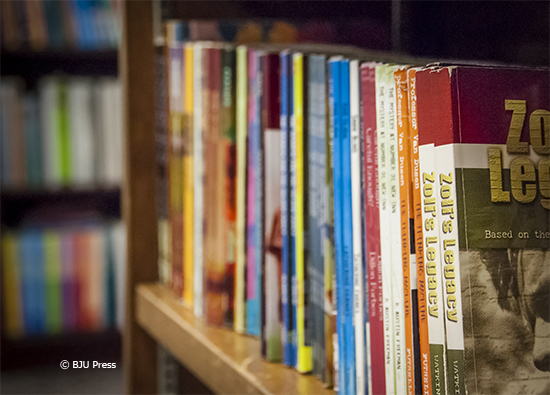
JourneyForth youth titles on a bookshelf

What’s the best way to keep your children learning during the summer? You guessed it─a nonstop parade of good books. With the strong pull of technology and outdoor fun, it may seem impossible for us to get our kids to sit still long enough to focus on a book. Regular library visits, a reward system, and some fun role-play after the summer reading session are just a few ways I recommend engaging your active brood in that most vital skill─reading.

Library Day

Scheduling a library day, either weekly or biweekly, sets aside a defined time for books and reading. If my kids have finished with their books, we return them on library day and get new ones. If a child is still enjoying a book, we renew it or bring it along to read while at the library. Make sure that the children know your family’s reading philosophy and guidelines; then set them free to wander among the shelves. They may come back with a random assortment of treasures─a pop-up book, a book about robots, a volume of fairy tales, and a historical novel─but if they’re excited about what they found, it’s a win-win.

Picture This!

Tiny preschoolers and early readers enjoy having plenty of pictures to go along with the story, like the beautiful illustrations in A King for Brass Cobweb. The images help their minds engage in the action, stimulating their imaginations. Eventually, the child’s imagination is mature enough to go off on its own, automatically creating the scenes and characters found in books without pictures. One way to help your little one’s imagination grow is to help him or her draw a new illustration for part of the story.

Chapter by Chapter

Once children pass the picture book phase, chapter books like Mice of the Herring Bone transition them to stories that last beyond a single reading session. They have a sense of accomplishment as each chapter ends, blended with anticipation for the next phase of the story. Read to them, and encourage them to read to you as well. Some parents of reluctant readers like to reward completion of chapters or whole books with a sticker, a treat, a trip to the playground, or a little time with the tablet or TV.

Girl Time

For moms of girls, starting a mother-daughter book club or girls’ reading time yields a closer bond and plenty of precious memories. My sister and I vividly recall curling up in our bunk bed each night, listening to my mother read Little Women by Louisa May Alcott. When I was older, I read the The Journeyman by Elizabeth Yates aloud to my mom while she cooked dinner every evening. To pique your daughter’s interest, find books that address current issues, such as Capturing Jasmina, with its thoughtful yet dramatic depiction of child labor and trafficking.

For the Guys

Boys typically love action-packed stories. They also appreciate strategy, cleverness, and a fight for survival. Wartime struggles or wild westerns are perfect for teenage boys. If elementary-aged boys have trouble settling down to read, promise to act out the story with them after they read a chapter or two. For example, after reading part of Brave the Wild Trail, you might set up a cowboy camp in the backyard.

With boys and girls alike, associating imaginative play and outdoor fun with a great book brings them that much closer to a lifelong love of reading.

• • • • •

Rebecca is a work-at-home freelance writer, novelist, wife, and the mom of two bright-eyed little ones. She credits her success in writing and her love of books to her own mom, who homeschooled three kids from pre-K through high school.
Filed Under: Successful Learning Tagged With: book club, chapter books, family, homeschool, language arts, reading, reluctant readers, summer reading

Benefits of Reading Aloud to Your Children

June 4, 2015 by BJU Press Writer

WP-JourneyForth-Books-3-2015

As I look back over my childhood, I’m thankful that many children’s books play an important role in my memories.

I can get quite nostalgic thinking about curling up next to Mom on the couch—back when my feet couldn’t reach the floor—and hearing her read aloud. She was (and still is) a great actress, and the books came alive in my mind over and over again.

Some of my favorite books are still easily available: Blueberries for Sal, The Snowy Day, The Story about Ping, Caps for Sale, Harry the Dirty Dog, Mike Mulligan and His Steam Shovel . . . and the list could go on.

What made those books so special? I think their beauty lies in their simplicity. And attaining simplicity is more difficult than it might seem!

What do I mean by this? I mean that a book for children must intrigue the child by hooking him into a situation to which he can relate. It may or may not be something he has actually experienced, but it should be something he can imagine happening to him.

What if my mom and I were picking blueberries and I saw a bear?

What if I woke up one morning and saw that the street outside was covered with beautiful, clean snow?

What if I were a little duck that got distracted and wandered away from the group . . . and then the boat left me?

Or it may be something completely outside his experience—but if he can enjoy the humor or sense the suspense, he will love it and want to hear it over and over.

Where did all those caps go while that man was sleeping?

What if the family doesn’t figure out that the dirty dog at their doorstep is actually their Harry?

What if Mike and Mary Anne can’t dig that basement in just one day?

Learning to love those read-alouds as a youngster contributed to my ongoing love of reading throughout life. As I grew older, I developed a similar love for The Borrowers, for My Friend Flicka, for Misty of Chincoteague. . . . Again, the list could go on and on!

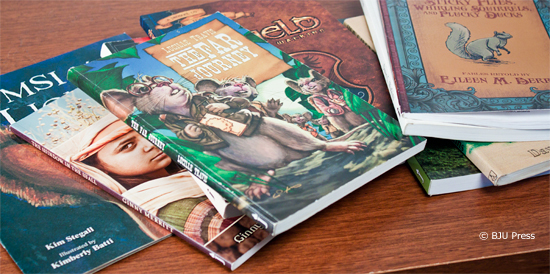
I encourage you to take some time out of your busy homeschooling schedule to read aloud to your children. Books that tell intriguing stories but also promote character traits that you’d like to encourage can have lifelong effects. And they don’t have to be just the “old” classics either! Include some new(er) classics in your repertoire—such as these titles:

  • The Far Journey
  • Mumsi Meets a Lion
  • Shield
  • Sticky Flies, Whirling Squirrels, and Plucky Ducks
  • The Window in the Wall

My kids have all grown past the age where they’re interested in those early read-aloud stories. But that’s OK. One of these days when the grandkids come along, they’ll be hearing about Harry and Ping and Mike and Mary Anne . . . and cap-stealing monkeys!

• • • • •

Steve serves as director of content development for BJU Press. He and his wife are the parents of five adult children. They homeschooled for over ten years.

Filed Under: Successful Learning Tagged With: books, children's books, classics, family, homeschool, language arts, read-aloud, reading, summer reading

A Mother-Daughter Reading Club

May 7, 2015 by Guest Writer

Christy was not a reader. Neither was Karen, her mother. So they weren’t excited about the idea of a Homeschool Mother-Daughter Book Club—until they tried it. The dry run, which took place at their home, was so successful that the two decided to take part in several other club meetings!

The elements included in their reading club included four or five girls of similar ages, their mothers (age is not an issue here!), a book that they all agreed on, and a pair of hostesses with adventuresome spirits. Once the members had committed to reading a specific book by the day of the club meeting, the mother-daughter teams made their own reading schedules.

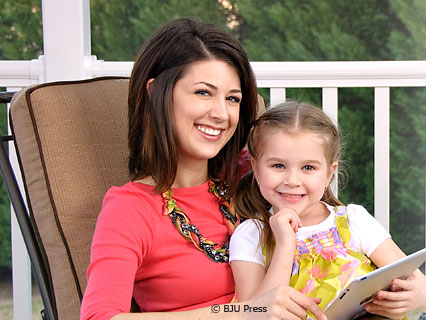
mother and daughter sitting on a porch reading from a tablet

What Mother Daughter Book Club Looked Like

Karen and Christy chose to set aside reading times through the week. Most days they tried to read on their own. But when Christy got bogged down, Karen would read to her. As the club meeting time drew closer, Christy often read aloud while Mom did the ironing. The other reading teams plugged along too, some making better progress than others, but everyone still keeping her eye on the goal—reading the whole book by the meeting time.

Activities to do at the club meeting evolved as Christy and her mom talked about the novel. They decided to start the meeting with a quiz to see who could match the characters with quotations from the book. Christy also searched for foods mentioned in the novel and then typed out the sections, including page numbers, where she found each one. She and Mom had to use some imagination, but those sections from the book determined what they served for refreshments at the meeting. Typed in a special font and printed on colored paper, the quotations made classy looking labels for the different foods. They brainstormed for other ideas and came up with a funny song from the novel’s time period and a game that families of that era used to play.

Excitement was high on the evening of that first Homeschool Mother-Daughter Book Club meeting. Even the few who hadn’t quite finished the book liked getting together, talking about the characters, and comparing favorite parts of the book. Of course, the snacks were a hit too. The meeting ended with another mother-daughter team claiming hostess duty for the next event.

If you’d like to start your own Homeschool Mother-Daughter Book Club, here’s a list of suggested titles to get you started.

Suggested Titles by Grade Level

Grades 2–3

  • Carolina’s Courage by Elizabeth Yates

Find adventure as Carolina Putnam’s family moves by covered wagon to the plains of Nebraska.

  • Jenny Wren by Dawn L. Watkins

Jenny, an orphan, learns to trust God and people who love her.

  • Roses on Baker Street by Eileen Berry

When Danae’s family goes on furlough, she has a difficult time “finding roses” in America.

  • Very Like a Star by Dawn Watkins

Rigel, the smallest bee in the hive, works to be dependable.

Grades 4–6

  • Captive Treasure by Milly Howard

Captured by a Cheyenne raiding party, Carrie learns to depend on God.

  • Mary Slessor: Missionary Mother by Terri B. Kelly

A biography of Mary Slessor a missionary to Africa

  • The Secret of the Golden Cowrie by Gloria Repp

Connie better understands her family as she solves the mystery of the golden cowrie shell.

  • Understood Betsy by Dorothy Canfield Fisher

Elizabeth Ann’s life is turned upside-down when she goes for an extended visit to the Putneys.

Grades 7–12

  • Ellanor’s Exchange by Linda Hayner

Miss Ellanor Fitzhugh finds herself in the middle of a dangerous political game as she enters society.

  • A Sparrow Alone by Alicia Petersen

An orphaned Jewish teenager, Mala meets Jesus of Nazareth, who changes her life.

• • • • •

Written by Gail Y.

Filed Under: Successful Learning Tagged With: family, homeschool, language arts, reading, summer reading

Grandmothers Can Be the Best Teachers

May 5, 2015 by Meredith

image of a grandmother and granddaughter video chatting.

With Mother’s Day just around the corner, I don’t want to overlook a very important group of women. They’re called grandmothers. And every child, no matter how old, knows just how grand they are. In fact, grandmothers often have the ability to encourage, inspire, motivate, and instruct children in a way that their own mothers cannot. At least, that’s the role my grandmothers have played in my own life, especially during the years I was homeschooled.

Distance often kept me from seeing my grandmothers face-to-face, but that didn’t stop them from taking an active part in my education. Here are some of the ways they got involved.

Language Arts

Grandma knew written words could make people feel special, and when I had to practice letter writing, she became my pen pal. Her round, flowing script wasn’t always easy to read, but what she wrote told me that I had sent her something important.

Another favorite past time Grandma shared with me as a child was reading. She would often send me books that Mom would incorporate into my lessons. Some of my favorite stories were the ones we read out loud while seated on her high, comfy bed. Uncle Wiggily was and still is quite the character.

Other ideas: Kids love solving puzzles, so try asking your grandkids to help you solve the newspaper’s daily crossword puzzle. Playing a simple game of hangman can reinforce proper spelling. Or start a reading club with just the two of you and later expand it to include their cousins and friends.

Math

Most of my time with both grandmothers was not spent in a kitchen. But in recent years, I’ve had the opportunity to collect their special family recipes and cookbooks. Cooking and baking can be great ways to practice math fractions, especially since the hard work results in a tasty treat.

Other ideas: Counting games are another way to teach sums and times tables. They can be done around the house or while running errands. If you work from home or own a business, your grandkids could play “office” by calculating orders. This teaching moment might work best with a mature young person.

History

Grammie told me stories she remembered about our family heritage. When I had a family genealogy project in elementary school, she sat on the couch for hours telling stories. This trip down memory lane for her gave me a deeper understanding of our family and broader perspective on the society in which she grew up.

Grandma took day trips with me and Mom to historical sites. It became “the thing to do” every time we visited. We often explored places on Georgia’s Antebellum Trail as well as the home sites of famous authors.

Other ideas: Share your perspective on a historical event that has taken place during your lifetime. Introduce your grandkids to people of character that you’re related to or who come from your area. This teaching moment can be done by viewing pictures or art, reading newspaper clippings, and visiting different places.

Science

Every morning Grammie would check her blood sugar and prepare her insulin. That daily routine of hers greatly fascinated me as a young child. It also helped me realize that science has many different facets—even if I didn’t want to learn them!

Other ideas: Demonstrate a plant’s life cycle by asking your grandkids to help you plant flowers or do yardwork. Spend time stargazing on a clear night, and share how our wonderful God made this planet a special place for us to live.

My grandmothers were my favorite teachers because they made ordinary events extraordinary and mundane tasks exciting. They helped me to gain perspective on the past, present, and future. But most importantly they simply invited me to be a part of their lives.

To all grandmothers: Thank you for choosing to invest in the next generation. May God bless you this Mother’s Day!

Filed Under: Successful Learning Tagged With: education, English, family, grandmothers, history, language arts, learning, math, Mother's Day, science

Poets You Can Count On

April 14, 2015 by Cosette

To be a poet—at least a very good poet—one has to be more than a little “disturbed,” or so it would seem. After all, the biographies of a number of the greats form a litany of dysfunction and instability. But such is not the case when you consider the lives of Victorian poets Robert and Elizabeth Browning.

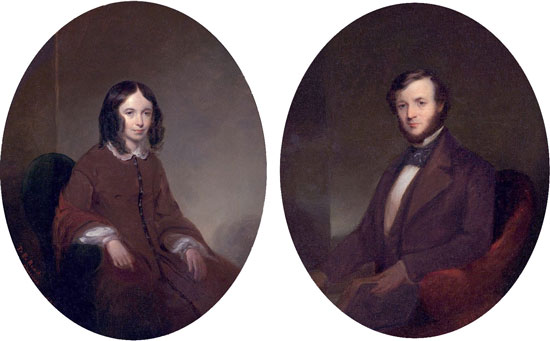
two painted portraits of Victorian poets Elizabeth Barrett Browning and Robert Browning
Portraits of Elizabeth Barrett Browning and Robert Browning by Thomas Buchanan Read/Wikimedia Commons/Public Domain

The casual observer might be skeptical at first given that the couple eloped because Elizabeth could not secure the blessing of her father. Robert was six years younger than Elizabeth and had significantly less income. Though sickly and frail, Elizabeth upstaged Robert in poetic reputation. Robert revealed to her that he had fallen in love with her poems before he met and fell in love with her! Nevertheless, their romance proved to be the stuff of legend—as enduring as their pens prophesied it would be. Despite their love’s somewhat difficult beginnings, the couples’ biography bears the scrutiny of curious students much better than the scandal-ridden profiles of a number of their contemporaries.

The Brownings’ poems reflect the Victorian culture into which they were born, with its strict adherence to poetic forms and strong emphasis on morality. However, their verse is not without innovation and drama. In the following two lines, from her most famous poem, “Sonnet 43” in Sonnets from the Portuguese, Elizabeth exalts both purity and faithfulness in love:

I love thee purely, . . .
I shall but love thee better after death.

Robert embraces a fortitude and optimism towards death that resonates with the Christian’s confident hope in a future resurrection. He ends his poem “Epilogue” with this conviction:

Never doubted clouds would break,
Never dreamed, though right were worsted,
wrong would triumph,
Held we fall to rise, are baffled to fight better,
Sleep to wake.

With passion and skill equal to that of their more controversial counterparts, the writings of the Brownings are a worthy and relatively wholesome consideration for young students of poetry. They bring a God-fearing steadfastness to the checkered world of troubled artists. A welcome and colorful study, they and their works await discovery by a new generation.

Links for further study:

  • Biography and Poems of Elizabeth Barrett Browning
  • “How Do I Love Thee?” (Sonnet 43) and other selected poems
  • Biography of Robert Browning
  • Browning’s Shorter Poems from Project Gutenberg

Filed Under: Successful Learning Tagged With: language arts

  • « Go to Previous Page
  • Page 1
  • Interim pages omitted …
  • Page 7
  • Page 8
  • Page 9
  • Page 10
  • Page 11
  • Go to Next Page »

Primary Sidebar

As parents, teachers, or former homeschool students, we are passionate about homeschooling from a biblical worldview. We hope these teaching tips, fun activities, and inspirational stories support you in teaching your children.

Email Signup

Sign up for our homeschool newsletter and receive select blog posts, discounts, and more right to your inbox!

Connect with Us!

                    Instagram     

Read Posts on Specific Subjects

Early Learning
Foreign Language
History
Language Arts
Math
Science

Footer

Disclaimer

The BJU Press blog publishes content by different writers for the purpose of relating to our varied readers. Views and opinions expressed by these writers do not necessarily state or reflect the views of BJU Press or its affiliates. The fact that a link is listed on this blog does not represent or imply that BJU Press endorses its site or contents from the standpoint of ethics, philosophy, theology, or scientific hypotheses. Links are posted on the basis of the information and/or services that the sites offer. If you have comments, suggestions, questions, or find that one of the links no longer works, please contact us.

Pages

  • About BJU Press
  • Conversation Guidelines
  • Terms of Use & Copyright

Archives

© 2026 · BJU Press Homeschool