• Skip to primary navigation
  • Skip to main content
  • Skip to primary sidebar
  • Skip to footer

BJU Press Blog

  • Home
  • Shop
    • Shaping Worldview
  • Simplified Homeschool
  • Successful Learning

Simplified Homeschool

You know that organization is the key to a smooth homeschool day. We share tips on planning your time and lessons as well as advice from other homeschool parents. There are also highlights from our Distance Learning daily video-lesson program, which is designed to simplify your homeschool.

Start here:

  • 3 Organizational Tips for Your Homeschool Space
  • How Do You Plan Your Homeschool Year?
  • What Am I Accomplishing with My Time?

Q & A: Can I use the same textbook for multiple ages?

February 23, 2016 by Justin

“Will a fifth-grade science textbook work for my third and first grader as well? The younger kids might not understand it all, but all of the information is there. Won’t it just challenge them more?”

Every now and then I hear a question like this from someone wondering whether it’s a good idea to use one textbook for multiple children. The answer is generally no, and here’s why: Grade levels are important because spiraling is important.

Have you heard about spiraling?

It’s important that concepts are repeated in each grade. Imagine taking a pen and a sheet of paper and drawing a series of expanding circles without lifting your pen. The first circle is small, but each circle after that gets a little bigger and covers more of the paper. The paper represents a concept from a textbook, and each circle is a new layer of knowledge about that concept. The layers build on each other, and eventually the entire concept is explored.

My father grew up in the 1960’s with very little exposure to technology. Only in the past few years has he started using a computer. Recently he got a smartphone. He asks me for a lot of help, generally when he is trying to learn something that is new to him. I often I have to repeat procedures to him. He’s catching on, but slowly. I never had these growing pains because technology has surrounded me from a very early age. When smartphones came out, I caught on quickly. They were like second nature to me.

Good homeschool textbooks seek to make academic concepts second nature by surrounding your children with them at an early age and repeating and building on them in each grade. This process leads to a fundamental understanding that isn’t easily forgotten. When new ideas come along, students are able to quickly and easily absorb them because the foundation is already there, and they don’t have to learn everything all at once. This educational approach is called spiraling.

ch10telescopeCMYK-2016

How does spiraling actually work?

Elementary science curriculum from BJU Press teaches weather in grades 1, 3, and 5.

In Science 1, weather is explored in a very basic sense. Children are introduced to concepts such as temperature, wind, clouds, rain, and snow, using colorful illustrations of sailboats and flags to present information in a way a six-year-old can easily relate to. They’re not only reading about the idea; they’re seeing it in a way that is meaningful to them with nothing else to clutter the experience.

Science 3 approaches weather in a more complex way. It introduces ways of measuring weather, using thermometers, rain gauges, weather vanes, and more. Again, illustrations are used, but there is much more text that digs deeper into the concept.

Science 5 explores layers of the atmosphere, weather fronts, weather forecasting, and more. Because the basics were introduced in earlier grades, a child is ready to dive into these advanced concepts instead of having to start at the beginning.

By the time children reach Science 5, they have built a foundation of science knowledge and understanding that even more complex ideas can be built on.

Have other questions about homeschool curriculum that you would like us to address in a future post? Let us know in the comments.

Filed Under: Simplified Homeschool Tagged With: ages, grades, multiple, science, spiraled, spiraling, textbook

Staying on Course with Homeschool Organization

February 18, 2016 by Guest Writer

tall ship sailing
© iStockphoto.com/FransDekkers

As a homeschooled kid, I thought very little about the amount of time and effort it took for my mom to keep everything organized. The concept only entered my mind when a new “school cabinet” showed up in our basement or living room and quickly filled up with books and DVDs, or when I saw my mom sitting at the kitchen table, notebooks and schedules spread out before her, like a ship’s captain consulting star charts and plotting the right course. With three kids, it took organization and discipline to make it all happen. Add in another child, or two or three, and homeschooling really gets complicated. Here are a few tips for keeping your little sailors and their school gear shipshape.

Color-Coding

Organization begins with stowing the books and supplies. My mom used a large cabinet with double doors and plenty of shelves, but other moms use cubbies, bookcases, drawers, and wall shelving─anything that can conveniently store a lot of books and educational items. To make it easier on you and on the kids, assign each child his or her own shelves, drawers, bins, or cubbies. Try color-coding these storage spaces using labels and the children’s names. The colors allow little ones to identify their supplies, even if they cannot read yet.

Of course, you also have those miscellaneous supplies that everyone needs─markers, pens, pencils, glue, scissors, sticky notes, folders, and paper. A separate cabinet or desk, placed in an accessible spot in your homeschool area, can house these “common use” items.

Using a Planner

Many textbooks and teacher’s manuals come with planning aids, and detailed homeschool planners are available online or in notebook format, depending on the style that is most comfortable for you. Before the beginning of the school year, set aside ample time to go through the kids’ upcoming subjects and create a plan for each child and every school day, right through the first month. It’s time-consuming but much less stressful in the long run. Of course, you can adjust your planner as you go along until you have a schedule that works well for everyone.

Teaching in Shifts

Homeschooling a mix of grade levels offers the potential for teaching independence and self-motivation. Using homeschool DVDs or online videos helps immensely here since you can start the older children with their lessons and check in on them periodically to keep them on track and to answer questions. Meanwhile, you can focus on the little ones who don’t yet have the attention span or the learning skills to take on a lesson by themselves. For instance, phonics and reading with a couple of the younger children happens while middle grade and high school kids are busy watching their video lessons.

If you don’t use video lessons, simply set up the older children in a quiet corner of the house with their reading assignments and then talk through the concepts with them later while the little ones are busy with worksheets. Work together on fun activities such as art, music, math manipulatives, and science experiments.

Knowing When to Flex

Many moms find that allowing their kids a little flexibility within the overall schedule works wonders. For example, Sophia may want to do math first and then science, rather than vice versa. If it doesn’t negatively affect anyone else’s schooling, Mom allows her that freedom to switch the two subjects. That way, Sophia is more engaged and interested in her work, and she gains a sense of responsibility for making that decision. It doesn’t change her assignment─ it just improves her mindset.

Motivating the Sailors─and the Captain

Whining and wailing about the workload happens in every homeschool, but it can really sap a mom’s patience. With a combination of consequences and rewards,  you can keep wayward sailors in line and stay the course for a successful homeschool day. If Jackson doesn’t finish his math assignment within the allotted time, it goes on the “evening work” pile and the schedule moves on to the next assignment. Jackson─and his siblings─quickly realize that the more they accomplish during school hours, the less they have to do later.

At the end of the day, not every pencil may find its way back to the pencil holder, and a couple of history pages may still be unread. What matters is the moments when their eyes light up with understanding, when they randomly give you a squeeze around the neck and a kiss on the cheek, or when they bend over a younger sibling and say, “Let me teach you what I learned.”

• • • • •

Rebecca is a work-at-home freelance writer, novelist, wife, and the mom of two bright-eyed little ones. She credits her success in writing and her love of books to her own mom, who homeschooled three kids from pre-K through high school.

Filed Under: Simplified Homeschool Tagged With: homeschool, homeschool DVDs, homeschool planners, organization, teacher's manuals, textbooks

The View from the Deep End: A Former Teacher’s Homeschool Story

February 16, 2016 by Karin

When you first wade into the homeschooling waters, it’s a good idea to scoop up all the knowledge and ideas you can from moms who have been doing this a long time. I’m still in the shallows of homeschooling, but my friend Brenda is an expert at swimming the deeper waters. As a former public school teacher, Brenda’s blend of knowledge and talents made her the ideal teacher for her own two boys.

After graduating with a degree in education, Brenda became a second-grade teacher at a public school. She stayed in that role for six years—until she decided to make the switch to stay-at-home mom and homeschool teacher.

“My homeschooling day was very much like a public school day,” she recalled when I asked her about her first foray into homeschooling. “I made a classroom space in my home. I purchased a work table and two desks.” She also set up a bookshelf to hold teacher’s manuals, learning aids, and manipulative materials.

As a former classroom teacher, she immediately saw the advantages that homeschooling provides. She could go slowly with difficult topics or move quickly if her child was grasping the concepts easily. “Teaching your own children allows you to move through the curriculum at your child’s pace rather than waiting for twenty-eight other children to finish each subject!” Brenda told me.

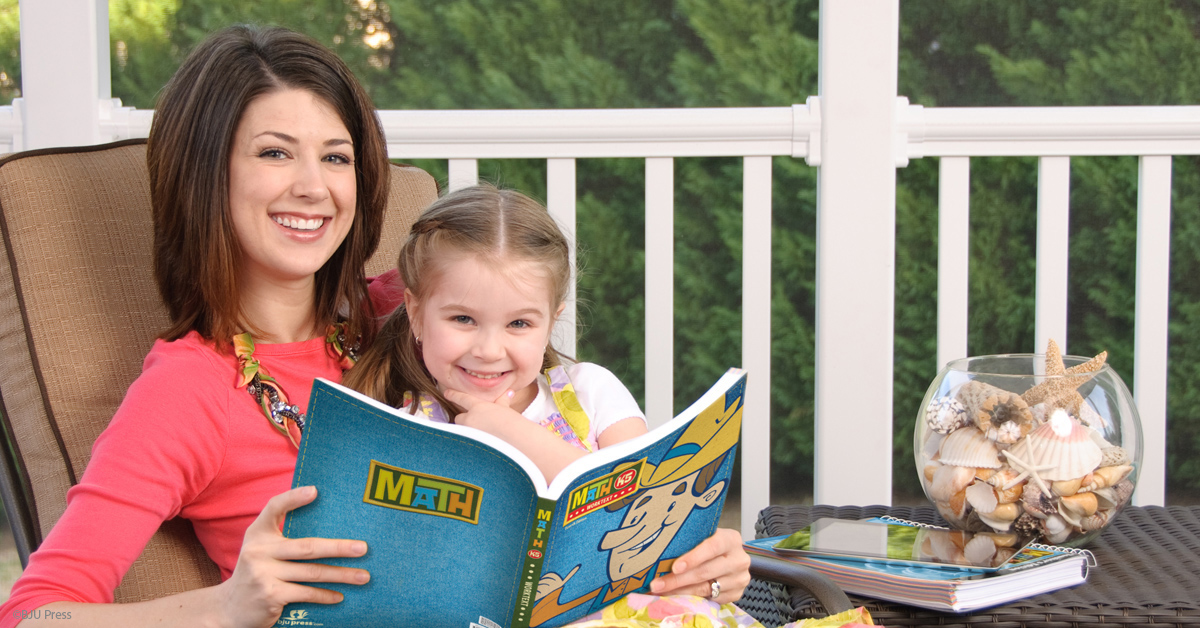
homeschool mom and daughter sitting outside doing BJU Press K5 Math

One concern that I have as a homeschool mom is what to do when children start testing their boundaries during school hours. How can I maintain both the role of mom and the role of teacher? “Most children would think twice about acting out in front of another authority figure, such as a teacher,” Brenda admitted. “But acting out with Mom would occur whether a child were homeschooled or not.” She told me that a homeschooling mom needs to commit to being patient and consistent, especially in her role as teacher.

One big question on my mind is curriculum choice, so I asked Brenda about her selection. “I have stayed with BJU Press because I have confidence in their scope and sequence,” she said. “The lessons are so well put together, and I know my children will be taught all the important concepts.”

Brenda’s older son has just entered a private Christian school. I asked Brenda why she made the decision not to homeschool past the elementary grades. “I like the fact that the Christian school provides so much opportunity with music, theater, and sports teams as well as classroom group activities,” Brenda answered. “My son had been in the BJU Press curriculum since kindergarten, and he was very prepared to enter the Christian school setting.”

Not everyone who dives into homeschooling is a former teacher. However, each parent brings a unique set of gifts and skills to the home classroom. In Brenda’s words, “The most beneficial thing is getting to spend quality time with my children, knowing exactly what they’re learning, and being able to give them a biblical worldview.”

Filed Under: Simplified Homeschool Tagged With: Gaps, getting started homeschooling, organization

Hope for a Weary Soul

January 26, 2016 by Megan

young girl standing in front of a wall with magenta hand paintI knew we were in trouble as soon as I heard the sound of my daughter’s cackling laughter. When the sound of a toilet flushing joined the laughter only a heartbeat later, I was already heading toward the stairs.
My daughter stopped laughing. She called out a worried “Mommy?” that was hardly reassuring.

I felt the crisis, quite literally, when I reached the top of the stairs. There was water on the floor. This was bad.

When I finally reached the scene, I discovered that my daughter had unrolled almost an entire roll of toilet paper and had tried to stuff it all down the toilet. Now the toilet was seriously clogged and was overflowing.

The moments that followed my discovery were not some of my best moments. I frantically called my husband, and he told me how to turn off the water. That solved the most pressing crisis. But I was still left with a mess. And a very frustrated heart.

By the time my husband got home that evening, I was in tears. I felt like a failure, not an “I-tried-a-new-recipe-that-was-a-complete-flop” failure, but a soul-crippling one. I was battle-weary, not just from dealing with three disobedient children all day, but from dealing with my own sinful self. I felt like I had utterly failed at being a mom. I was sure that I was ruining my children.

This sense of failure hung on for a while. I would feel it when I would go to church and see other moms who, from my perspective, had it all together, or when I checked my social media accounts. Clean houses. Fancy dinners. Little girls in gorgeous, hand-sewn dresses. Fun (and educational!) activities. These perfect pictures of seemingly perfect families taunted me and cultivated my own sense of personal failure.

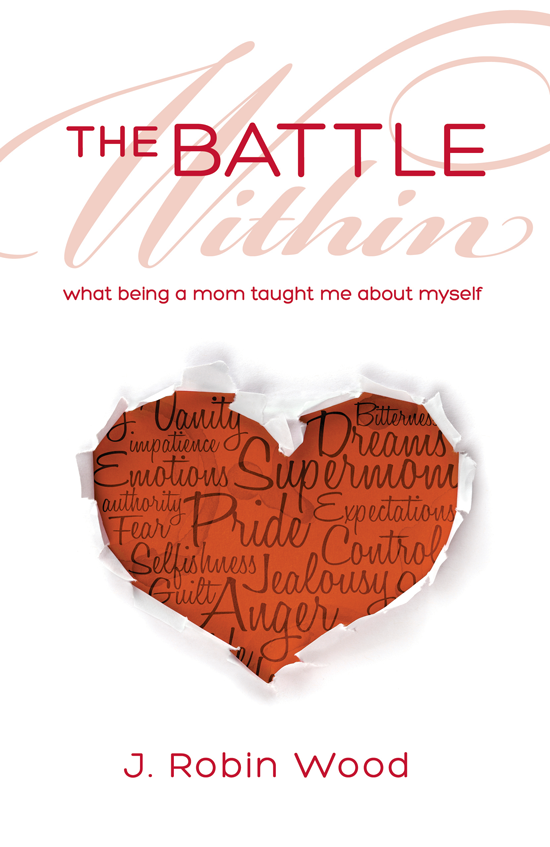
book cover of The Battle Within: What Being a Mom Taught Me About Myself by J. Robin Wood

Then one Sunday morning, my husband gave me a copy of The Battle Within by J. Robin Wood. That book, which I started reading the very day I received it, was a balm to my battered soul. Even the forward gave me hope:

I am convinced that marriage and motherhood are extreme tests of selflessness. I am also convinced that every woman who enters these responsibilities is unprepared for the extent of the selflessness required, and that we are doomed to failure if we try to succeed by ourselves, in our own strength, and for our own happiness.

But there is hope—an absolute rock-solid truth. God is faithful. His Word is powerful and full of comfort. And there is help—real, credible support.

We have everything we need in His Word and through His Spirit to defeat the power of our personal Supermom—our own sinful nature.1

The author of this book is very much like me. She’s a stay-at-home mom with three very young children and is trying to juggle the responsibilities of helping her husband, training her children, and ministering to the body of Christ. She’s very transparent—from the very first pages of the book you realize that she’s not perfect in any of those roles. That transparency was very comforting to me. It helped me realize that I’m not alone in my struggle.

But the author didn’t just offer me a sympathetic “I’ve been there too” pat on the back. She pointed me to the only path to victory, God’s Word. She urged me to look deep within my own soul, to confess my sin, and to renew my mind continually with Scripture.

For as long as I am in this world, I’m going to struggle against my sinful flesh. I’m going to fail. But, as Robin Wood reminds readers, I’m not alone. God truly has given me all that I need—not just to defeat sin but to encourage my heart day by day.

If you or someone you know is struggling under the weight of responsibility that motherhood brings, I would strongly recommend The Battle Within.

1 J. Robin Wood, The Battle Within: What Being a Mom Taught Me About Myself (Greenville, SC: JourneyForth, 2015), i–ii.

Filed Under: JourneyForth, Simplified Homeschool Tagged With: encouragement, faith, family, hope, motherhood, transparency

How a New Homeschooler Balances Her Day

January 14, 2016 by Megan

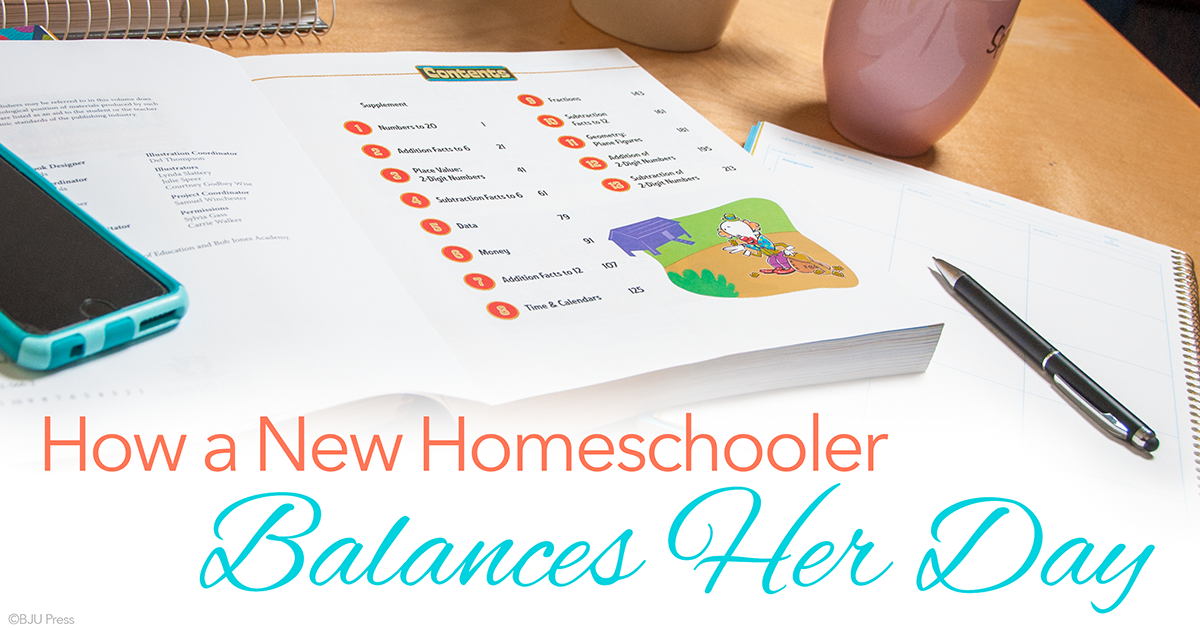
I’ve been thinking a lot lately about homeschooling. Even though I was homeschooled for more than six years, the idea of setting up my own homeschool is overwhelming. There’s a lot to think about and plan for. One topic that I’ve been researching lately is scheduling. One of the big benefits of homeschooling is flexibility in scheduling the school year. When you start and when you finish is completely up to you. But individual days need to be scheduled too if learning objectives are going to be met.

WP-NewHomeschoolBalance-1-2016

How much flexibility should there be in the daily schedule?

One homeschool blog that I have found particularly helpful is No Twiddle Twaddle. The author, Bethany, is a new homeschool mom, and she has blogged a bit about their first year. Her post “10 Tips for Starting to Homeschool” is a great resource for those of us who are just getting started. I love the way that she adds personal illustrations to each of her big ideas.

In this post, Bethany mentions the need to balance flexibility with structure. First, she urges her readers to take advantage of the flexibility that homeschooling offers.

I found that allowing ourselves the enjoyment of the flexibility of homeschooling helped keep our family from getting stressed out by the demands of homeschooling, and it also helps my kids stay on task when they know that working hard means extra time for play.

But she also mentions the need for structure.

It’s great to be flexible, but I quickly found out that starting lessons late in the morning meant school stretched forever into the afternoon (which is no fun when the sun is shining outside). I also found that I needed to be firm about making my kid use the bathroom and eat a decent breakfast before school. You really can’t learn anything when you are taking a gazillion breaks.

Bethany’s comments about the need for balance in every homeschool was a good reminder for me. I doubt my homeschool will lack structure—I tend to be a very task-oriented person. But I need to remember to pay attention to the needs of my students. Nurturing my children is infinitely more important than crossing off the items on the daily to-do list. I imagine that schoolwork may need to be put off some days in order to deal with heart issues. And that’s OK.

The tips in Bethany’s article gave me a lot to think about. Among other things, she talks about the need for a support structure, for organization, and for being teachable and learning from our own mistakes. If you are like me and are thinking about taking the plunge into homeschooling, I recommend that you read the rest of her excellent blog post.

Filed Under: Simplified Homeschool Tagged With: getting started homeschooling, homeschool, schedules, tips

  • « Go to Previous Page
  • Page 1
  • Interim pages omitted …
  • Page 23
  • Page 24
  • Page 25
  • Page 26
  • Page 27
  • Interim pages omitted …
  • Page 32
  • Go to Next Page »

Primary Sidebar

As parents, teachers, or former homeschool students, we are passionate about homeschooling from a biblical worldview. We hope these teaching tips, fun activities, and inspirational stories support you in teaching your children.

Email Signup

Sign up for our homeschool newsletter and receive select blog posts, discounts, and more right to your inbox!

Connect with Us!

                    Instagram     

Read Posts on Specific Subjects

Early Learning
Foreign Language
History
Language Arts
Math
Science

Footer

Disclaimer

The BJU Press blog publishes content by different writers for the purpose of relating to our varied readers. Views and opinions expressed by these writers do not necessarily state or reflect the views of BJU Press or its affiliates. The fact that a link is listed on this blog does not represent or imply that BJU Press endorses its site or contents from the standpoint of ethics, philosophy, theology, or scientific hypotheses. Links are posted on the basis of the information and/or services that the sites offer. If you have comments, suggestions, questions, or find that one of the links no longer works, please contact us.

Pages

  • About BJU Press
  • Conversation Guidelines
  • Terms of Use & Copyright

Archives

© 2026 · BJU Press Homeschool