• Skip to primary navigation
  • Skip to main content
  • Skip to primary sidebar
  • Skip to footer

BJU Press Blog

  • Home
  • Shop
    • Shaping Worldview
  • Simplified Homeschool
  • Successful Learning

English

3 Tips for Being Research Paper Ready

September 6, 2016 by Jenna

The research paper is the most difficult part of any English course—almost universally dreaded because of its difficulty. Most students would rather avoid it. As much as students dislike doing the research paper, teaching and grading it is just as intimidating. While I was working on my MA in English, I was also a graduate assistant in the English department, and teaching and grading research papers became my life for the better part of two years. Even with my background in English, I had some of the same fears you probably have as you teach your child about research papers. I worried that I wouldn’t be able to answer my students’ questions or that I’d teach them wrong. Here are three helpful things I learned from teaching college freshmen about writing research papers.

Research-Papers

1. Assign More Than One Paper

I always handed out questionnaires on the first day of class to ask my students what kind of writing they had already done. I liked the interesting responses to that question. Some regularly wrote on a blog while others had written short stories. Almost invariably, the students who had written research papers regularly in high school (once a year or more) did better on their first college-level research paper than those who hadn’t.

You can encourage your child to develop his thinking by assigning different kinds of research papers, and not just for English class. You can assign comparison-contrast papers in history, persuasive papers in economics, argumentative papers in biology, analytical papers in literature, or simple informative papers in science.

2. Let Them Write About What They Like

Because of English department requirements, every student in my class had to write about energy technology and policy, a topic even I found boring. It was hard to watch students who were beginners at writing struggle with both a lack of understanding about writing as well as a strong dislike for the subject. If it’s your child’s first research paper, there’s no reason he shouldn’t have some fun with it.

Letting your children pick their own topics or assigning them a topic they’re interested in can be a great way to encourage them to write, especially if they’re reluctant or young writers. Though writers also need to know how to write well about topics they aren’t interested in, it’s better and more encouraging for them if their first experience with a high school assignment is on a topic they enjoy.

3. Require Them to Make a Good Outline

An outline can make or break a research paper. If the writer has a solid outline, he’ll have a solid paper. But if his outline is faulty, the paper won’t work. With fifty or more students, I couldn’t make sure every student had a good outline before I let them start writing the paper, but in a homeschool situation you can.

An outline is like a snapshot of the entire paper. It should quickly show the reader the overall structure of the paper—the argument, the reasons for that argument, and the support for those reasons. For most papers, the main points should all explain why the thesis is true. The subpoints all explain how the corresponding main point is true. If the outline includes sub-subpoints, these should show research that supports the how’s of the subpoints. If the main points and subpoints follow these guidelines, then the thought behind the paper should be accurate, and your child can focus on style and grammar as he presents the content. If the outline doesn’t follow these guidelines, then he isn’t ready to write yet. So make sure your child has the outlining done properly before writing the rest of the paper.

BJU Press’s Writing & Grammar courses put a strong emphasis on research paper writing and suggest many options for research papers in different subject areas.

Do you have any other research paper writing topics you’d like me to cover or tips you’d like to share? Feel free to comment with your questions or suggestions!

Filed Under: Successful Learning Tagged With: English, homeschool, language arts, Research Papers, writing

Applying Bloom’s Taxonomy

July 19, 2016 by Jenna

As parents, you want your children to succeed in every area of their lives, and as home educators, you especially want them to succeed in their education. A good way to visualize your goals for your children’s education is through Bloom’s Taxonomy.

Dr. Benjamin Bloom described what he believed to be the best processes for learning. Though he identified three different domains of learning, we are all most familiar with the cognitive domain, which has to do with knowledge. Understanding his process can help you to fulfill the greater purpose of education—education isn’t just about learning facts and figures. It’s a process that continuously encourages children to grow and think critically. Bloom’s Taxonomy verbalizes the process so that we can aim for a clearer goal in education—being able to master concepts so that we can create new concepts.

BloomsTax

Since the best way to learn something is to see it applied, here is Bloom’s process for the cognitive domain applied to learning nouns. (To keep it simple, we’ll focus on the rule that says nouns are words that refer to persons, places, or things.)

Level One: Knowledge/Remembering

The first level focuses on facts and recall. It has nothing to do with what the rule means, implies, or suggests, it only focuses on knowing what the rule says. Our rule is “Nouns are words that refer to persons, places, or things.”

Level Two: Comprehension/Understanding

Comprehension is one step beyond simple recall. It demonstrates that you not only know what the rule is word for word, but you also know what those words mean and you can put the rule into your own words to express the same concept. To understand the “noun as a person, place, or thing” rule, you have to know what a person is, what a place is, and so on. Putting the rule into my own words, I might say that people’s names, specific or general locations, and objects are all referred to with nouns.

Level Three: Application/Applying

Level three begins the step where textbook practices and exercises come in. Here we take our rule and look at something it applies to. That means taking a sample sentence and finding and labeling all the nouns, based on our rule.

For example, “Amy (person) wanted to move back to Scotland (place), but her aunt (person) didn’t have enough money (thing) for the move (thing).”

Level Four: Analysis/Analyzing

Analysis involves grouping information into parts. It’s a question-and-answer process that might reveal more about our rule. When I put the rule into my own words, I changed things to objects because I felt that objects better indicates the tangible nature of things. But in the example sentence above, I’ve identified the second move as a noun, not a verb. Why is it a noun and not a verb? When we’re analyzing, we need to recognize that some words may be nouns that refer to persons, places, or things even if they’re normally used as a different part of speech. While we’re thinking about it, we may notice that we can classify the second move as a noun, but not the first one.

Levels Five and Six: Evaluation/Evaluating and Synthesis/Creating

Originally, Bloom’s fifth level was synthesis, and his sixth was evaluation. But a group of Bloom’s former students revised his original process in the 1990s. Under the revised version, evaluating became the fifth level, and creating became the sixth.

Evaluating involves forming conclusions based on new and prior knowledge and being able to support those conclusions with that knowledge. Here we should be able to look at what we discovered in our analysis step and explain why we came to the conclusion that we did. In the example sentence above, we know that move usually indicates an action, like when we first used it, but the second time it’s used in a tangible, countable sense, not as an action.

This step marks the end of most forms of practice exercises in many textbooks. But we need to go on to the last level in order to demonstrate true knowledge of a concept.

The final level in the revised model is creating. Creating requires using all prior knowledge in order to form a new idea. It goes beyond reading a new sentence and identifying parts of speech. Creation demonstrating a mastery of nouns would require putting together a new sentence using nouns intentionally and naturally. For example, in the following sentence, I’ve created a situation to use words that would often act as verbs (love and traveling) as nouns in order to show what we discovered about things.

“Amy decided that her love of traveling was more important to her than her love of Scotland.”

Bloom’s process relies on a widening foundation of knowledge, and BJU Press homeschool curriculum references the Revised Bloom’s Taxonomy, especially in math and vocabulary. Check out our math curriculum or vocabulary curriculum to see how we do it!

Filed Under: Successful Learning Tagged With: Bloom's taxonomy, English, language arts, teaching, writing

How to Teach Paragraph Writing

April 7, 2016 by Meredith

We could argue that paragraph writing is a lost art these days. Technology has brought about huge changes in written communication. From status updates to texting, messages seem to be reduced down to abbreviations. But does that approach work for your child’s writing project? Maybe, maybe not.

The answer mainly depends on how well the entire written message communicates. And that’s where the need for paragraph writing comes in.

Paragraph Definition

A paragraph sets up a logical flow of complete thoughts (sentences) about a particular topic. The first sentence gives the main idea of the paragraph. All of the other sentences tell more about that idea.

In its simplest form, the paragraph includes these three elements: a topic, a topic sentence, and supporting sentences. Once your child has developed some writing and grammar skills, the sentences should also add interest and explain details.

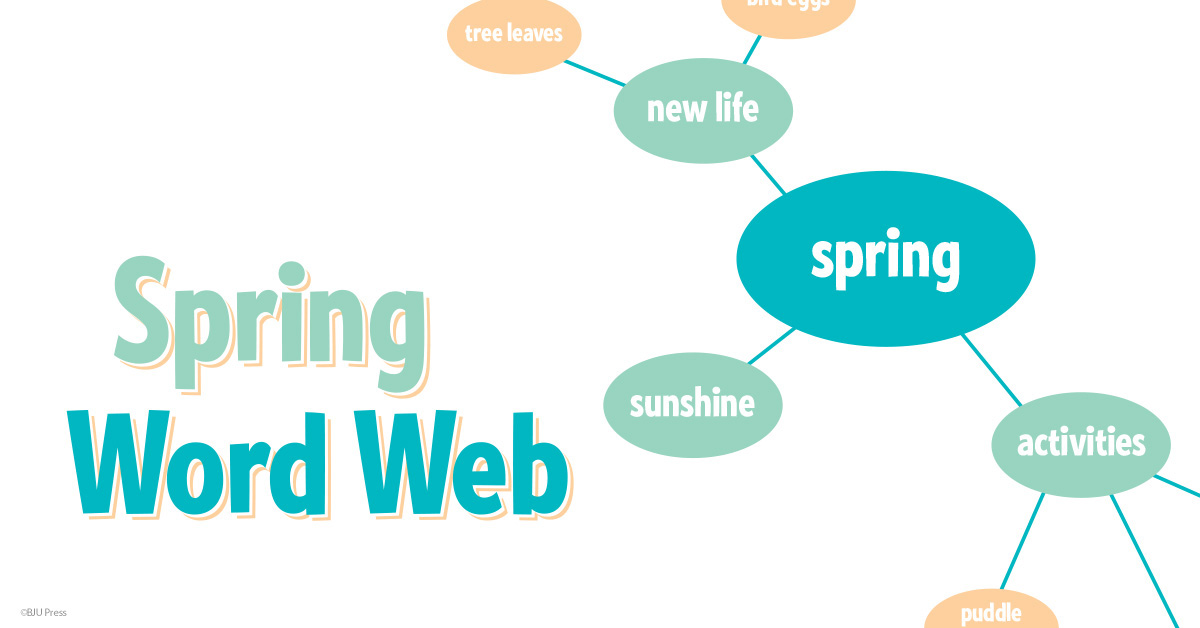
Spring Word Web

Writing Activity

You can introduce the paragraph to your child by using this word web about spring. The first sentence of the paragraph should introduce the season and the main idea of the paragraph. Each sentence that follows adds more detail about the main idea.

Mastering paragraph writing looks different for each child, but this foundational skill is typically developed in second or third grade. By communicating his thought process through the use of multiple paragraphs, your child can launch into more advanced types of writing such as personal narratives, book reports, letters, and creative stories.

Extra Practice

If your child needs some extra practice in paragraph writing, assign a paragraph topic and then discuss these questions with him when he’s finished writing.

  • What’s the main idea?
  • Does the first sentence give that idea?
  • Are the sentences written in an order that makes sense?
  • What else would you like to know?

Having him read the paragraph aloud will allow him to see if the flow of thoughts is logical. Repeating these steps strengthens your child’s understanding and application of the paragraph so that he can then be guided through the five-step writing process.

Writing projects should be simple at first and then build on your child’s skills as he matures in his writing and grammar. Teaching writing this way helps prepare him for the next writing project without overwhelming him. It also places emphasis on communicating a clear written message, which is something Christians need to be good at doing.

Find writing exercises and projects like the ones suggested above in BJU Press elementary English.

Save

Filed Under: Successful Learning Tagged With: English, language arts, paragraph, word web, writing, writing process

Remember These Dates in November

October 29, 2015 by Meredith

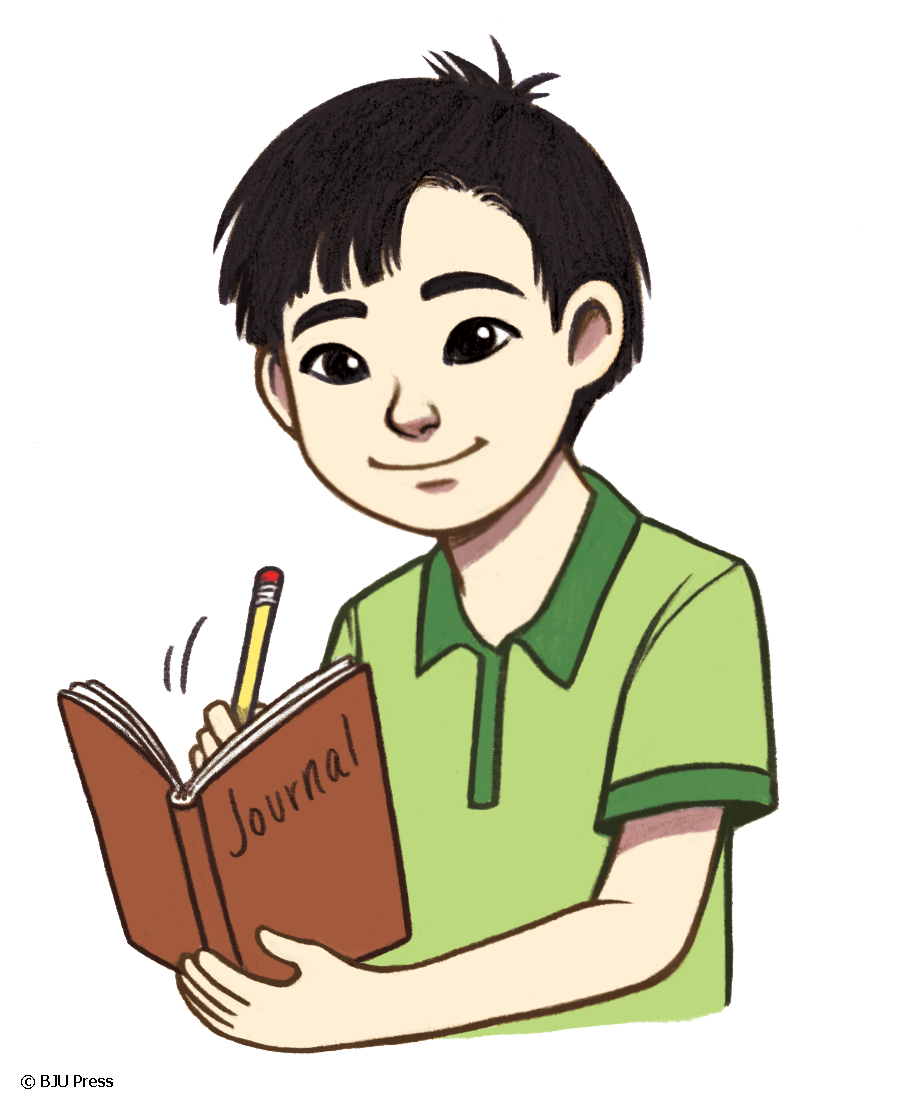
illustration of a boy writing in a journalNovember has a heritage of blessings! There are many things to celebrate. It must be the start of the holiday season! I hope you and your family take time to reflect on God’s blessings this year (James 1:17). To start us off, here are two month-long observances worth mentioning.

Native American Heritage Month

Remember this month’s observance by highlighting the notable Native Americans mentioned throughout this post. You can also find more teaching resources from the National Archives.

NaNoWriMo

What’s the most words you’ve ever written? Try cranking out fifty thousand words this month, just for fun. Yes, fun! This special challenge does my literary-loving heart some good, although I must confess writing that many words (and having them all intelligible) seems overwhelming. Start small and find ways to incorporate National Novel Writing Month into your kids’ learning with ideas from Write a Novel in a Month.

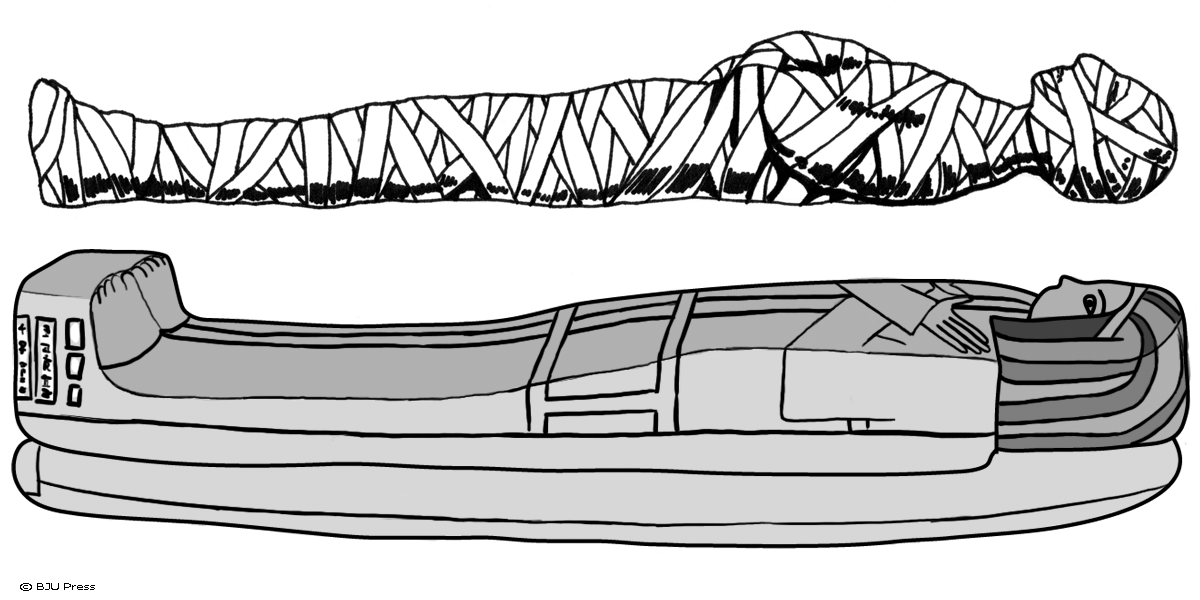
illustration of an Egyptian mummy

November 4

The discovery of King Tutankhamun’s tomb occurred on this date in 1922. It wasn’t until about a month later that the archeologists were able to open the tomb and discover what treasures the Egyptians had placed with his mummy. Take an opportunity to discuss how as Christians, we can lay up treasure in heaven (Matthew 6:19–21).

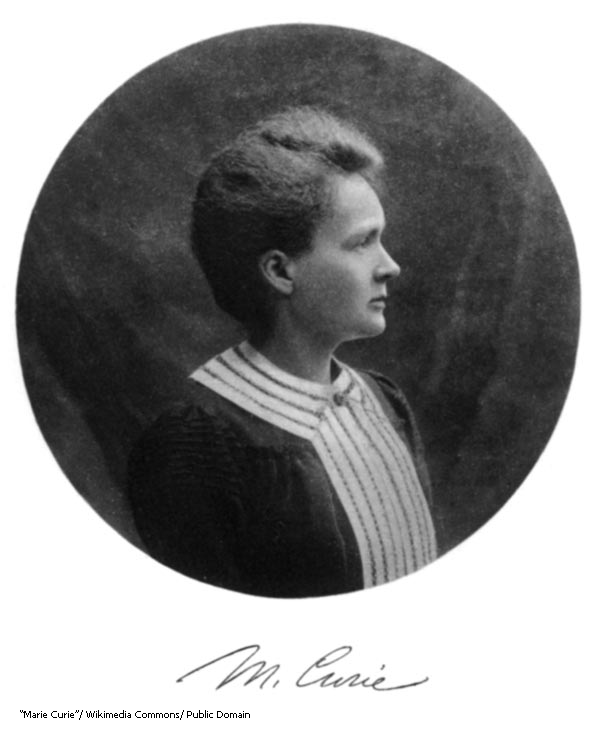
photograph of Marie Curie for Nobel Prize in 1903

November 7

Marie Curie was born on this date in 1867. She taught physics at the Sorbonne in France but is probably most famous for her work with radioactivity. It was through this research that Marie and her husband discovered two elements (polonium and radium). Marie also won a Nobel Prize in chemistry and another in physics for her work. This chart of the Periodic Table inspires me to remember all the elements! Can you find curium, named for Marie and Pierre Curie?

illustration of a veteran saying the pledge to the American flag

November 11

Veteran’s Day honors all the men and women who dedicate their lives to serving in the American armed forces. While this federal holiday started as a remembrance for those who served in World War I, it now serves as a day to show tribute for all service men and women from every American war.

In particular, there’s a small, but significant group who helped to defend our nation at a critical time in history. Known as the Navajo “Code Talkers,” this group of Native Americans worked with the US military during World War II. This communication system is the only unbroken code in military history. The code itself was so complex that even native Navajo speakers would not be able to make sense of the cryptic messages. Because of the classified nature of this code, these veterans were not recognized for their efforts until decades after the war ended. Watch these Navajo Code Talker interviews.

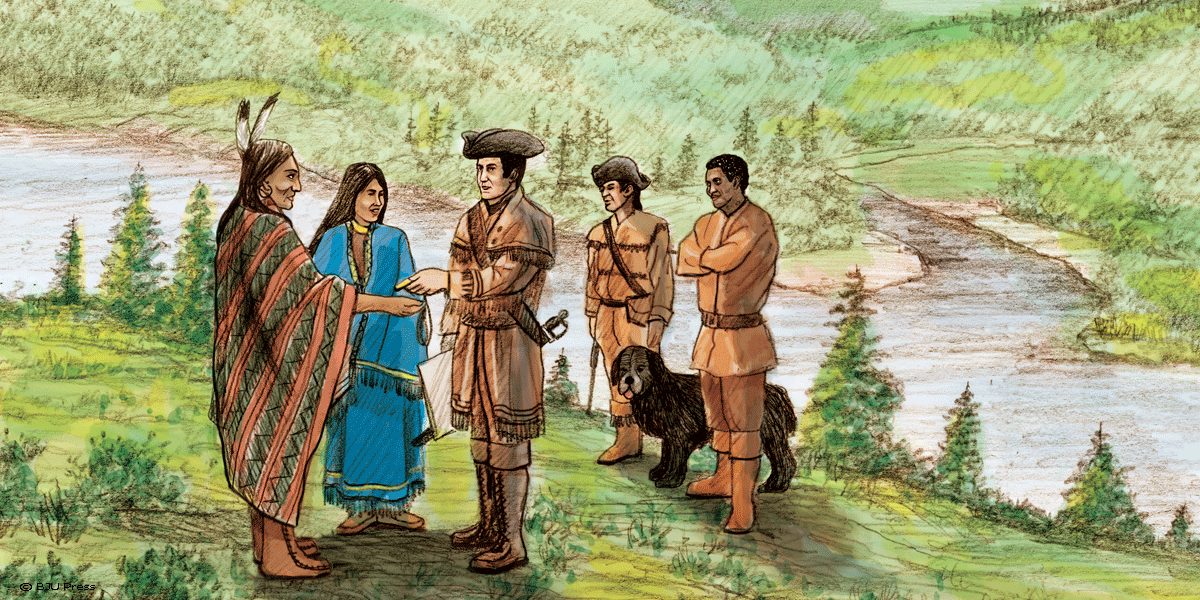
illustration of Lewis and Clark expedition

November 17

On this day in 1805, Lewis and Clark reached the Pacific Ocean. Their journey took about two years—now we can travel across the continent in just hours! The purpose of their exploration was to chart the land west of the Mississippi River contained in the Louisiana Purchase. Lewis and Clark took notes on plant and animal life, geography, and Native American tribes. Their journey started in Missouri,  and they went all the way up to Oregon (where they saw the Pacific Ocean) and back again.

The success of their expedition depended in part on a Native American woman named Sacagawea. She helped the corps with her insights into Native American culture. Sacagawea’s best- known contribution to the exploration came when her own tribe, the Shoshone, agreed to provide horses to carry the corps.

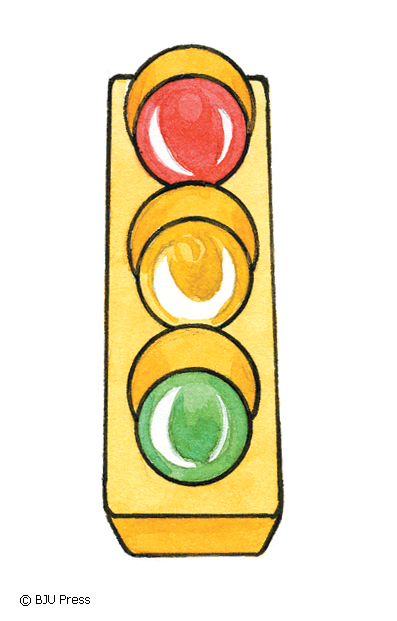
illustration of stoplight

November 20

On this day, the three-position traffic light was patented in 1923 by Garrett Morgan. Since previous traffic lights offered no warning between go and stop, this invention helped to decrease the number of auto accidents. Remember to drive safely especially if your kids are soon-to-be backseat drivers! I think a game of red light, green light would be great to include for today’s family activity. Don’t forget to add the yellow light (walking) too!

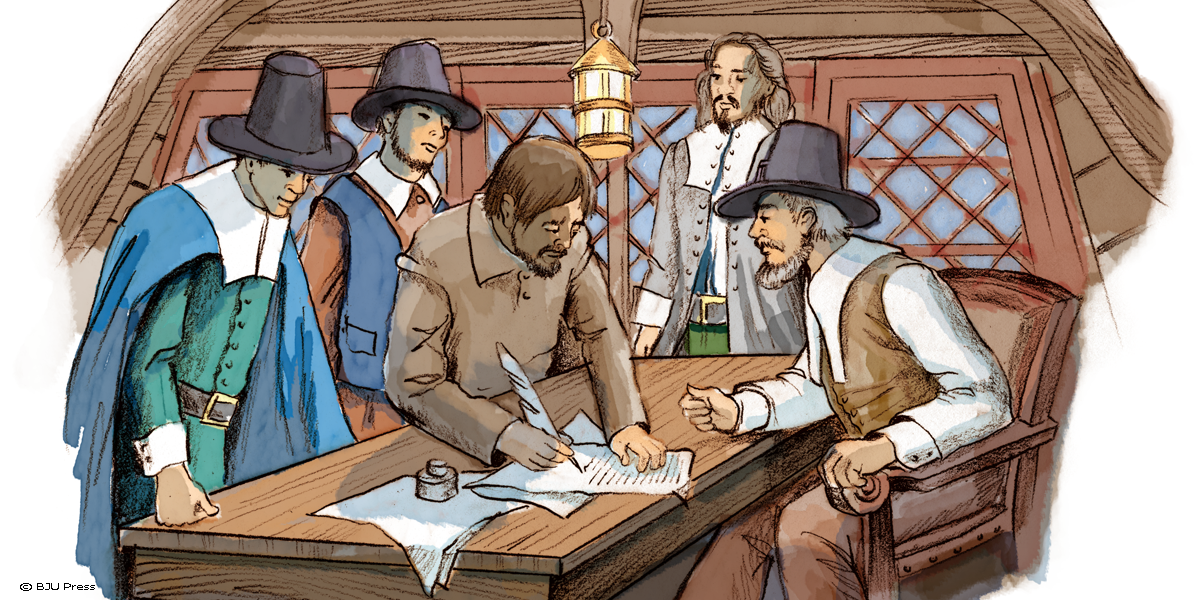
illustration of Pilgrims signing the Mayflower Compact

November 21

The Separatists completed the signing of the Mayflower Compact in 1620.  This document listed the rules the colonists agreed to live by as their ship landed in “new” territory outside of the land granted to them by the English government. Read the text of the Mayflower Compact. Does your family have a similar “code of conduct” that your kids can relate to?

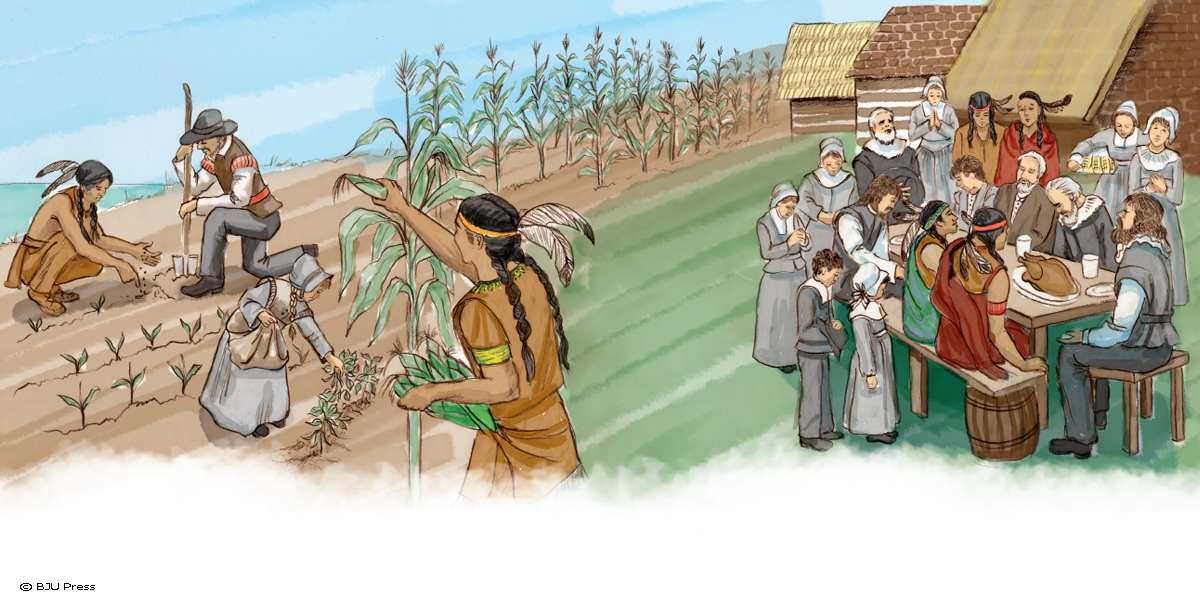
illustration of Squanto helping the Pilgrims

November 26

In the United States, we celebrate Thanksgiving Day on the fourth Thursday in November. We often think back to the first Thanksgiving shared by the Pilgrims and the Wampanoags. Many details about this event may be mythical, but we do know that the Pilgrims took a day to celebrate God’s goodness.

One of the blessings God gave to the Pilgrims was a friend named Squanto (Tisquantum). His ability to speak English gave Squanto opportunities to help the Pilgrims as they established their colony in the New World. He taught them how to live off the land and served as a negotiator between them and the surrounding Wampanoag tribe. Squanto’s efforts allowed peace to exist between the two groups for almost fifty years. Find ways to celebrate this special holiday by being a blessing to others and spending time with family. You’ll also want to be on the lookout for a Thanksgiving-themed roundup post I’ll be sharing in a couple weeks.

Filed Under: Successful Learning Tagged With: English, history, inventions, language arts, Marie Curie, November, science, Thanksgiving, writing

Learning the Value of Grammar Lessons

October 6, 2015 by Megan

photograph of a bored female student sitting at a table with piles of homework

Many high schoolers question the usefulness of studying grammar. I know I did.

My parents started homeschooling when I was in seventh grade. I was a good student and had stayed on the honor roll throughout elementary school. I loved learning and generally spent my spare time either reading or typing out stories on my family’s computer. I enjoyed my distance-learning history and literature classes enough that I often watched the videos twice. But I loathed the English class in the distance-learning program that my parents chose.

During that class, I rarely paid attention, choosing instead to either doodle in the back of my notebook, write stories, or get a head start on the evening’s homework assignment.

I had several reasons for disliking English. Minor reasons included the fact that the teacher on the videos was annoying, the textbook was visually uninteresting, and I never felt like I learned anything new. But the main reason that I hated the class was that the content seemed useless.  The distance-learning program that we used (not BJU Press) was effective at drilling the course content into my head, but it failed to answer my burning question of why the content should be learned in the first place.

It wasn’t until a few years later when I took a missions trip to Micronesia that I began to understand the usefulness of grammar. That summer, I traveled with some friends and spent almost a month on Majuro, the main island of the Marshall Islands with my aunt, uncle, and cousins, who were missionaries there. During our stay, my uncle gave us daily lessons in Marshallese. I had expected to learn a collection of useful Marshallese phrases such as “How are you?” “How much does it cost?” and “Where is the restroom?” Instead, we talked about things like pronouns and verb tenses and where to place adjectives in relation to nouns. All those grammar exercises in English class were finally coming in handy! I was so thankful that I knew the “lingo” of language. I knew what adjectives and pronouns were, and I knew the role they played in sentence structure. That knowledge helped me immensely, and I was able to learn quite a bit of Marshallese during that brief time.

Three years later, I was a sophomore in college taking an expository writing class and learning another use for all those grammar exercises. That semester, my professor used a lot of terms like gerunds, participles, and nominative absolutes as he tried to challenge us to experiment with sentence structure to create compelling prose. Again, I was thankful for those years of studying grammar. I knew the terms as well as the concepts, and that knowledge was helping me become a better writer.

Seeing grammar at work in the real world got me excited. I was beginning to see grammar not as a tool for torturing students but as an essential part of producing clear, God-honoring communication. I realized students needed to be taught grammar through this worldview lens. And I decided that I wanted to teach them. This former English-class-hater actually ended up pursuing a master’s degree in English education.

In the providence of God, I’m not currently teaching grammar in a classroom. I’m a stay-at-home mom with three daughters. But someday soon I will begin teaching them the fundamentals of English grammar. And from the very beginning, they will know its value.

Filed Under: Successful Learning Tagged With: class, English, grammar, language arts, linguistics, writing

  • « Go to Previous Page
  • Page 1
  • Page 2
  • Page 3
  • Go to Next Page »

Primary Sidebar

As parents, teachers, or former homeschool students, we are passionate about homeschooling from a biblical worldview. We hope these teaching tips, fun activities, and inspirational stories support you in teaching your children.

Email Signup

Sign up for our homeschool newsletter and receive select blog posts, discounts, and more right to your inbox!

Connect with Us!

                    Instagram     

Read Posts on Specific Subjects

Early Learning
Foreign Language
History
Language Arts
Math
Science

Footer

Disclaimer

The BJU Press blog publishes content by different writers for the purpose of relating to our varied readers. Views and opinions expressed by these writers do not necessarily state or reflect the views of BJU Press or its affiliates. The fact that a link is listed on this blog does not represent or imply that BJU Press endorses its site or contents from the standpoint of ethics, philosophy, theology, or scientific hypotheses. Links are posted on the basis of the information and/or services that the sites offer. If you have comments, suggestions, questions, or find that one of the links no longer works, please contact us.

Pages

  • About BJU Press
  • Conversation Guidelines
  • Terms of Use & Copyright

Archives

© 2026 · BJU Press Homeschool